Comparing tradesperson quotes is not just about finding the lowest number. A cheap quote can become expensive if it leaves out materials, waste removal, VAT, access costs, or essential checks. A highe
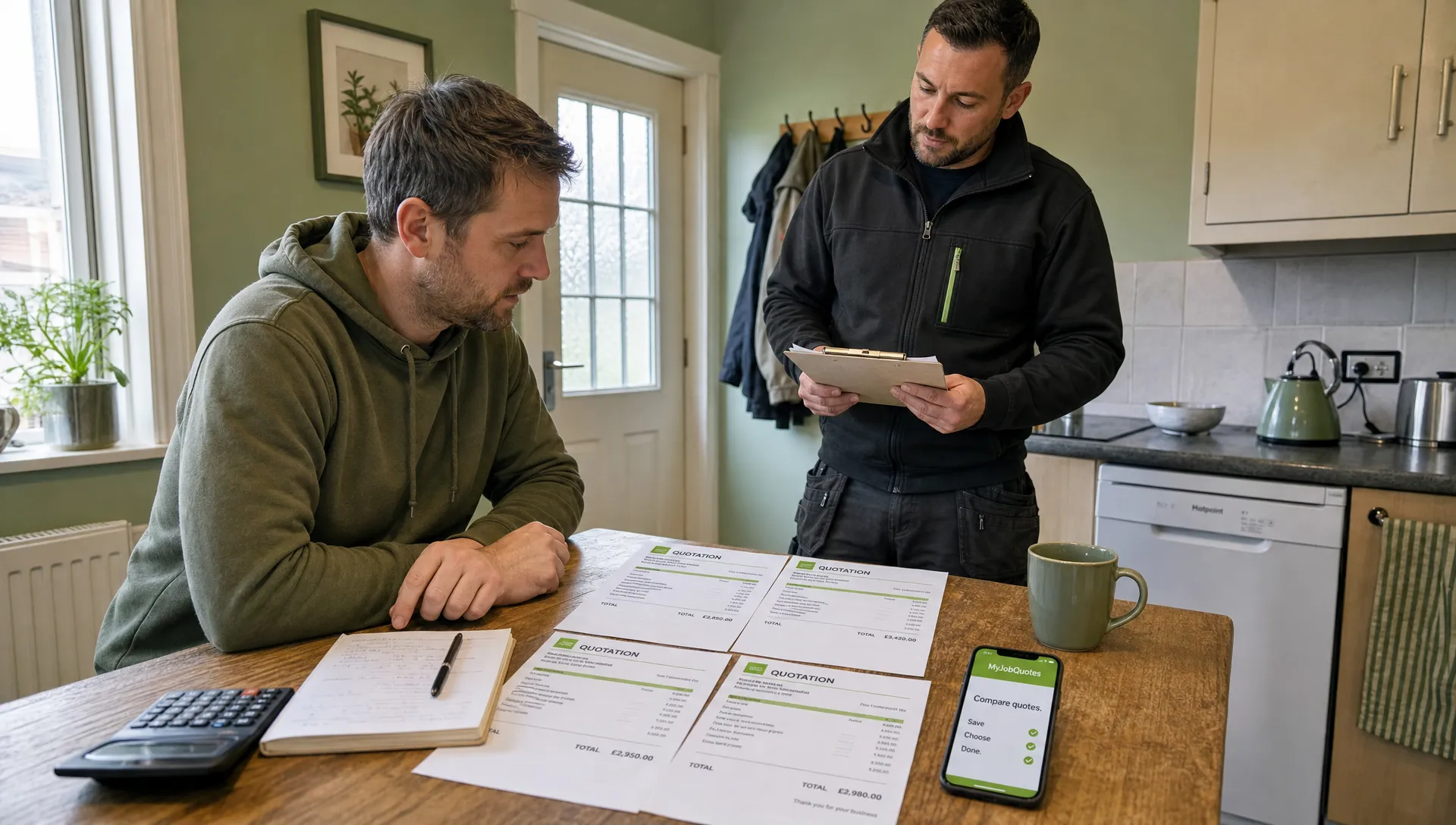
Comparing tradesperson quotes is not just about finding the lowest number. A cheap quote can become expensive if it leaves out materials, waste removal, VAT, access costs, or essential checks. A higher quote can sometimes be better value if it is clearer, more complete, and backed by proper qualifications and reviews.
The good news is that you do not need trade knowledge to compare quotes properly. You need a clear brief, itemised pricing, and a way to check whether the quote matches real local rates. That is where HaMuch is useful: it shows transparent, comparable pricing data by trade and location, so you are not relying on vague guesswork before you hire.
Why tradesperson quotes can vary so much
Two tradespeople can look at the same property and give very different quotes. That does not always mean one is overcharging. It often means they have priced the job differently, included different things, or made different assumptions about time, materials, risk, and access.
The biggest reasons quotes differ are usually:
- Scope of work: One quote may include preparation, finishing, testing, tidying up, or return visits, while another only covers the main labour.
- Materials: Some quotes include materials, some exclude them, and some use allowances that may change later.
- Local labour rates: Prices are not the same across the UK. A London quote may differ from Birmingham or Manchester because overheads, travel, parking, and demand vary.
- Experience and qualifications: A properly qualified, insured tradesperson may charge more than someone who cannot show evidence of competence.
- Timing: Emergency, weekend, evening, or short-notice work often costs more than planned work.
- Access and condition: Difficult parking, awkward access, older properties, hidden damage, or working at height can all affect the price.
Before deciding whether a quote is fair, check the market for your area. For example, you can compare plumber rates in London, electrician rates in Birmingham, or builder rates in Manchester to get a clearer starting point.
Start with the same brief for every tradesperson
The simplest way to compare tradesperson quotes fairly is to give each person the same information. If one tradesperson receives a vague message and another receives photos, measurements, access details, and your preferred finish, their quotes will not be comparable.
A good brief should explain what you want done, where the work is, what the tradesperson can and cannot access, whether you want them to supply materials, and whether there are any time limits. Photos are also helpful, especially if the tradesperson is giving an initial estimate before visiting.
Try to include:
- The property type, such as flat, terraced house, semi-detached house, or rental property
- The exact area or rooms affected
- Clear photos from a normal distance, not only close-ups
- Measurements if relevant
- Any known problems, previous repairs, or signs of damage
- Whether the property is occupied, vacant, tenanted, or managed by a landlord
- Parking, access, stairs, lifts, and working-hour restrictions
- Your preferred timing, but also whether you can be flexible
This makes it much harder for costs to be missed. It also gives you a better idea of which tradespeople are organised, responsive, and willing to explain things clearly.
Ask for a written, itemised quote
A one-line total is rarely enough. If a quote simply says “labour and materials” with one total, you cannot easily see what you are paying for or what might be added later.
Ask for a written quote that breaks down the main parts of the job. It does not need to be complicated, but it should be clear enough that you can compare it against other quotes. At minimum, it should show labour, materials, VAT status, waste removal if relevant, and any likely extras.
Here is a simple comparison format you can use:
| Quote detail | Why it matters | What to check |
|---|---|---|
| Labour | Shows how much time the tradesperson expects the work to take | Is it a fixed price or based on an hourly or daily rate? |
| Materials | Prevents confusion over what is included | Are materials included, excluded, or listed as an allowance? |
| VAT | Can change the final amount you pay | Is VAT included in the total or added on top? |
| Waste removal | Often forgotten until the end | Who removes debris, packaging, or old materials? |
| Access costs | Can affect jobs in busy areas or flats | Are parking, permits, congestion charges, or specialist access included? |
| Timescale | Helps you plan around disruption | When can they start, and how long should the work take? |
| Exclusions | Reveals what could cost extra | What is specifically not included in the quote? |
If something is not listed, do not assume it is included. A quick question before work starts is far easier than a disagreement after the work is finished.
Understand the difference between a quote and an estimate
People often use the words “quote” and “estimate” as if they mean the same thing, but they are not identical.
A quote is usually a fixed price for agreed work, assuming the scope does not change. An estimate is an approximate price, often used when the tradesperson cannot know the full cost until they investigate further.
For example, if part of the work depends on what is hidden behind a wall, under flooring, or inside an existing structure, a tradesperson may only be able to give an estimate at first. That is not automatically a problem, but it should be made clear in writing.
Ask these questions before accepting:
- Is this a fixed quote or an estimate?
- What could cause the price to change?
- How will extra work be approved?
- Will I be told before any additional costs are added?
Citizens Advice also recommends getting agreements in writing when arranging home improvement work. Written details protect both sides because everyone can see what was agreed.
Compare the full value, not just the final price
The cheapest quote is not always the best quote. It may be good value, but only if it covers the same work to the same standard. A low quote can become more expensive if key items are missing or if the tradesperson has not allowed enough time.
Look closely at whether the quote includes preparation, protection of nearby areas, tidy-up, testing, certificates, guarantees, and aftercare where relevant. Also consider whether the tradesperson has asked sensible questions. A professional who spots risks before starting may save you trouble later.

A simple way to compare value is to score each quote against the same criteria:
| Criteria | What a strong quote looks like |
|---|---|
| Clarity | The work, materials, VAT, timing, and exclusions are easy to understand |
| Completeness | The quote covers the full job, not only the most obvious part |
| Local price fit | The price makes sense compared with real rates in your area |
| Reviews | The tradesperson has genuine customer feedback for similar work |
| Qualifications | They can show appropriate qualifications, registration, or competence where needed |
| Insurance | They can confirm suitable insurance for the work |
| Communication | They respond clearly and do not pressure you into an instant decision |
If one quote is much cheaper than the others, ask why. A good tradesperson should be able to explain their pricing without being defensive. They may have lower overheads, a shorter journey, or a more efficient method. Equally, they may have missed part of the work.
Check qualifications and insurance before accepting
Price matters, but it should never be the only factor. Some work carries safety, legal, or property-risk implications, especially for landlords and property managers who need proper records.
Before hiring, ask for evidence of relevant qualifications, trade memberships, registration where applicable, and public liability insurance. What you need to check depends on the trade, so it is worth understanding the basics. HaMuch has a separate guide on how to check if a tradesperson is properly qualified if you want a step-by-step checklist.
Reviews matter too. Look for comments about punctuality, tidiness, communication, reliability, and how the tradesperson handled problems. A perfect-looking quote is less reassuring if there is no feedback or if the reviews raise the same issue repeatedly.
Watch for common quote red flags
Most tradespeople want to do a good job and price fairly. Still, there are warning signs that should make you pause before paying a deposit or agreeing a start date.
Be cautious if a tradesperson will only give a verbal price, refuses to confirm what is included, pressures you to decide immediately, asks for the full amount upfront, or cannot explain a large price difference. Also be wary if the quote is far below the rest but does not show how the saving is being achieved.
For electrical work in particular, it is sensible to ask about qualifications, certification, insurance, and testing before agreeing to anything. If that is relevant to your job, this guide to questions to ask before hiring an electrician gives a useful framework.
Think about payment terms before work starts
A fair quote should also make payment terms clear. You should know whether a deposit is required, when stage payments are due, and what happens if extra work is discovered.
For larger projects, staged payments can be normal, but each stage should relate to progress. For smaller jobs, payment on completion is common. What matters most is that the agreement is written down and understood by both sides.
Avoid paying large sums without a written quote, clear business details, and some record of what the payment covers. If a tradesperson is supplying expensive materials, ask for the materials element to be separated so you can see what the deposit is for.
Extra tips for landlords and property managers
Landlords and property managers often compare quotes differently from owner-occupiers because speed, access, paperwork, and repeat reliability matter as much as the immediate price.
If you manage rental properties, make sure the quote includes tenant access arrangements, appointment windows, invoice details, and any evidence you need for your records. If the property is vacant, clarify key collection, parking, and who will check the work on completion.
It is also worth keeping a written record of previous quotes by trade and location. Over time, you will spot whether a new quote looks reasonable, whether a job has become more complex, or whether market rates have changed.
Use HaMuch to benchmark before you book
Many homeowners only find out whether a quote is high after they have already accepted it. HaMuch is designed to help you compare first. You can check real, comparable pricing by trade and location, read genuine customer reviews, and request quotes from local tradespeople without any obligation to book.
That upfront pricing is important. It gives you context before you speak to a tradesperson, not after. Instead of guessing whether a day rate or job quote sounds right, you can compare it against local data and then judge the quote on clarity, quality, reviews, and suitability.
A sensible process is:
- Check local rates first: Look at pricing for the relevant trade in your area so you have a realistic benchmark.
- Send the same brief to each tradesperson: Include photos, access details, timing, and what you want included.
- Ask for written, itemised quotes: Make sure labour, materials, VAT, timing, and exclusions are clear.
- Compare like for like: Do not compare a full-service quote with a bare labour-only price.
- Check reviews and qualifications: Choose someone who is not only fairly priced, but also reliable and suitable for the work.
Frequently Asked Questions
How many tradesperson quotes should I get? For non-urgent work, getting two or three written quotes is usually a sensible starting point. For larger or more complex work, you may want more detail from each tradesperson rather than simply more quotes.
Should I always choose the cheapest tradesperson quote? Not automatically. Choose the quote that offers the best overall value, including clear scope, suitable qualifications, good reviews, realistic timing, and a fair local price.
What should a tradesperson quote include? A good quote should include the work being done, labour, materials, VAT status, likely timescale, payment terms, exclusions, and how extra work will be approved.
Why is one quote much higher than the others? It may include more work, better materials, higher overheads, travel, access costs, or a more experienced tradesperson. Ask for a breakdown before deciding whether it is too high.
Can I negotiate a tradesperson quote? You can ask whether there is any flexibility, but avoid pushing the price down without changing the scope. A better approach is to ask what is included and whether there are options at different price points.
How do I compare tradesperson quotes if I know nothing about the trade? Use the same written brief, ask for itemised quotes, check local rates on HaMuch, read reviews, and verify qualifications. You do not need to understand every technical detail to compare the basics properly.
Ready to compare quotes with more confidence?
Before you accept a price, check what similar trades charge in your area and compare local tradespeople side by side. With HaMuch, you can view transparent pricing data, read genuine reviews, and request quotes for free with no obligation to book.
Start with the facts, compare like for like, and choose the tradesperson who offers the right balance of price, clarity, and trust.