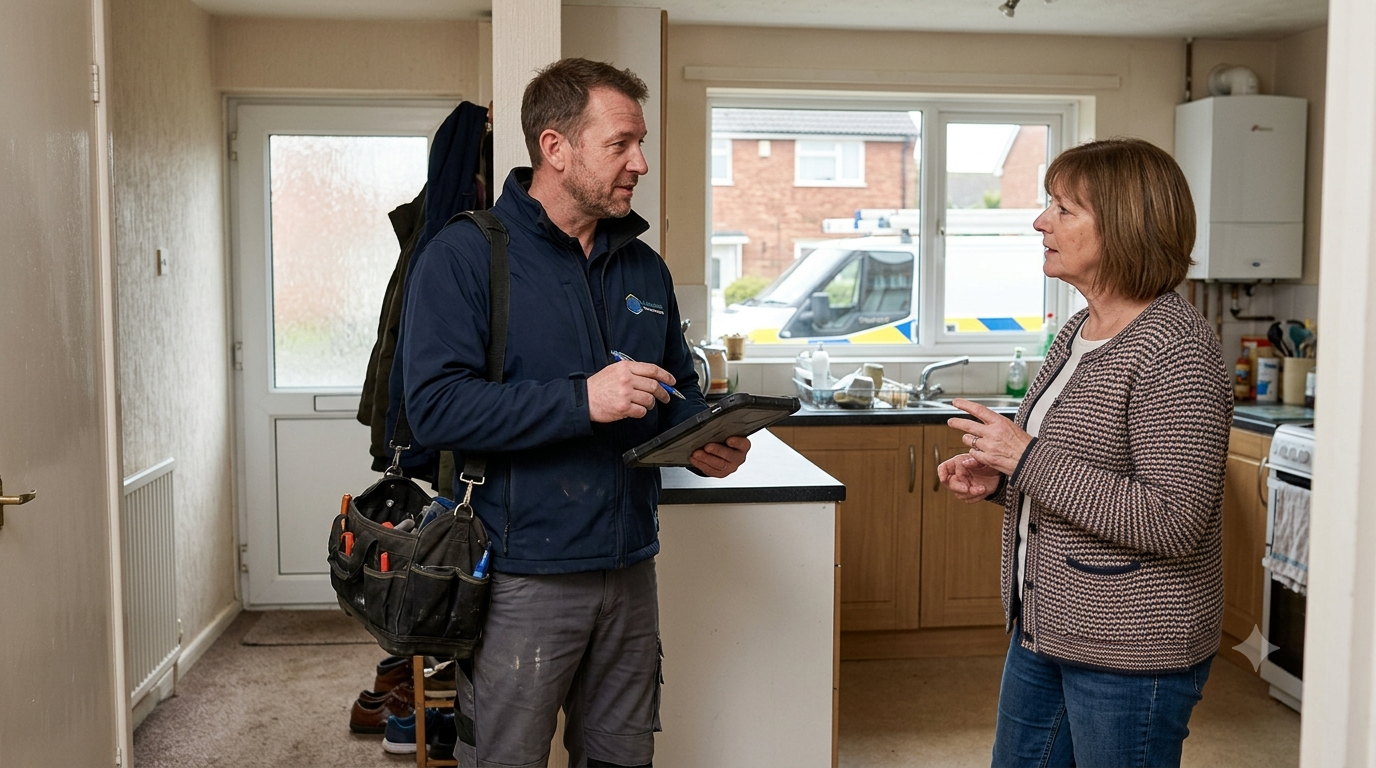
Hiring a plumber often happens when something is already leaking, blocked or not working. That urgency can make it tempting to choose the first person who answers the phone, but a few clear questions
Hiring a plumber often happens when something is already leaking, blocked or not working. That urgency can make it tempting to choose the first person who answers the phone, but a few clear questions can save a lot of stress later.
The best questions to ask before hiring a plumber are not complicated. You are simply trying to find out whether they are qualified for the job, whether the price is clear, whether they are insured, and whether you will have proper backup if something goes wrong.
Before you start calling around, it is worth checking local plumber rates so you have a realistic price benchmark. A quote is much easier to judge when you can compare it with real, transparent pricing data by trade and location, rather than relying on guesswork or waiting until after you have sent off a job request.
Prices can also vary by area. A plumber in London may have different labour, travel and parking costs from one in Birmingham or Manchester, so local comparison matters.
Quick checklist of questions to ask a plumber
| Question | What it helps you check |
|---|---|
| Are you qualified for this exact job? | Whether they have the right skills, especially for gas, heating or unvented cylinders |
| Are you insured? | Whether your home and their work are protected if something goes wrong |
| Can you provide a written quote? | Whether the price is clear before work starts |
| Is it a fixed price or an estimate? | Whether the final bill could change |
| Have you done similar jobs locally? | Whether they understand the type of property and plumbing issue |
| Who will actually do the work? | Whether the person you speak to is the person attending |
| How will you diagnose the problem? | Whether call-out charges and investigation time are clear |
| Which parts will you use? | Whether materials are suitable, available and included in the price |
| Do you guarantee the work? | Whether you have comeback if the same fault returns |
| What paperwork will I receive? | Whether you will get invoices, certificates or landlord records where needed |
1. Are you qualified for this exact type of plumbing work?
Not every plumber does every type of plumbing job. Some focus on leaks, taps, toilets and pipework. Others specialise in heating systems, boilers, bathrooms, drainage or commercial properties.
Ask the plumber whether they have experience with your specific issue. Replacing a kitchen tap is very different from tracing a hidden leak, installing an unvented hot water cylinder or working around a boiler.
If the work involves gas, such as a gas boiler, gas pipe, gas hob or gas fire, the person must be Gas Safe registered. You can check this through the official Gas Safe Register. Ask to see their Gas Safe ID card and make sure the categories on the card match the work being carried out.
For water supply and mains water work, you may also want to look for an approved plumber through schemes such as WaterSafe, especially if the job involves drinking water pipework or compliance with water regulations.
2. Are you insured, and can I see proof?
A reliable plumber should be able to tell you what insurance they carry. Public liability insurance is the main one homeowners usually ask about, as it can help cover accidental damage caused during the job.
If the plumber is bringing employees or subcontractors, it is also sensible to ask how those people are covered. You do not need to interrogate them, but a genuine professional should not be offended by a polite request for proof of insurance.
This matters for small jobs as well as big ones. A tiny leak behind a basin can damage flooring, kitchen units or a ceiling below. Insurance does not replace good workmanship, but it is an important safety net.
3. Can you give me a written, itemised quote?
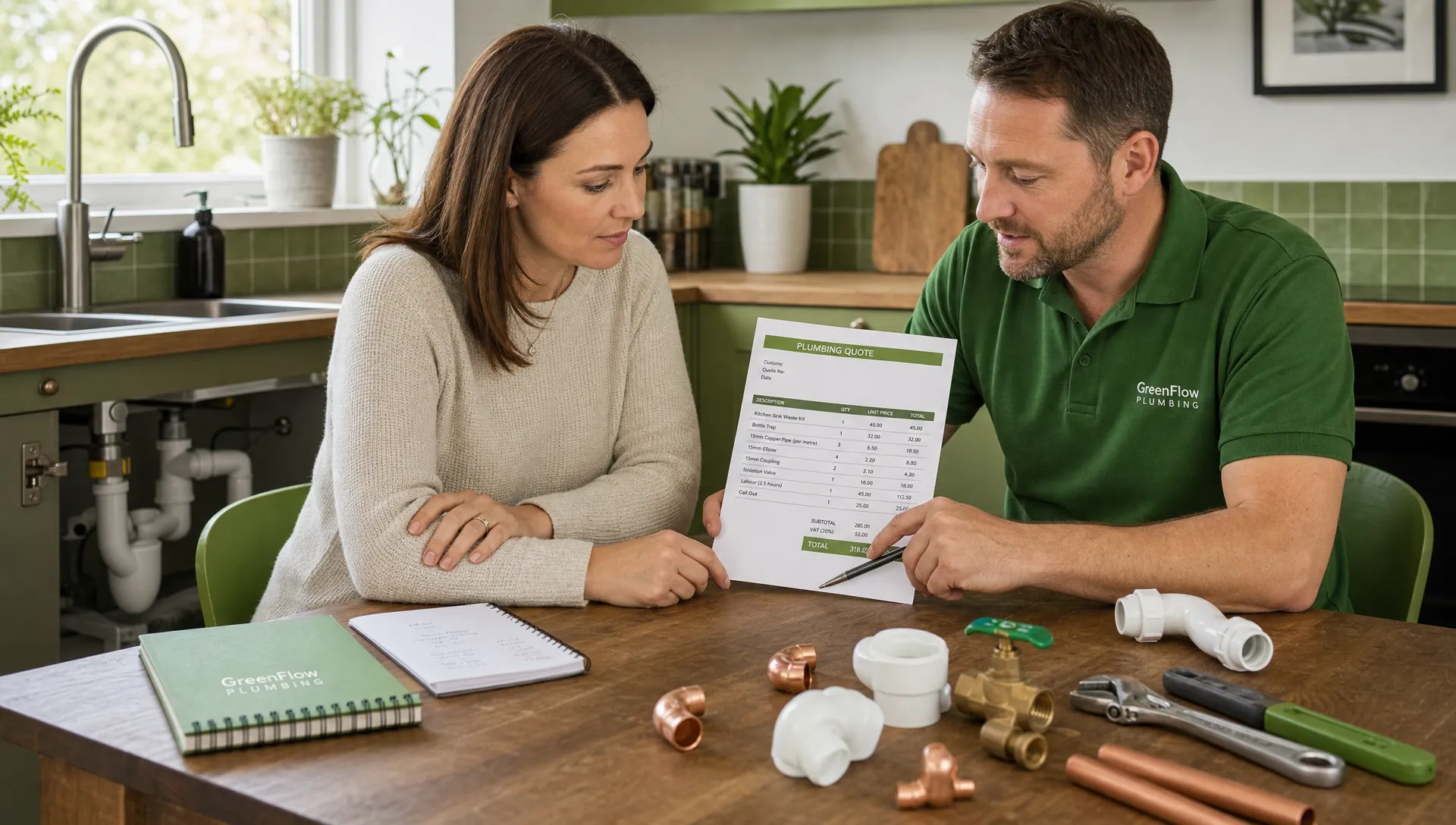
A verbal price is easy to misunderstand. Before you agree to the work, ask for a written quote that sets out what is included.
A good plumbing quote should usually make clear whether the price includes labour, materials, VAT, call-out charges, waste removal, parking costs and any follow-up visit. For larger jobs, it should also break down the main stages of work, rather than giving one vague total.
This is where HaMuch can help you sense-check the figure. Many tradesperson comparison sites do not show useful pricing upfront, while HaMuch focuses on real, comparable local pricing data so you can compare quotes more confidently before you commit.
4. Is this a fixed price or an estimate?
A quote and an estimate are not the same thing. In plain English, a fixed quote is the agreed price for a defined piece of work. An estimate is the plumber's best judgement based on what they can see at the time.
Some plumbing jobs are hard to price exactly before investigation. For example, a leak under a floor may reveal damaged pipework, rotten boards or poor previous repairs once the area is opened up. That does not mean an estimate is bad, but the plumber should explain what might change the final cost.
Ask what happens if the job turns out to be more complicated than expected. A good plumber will pause, explain the issue, give you an updated price and ask for approval before carrying on with extra work.
5. Have you completed similar jobs recently?
Experience with similar jobs is often more useful than a general promise that they can handle it. Ask whether they have dealt with the same type of problem, property or system recently.
For example, older homes can have pipework that has been altered several times over the years. Flats may have awkward access, shared drainage or building management rules. Rental properties may need tidy communication with tenants and paperwork for the landlord.
Customer reviews are useful here, especially when they mention the same type of work. Look for comments about punctuality, communication, tidiness and whether the price matched the quote.
6. Who will actually do the work, and when?
Sometimes the person who gives the quote is not the person who turns up. That is not automatically a problem, but you should know who will be in your home and who is responsible for the standard of work.
Ask whether the plumber will attend personally or send a colleague. If more than one person is involved, ask who your main contact will be and whether all workers are qualified for the tasks they will carry out.
It is also worth confirming the expected start date, arrival window and how long the job is likely to take. For landlords and property managers, ask whether they can contact tenants directly, provide notice where needed and send updates once the job is complete.
7. How will you diagnose the problem, and what does the call-out fee include?
For emergency leaks, boiler issues, blocked toilets or low water pressure, the first visit may involve diagnosis rather than immediate repair. This is normal, but the charging structure should be clear.
Ask whether there is a call-out fee, what it includes and when the hourly rate begins. If the plumber needs specialist equipment, such as leak detection tools or drain cameras, ask whether that is included or charged separately.
A trustworthy plumber should be able to explain their process in simple terms. For example, they might isolate the water supply, test pressure, inspect visible pipework and then advise whether further investigation is needed.
8. What parts and materials will you use?
Parts vary in quality, availability and warranty. A cheaper part is not always poor quality, and a premium part is not always necessary, but the choice should be explained.
Ask whether the quote includes all parts and whether the plumber will use like-for-like replacements or recommend an upgrade. For taps, valves, pumps, toilets, radiators and shower components, it helps to know whether the parts are standard and easy to source if they ever need replacing.
If you are buying materials yourself, check that the plumber is happy to fit them. Some tradespeople will not guarantee customer-supplied parts, because they cannot control the quality or compatibility.
9. What guarantee do you provide on labour and parts?
A professional plumber should be clear about what is guaranteed and for how long. There may be one guarantee for labour and a separate manufacturer's warranty for parts.
Ask what happens if the same fault returns after the visit. Will they come back free of charge if it is related to their workmanship? Are there situations where a return visit would be chargeable, such as a new blockage caused by misuse or a separate fault elsewhere in the system?
Get the guarantee in writing where possible, especially for larger jobs. It does not need to be complicated, but it should be clear enough that both sides understand it.
10. What paperwork or certification will I receive?
For simple jobs, an invoice may be all you need. For gas, heating, landlord or regulated work, paperwork becomes much more important.
If gas work is involved, ask what Gas Safe documentation will be provided. If you are a landlord, make sure the plumber or heating engineer understands what records you need for your rental property. For unvented hot water cylinders or certain heating upgrades, ask whether any building control notification, certificate or compliance paperwork applies.
Good paperwork helps if you later sell the property, make an insurance claim, manage a tenancy or need another tradesperson to understand what has been done.
Red flags to watch for before you book
Most plumbers are honest, hardworking tradespeople, but it still pays to be alert. Be cautious if something feels rushed, vague or unusually cheap without explanation.
Common warning signs include:
- Refusing to provide a written quote for anything beyond a very small job
- Asking for a large cash payment upfront before any work or materials are supplied
- Being unclear about qualifications for gas or specialist work
- Avoiding questions about insurance, guarantees or paperwork
- Pressuring you to decide immediately when the job is not an emergency
- Giving a price that is far below other quotes without explaining why
A low quote is not always a bad quote. The key is whether you understand what is included, what is excluded and what could change.
How to compare plumbing quotes fairly
Once you have answers from two or three plumbers, compare like with like. A cheaper quote may exclude parts, VAT, waste removal or follow-up visits. A higher quote may include better materials, faster availability or a longer guarantee.
Do not judge on price alone. Look at the full picture: experience, reviews, communication, insurance, clarity and whether the plumber has explained the job in a way you understand.
For homeowners, this helps avoid paying more than necessary. For landlords and property managers, it also helps reduce repeat call-outs, tenant disruption and unclear invoices.
Related cost guides to compare next
If your plumbing job overlaps with another trade, it is worth checking the right specialist before you book:
- Compare heating engineer rates if the job involves a boiler, radiator system or gas appliance.
- Compare electrician rates if the plumbing work includes an electric shower, pump wiring or controls.
- Compare builder rates if you are planning a bathroom renovation, drainage alteration or structural work.
Frequently asked questions
Should I choose the cheapest plumber? Not automatically. The cheapest quote may be good value, but only if it includes the same labour, parts, insurance, VAT and guarantee as the others. Compare the detail, not just the total.
How many plumbing quotes should I get? For non-urgent work, getting two or three quotes is sensible. For emergencies, you may need to move faster, but you should still ask about call-out fees, hourly rates and insurance before booking.
Do plumbers need to be Gas Safe registered? Only if they are doing gas work. A plumber can carry out water plumbing without being Gas Safe registered, but any work on gas appliances or gas pipework must be done by someone on the Gas Safe Register.
Should I pay a deposit before plumbing work starts? A small deposit can be reasonable for larger jobs or special-order materials. Be cautious about paying a large amount upfront, especially in cash, before any work has started.
Can landlords use the same questions when hiring a plumber? Yes. Landlords should also ask about tenant access, emergency response times, invoices, certificates and any safety paperwork needed for the property.
Ready to compare plumbers with confidence?
The right plumber should be able to answer these questions clearly and calmly. If the price, qualifications or scope of work feels vague, take a step back and compare your options.
With HaMuch, you can check real local pricing data, compare vetted tradespeople with genuine customer reviews and request quotes for free, with no obligation to book. Start by comparing plumber rates in your area, then choose the professional who feels right for the job.