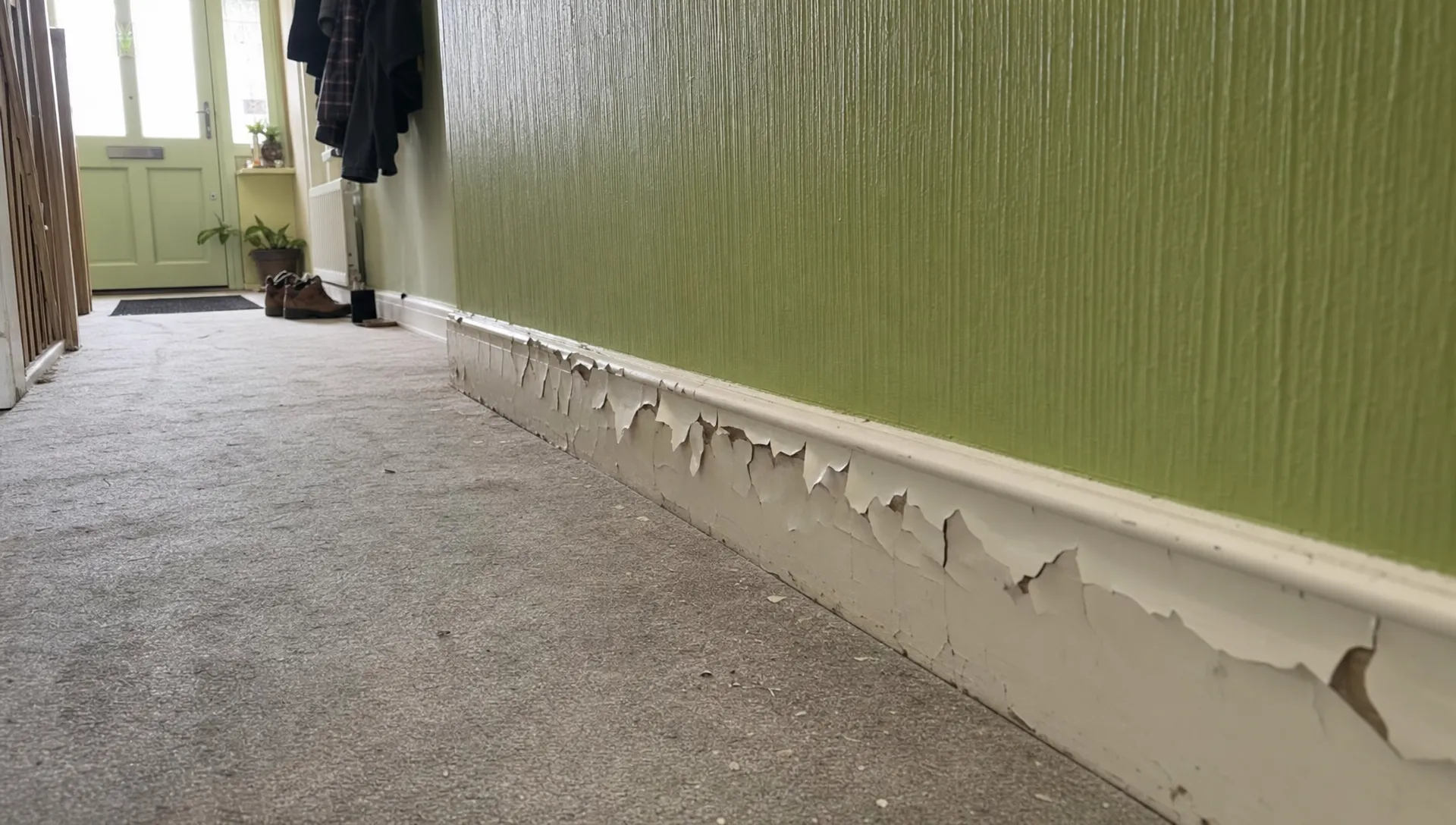
Paint flaking off skirting boards is frustrating, but it is also a useful clue. Sometimes it is just tired gloss, poor preparation, or everyday knocks from the vacuum cleaner. Other times, it points t
Paint flaking off skirting boards is frustrating, but it is also a useful clue. Sometimes it is just tired gloss, poor preparation, or everyday knocks from the vacuum cleaner. Other times, it points to damp, leaks, swollen timber, or paint being applied to a surface that was never ready for it.
The good news is that most skirting board paint problems are fixable. The important bit is working out whether you need a painter and decorator, a carpenter and joiner, or someone else to deal with the cause first.
If the skirting board is dry, firm, and only the top paint layer is peeling, this is usually a Painter & Decorator job. If the board feels soft, damp, swollen, loose, or stained, pause before repainting. A fresh coat of paint may hide the problem for a few weeks, but it will not solve it.
First, check whether the skirting is dry and sound
Before you scrape or repaint anything, do a quick visual check. You do not need specialist tools, just take your time and look for patterns.
A single chipped patch in a hallway is often wear and tear. Flaking along a whole external wall may suggest damp or condensation. Peeling paint behind a radiator, next to a bathroom, or below a kitchen sink may point to a leak. Flaking on every skirting board in a recently decorated room could mean the paint was applied over dust, old gloss, or the wrong primer.
| What you can see | Likely cause | Who usually helps |
|---|---|---|
| Paint flakes off in dry, brittle sheets | Poor prep, old gloss, wrong paint, too many layers | Painter and decorator |
| Peeling appears near a bathroom, kitchen, radiator, or pipe route | Possible leak or moisture source | Plumber first, then painter |
| Skirting is swollen, soft, crumbling, or pulling away | Water damage, rot, damaged MDF or timber | Carpenter and joiner, possibly plumber if moisture is active |
| Paint bubbles or peels along a cold outside wall | Condensation, penetrating damp, or trapped moisture | Decorator, damp specialist, builder, or ventilation specialist depending on cause |
| Flaking happens mostly on corners and high traffic areas | Scuffs, impact damage, cleaning knocks | Painter and decorator |
If there is an active leak, do not wait for the paint to dry out on its own. Stop the water if safe, protect the floor, and get the leak checked before arranging decoration.
Common causes of paint flaking off skirting boards
1. Moisture behind or around the skirting
Moisture is one of the most common reasons paint fails on skirting boards. Paint is designed to stick to a stable, dry surface. If water is getting into the wall, floor edge, or board, the paint film can blister, lift, and peel away.
Possible moisture sources include:
- A small leak from a radiator valve, pipe, bath, shower, sink, or washing machine connection
- Condensation collecting at floor level, especially on cold external walls
- Damp from a solid wall, chimney breast, or poorly ventilated room
- Water soaking into MDF skirting after mopping or a spill
- Moisture trapped behind old paint or caulk
A painter can make the surface look good again, but they cannot fix an ongoing leak. If the paint is peeling near plumbing, check local plumber rates on HaMuch so you can compare likely call-out and labour costs before booking someone.
For landlords, this is especially important. Repainting over damp skirting before a new tenancy can lead to the same problem reappearing quickly, often with added tenant complaints. It is usually cheaper and safer to identify the cause properly, then decorate once the area is genuinely dry.
2. The old gloss was not sanded or prepared properly
Skirting boards are often painted with gloss, satinwood, or eggshell. These finishes can be smooth and shiny, which looks neat when finished but gives new paint very little to grip onto.
If a previous decorator painted straight over old gloss without sanding, cleaning, or using the right primer, the new paint may sit on top rather than bonding properly. It can then flake off when knocked, cleaned, or even when masking tape is removed.
Signs this is the issue include paint peeling in neat sheets, a shiny surface underneath, and no obvious damp smell or staining. This is usually a straightforward repair for a painter and decorator, but it does take proper preparation rather than simply adding another coat.
3. The wrong paint was used
Not all paints are suitable for skirting boards. Wall emulsion, for example, is not designed for the knocks, scuffs, and cleaning that skirting boards receive. It may look acceptable at first, but it can chip, peel, or mark easily.
Skirting boards usually need a tougher woodwork finish, such as satinwood, eggshell, or gloss, depending on the look you want. Bare timber and MDF also need the correct primer or undercoat before the topcoat goes on.
If you have paint flaking off skirting boards shortly after decorating, and the surface underneath looks dusty, porous, or patchy, the paint system may have been wrong from the start.
4. Dust, grease, polish, or cleaning residue was left on the surface
Skirting boards collect more dirt than people realise. They sit where dust settles, shoes scuff, pets brush past, and vacuum cleaners hit the wall. In kitchens and dining areas, they can also collect grease and cleaning product residue.
Paint will not stick well to contamination. Even a thin film of polish, silicone spray, grease, or soap residue can stop paint from bonding. The result is patchy flaking, often around corners, doorways, and areas that get cleaned frequently.
A good decorator will usually clean, sand, dust off, fill, prime where needed, and only then paint. Skipping those steps can cause the finish to fail long before it should.
5. Impact damage from daily use
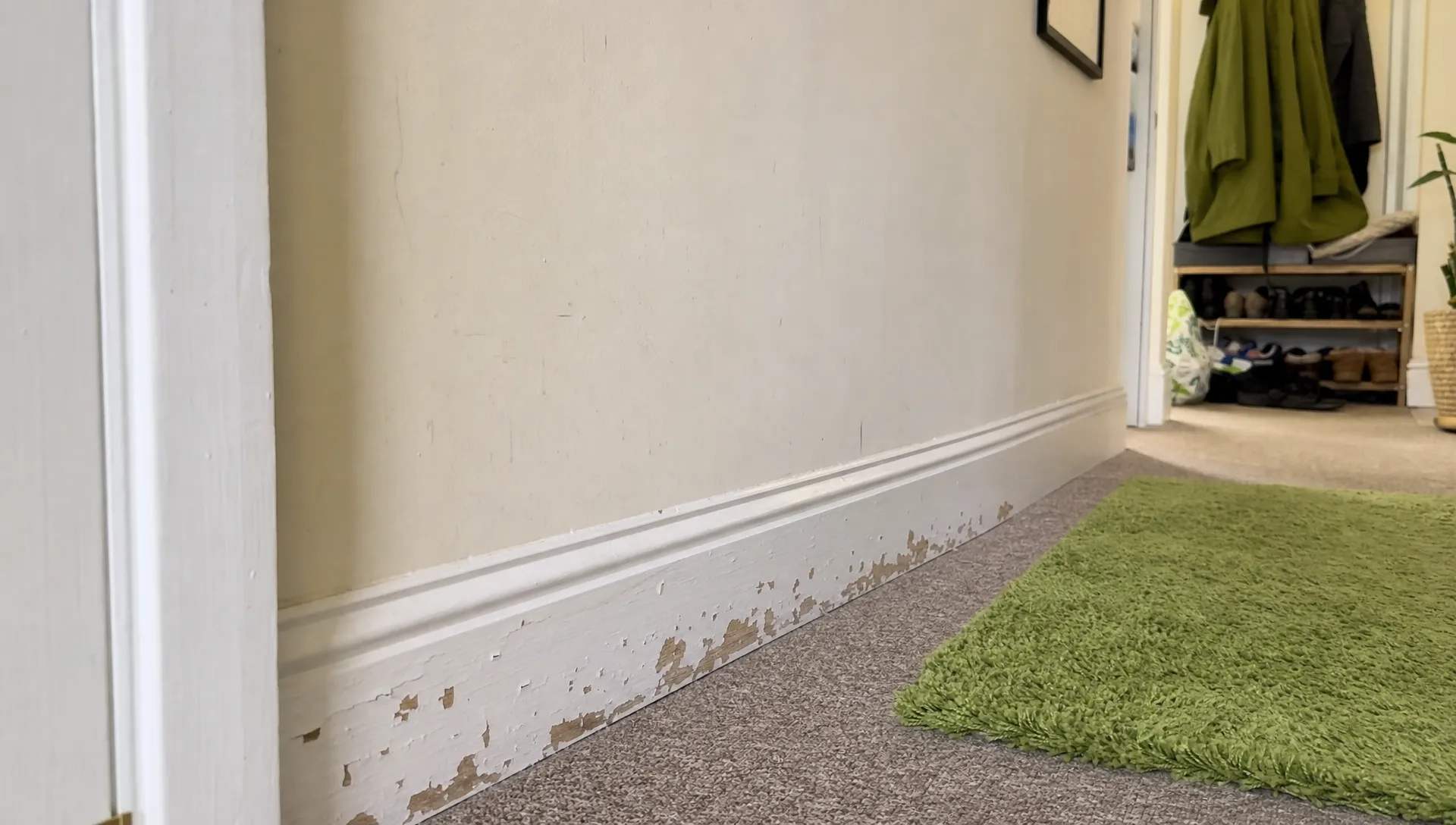
Sometimes the cause is not mysterious at all. Skirting boards are there to protect the base of the wall, so they take knocks from vacuum cleaners, furniture, shoes, toys, prams, bikes, and pet bowls.
In busy homes, rental properties, hallways, and stair landings, flaking may be worse on corners and high traffic areas. If the timber is sound and there is no damp, this is usually a cosmetic decorating job.
A decorator may recommend a harder-wearing finish and better preparation on these areas. In some cases, badly chipped corners may need filling or minor repair before painting.
6. Old layers of paint have built up
Many UK homes have skirting boards that have been painted again and again over the years. Thick layers of old paint can become brittle, especially if each new coat has been applied with little sanding between them.
When those layers start to fail, they may crack and flake in uneven patches. You might see ridges, brush marks, chips around edges, or different colours under the top layer.
In older properties, be careful before sanding old paint heavily. Some very old paint layers may contain lead. If your home is older and you are unsure what has been used before, ask an experienced decorator for advice rather than dry sanding large areas yourself. The UK Health and Safety Executive has guidance on working safely with lead for professionals.
7. MDF or timber has swollen
Modern skirting is often MDF, which can swell if it gets wet. Once MDF has expanded and the surface has blown, paint may continue to flake even after the area dries. Timber skirting can also warp, split, or rot if moisture has been present for long enough.
You may need a carpenter rather than a painter if the board is soft, misshapen, crumbling, or no longer sitting flush against the wall. Compare carpenter and joiner rates if the skirting needs repairing, refitting, or replacing before it can be decorated.
A painter can make good minor chips and surface damage, but replacing badly swollen or rotten skirting is usually outside a simple repaint.
8. New plaster, filler, or caulk was not fully dry
Paint can flake if it is applied before plaster, filler, or caulk has dried properly. This is common after renovation work, leak repairs, or fast turnarounds between tenancies.
The paint may bubble, crack, or peel along the top edge of the skirting, especially where caulk meets the wall. If the wall has recently been plastered, residual moisture can also affect the paint at floor level.
A decorator will usually check that surfaces are dry and stable before repainting. If there is any doubt, they may recommend waiting, improving ventilation, or using the right primer once the surface is ready.
Which trade should you call?
Most cases of flaking skirting board paint are handled by a painter and decorator. They can strip loose paint, prepare the surface, fill small dents, prime, and repaint with a suitable finish.
However, if the cause is not purely cosmetic, the right first trade may be different.
| Situation | Best first step |
|---|---|
| Paint is flaking but skirting is dry and solid | Call a painter and decorator |
| Paint is peeling near a leak, radiator, sink, bath, or pipe route | Call a plumber first |
| Skirting is swollen, soft, rotten, split, or loose | Call a carpenter and joiner |
| Flaking is linked to condensation or mould around windows and cold walls | Consider a ventilation or damp assessment, then decorate |
| Paint is failing after recent building or plastering work | Ask the decorator or builder to check drying and preparation |
If you are comparing decorating costs in larger cities, HaMuch lets you look at real, comparable local rates rather than guessing. You can check painter and decorator rates in London, compare painter and decorator rates in Birmingham, or review painter and decorator rates in Manchester before requesting quotes.
Prices will vary depending on the size of the room, how much scraping and sanding is needed, whether the skirting needs filling or priming, and whether the decorator is painting one room or several. The key advantage of HaMuch is that you can compare transparent trade rates and customer reviews before deciding who to contact.
Can you fix flaking skirting board paint yourself?
If the skirting is dry, solid, and the flaking is minor, a confident DIYer may be able to tidy it up. The basic process is to remove loose paint, sand the edges smooth, clean away dust, fill small dents, prime bare areas, and repaint with a suitable woodwork paint.
Do not paint over loose flakes. They will continue to lift and spoil the finish. Also avoid sealing in damp. If the board feels cold and wet, smells musty, or the paint keeps bubbling back, the cause needs dealing with first.
For a neat, lasting finish, a professional decorator is usually worth considering when:
- The paint is flaking across several rooms
- You need a rental property refreshed quickly and properly
- The skirting has many old paint layers
- The finish needs to match other woodwork
- You are worried about older paint, dust, or lead risk
- The room has recently had damp, leaks, or plastering work
A professional will also know when not to paint yet. That judgement matters, because decorating too early after a leak or plaster repair can waste time and money.
How to stop the paint flaking again
The best prevention is proper preparation. Skirting boards should be clean, dry, lightly sanded, dust-free, and primed where needed. Bare timber, MDF, filler, and old glossy paint all need the right approach before the topcoat is applied.
Good everyday habits help too. Avoid soaking skirting boards when mopping. Keep rooms ventilated, especially bathrooms, kitchens, and bedrooms with condensation. Deal with plumbing leaks quickly. Use a durable paint finish in hallways and rental properties where knocks are more likely.
If the flaking keeps returning in the same place, treat that as a sign. Repeated paint failure usually means something underneath has not been solved, whether that is moisture, movement, contamination, or damaged timber.
Frequently asked questions
Why is paint flaking off my skirting boards but not the walls? Skirting boards are made from timber or MDF, not plaster, and they receive more knocks, dust, cleaning residue, and moisture at floor level. Paint also needs different preparation on woodwork than on walls.
Can I just paint over flaking skirting boards? It is not a good idea. Loose paint needs scraping back and the surface should be sanded, cleaned, primed where needed, and repainted. Painting over flakes usually gives a rough finish and the new paint may peel again.
Does flaking skirting board paint mean I have damp? Not always. It can be caused by poor preparation, old gloss, wrong paint, or impact damage. Damp is more likely if the skirting is swollen, soft, stained, musty, or the problem is worse near plumbing or an external wall.
Who fixes paint flaking off skirting boards? A painter and decorator is usually the right trade for dry, sound skirting. If there is a leak, call a plumber first. If the board is damaged, rotten, swollen, or loose, a carpenter and joiner may need to repair or replace it before decorating.
How long should skirting boards dry before repainting after a leak? It depends on how wet the board and wall became, the material, ventilation, and room temperature. Do not rely only on the surface looking dry. If the area was badly soaked or keeps feeling damp, ask a professional to check before repainting.
Need the skirting boards repaired or repainted?
If your skirting boards are flaking, peeling, or bubbling, start by working out whether the surface is dry and sound. Once you know whether it is a decorating job, a leak issue, or damaged timber, you can bring in the right trade first time.
With HaMuch, you can compare local tradespeople, see transparent pricing information, read genuine customer reviews, and request quotes with no obligation to book. If you want the problem sorted properly, post your skirting board repair or decorating job on HaMuch and compare local quotes before you decide.