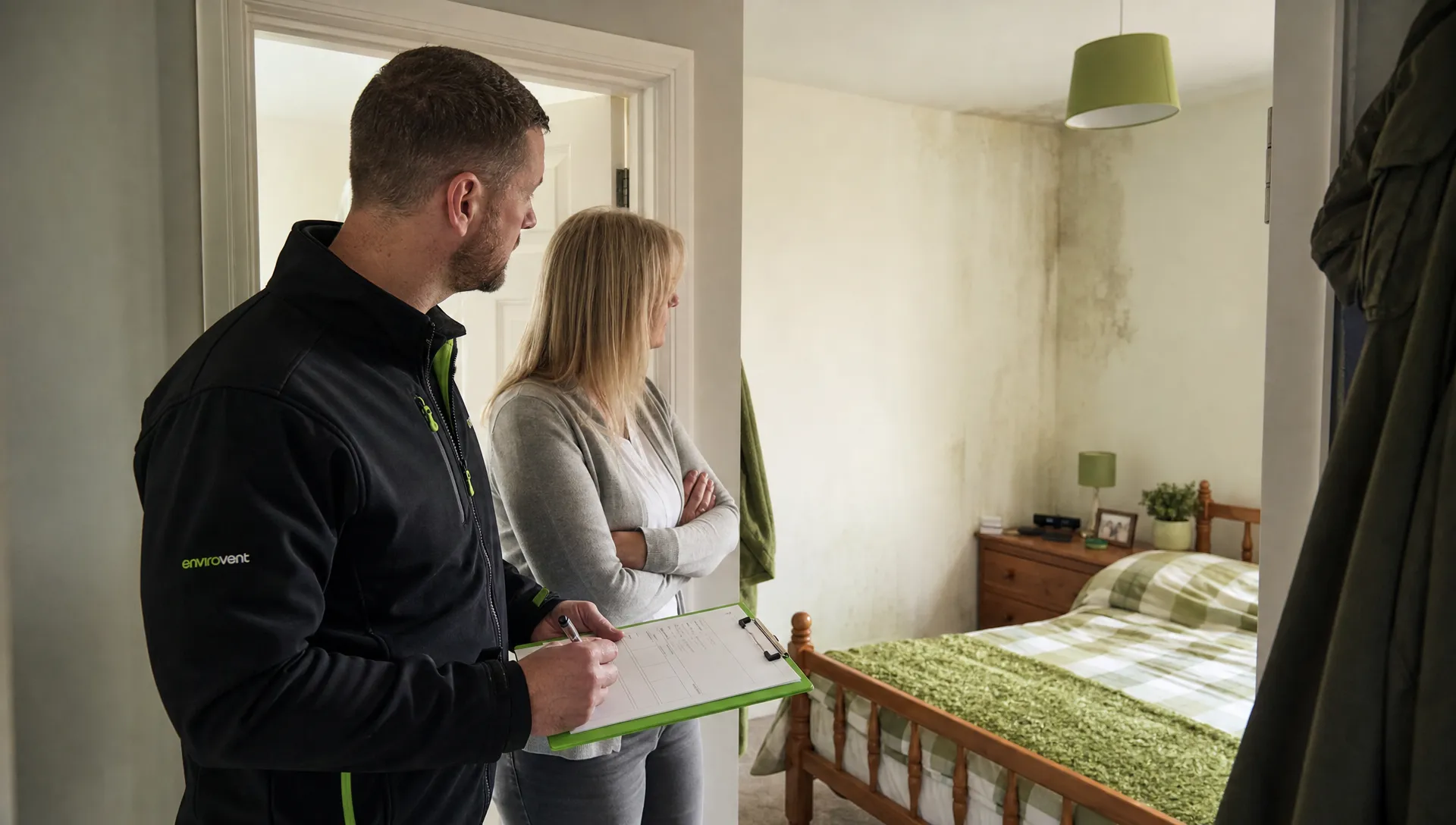
A damp patch on a bedroom wall can feel worrying, especially if it seems to appear overnight. The good news is that the cause is often fairly traceable once you know what to look for. It might be cond
A damp patch on a bedroom wall can feel worrying, especially if it seems to appear overnight. The good news is that the cause is often fairly traceable once you know what to look for. It might be condensation, rainwater getting in, a hidden plumbing leak, a problem around a window, or less commonly, damp rising from below in a ground-floor bedroom.
The important thing is not to cover it up too soon. Paint, stain blocker and fresh wallpaper may hide the mark for a while, but they will not fix the source of the moisture. A calm, methodical check will help you work out whether you need a plumber, builder, ventilation specialist, plasterer, decorator or electrician.
First, decide whether it is urgent
A damp patch is not always an emergency, but some signs need quicker action. If the patch is wet to the touch, spreading, dripping, bubbling plaster, or close to sockets or light switches, treat it as more urgent.
Move furniture, bedding and curtains away from the wall so air can circulate and to reduce the risk of mould spreading onto fabrics. If water is near electrical fittings, do not touch the fitting, do not plug anything in nearby, and call an electrician or the relevant emergency trade. If there is active water coming through, a plumber is usually the first call unless it is clearly rainwater from the roof or external wall.
For a damp patch that is dry, small and not growing, you can take a little time to observe the pattern. Mark the edge lightly with pencil, take photos, and check it again after rain, after using a shower or bath, and after the heating has been on. That timing often gives away the cause.
What a damp patch on a bedroom wall can mean
The position, shape and timing of the patch matter. A patch in the middle of an internal wall is a different clue from one under a window, on an outside wall, or near the ceiling.
| What you can see | Likely cause | Trade most likely to help | How quickly to act |
|---|---|---|---|
| Patch grows after rain | Penetrating damp from roof, guttering, render, brickwork or window seals | Builder, roofer or window specialist | Promptly, especially if it is spreading |
| Patch appears on an internal wall | Hidden pipe leak, radiator pipe leak, bathroom leak on the other side | Plumber or heating engineer | Quickly if wet or growing |
| Dark marks or mould on a cold outside wall | Condensation, poor ventilation, cold bridging or furniture too close to the wall | Ventilation and AC engineer, builder, decorator after treatment | Soon, but usually not a same-day emergency |
| Damp below or around a window | Failed sealant, cracked sill, blocked drainage channel, leaking frame or external pointing | Builder, window fitter or decorator after repair | Promptly after rain-related staining |
| Patch near ceiling line or chimney breast | Roof leak, damaged flashing, gutter overflow, chimney damp or salts | Builder, roofer, chimney specialist, plasterer after repair | Promptly, especially after rain |
| Low-level damp on a ground-floor bedroom wall | Rising damp, defective damp proof course, external ground level too high, plumbing leak under floor | Damp specialist, builder or plumber | Needs proper investigation |
Condensation is common in bedrooms because people breathe out moisture overnight, windows are often closed, and wardrobes or beds can trap cold air against external walls. However, a single well-defined damp patch should not automatically be blamed on condensation. If it is localised, growing, or feels wet, look for a water source first.
Government guidance treats damp and mould as more than a cosmetic issue, particularly where people are vulnerable or exposure is prolonged. The UK government’s guidance on damp and mould health risks is aimed at rented homes, but the same practical message applies to owner-occupied homes too: find the source and deal with it properly.
Quick checks you can do before calling someone
You do not need trade knowledge to gather useful clues. A tradesperson will often diagnose the problem faster if you can explain when the patch appeared, whether it changes, and what is on the other side of the wall.
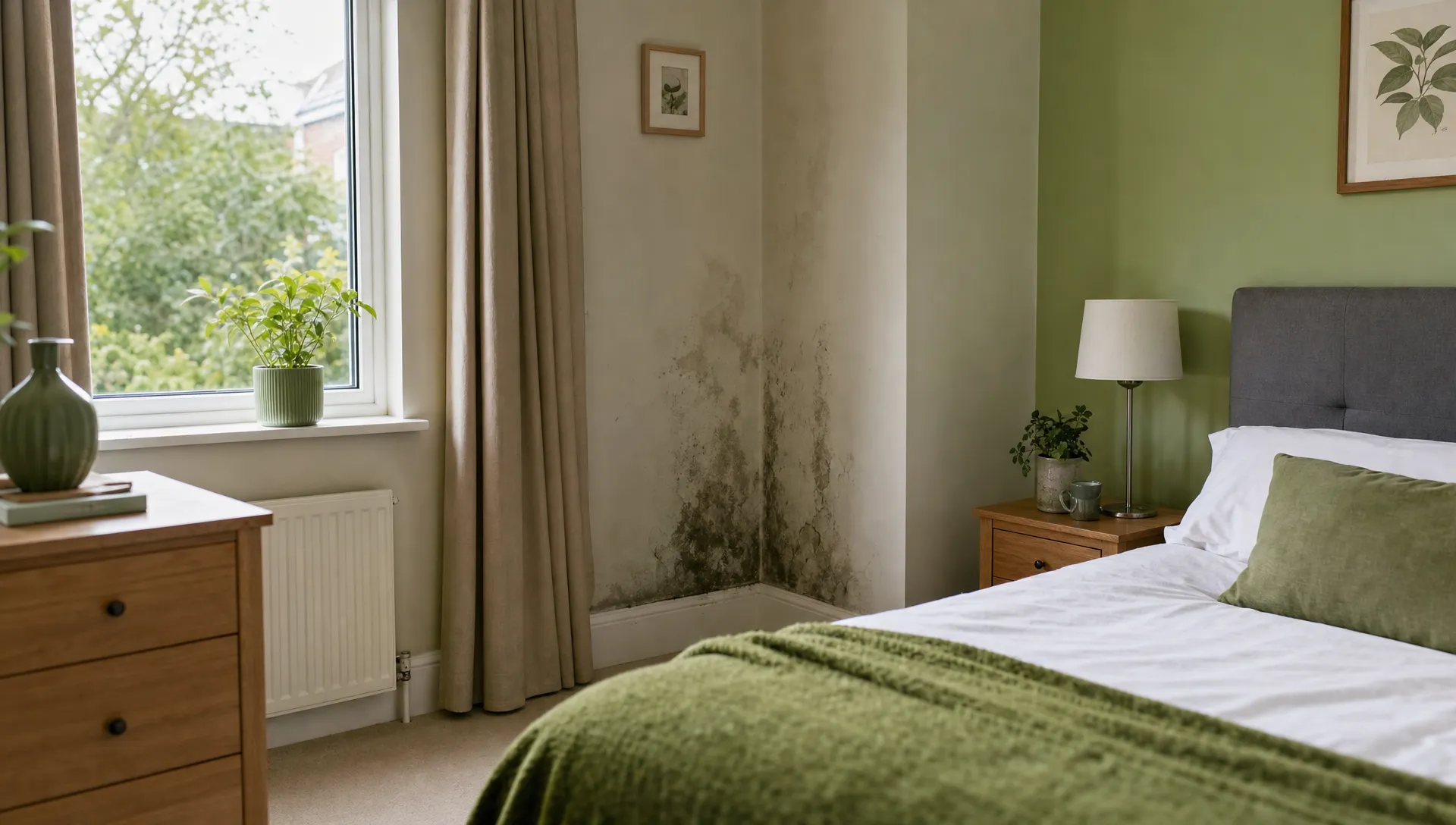
Check the room side first. Is the damp patch behind furniture, near a cold corner, or close to a window? Is there mould, flaking paint, wallpaper lifting, or a tide mark? Condensation often leaves black mould or speckled staining, while leaks may create a darker, more sharply edged patch with bubbling paint or soft plaster.
Then think about what is behind or above the wall. If there is an en-suite, bathroom, radiator, airing cupboard, water tank, or pipework nearby, a plumber or heating engineer may be the right first call. If the patch is on an external wall, under a window, or high up near the ceiling, rainwater may be getting in from outside.
It is also worth looking outside from ground level if you can do so safely. You are not trying to climb ladders or carry out repairs yourself. Just look for obvious clues such as overflowing gutters, missing roof tiles, cracked render, damaged brickwork, blocked air bricks, or a window sill that looks cracked or loose.
Which tradesperson should you call?
If the patch is wet, spreading, or on an internal wall near bathrooms, radiators or pipe routes, start with a plumber. A hidden leak can continue damaging plaster, timber and flooring even if the surface mark looks small. If you are choosing someone for the first time, HaMuch’s guide on how to find a reliable plumber gives a useful checklist of reviews, insurance, experience and pricing questions.
If the damp follows rain, especially on an outside wall, near a chimney, around a window or close to the ceiling, a builder or roofing contractor is usually more appropriate. They can investigate external defects such as failed pointing, blocked gutters, cracked render, slipped tiles, faulty flashing or gaps around frames. You can compare builder rates on HaMuch to get a clearer idea of local labour costs before you book.
If the patch comes with mould on cold walls, heavy window condensation, stale air or recurring damp behind furniture, ventilation may be part of the problem. A ventilation and AC engineer can advise on extract fans, airflow and moisture control, while a builder may be needed if cold bridging or insulation defects are involved.
If the damp has affected sockets, switches or light fittings, add an electrician to the list. Water and electricity are not worth guessing about. The electrician may not fix the damp source, but they can make the affected electrical area safe and advise whether fittings need replacing.
For homeowners and landlords in bigger cities, availability and labour rates can vary noticeably. If a plumbing leak looks likely, compare plumber rates in London, plumber rates in Birmingham or plumber rates in Manchester before agreeing to work. HaMuch shows real, comparable local pricing rather than leaving you to guess what a fair call-out or day rate should look like.
What affects the cost of fixing a damp patch?
The cost depends on the cause, not just the size of the stain. A small patch from condensation may need changes to ventilation, heating habits and redecoration. A similar-looking patch from a hidden pipe leak may involve leak detection, pipe repair, drying time, plaster repair and redecorating.
The main cost factors are usually the trade needed, access, urgency, damage already caused, and how many visits are required. A plumber may be able to stop a straightforward leak in one visit, while rainwater ingress through brickwork or a roofline may need inspection, external repair, drying time and later internal making good.
| Cost factor | Why it matters |
|---|---|
| Source of moisture | Condensation, plumbing leaks and rainwater ingress need different trades and materials |
| Access | Pipes under floors, behind fitted wardrobes or inside walls take longer to reach |
| Urgency | Same-day or out-of-hours visits usually cost more than booked-in work |
| Drying and repair time | Plaster and timber may need time to dry before decorating |
| Location | Labour rates differ between areas, especially in large cities and commuter towns |
| Making good | Plastering, stain blocking and decorating may be separate from the original repair |
This is where comparing quotes matters. A vague national average will not tell you much if your job needs a plumber in one area, a builder in another, or a ventilation specialist in a third. HaMuch is built around transparent, comparable pricing by trade and location, so you can check local rates before you decide who to contact.
What not to do
It is tempting to dry the patch, paint over it and hope for the best. That can work only if you have dealt with the moisture source first. Otherwise, the patch is likely to return, often bigger than before.
Avoid these common mistakes:
- Do not seal or paint over a damp patch until the source has been found and the wall has dried.
- Do not push furniture back tightly against a cold external wall if mould or condensation is present.
- Do not ignore a patch that grows after rain, as the external defect may worsen over time.
- Do not assume every damp patch is rising damp, especially in an upstairs bedroom.
- Do not disturb mould heavily without protection, especially if anyone in the home has asthma, allergies or a weakened immune system.
If mould is present, clean small areas carefully using appropriate mould cleaner and ventilation, but treat cleaning as a temporary step. If the same patch returns, moisture is still entering or condensing there.
When the wall needs plastering or decorating
Once the cause is fixed, the wall may still look stained. Plaster can hold moisture for some time, and stain marks can bleed through ordinary emulsion. In many cases, the repair sequence is source first, drying time second, then plastering or decorating.
A plasterer may be needed if the wall surface has blown, crumbled, bubbled or become soft. A painter and decorator can then apply the right stain-blocking preparation and finish. If you decorate too early, trapped moisture can push fresh paint off the wall or cause the stain to reappear.
For landlords, it is worth keeping a simple record: dates, photos, tenant reports, contractor visits and repair notes. This helps show that you responded properly and also gives future tradespeople a useful history if the issue comes back.
How to explain the problem when requesting quotes
You will get more useful responses if your job description is specific. Include the room, wall position, size of the patch, whether it is wet or dry, when it appeared, and whether it changes after rain, heating or bathroom use.
For example, instead of saying “damp in bedroom”, try: “Damp patch about 40 cm wide on external bedroom wall under window. Appeared after heavy rain and paint is bubbling. Looking for investigation and repair.”
Or, for a possible leak: “Damp patch on internal bedroom wall next to en-suite. Feels wet and has grown over two days. Need plumber to investigate possible pipe or bathroom leak.”
Clear details help the right trade respond and reduce the chance of paying for an unsuitable call-out.
Frequently asked questions
Is a damp patch on a bedroom wall always serious? Not always. It may be condensation, especially on a cold external wall behind furniture. But if it is wet, spreading, localised, or appears after rain or bathroom use, it should be investigated rather than covered over.
Who should I call first for a damp patch in a bedroom? Call a plumber first if the wall is internal, wet, close to a bathroom, near a radiator, or the patch is growing quickly. Call a builder or roofing contractor if it appears after rain or is on an external wall, near a chimney, window or ceiling line.
Can I paint over a damp patch once it looks dry? Only after the moisture source has been fixed and the wall has properly dried. If you paint too soon, the stain can return and fresh paint may blister or flake.
Why does the damp patch get worse in winter? Bedrooms often have more condensation in winter because walls are colder, windows stay shut, and moisture from breathing, drying clothes or showers remains indoors for longer. Poor ventilation and furniture against outside walls can make this worse.
Could a damp patch be caused by a leak even if there is no dripping water? Yes. Small leaks inside walls, under floors or near bathrooms can create damp staining without obvious dripping. A plumber can investigate likely pipe routes and nearby fittings.
Do landlords need to deal with damp patches quickly? Yes. Landlords should investigate damp and mould reports promptly, identify the cause and arrange appropriate repairs. Keeping photos, dates and contractor records is sensible for rental properties.
Get the damp patch checked by the right local trade
If the damp patch is active, wet, spreading or close to electrics, do not wait for it to worsen. Post the job on HaMuch and compare local tradespeople with transparent pricing, customer reviews and no obligation to book.
Whether you need a plumber for a hidden leak, a builder for rainwater ingress, a ventilation specialist for recurring condensation, or a plasterer and decorator after the repair, HaMuch helps you compare real local prices before you choose who to call.