Strange smells from the kitchen sink are unpleasant, but they are also useful clues. In many UK homes, the cause is something fairly ordinary, such as food buildup in the waste pipe, a dry Ubend, a di
Strange smells from the kitchen sink are unpleasant, but they are also useful clues. In many UK homes, the cause is something fairly ordinary, such as food build-up in the waste pipe, a dry U-bend, a dishwasher connection issue or a small leak under the cupboard.
The right next step depends on what the smell is like, when it appears and whether the sink is draining normally. This guide walks you through the common causes, what you can safely check yourself and when a plumber or drainage specialist is the right person to call.
First, make sure it is not a gas smell
Most sink smells come from the drain, not the gas supply. Even so, a rotten egg type smell can sometimes be confused with the smell added to mains gas, especially in a kitchen where there may be a gas hob, boiler or pipework nearby.
If the smell seems to be coming from the room rather than the plughole, or you suspect gas for any reason, do not investigate the sink first. Follow Gas Safe Register emergency advice, call the National Gas Emergency Service on 0800 111 999, open doors and windows, avoid flames and do not turn electrical switches on or off. Any repair to a gas appliance or gas pipe must be handled by a Gas Safe registered engineer.
If you are confident the smell is only from the sink drain, the checks below can help you narrow it down.
What different kitchen sink smells usually mean
A smell from kitchen sink drains can have several causes. This table gives you a quick way to match the smell to the most likely problem and the trade that usually deals with it.
| What you notice | Likely cause | Who usually handles it |
|---|---|---|
| Rotten egg or sewer-like smell from the plughole | Dry trap, faulty trap, blocked waste pipe or drain gases escaping | Plumber, or drainage specialist if the blockage is further along |
| Sour, stale food or greasy smell | Food residue, fat and biofilm inside the waste pipe or trap | Plumber if cleaning does not clear it |
| Musty smell in the cupboard below the sink | Small leak, damp unit base, mould or trapped moisture | Plumber first, then cleaner or carpenter if damage remains |
| Smell appears when the dishwasher or washing machine runs | Appliance waste hose or shared waste connection issue | Plumber for the waste connection, appliance engineer if the machine itself smells |
| Smell is strongest outside near a gully or manhole | External drain issue, blocked gully or backed-up waste | Drainage specialist or plumber |
For most kitchen sink smells, a plumber is the sensible first call. They can check the waste trap, pipework, appliance connections and signs of a partial blockage without you having to dismantle anything.
Safe checks you can do now
If there is no suspected gas leak, no sewage backing up and no active leak, there are a few simple checks you can try before booking a tradesperson.
- Run cold water, then hot water, for a minute or two to refill the trap and move loose residue.
- Remove obvious food debris from the plughole, strainer and around the sink, then clean those visible surfaces.
- Pour washing-up liquid into the plughole and flush with hot tap water to help shift light grease.
- Check whether the smell is worse after using the dishwasher, washing machine or sink waste disposal, if you have one.
- Look inside the under-sink cupboard from a normal standing position and check for damp patches, swelling, black spots, staining or a wet smell.
- Avoid mixing chemicals, especially bleach with vinegar, limescale remover or drain cleaner.
Do not remove the U-bend or trap unless you are confident, have a container ready and know how to refit it correctly. A badly refitted trap can leak or let drain smells back in, which makes the problem worse.
The most common causes of a smelly kitchen sink
1. The U-bend has dried out
The U-bend, also called a trap, is the curved section of waste pipe under the sink. It holds a small amount of water that acts as a seal between your kitchen and the drain system. If that water evaporates, drain smells can travel back up through the plughole.
This is common in sinks that have not been used for a while, such as in a vacant rental property, a holiday let or a utility area. Running water for a couple of minutes may be enough to refill the trap. If the smell disappears and stays away, the issue was probably a dry trap.
If it comes back quickly, the trap may be leaking, fitted badly or being emptied by a pressure problem elsewhere in the waste system. That is when a plumber should take a look.
2. Food, fat and grease have built up in the waste pipe
Kitchen sinks deal with cooking water, crumbs, oil, sauces and tiny food particles. Over time, grease can cling to the inside of the waste pipe and trap other debris. Even if the sink still drains, the residue can smell sour or stale.
You may notice this more after cooking, washing pans or running hot water, because warmth can release the smell. A sink strainer, wiping pans before washing them and putting fats in the bin rather than down the sink can reduce the chance of it returning.
If the smell keeps coming back despite normal cleaning, a plumber can remove and clean the trap, check for a partial blockage and make sure the waste run is set up properly.
3. There is a partial blockage
A partial blockage is not always dramatic. The sink might drain, but more slowly than usual. You might hear gurgling, see water briefly rise in the plughole or notice the smell after another appliance empties into the same waste pipe.
This is often caused by a mix of grease, food waste, coffee grounds, rice, pasta, soap residue and general debris. Caustic drain cleaners can sometimes move a small blockage, but they can also leave chemicals sitting in the pipe if the blockage remains. That can make the job more unpleasant and less safe for whoever comes to fix it.
If there is gurgling, slow drainage or repeated smell, it is usually better to call a plumber rather than keep adding stronger chemicals.
4. The dishwasher or washing machine waste is connected incorrectly
Many kitchens have a dishwasher or washing machine waste hose connected under the sink. If that hose is not positioned correctly, waste water can sit in the hose or smells can travel back through the connection.
A clue is timing. If the sink smells worse just after the dishwasher finishes, or the smell appears when the washing machine drains, the appliance waste connection could be involved. A plumber can check the under-sink waste arrangement. If the appliance drum itself smells even when the sink is fine, an appliance engineer may be more appropriate.
5. The trap, waste pipe or venting was fitted badly
If the smell started after a new sink, worktop, kitchen refit or appliance installation, the installation is worth checking. Missing traps, poorly sealed joints, awkward pipe runs and incorrect waste connections can all allow odours to escape.
This is not always obvious from the outside. The sink may look tidy, but the waste setup inside the cupboard may not be doing its job. A plumber can identify whether the waste pipework needs adjusting rather than simply cleaning.
When to call a plumber, drainage specialist or another trade
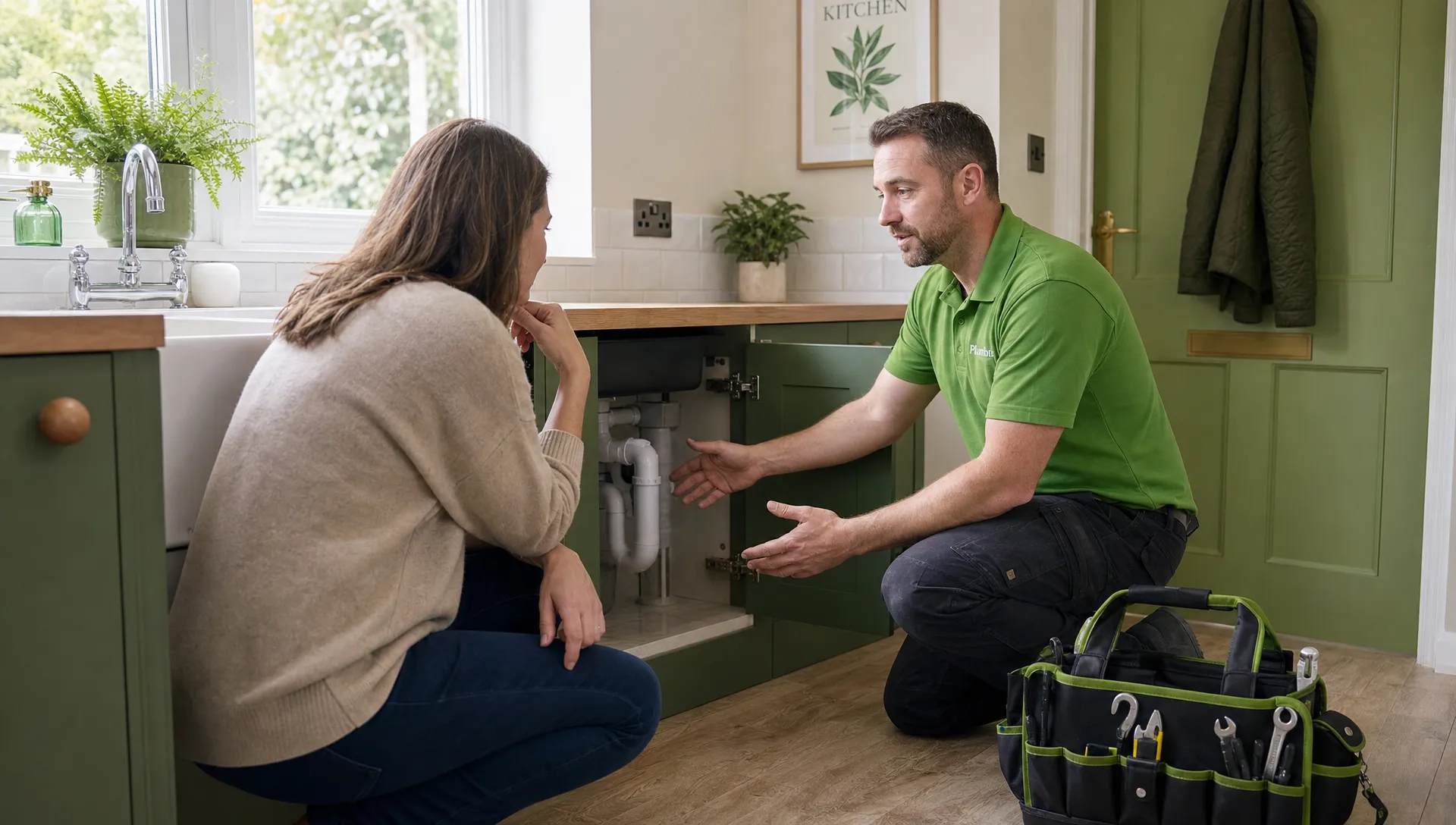
A plumber is the right first call if the smell is coming from the plughole, the under-sink cupboard, the dishwasher waste connection or a suspected trap issue. They can deal with most kitchen sink waste problems and tell you if a drainage specialist is needed.
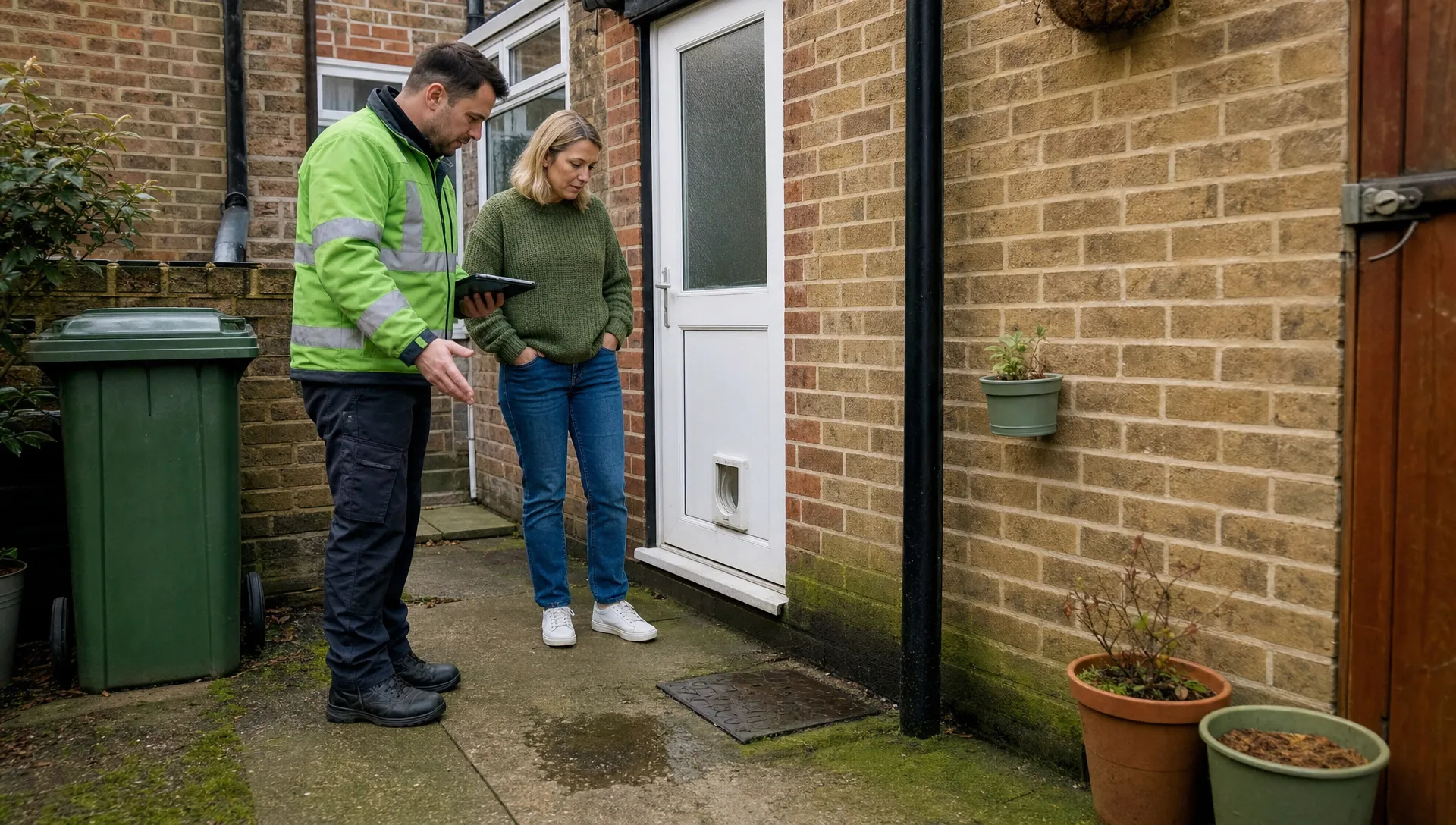
A drainage specialist is more likely to be needed if there are outdoor drain smells, sewage-like smells from several drains, a blocked gully, water backing up outside or repeated blockages that return after the sink waste has been cleared.
If a small leak has damaged the kitchen unit, start with a plumber to stop the moisture. After that, you may need a cleaner for mouldy surfaces or a carpenter and joiner if the cupboard base or surrounding units need repair.
If you are choosing someone for the first time, HaMuch has a practical guide on how to find a reliable plumber, including what to check before you agree to the work.
How much does it cost to fix a smelly kitchen sink?
The cost depends on what is causing the smell. A simple trap clean or refit is usually a smaller job than tracing a recurring blockage, correcting a poor installation or investigating an external drain issue. Location matters too, with rates varying between London, Birmingham, Manchester and surrounding areas.
This is where HaMuch is useful. Instead of giving you a vague national guess, HaMuch lets you check current plumber rates by location, compare local tradespeople, read genuine customer reviews and decide who to contact. It is free for homeowners and landlords to request quotes, and there is no obligation to book.
For landlords and property managers, getting a recurring sink smell checked promptly is sensible. Tenants may describe the issue differently, such as a bad drain smell, damp smell in the cupboard or rotten egg smell in the kitchen. Asking when it happens and whether the sink drains slowly can help you brief the plumber clearly.
When the smell needs urgent attention
Most kitchen sink smells are not emergencies, but some signs need faster action.
Call the National Gas Emergency Service immediately on 0800 111 999 if there is any chance the smell is gas. Do not use online quote forms or general troubleshooting for a suspected gas leak.
Arrange a same-day plumber or drainage specialist if sewage is backing up into the sink, several drains smell at once, water is escaping into the cupboard, the floor is wet or the smell is strong and getting worse. If water is near electrics, keep away from the area and get professional help.
How to prevent the smell coming back
Once the sink is sorted, prevention is mostly about keeping food, fat and stagnant water out of the waste system.
Use a sink strainer, scrape plates into the bin and wipe greasy pans with kitchen roll before washing them. Run plenty of water after rinsing food residue down the sink. If a sink is rarely used, run water through it every week or so to keep the trap topped up.
It is also worth paying attention after any kitchen work. If a smell starts soon after a new appliance, new sink or changed waste pipe, do not assume it is just normal settling in. A small installation issue can create a persistent smell until it is corrected.
Frequently Asked Questions
Why does my kitchen sink smell like rotten eggs? A rotten egg smell from the plughole is often caused by drain gases coming through a dry or faulty trap, or by a build-up of food and grease in the waste pipe. If the smell could be gas rather than drain odour, call the National Gas Emergency Service on 0800 111 999 straight away.
Can I fix a smell from kitchen sink drains myself? You may be able to clear a mild smell by cleaning visible debris, flushing the sink with hot water and washing-up liquid, and making sure the trap has water in it. If the smell returns, the sink drains slowly or there is damp under the cupboard, call a plumber.
Should I pour bleach down a smelly kitchen sink? Bleach may mask smells, but it often does not remove grease build-up or a blockage. Never mix bleach with vinegar, drain cleaner or other chemicals. If you have already used chemicals and need a plumber, tell them before they start work.
Who should I call for a sewage smell from the kitchen sink? Start with a plumber if the smell seems to come from the sink, trap or under-sink waste. If several drains smell, an outside drain is blocked or waste water is backing up, a drainage specialist may be needed.
Why does the smell come back after I clean the sink? Recurring smells usually mean the problem is deeper than the visible plughole. Common causes include grease inside the waste pipe, an incorrectly fitted trap, a dishwasher waste issue or a partial blockage further along the drain.
Get the smell sorted with the right local tradesperson
If your kitchen sink smell keeps returning, the safest next step is to get the waste pipework, trap and appliance connections checked properly. Post your job on HaMuch to compare local plumbers, see transparent pricing information and request quotes before deciding who to hire.
If you suspect gas, do not post a job first. Call 0800 111 999 immediately and follow the emergency advice.