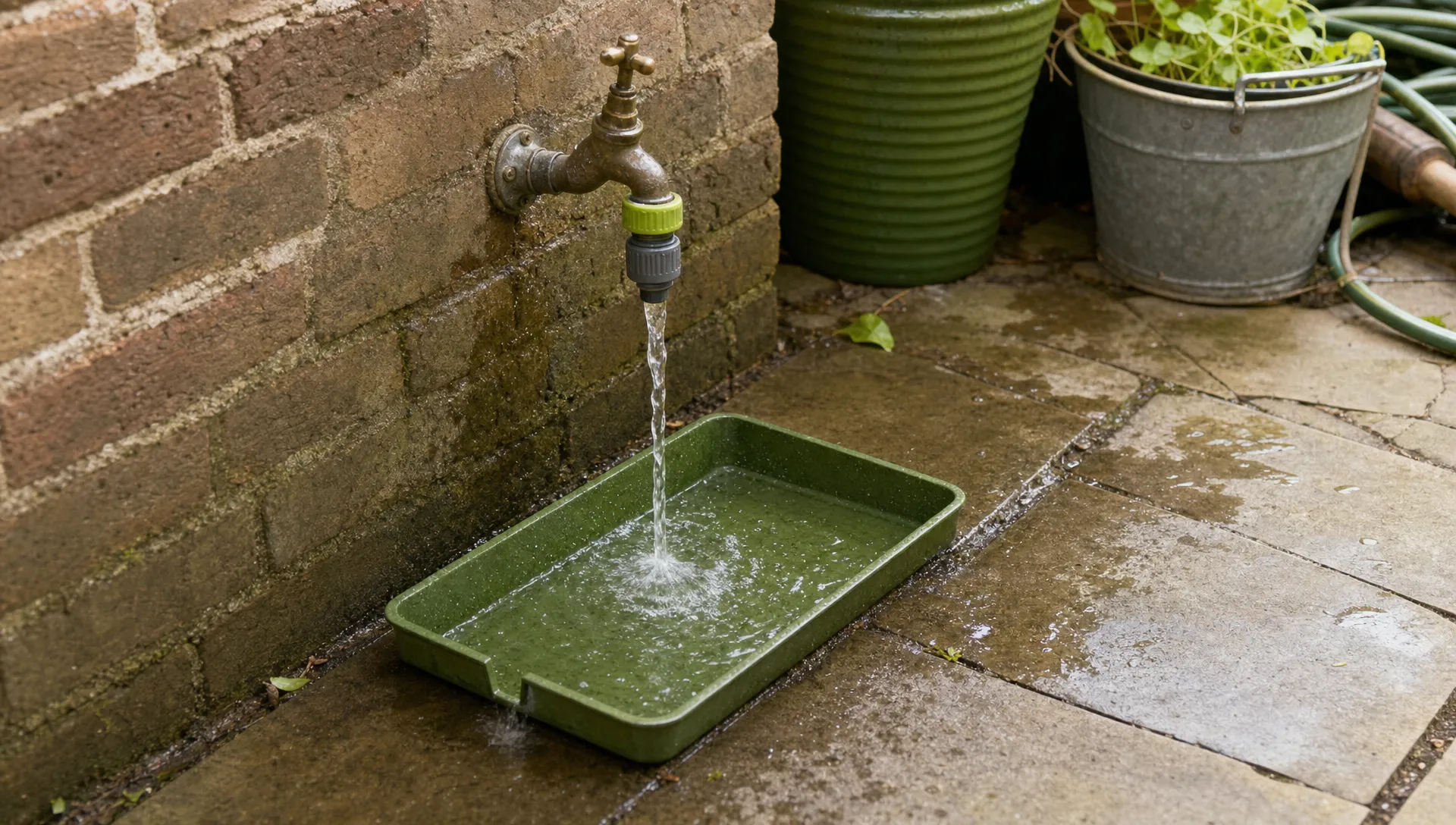
An outdoor tap that won’t turn off properly is usually a straightforward plumbing problem, but it still needs dealing with promptly. A slow drip can waste more water than you expect, and a steady tric
An outdoor tap that won't turn off properly is usually a straightforward plumbing problem, but it still needs dealing with promptly. A slow drip can waste more water than you expect, and a steady trickle can point to a worn internal part, frost damage or a fault with the tap body itself.
The good news is that you do not need to diagnose every part before taking action. Your first job is to stop or reduce the water safely. After that, a plumber can usually confirm whether the tap needs a new washer, a new head or a full replacement.
If water is running now, do this first
If the tap is only dripping, you may have time to arrange a normal plumbing visit. If it is running continuously, spraying or soaking the wall, treat it as urgent and isolate the supply if you can.
- Turn the tap clockwise gently: Do not force it with pliers or a wrench. If the internal spindle is damaged, forcing the handle can make the problem worse.
- Look for an indoor isolation valve: Outdoor taps are often fed from a pipe inside the kitchen, utility room, downstairs toilet, garage or under a sink. The isolation valve may look like a small slotted screw or lever on the pipe.
- Use the main stopcock if needed: If the tap is still running and you cannot find a separate valve, turn off the main stopcock for the property. This is often under the kitchen sink, in a cupboard or near where the water pipe enters the home.
- Keep water away from electrics: If water is reaching an outdoor socket, lighting, pond equipment or extension lead, do not touch wet electrical fittings. Turn off power only if you can do so safely from a dry location.
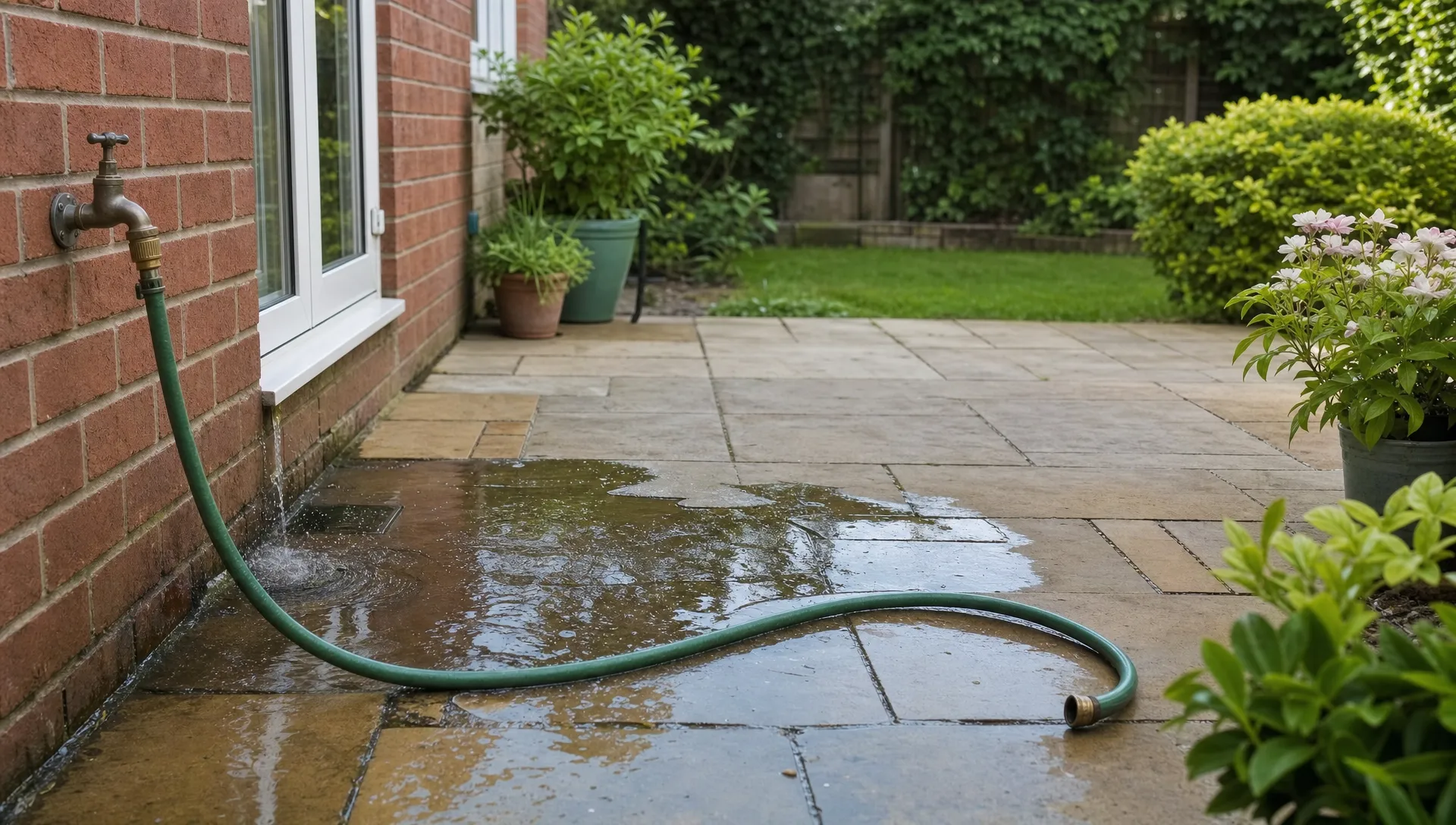
- Direct water away from the wall if safe: A hose can sometimes be used to guide water towards a drain while you wait, but do not leave it running into soil against the house or near air bricks.
If you cannot isolate the water, call a plumber for urgent help. This is especially important if water is coming from behind the tap, from the wall or from a pipe inside the property.
Why your outdoor tap won't turn off
Most outside taps are simple, exposed fittings. They deal with weather, wear and limescale, so the cause is often mechanical rather than mysterious. The way the tap behaves gives useful clues.
| What you can see | Likely cause | Who usually fixes it | How quickly to act |
|---|---|---|---|
| Slow drip from the spout after closing the tap | Worn washer, cartridge or valve seal | Plumber | Soon, before it worsens |
| Constant trickle even when fully turned off | Damaged internal valve, spindle or seat | Plumber | Same day if you cannot isolate it |
| Handle turns but does not tighten | Stripped handle, loose headgear or damaged spindle | Plumber | Same day if water is flowing |
| Water comes from around the tap body or wall | Frost damage, cracked fitting or failed joint | Plumber, possibly a builder later if wall damage occurs | Urgent |
| Tap only leaks when a hose is attached | Hose connector washer, tap thread issue or trapped pressure in the hose | Homeowner or plumber | Usually not urgent unless water continues without the hose |
| Tap is stuck after freezing weather | Frozen internal parts or frost damaged tap | Plumber if cracked or leaking | Urgent if water appears from the wall |
A drip from the spout is often a worn washer or valve seal. A tap that keeps running even when the handle feels fully closed may have a damaged internal seating, which means the part that should seal the flow no longer makes proper contact.
If the handle spins loosely, the handle or spindle may no longer be gripping properly. In that case, the tap might feel as though it is closing, but the internal valve is not actually moving enough to shut off the water.
Do not just overtighten it
It is tempting to keep turning harder when an outdoor tap will not shut off, but overtightening often causes more trouble. Older outdoor taps can have worn threads, brittle handles and corroded internal parts. Too much force can snap the handle, damage the spindle or loosen the fitting where it passes through the wall.
A temporary cap on the tap is not a proper fix either. It may stop the visible drip for a short time, but it can leave the tap under pressure and push the leak elsewhere, including back towards the wall. If the internal valve is failing, the safer answer is to isolate the supply and have the tap repaired or replaced.
Is it the tap, the hose or the wall connection?
Before calling someone out, check whether the problem changes when the hose is disconnected. Only do this if the water is not spraying heavily and you can remove the hose safely.
If the tap stops leaking once the hose is removed, the issue may be the hose connector, the rubber washer inside the connector or a spray gun holding pressure. These are low-cost parts and may be easy to replace.
If the tap still drips or runs with no hose attached, the fault is more likely inside the tap itself. If water appears from behind the tap plate, from brickwork or from the pipe inside the home, stop using the tap and call a plumber. That can mean the fitting has loosened, a joint has failed or frost has cracked part of the installation.
Outdoor taps should also have suitable backflow protection, which helps stop garden water being drawn back towards the drinking water supply. If your tap is old or being replaced, ask the plumber to check this at the same time. WaterSafe is a useful UK source for finding approved plumbers and understanding why water fittings should be installed correctly.
Who should you call?
For an outdoor tap that won't turn off properly, the main trade to call is a plumber. They can isolate the supply, strip down the tap, replace washers or cartridges where suitable and fit a new outdoor tap if repair is not worth it.
There are a few situations where another trade may be involved later, but the plumber should usually come first:
- A plumber handles the tap, water feed, isolation valve, frost damage and replacement fitting.
- An electrician may be needed if water has reached outdoor electrics, sockets, garden lighting or electrical equipment.
- A builder or plasterer may be needed later if long-running water has damaged brickwork, render, plaster or the wall around the pipe.
- A gardener or drainage specialist is only likely to be relevant if the tap fault has caused waterlogging and you also have poor garden drainage.
If you are a landlord or property manager, an outdoor tap that will not shut off should be logged and dealt with quickly, particularly before cold weather or between tenancies. Tenants may not know where the internal isolation valve is, so it is worth asking them to send photos or a short description before you book the plumber.
Repair or replace?
A plumber will usually decide between repairing the existing tap and replacing it. With indoor taps, repair is often worth considering carefully because styles, finishes and access can vary. Outdoor taps are generally simpler, so replacement can be the most practical option when the tap is old, corroded, frost damaged or repeatedly leaking.
A repair may make sense when the tap body is sound and the problem is a basic washer or seal. Replacement may be better when the handle is loose, the spindle is worn, the threads are damaged or the tap has split after freezing weather.
If you want a broader idea of what affects tap repair pricing, HaMuch has a separate guide on how much it costs to fix a leaking tap. For an outdoor tap specifically, the final price will depend on access, whether there is an isolation valve, whether parts are needed and whether the job is booked as an urgent call-out.
What affects the cost of fixing an outdoor tap?
The biggest cost factor is usually not the tap itself, but the time and difficulty involved. A plumber who can isolate the outdoor tap easily and replace a washer during a normal appointment will usually have a simpler job than one who has to trace pipework, shut off the whole property or deal with a seized fitting.
Pricing can also vary by location. Labour rates and availability are not always the same in London, Birmingham, Manchester and nearby towns, especially for same-day visits. Rather than relying on vague national averages, you can compare current plumber rates on HaMuch and see local pricing information before you request quotes.
Common cost factors include:
- Whether the tap is dripping slowly or actively running
- Whether the plumber can isolate just the outdoor tap
- Whether the whole tap needs replacing
- Whether the pipe through the wall is damaged
- Whether the job is during normal hours or an emergency call-out
- How easy it is to access the internal pipework
HaMuch is built to make this comparison easier. You can check real, comparable pricing data by trade and location, then look at local plumbers with genuine customer reviews before deciding who to contact.
When it becomes urgent
A dripping outdoor tap is inconvenient. A running tap that cannot be isolated is more urgent, especially if water is going into the wall, pooling near the house or reaching electrical fittings.
Call a plumber urgently if:
- Water keeps flowing and you cannot turn it off at the tap
- You cannot find or operate the isolation valve or stopcock
- Water is coming from the wall rather than just the spout
- The tap has frozen and then started leaking after thawing
- The leak is affecting a neighbouring property, shared entrance or rented home
If you have turned off the main stopcock, remember that your home may have no running water until the fault is fixed. Let the plumber know this when you request quotes, as it changes the urgency of the job.
How to reduce the chance of it happening again
Once the fault is fixed, a few simple habits can help protect the new or repaired tap. Turn off and disconnect hoses in cold weather, especially if the hose has a spray gun or connector that can trap water. If there is an indoor isolation valve for the outdoor tap, use it before winter and open the outside tap to let any remaining water drain away.
Avoid leaving hose attachments permanently under pressure. It is also worth asking the plumber to show you where the isolation valve is, or to fit one if there is not already a convenient way to shut off the outdoor tap separately from the rest of the home.
Frequently Asked Questions
Why won't my outdoor tap turn off fully? The most common reasons are a worn washer, damaged seal, loose handle, damaged spindle or worn valve seat inside the tap. Frost damage can also crack or distort parts of an outside tap.
Is an outdoor tap that won't turn off an emergency? A slow drip is usually not an emergency, but a tap that keeps running, sprays water or leaks from the wall should be treated as urgent. Isolate the water if you can and call a plumber.
Can I fix an outdoor tap myself? You may be able to replace a hose washer or connector yourself. If the tap itself is faulty, only attempt work if you can safely isolate the water and know what you are doing. Otherwise, call a plumber.
Should I turn off the main stopcock? Yes, if the outdoor tap is running and you cannot find a separate isolation valve. Turning off the main stopcock can stop the flow until a plumber arrives, but it will usually cut off water to the property.
Should the outdoor tap be repaired or replaced? A newer tap with a worn washer may be repairable. An old, seized, frost damaged or repeatedly leaking tap is often better replaced, especially if the labour time to repair it would be similar.
Who fixes an outdoor tap that won't turn off? A plumber is the right trade for the tap, pipework and isolation valve. If water has reached electrics or caused building damage, you may also need an electrician or builder after the water leak is under control.
Need a plumber for an outdoor tap that will not turn off?
If the tap is still running, isolate the water if you can and arrange help quickly. With HaMuch, you can post your plumbing job for free, compare local plumbers, check transparent pricing information and read genuine customer reviews before you decide who to hire.
For urgent leaks, describe the problem clearly when you request quotes. Include whether the water is dripping or flowing, whether you have turned off the stopcock and whether water is coming from the wall. That helps local plumbers understand how quickly they need to attend.