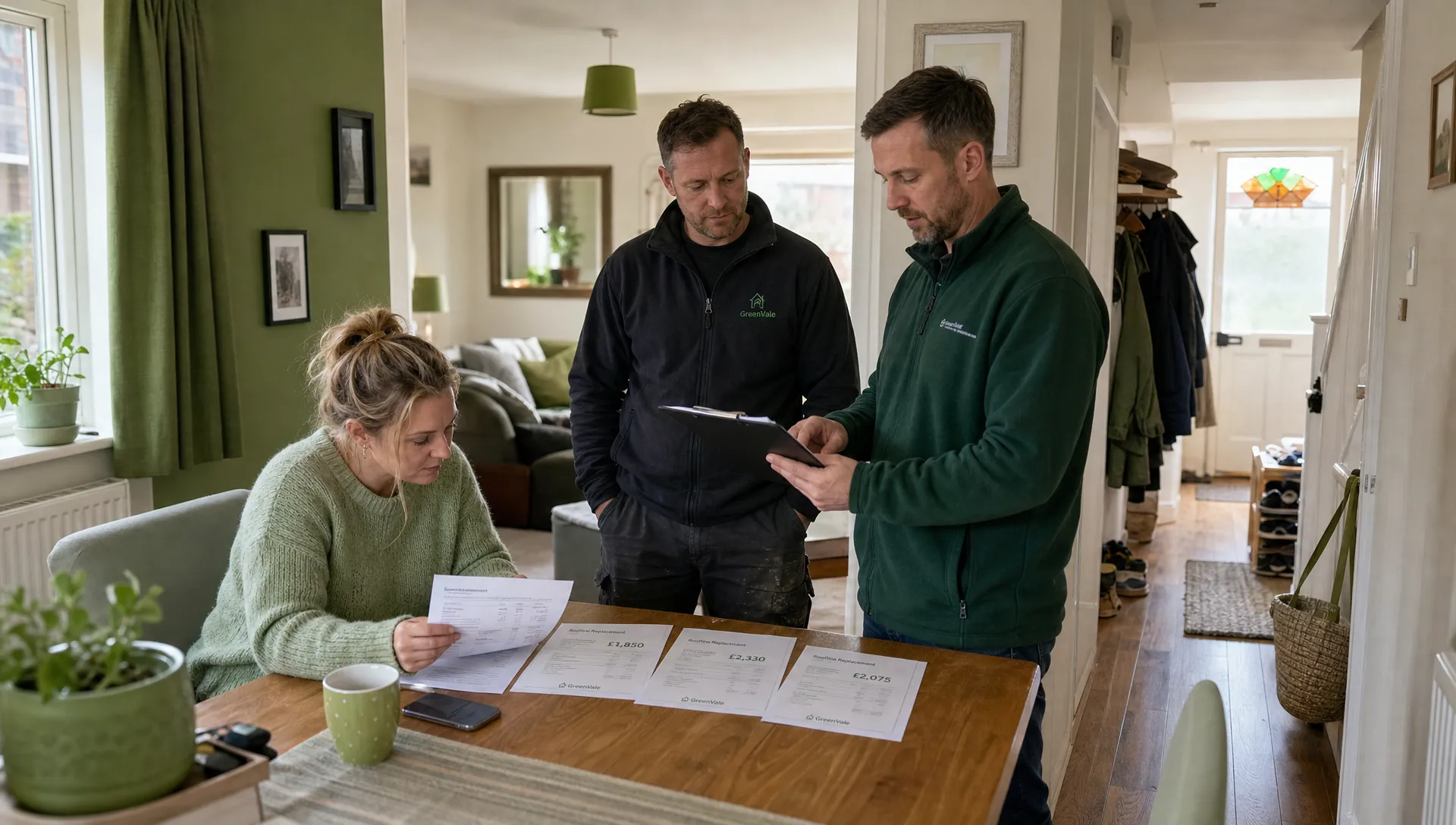
If you are wondering how to check if a tradesperson is qualified, the safest approach is simple: verify the person, the business and the specific work they are allowed to do before you agree to anythi
If you are wondering how to check if a tradesperson is qualified, the safest approach is simple: verify the person, the business and the specific work they are allowed to do before you agree to anything.
A tidy van, a confident manner and a few good reviews can be reassuring, but they are not proof of competence. In the UK, some trades and job types are legally regulated, while others rely more on training, trade body membership, experience, insurance and customer feedback.
That can feel confusing if you are a homeowner arranging a one-off repair, or a landlord responsible for keeping a rental property safe. This guide explains what to ask for, where to check it, and how to compare quotes without getting caught out by vague claims or unusually low prices.
What properly qualified really means
There is no single UK licence that covers every tradesperson. A qualified tradesperson may have formal training, apprenticeship experience, industry certificates, scheme membership, years of proven work, or a combination of these.
For the person hiring them, the key question is not whether they have a certificate somewhere. It is whether they are competent and authorised for your exact job.
In practice, you are checking three things:
- The tradesperson has suitable skills and experience for the work.
- They are registered with the correct official scheme where the law or Building Regulations require it.
- They carry appropriate insurance and are willing to provide written paperwork.
For example, a decorator does not need the same kind of registration as a gas engineer. A general plumber may be perfectly competent to replace taps, but that does not mean they are legally allowed to work on a gas boiler. A builder may be experienced with extensions, but certain structural, drainage or window work may still need Building Control sign-off.
Start with the trade and the job type
The quickest way to avoid confusion is to start with the work you need done. Some jobs carry a higher safety or compliance risk, so the checks are stricter.
| Trade or job type | What to check | Where to verify |
|---|---|---|
| Gas boiler, gas cooker or gas fire work | Gas Safe registration, photo ID card and the exact gas work categories listed on the card | Gas Safe Register |
| Domestic electrical work | Competent person scheme registration for notifiable work, plus evidence of suitable electrical qualifications and experience | Competent Person Register |
| Landlord electrical inspection or EICR | A competent and qualified inspector, suitable insurance and a proper Electrical Installation Condition Report | Scheme provider checks and written evidence from the electrician |
| Oil boiler or oil tank work | OFTEC registration for oil-fired heating work | OFTEC |
| Solid fuel stove installation | HETAS registration or Building Control approval | HETAS |
| Replacement windows and doors | FENSA, CERTASS or Building Control sign-off | FENSA or the installer’s scheme provider |
| General plumbing | No universal UK plumber licence, so check experience, insurance, reviews and optional trade membership | WaterSafe can help for approved plumbers |
| Locksmith work | No statutory locksmith licence in the UK, so check reviews, ID, insurance and optional trade membership | Master Locksmiths Association |
| Building, carpentry, plastering, tiling, decorating, gardening and cleaning | Relevant experience, references, photos of similar work, insurance and written terms | Customer reviews, references and any job-specific paperwork |
The important point is that a logo on a website is not enough. Always check the official register yourself, using the business name, registration number or postcode. If the work is safety-critical, ask the tradesperson to show their ID card when they arrive.
How to check a tradesperson’s qualifications step by step
Ask for their full business details
Before arranging a visit, ask for the tradesperson’s trading name, full name, business address, phone number and email address. If they say they are registered with a trade body or official scheme, ask for the registration number too.
A genuine professional should not be offended by this. Qualified tradespeople are used to being asked, especially for gas, electrical and landlord safety work.
Be cautious if someone only gives a mobile number, refuses to share a surname, or wants to keep everything informal. That does not automatically mean they are unqualified, but it makes your checks much harder.
Check the official register yourself
Do not rely on screenshots, old certificates or website badges alone. Go to the official register and search for the business or individual.
For gas work, check the Gas Safe Register and make sure the engineer is listed for the exact type of appliance. Gas Safe ID cards include categories of work, so a person registered for one type of gas work may not be covered for every gas job.
For electrical work, check whether the electrician or business is part of a recognised competent person scheme. In England and Wales, some domestic electrical work is notifiable under Building Regulations. A registered competent person can usually self-certify that work, which avoids you having to arrange Building Control approval separately.
For rented properties, landlords should also check that electrical inspections are carried out by someone competent to produce a valid EICR. If you are budgeting for this, HaMuch has a guide to how much an EICR electrical safety certificate costs, which explains typical cost factors and what affects the quote.
Match the person at the door to the paperwork
This is especially important for gas and electrical jobs. A company may be registered, but you still want to know who is actually doing the work.
Ask who will attend and whether they are covered under the business registration. When they arrive, check ID if the job is regulated. For Gas Safe work, the engineer should be able to show a current Gas Safe ID card. For electrical work, the person or business should be able to explain what certification you will receive once the work is complete.
If a subcontractor turns up and you have never been given their details, pause and ask for confirmation before they start.
Ask for insurance proof
Qualifications show competence. Insurance protects you if something goes wrong.
At a minimum, ask whether the tradesperson has public liability insurance. If they employ other people, employers’ liability insurance may also be relevant. For inspection and reporting work, such as certain surveys or safety reports, professional indemnity insurance can be useful too.
Ask for the insurance certificate and check that the business name, expiry date and level of cover look sensible for the job. You do not need to become an insurance expert, but you should be able to see that cover is current and not in someone else’s name.

Look for evidence of similar work
A tradesperson can be qualified and still be a poor fit for your job. A small repair, a full bathroom refit, a garden clearance and a rental safety inspection all need different experience.
Ask whether they have completed similar work recently. Photos, references and reviews are useful here. For larger projects, ask how they plan to handle access, waste, materials, timescales and any approvals.
For homeowners, this helps you understand whether the tradesperson is comfortable with the scale of the job. For landlords and property managers, it also helps you judge whether they can work around tenants, provide paperwork promptly and communicate clearly.
Get a proper written quote
A qualified tradesperson should be willing to put the basics in writing. A clear quote reduces misunderstandings and makes it easier to compare like for like.
A good written quote should include the scope of work, labour, materials, VAT if applicable, start date or expected timescale, payment terms, waste disposal, and which certificates or guarantees will be provided.
Avoid making a decision based only on a single total price. One quote may include certification, disposal and making good, while another may leave those out. If a quote is much cheaper than the others, ask what is included and what is not.
How qualifications affect price
A properly qualified and insured tradesperson will not always be the cheapest option. They have training, scheme fees, insurance, tools, travel time and admin costs to cover. That does not mean you should overpay, but it does mean the lowest quote is not automatically the best quote.
This is where transparent local pricing helps. HaMuch is built to show real, comparable pricing by trade and location, not vague guesswork. If you are booking electrical work in busy areas such as London, Birmingham or Manchester, checking local electrician rates on HaMuch gives you a better starting point before you request quotes.
The same principle applies to plumbing. If you are not sure what is normal for call-outs, hourly labour or day rates, the HaMuch guide to the average plumber hourly rate in the UK can help you sense-check a quote before you commit.
The aim is not to find the cheapest person at any cost. It is to find someone qualified, reliable and fairly priced for your area.
Extra checks for landlords and property managers
Landlords have additional duties because the property is being let to tenants. You need reliable work, but you also need paperwork that proves key safety checks have been done properly.
For gas appliances, use a Gas Safe registered engineer and keep the gas safety record. For electrical safety in England, private landlords must have electrical installations inspected and tested at least every five years by a qualified and competent person. The GOV.UK landlord guidance on electrical safety explains the current requirements in more detail.
Rules can differ across England, Scotland, Wales and Northern Ireland, so check the requirements for your property’s location. If you manage several properties, it is worth keeping a simple record of each tradesperson’s registration, insurance expiry date, certificates supplied and invoice history.
Red flags that should make you pause
Most tradespeople are honest and hard-working, but it is still worth knowing the warning signs. Be cautious if you notice any of the following:
- They refuse to provide a registration number for regulated work.
- They say certificates are not needed for gas, electrical or Building Regulations work without a clear explanation.
- The name on the register does not match the person or business you are dealing with.
- They pressure you to agree immediately or pay a large cash amount upfront.
- They only provide a verbal price for a job that clearly needs a written quote.
- They cannot explain what is included in the quote.
- They dismiss your questions about insurance, references or certification.
One red flag does not always mean someone is unsafe, but it does mean you should slow down. A trustworthy tradesperson will usually be happy to explain their credentials in plain English.
Are reviews enough to prove qualification?
Reviews are valuable, but they are not a substitute for qualification checks. A customer review can tell you whether someone turned up on time, communicated well and left the property tidy. It cannot prove they are legally registered for gas work or competent to inspect an electrical installation.
Use reviews as one part of the decision, alongside official registers, written quotes, insurance and evidence of similar work. On HaMuch, local tradesperson listings include genuine customer reviews and comparable pricing, so you can look at reputation and cost together rather than guessing.
Frequently Asked Questions
Can I check a tradesperson’s qualifications online? Yes. For regulated work, use the official register, such as Gas Safe for gas engineers or the Competent Person Register for certain domestic electrical work. For other trades, check trade body membership, reviews, references and insurance.
Does every tradesperson need a licence in the UK? No. The UK does not have one universal tradesperson licence. Gas work is strictly regulated, and some electrical and building-related jobs need specific registration or Building Control sign-off. Many other trades rely on training, experience, insurance and reputation.
Is a recommendation from a friend enough? A recommendation is useful, but it should not replace basic checks. Even if a friend had a good experience, you still need to confirm that the tradesperson is suitable for your exact job and properly registered where required.
What should landlords check before hiring a tradesperson? Landlords should check registration for regulated work, insurance, written quotes and whether the tradesperson can provide the certificates or reports needed for rental compliance. Keep copies of all paperwork with your property records.
Should I avoid the cheapest quote? Not automatically. A low quote may be fine if the scope is clear and the tradesperson is properly qualified. Be careful if it is much lower than other quotes and important items such as certification, materials or waste disposal are missing.
Compare qualified local tradespeople with clearer prices
Checking qualifications does not have to be awkward. It is a normal part of hiring someone to work in your home or rental property.
With HaMuch, you can compare local, vetted tradespeople, see genuine customer reviews and check transparent pricing data before you decide. It is free for homeowners to use and there is no obligation to book.
If you need work done, request quotes through HaMuch and compare properly qualified tradespeople in your area before you choose who to hire.