Need help with a job?

Find affordable tradespeople

Need help with a job?

HaMuch is Excellent

Currently Viewing Posts Tagged heating-engineer

Musty Smell Coming From Under the Floorboards

Musty Smell Coming From Under the Floorboards

A musty smell coming from under the floorboards is usually a sign that moisture is trapped somewhere below the timber. It might be a small plumbing leak, condensation in the floor void, blocked air br

A musty smell coming from under the floorboards is usually a sign that moisture is trapped somewhere below the timber. It might be a small plumbing leak, condensation in the floor void, blocked air bricks, rising damp or wet ground outside pushing moisture into the house.

The good news is that the smell itself gives you an early warning. If you act before the boards soften, mould spreads or timber starts to rot, the fix is often simpler than waiting until the floor feels spongy or visible damp appears.

What to do first if the smell has appeared suddenly

Start with a quick, safe check. You do not need to pull the floor apart straight away, and in many homes you should not lift boards unless you know what is underneath them. Pipes and cables can run below floorboards, and a small investigation can become a bigger repair if a board is forced up badly.

Walk around the room and note where the smell is strongest. Check near radiators, sinks, washing machines, dishwashers, downstairs WCs, fireplaces, bay windows and external walls. If the smell is worse after rain, that points more towards damp, drainage or outside ground levels. If it is worse after using the shower, bath, washing machine or heating, a leak becomes more likely.

Look for practical clues:

  • Dark patches, staining or lifting floor finishes
  • Boards that feel soft, springy or uneven
  • A damp skirting board or peeling paint low on the wall
  • A radiator losing pressure or needing regular topping up
  • Air bricks outside that are blocked by soil, leaves, paving or stored items
  • A stronger smell in a cupboard, corner or under stairs area

If you find active water, turn off the water supply at the stop tap if safe to do so. If water is near sockets, lights, appliances or visible wiring, do not touch the area and arrange urgent help. If the smell is not musty but smells like gas, leave the property, call the National Gas Emergency Service on 0800 111 999 and contact a Gas Safe registered engineer.

What a musty smell under floorboards usually means

A musty smell is different from a drain smell or a gas smell. It is often earthy, stale or like wet wood. That usually means there is enough moisture for mould, mildew or timber decay to develop in a hidden space.

Older UK homes with suspended timber floors are especially prone to this. These floors often have a void beneath them, with air bricks to let air move through. If that airflow is blocked, moisture can sit under the floor and make the boards smell damp even when there is no obvious leak.

Likely cause Common signs Trade usually needed
Leaking pipe under the floor Smell in one area, damp boards, boiler pressure dropping, water meter movement Plumber or heating engineer
Poor subfloor ventilation Stale smell across the room, blocked air bricks, condensation, worse in winter Builder or ventilation and AC engineer
Rising damp or bridging outside Damp skirting, tide marks, external ground level too high Builder or damp specialist
Drainage or rainwater problem Worse after rain, damp near external walls, pooling outside Builder, drainage contractor or plumber
Rotten or damaged floorboards Soft timber, bouncing floor, persistent smell after the leak is fixed Carpenter and joiner, often after the damp source is repaired

The right trade depends on the cause. If you suspect a leak, start with a plumber. You can check local plumber rates on HaMuch before you book, which is useful because call-out costs and labour rates can vary between London, Birmingham, Manchester and nearby towns. If you are not sure how to choose someone, HaMuch also has a practical checklist on how to find a reliable plumber.

When the cause is probably a plumbing leak

A plumbing leak is more likely if the musty smell is localised to one area, especially near a radiator, bathroom, kitchen, utility room or downstairs cloakroom. Leaks under floors are not always dramatic. A pinhole leak from a pipe, a slow waste pipe leak or a small joint failure can release enough water to soak dust, timber and insulation without showing as a visible puddle.

You might also notice your boiler pressure dropping if the leak is on a central heating pipe. In that case, a heating engineer may be more suitable than a general plumber, particularly if the repair involves the heating system. You can compare heating engineer rates to get a clearer idea of local pricing before arranging a visit.

A plumber or heating engineer may check the stop tap, visible pipe runs, radiator valves, boiler pressure, waste pipes and the area below nearby fixtures. They may need to lift a small section of floor or use moisture readings to narrow down the location. The aim is to avoid unnecessary damage while finding the source.

Do not keep using the room as normal if the boards feel wet, soft or warm in patches. Heat, trapped moisture and timber do not mix well. The sooner the leak is found, the easier it usually is to dry the area properly and prevent further repairs.

When the cause is damp or poor ventilation

If the smell is spread across a room rather than one clear patch, think about subfloor ventilation. In many Victorian, Edwardian and mid-century homes, timber floors rely on airflow beneath them. Air bricks at the outside walls let fresh air pass through the void. When they are blocked, damp air sits under the boards.

Common causes include raised patios, soil piled against the wall, debris in the air brick, insulation fitted too tightly, new flooring that traps moisture or furniture blocking internal airflow. Sometimes home improvements accidentally create the problem. A new path or patio can sit too high against the wall and bridge ventilation points, which lets damp build up where it was not a problem before.

For blocked air bricks, high external ground levels, damaged damp-proofing or timber floor issues, a builder is often the right first call. You can compare builder rates on HaMuch if the investigation points towards external ground levels, brickwork, air bricks or damp-proofing rather than a pipe leak.

If the issue is mainly airflow, such as condensation building up in a poorly ventilated void, a ventilation and AC engineer may also be relevant. That is more likely where the property has ongoing condensation problems, sealed floors or poor background ventilation throughout the home.

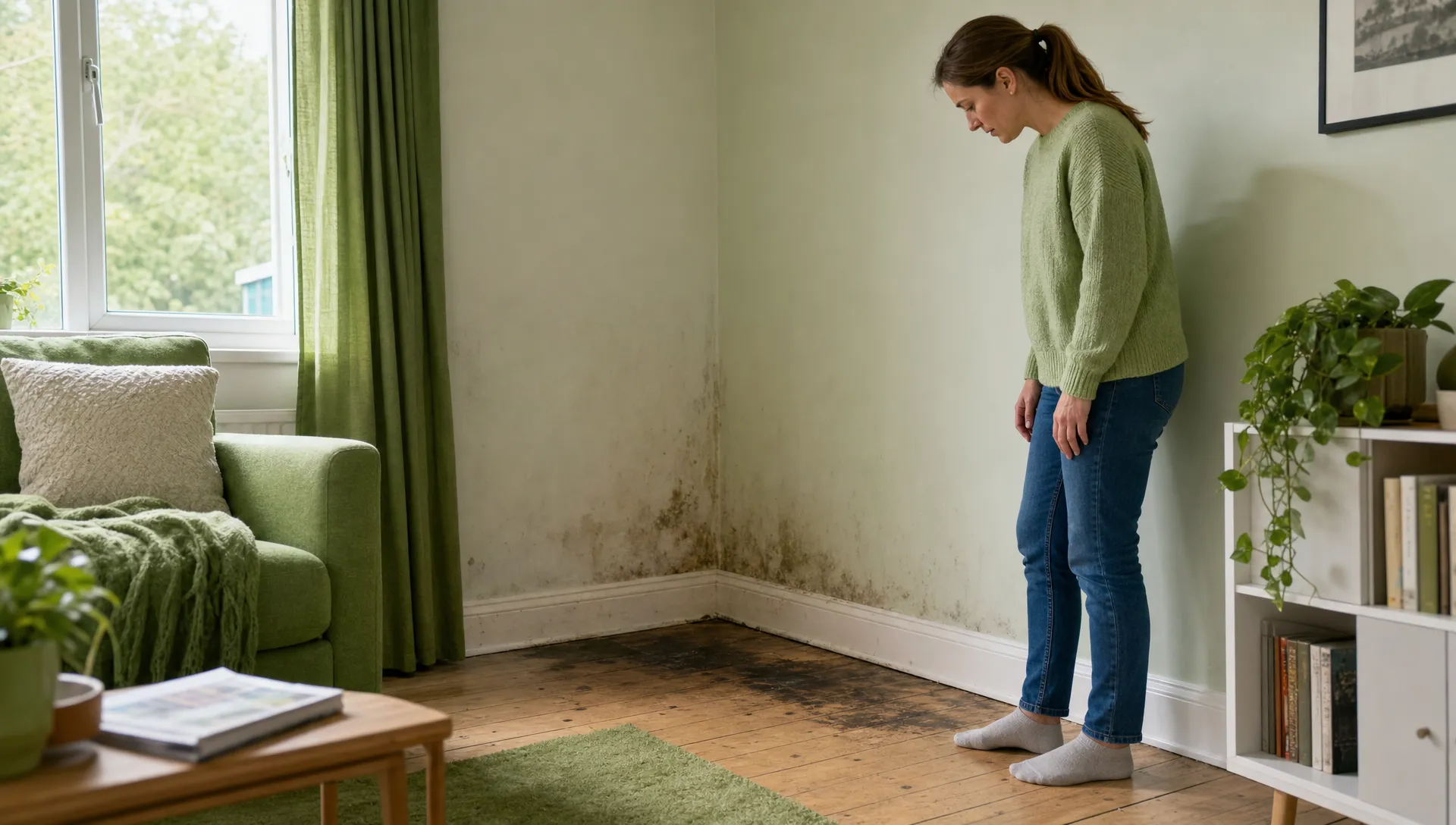
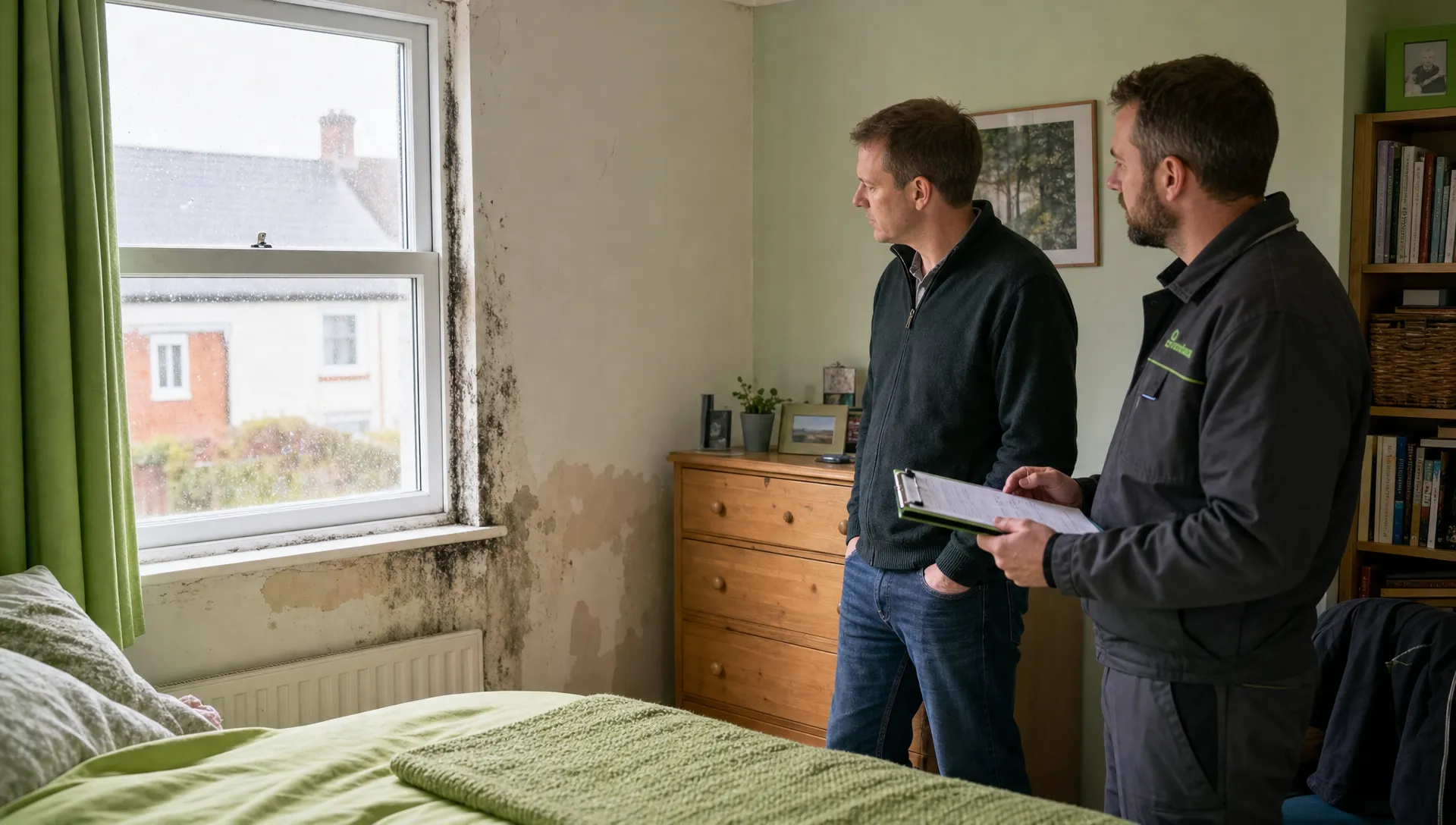
A UK living room shows stained floorboards near the skirting board while a homeowner stands nearby checking the musty patch.

When the smell is linked to rain or outside ground conditions

If the musty smell gets stronger after heavy rain, the cause may be outside rather than under the floor itself. Rainwater can collect against walls if gutters overflow, drains are blocked, paving slopes the wrong way or the ground level outside is too high.

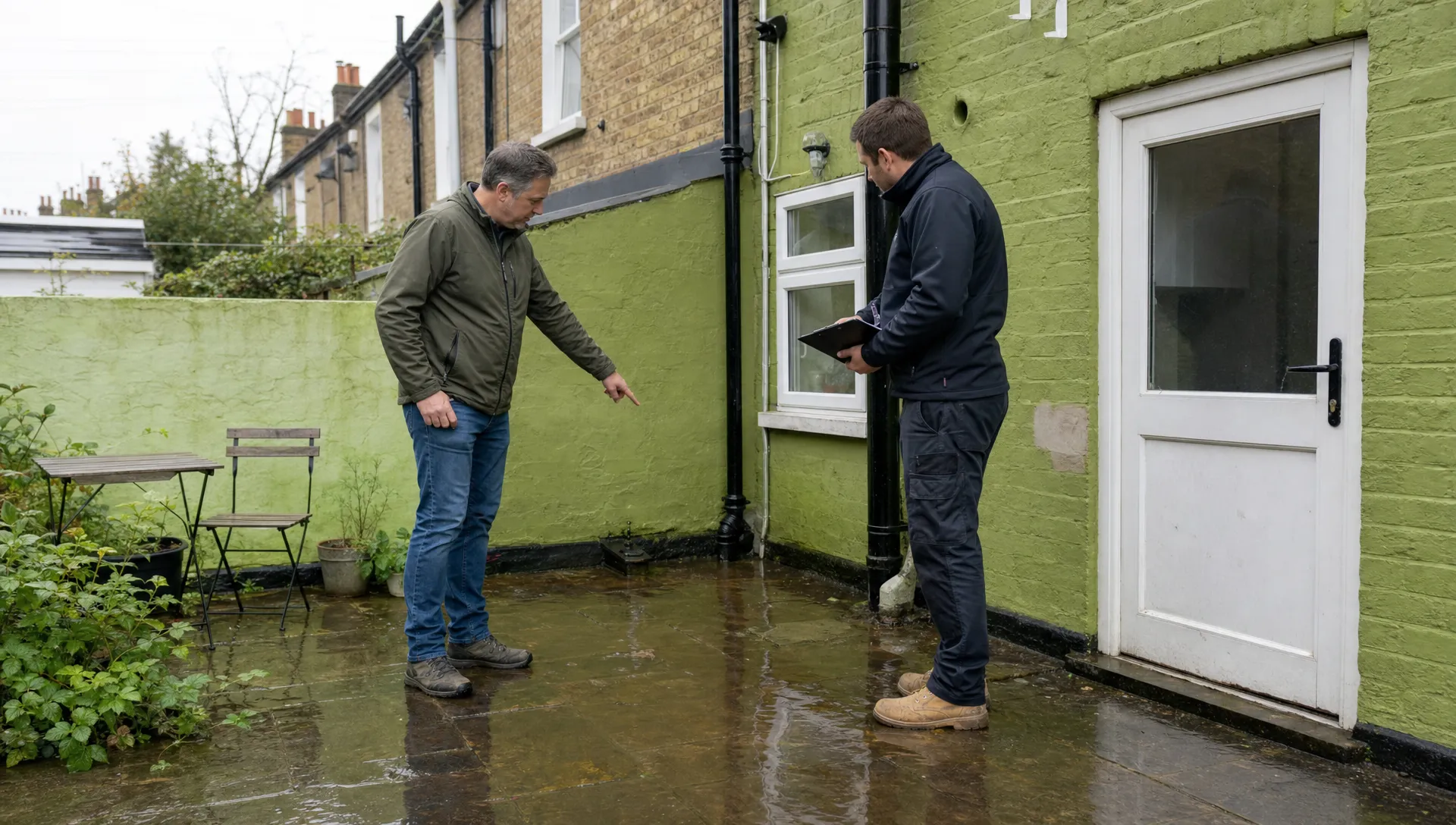
In terraced homes and older properties around London, Birmingham and Manchester, small front gardens and rear yards are often paved. If paving is laid too close to air bricks or above the damp-proof course, it can trap moisture against the wall and reduce airflow under the floor. Over time, that damp air can make the floorboards smell musty.

A builder can check ground levels, walls, air bricks and obvious signs of penetrating damp. A drainage contractor or plumber may be needed if there is a blocked drain, leaking underground pipe or water collecting near the property. If the issue involves a patio or path that is too high or poorly draining, a local patio and path specialist may be able to help after the damp cause has been confirmed.

Could it be mould, rot or damaged timber?

Mould and rot are not usually the first cause. They are more often the result of moisture being present for too long. If the boards feel bouncy, soft or crumbly, or if the smell remains after a leak has been repaired, timber may have been affected.

A carpenter and joiner can replace damaged boards, joists or skirting, but it is important to fix the moisture source first. Replacing timber without solving the leak, damp or ventilation problem usually means the smell will come back.

A good tradesperson will normally want to understand why the timber became damp before quoting for replacement. That might mean bringing in a plumber, builder or damp specialist first, depending on what they find.

What not to do

It is tempting to hide the smell with air fresheners, scented candles or new flooring, but those only mask the symptom. Laminate, vinyl and carpet can trap moisture underneath, which can make the smell worse and slow down drying.

Avoid painting or sealing floorboards until the source has been found. Do not block air bricks to stop draughts, as that can make subfloor moisture worse. If you use a dehumidifier, treat it as a temporary drying aid rather than the fix. A dehumidifier can remove moisture from the air, but it cannot repair a leaking pipe or clear a blocked air brick.

You should also be careful with DIY floor lifting. Floorboards can split, pipes can be clipped beneath them and older boards may be difficult to refit neatly. If the room has fitted flooring, underfloor heating or suspected electrical work below, it is safer to get a professional assessment.

What a tradesperson will usually check

A proper inspection should start with questions about when the smell began, whether it changes after rain or water use, and whether any work has recently been done. Recent flooring, plumbing, radiator, bathroom or patio work can all be relevant.

Depending on the likely cause, the tradesperson may check:

  • Moisture levels in boards, skirting and nearby walls
  • The condition and airflow of external air bricks
  • Visible pipework, radiator valves and plumbing connections
  • Boiler pressure and heating pipe routes
  • Outside ground levels, gutters, drains and paving falls
  • Whether any timber needs drying, treatment or replacement

This is where comparing more than one quote helps. One tradesperson may approach it as a leak investigation, while another may see signs of poor ventilation or external damp. HaMuch is built to make those comparisons easier by showing real, comparable local rates rather than leaving you to guess what a fair starting point looks like.

Advice for landlords and property managers

If a tenant reports a musty smell under floorboards, treat it as a repair issue rather than a housekeeping complaint until the cause is known. Ask when the smell appears, whether it is worse after rain or water use, and whether there are soft boards, damp skirting or visible mould.

For rented homes, damp and mould should be dealt with promptly. GOV.UK guidance on damp and mould makes clear that landlords and housing providers should understand and address moisture problems, not just clean visible mould and leave the cause unresolved.

Keep records of reports, photos, inspections and quotes. If the property is between tenancies, it is sensible to deal with the smell before new flooring or decorating, otherwise the next tenant may report the same issue soon after moving in.

How urgent is a musty smell under floorboards?

It depends on the signs around it. A faint smell in an old room with blocked air bricks may not be an emergency, but it should still be investigated. A strong smell with wet boards, a spreading stain, falling boiler pressure or visible mould needs faster attention.

Use this as a simple guide:

Situation How quickly to act
Slight musty smell, no visible damp, floor feels firm Arrange an inspection soon, especially if it persists
Smell worse after rain or near an outside wall Book a builder or damp inspection before redecorating
Smell near bathroom, kitchen, radiator or utility room Contact a plumber or heating engineer promptly
Wet, soft or stained floorboards Treat as urgent and avoid using the area where possible
Water near electrics or active leak Get urgent help and avoid touching affected fittings

Frequently Asked Questions

Why do my floorboards smell musty but look dry? Moisture can be trapped underneath the boards even when the top surface looks dry. Poor airflow, a slow leak or damp in the subfloor void can create a smell before visible staining appears.

Can I fix a musty smell under floorboards myself? You can check for blocked air bricks, obvious leaks and damp patches, but do not lift boards or disturb hidden services unless you are confident it is safe. If the smell persists, get a plumber, builder or ventilation specialist to investigate.

Who should I call for a musty smell under floorboards? Call a plumber if the smell is near water pipes, radiators, bathrooms or kitchens. Call a builder if it is linked to damp walls, blocked air bricks, high outside ground levels or rain. A carpenter may be needed later if timber has rotted.

Will a dehumidifier get rid of the smell? A dehumidifier may reduce damp air, but it will not solve the cause if there is a leak, blocked ventilation or outside water problem. Use it only as a short-term aid while the source is being fixed.

Is a musty smell under floorboards dangerous? It is not always immediately dangerous, but it can point to damp, mould or timber decay. If there is active water, soft flooring, electrical risk or a strong smell that is getting worse, arrange help quickly.

Get local help before the problem spreads

A musty smell from under the floorboards is one of those household problems where the right first call matters. It could be plumbing, heating, ventilation, damp, drainage or timber repair, and guessing can waste time.

Post the job on HaMuch to compare local tradespeople, see transparent rates and read genuine customer reviews before deciding who to hire. If the floor is wet, soft or the smell is getting stronger, treat it as urgent and request quotes now so a suitable plumber, builder or heating engineer can investigate before more damage is done.

Strong Smell of Gas Near the Boiler

Strong Smell of Gas Near the Boiler

If there is a strong smell of gas near the boiler, treat it as a gas emergency straight away. Do not try to find the leak, relight the boiler, reset it or test anything yourself. Call the National Gas

If there is a strong smell of gas near the boiler, treat it as a gas emergency straight away. Do not try to find the leak, relight the boiler, reset it or test anything yourself.

Call the National Gas Emergency Service on 0800 111 999 from outside the property or from a safe place. The service is free to call and operates 24 hours a day. You should also arrange for a Gas Safe registered heating engineer to inspect the boiler or gas appliance once the property has been made safe.

What to do right now

If you can smell gas now, take these steps calmly and in this order:

  • Call the National Gas Emergency Service on 0800 111 999.
  • Open doors and windows if you can do so without delaying your exit.
  • Turn off the gas at the emergency control valve by the meter if it is safe and easy to reach.
  • Do not use naked flames, matches, cigarettes or candles.
  • Do not turn electrical switches on or off, including lights, plug sockets, extractor fans or the boiler controls.
  • Do not use a phone inside the property.
  • Leave the property and wait outside, away from doors, windows and the gas meter.

The Gas Safe Register’s emergency advice is clear: if you smell gas, call the emergency number first. That comes before calling a tradesperson, landlord, managing agent or boiler manufacturer.

If someone is unwell, has collapsed, is struggling to breathe or you think there is an immediate danger, call 999 from outside the property.

Who should you call for a gas smell near a boiler?

There are two different roles to understand.

The National Gas Emergency Service deals with the immediate risk. An emergency engineer may attend to check for a gas escape and make the property safe. This can include isolating the gas supply. They may not repair your boiler or reconnect an appliance if it is unsafe.

A Gas Safe registered heating engineer deals with the boiler, gas pipework connected to it and any repair, replacement or safety inspection needed afterwards. For a boiler-related gas smell, this is usually the main trade you need after the emergency has been handled.

A general plumber is not enough unless they are also Gas Safe registered for the type of gas work required. Gas work in the UK must be carried out by someone on the Gas Safe Register, and you can ask to see their Gas Safe ID card before any work starts.

Once the immediate danger has been dealt with, you can use HaMuch to compare local heating engineer rates and see transparent pricing information before deciding who to contact.

Possible causes once the property is safe

You should not try to diagnose the cause while you can still smell gas. The table below is only to help you understand what the emergency engineer or Gas Safe registered heating engineer may be looking for after the area has been made safe.

Possible cause Who usually deals with it What may happen next
Gas escaping from a boiler connection Gas Safe registered heating engineer The boiler may be isolated until the fault is repaired and tested
Fault inside the boiler Gas Safe registered heating engineer The engineer may repair the part, test the appliance or advise replacement
Gas smell from the meter area National Gas Emergency Service first The supply may be checked, isolated or referred for further work
Recent boiler service, repair or installation issue Gas Safe registered heating engineer The previous work may need inspecting and making safe
Smell drifting from another gas appliance National Gas Emergency Service first, then a relevant Gas Safe engineer The source must be confirmed before any appliance is used again
A smell that is not gas, such as drains or chemicals Emergency gas check first if you are unsure If gas is ruled out, another trade such as a plumber or ventilation engineer may be needed

A smell of gas near the boiler is often described as sulphur-like or similar to rotten eggs. Natural gas has an added smell so leaks are easier to notice. If you are in any doubt, treat it as gas until a qualified person tells you otherwise.

What not to do while waiting

The most common mistake is trying to “just check” the boiler. Do not remove the boiler cover, press reset repeatedly, relight a pilot light, adjust controls or look for the leak with a flame. These actions can make the situation more dangerous.

Do not assume the smell will clear on its own because the boiler is off. Gas can still escape from pipework, valves or the meter area even when an appliance is not running.

You should also avoid turning appliances on or off. That includes lights, the cooker, extractor fans, washing machines, tumble dryers and plug sockets. If something is already on, leave it as it is and get out.

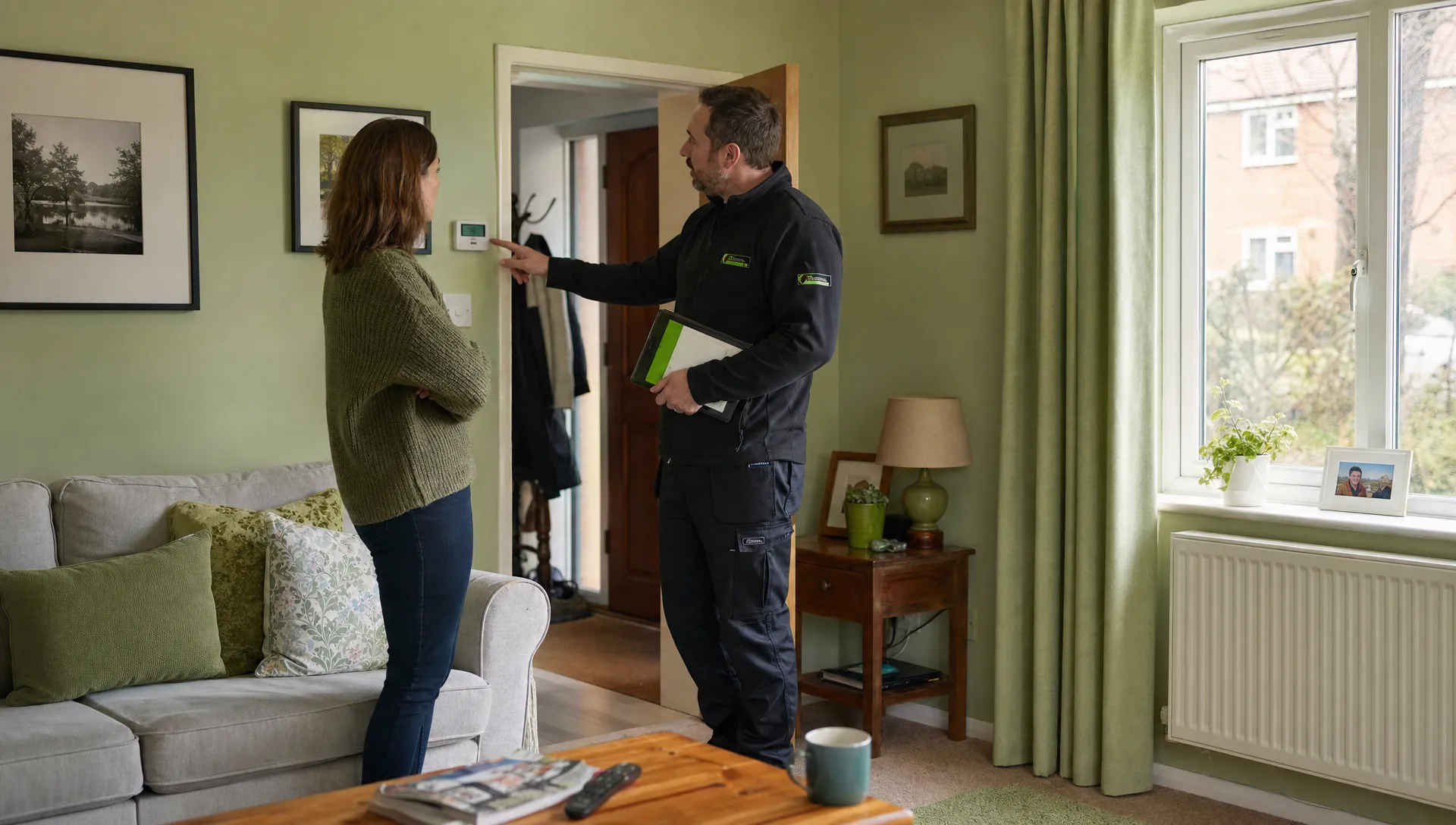
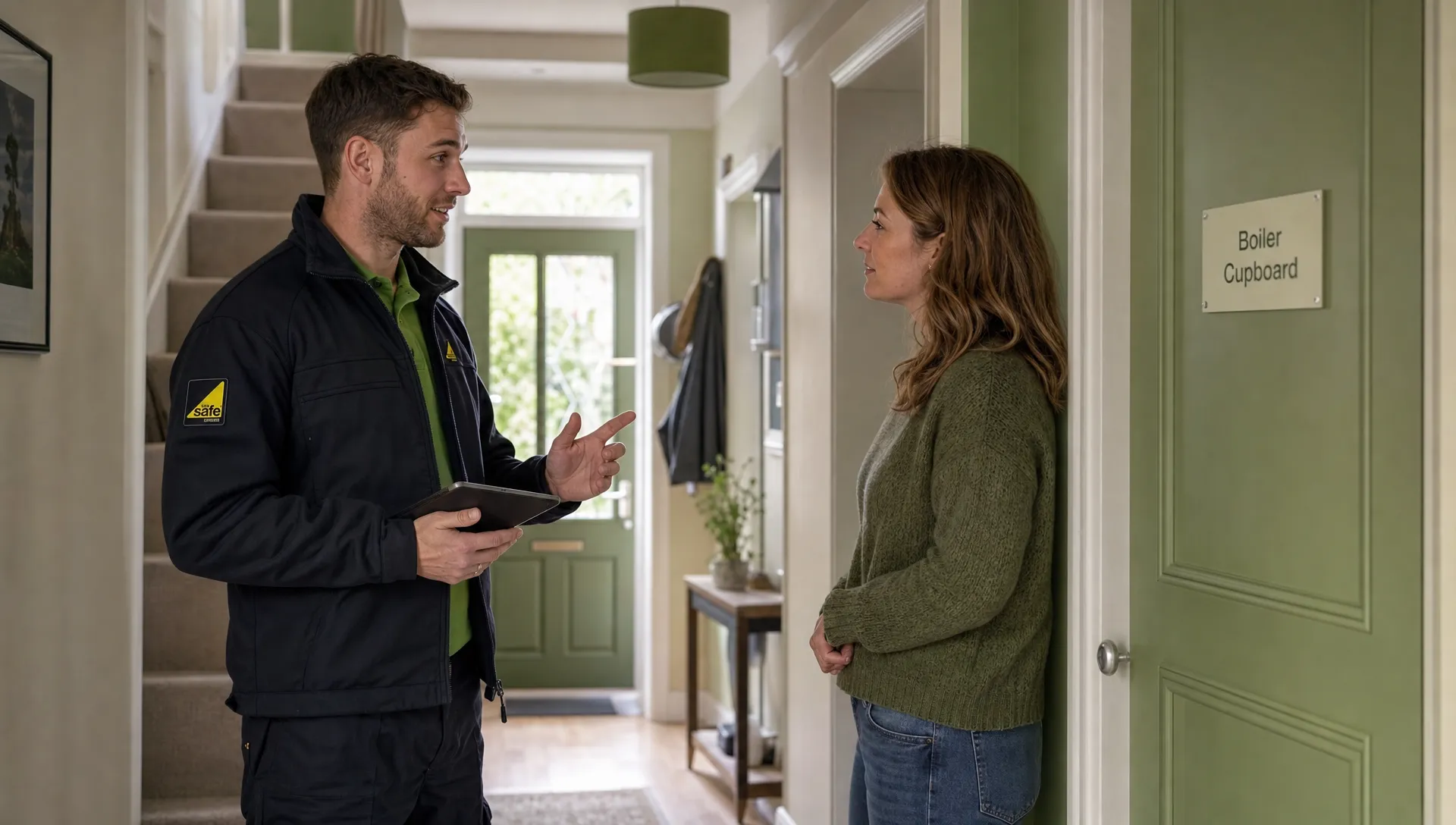
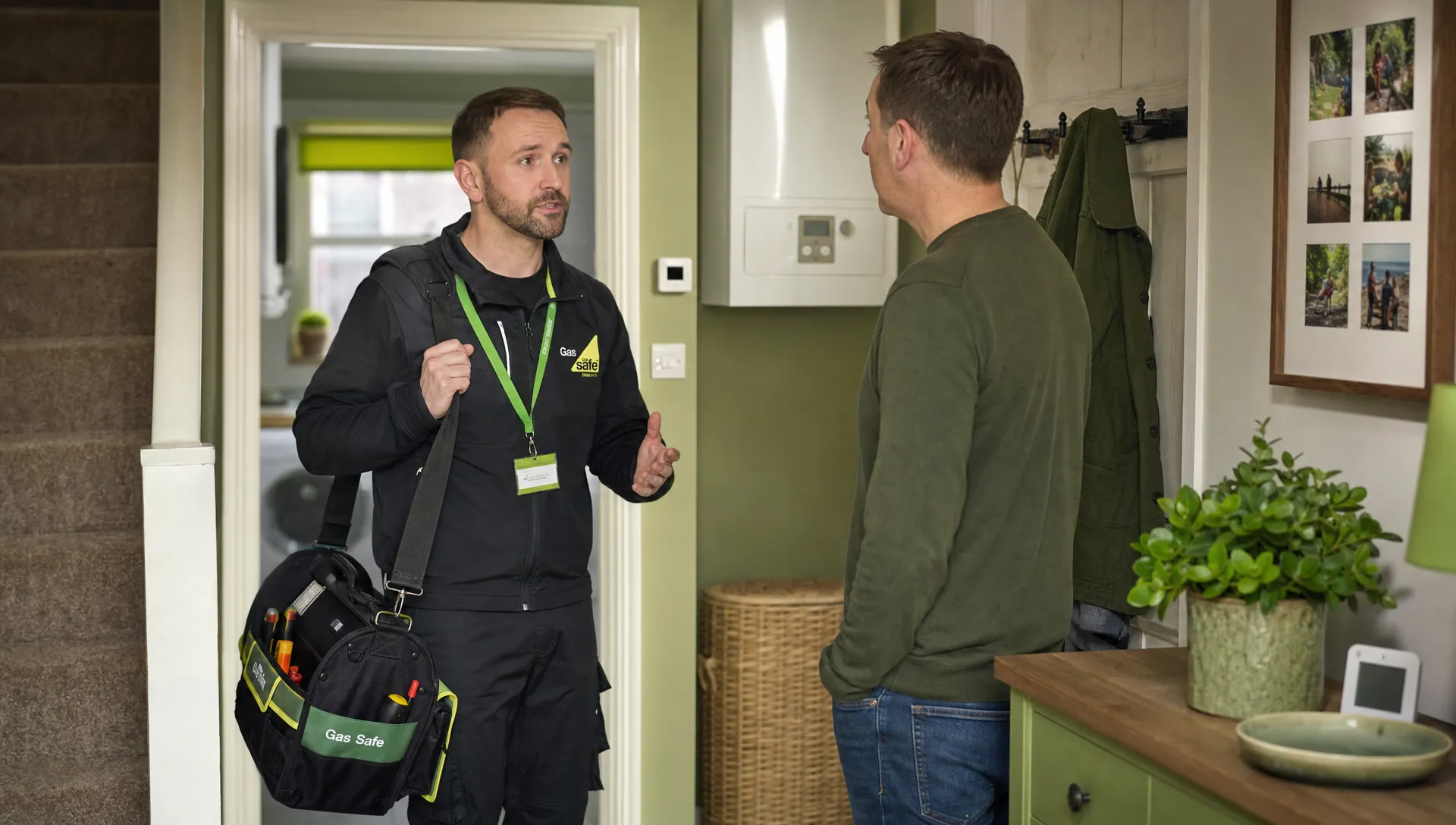
A Gas Safe heating engineer speaks calmly with a homeowner in a British hallway while the boiler cupboard stays closed nearby.

What happens after the emergency visit?

After an emergency call-out, you may be told that the gas supply has been isolated or that the boiler must not be used. This can feel inconvenient, especially if you rely on the boiler for heating and hot water, but it means the immediate risk has been controlled.

The next step is normally to book a Gas Safe registered heating engineer. They can inspect the boiler, identify the fault and explain whether it is a repair, service issue or replacement decision.

The follow-up work might be one of the following:

Follow-up job Typical reason Trade to use
Boiler safety inspection Gas supply has been isolated or appliance has been switched off Gas Safe registered heating engineer
Boiler repair A faulty component or connection has been identified Gas Safe registered heating engineer
Annual boiler service The boiler is due a routine service after being checked safe Gas Safe registered heating engineer
Boiler replacement The boiler is unsafe, uneconomical to repair or at the end of its life Gas Safe registered heating engineer

If the engineer recommends a service after the emergency issue has been resolved, HaMuch’s guide to annual boiler service costs can help you understand what is usually included. If the boiler is beyond economical repair, you can also check the guide to new boiler installation costs before comparing quotes.

How much will it cost to put right?

The cost depends on what the emergency engineer finds and what the Gas Safe registered heating engineer needs to do afterwards. A quick inspection is very different from a parts replacement, full boiler repair or new boiler installation.

Factors that can affect the final price include:

  • Whether the visit is during normal working hours or out-of-hours.
  • Whether the gas supply has been isolated and needs further testing.
  • The age, make and model of the boiler.
  • Whether parts are needed.
  • Your location and local labour rates.
  • Whether more than one gas appliance needs checking.

This is where HaMuch is useful once the urgent safety step is complete. Instead of working from vague estimates, HaMuch shows real, comparable pricing by trade and location, alongside local tradesperson listings and customer reviews. You can compare before you book and choose the heating engineer that suits the job.

Advice for landlords and tenants

If you are a tenant and you smell gas near the boiler, do not wait for the landlord before taking emergency action. Call the National Gas Emergency Service on 0800 111 999 first, leave the property and then contact your landlord or letting agent.

Landlords must keep gas appliances, flues and pipework in a safe condition. The Health and Safety Executive explains landlord duties under the Gas Safety (Installation and Use) Regulations, including annual gas safety checks by a Gas Safe registered engineer.

For landlords and property managers, a reported gas smell should be treated as urgent. Once the emergency service has attended, arrange follow-up work quickly and keep clear records of advice, isolation notices, engineer visits and any completed repairs.

Can you prevent this happening again?

Not every gas smell can be prevented, but regular boiler care reduces the chance of faults being missed. Have the boiler serviced by a Gas Safe registered heating engineer, keep landlord gas safety checks up to date and do not ignore small or occasional gas smells.

A carbon monoxide alarm is also sensible near sleeping areas and in rooms with fuel-burning appliances, but remember that carbon monoxide itself has no smell. A gas smell near the boiler and a carbon monoxide alarm are different warning signs, and both need immediate attention.

If your boiler has been repaired after a gas smell, ask the engineer what caused the issue, whether any parts were replaced and whether any further monitoring is needed. Keep paperwork for future servicing, especially if you own a rental property.

Frequently asked questions

Is a gas smell near the boiler always an emergency? Yes. If you can smell gas, call the National Gas Emergency Service on 0800 111 999 first. Do not try to decide whether the smell is serious yourself.

Can I turn the boiler off if I smell gas? Do not touch the boiler controls or any electrical switches. If you can safely turn off the gas at the emergency control valve by the meter without delaying your exit, do that, then leave and call from outside.

Should I call a plumber or a heating engineer? For a boiler-related gas smell, you need a Gas Safe registered heating engineer after the emergency has been made safe. A plumber should only do gas work if they are Gas Safe registered for that work.

What if the smell disappears before anyone arrives? Still call the emergency number if you smelled gas. A leak can be intermittent, and the source needs to be checked by the right person before the boiler or gas supply is used again.

Can my landlord tell me to wait until morning? If you smell gas, call the National Gas Emergency Service immediately. Tell your landlord or letting agent afterwards so they can arrange the required follow-up with a Gas Safe registered engineer.

Need a Gas Safe heating engineer after the emergency call?

If you can smell gas now, call 0800 111 999 before doing anything else.

Once the National Gas Emergency Service has made the property safe, post the follow-up boiler job on HaMuch. You can compare local heating engineers, check transparent pricing information and read genuine customer reviews before choosing who to contact. For a gas smell near a boiler, act urgently, use the emergency number first and only book Gas Safe registered help for the repair or inspection.

Water Pouring Through the Ceiling: What to Do First

Water Pouring Through the Ceiling: What to Do First

If water is pouring through the ceiling, your first job is not to find the perfect fix. It is to make the area safe, stop the water if you can and call the right tradesperson quickly. A leak like this

If water is pouring through the ceiling, your first job is not to find the perfect fix. It is to make the area safe, stop the water if you can and call the right tradesperson quickly.

A leak like this is stressful, especially if it is coming through a light fitting or spreading across plasterboard. Stay calm and work through the steps below in order. Most ceiling leaks are handled first by a plumber, but the right trade can change depending on whether the source is a pipe, bathroom fitting, roof, heating system or electrics affected by water.

If you have searched for a water leak through ceiling emergency because it is happening right now, start here.

What to do in the first few minutes

Move people, pets and valuables away from the affected area. If the ceiling is bulging, bowing, cracking or making creaking sounds, do not stand under it. Wet plasterboard can become heavy and may give way with little warning.

Put a bucket, bowl or towels under the drip only if it is safe to do so. If water is coming through quickly, use more than one container and check them often. Do not climb on furniture or ladders under a wet ceiling.

Next, try to stop the water at the source. If you know the leak is from an upstairs bathroom, toilet, sink, washing machine or pipe, turn off the water supply. In many UK homes, the main stopcock is under the kitchen sink, in a downstairs cupboard, near the front door or in a utility area. Turn it clockwise to shut the water off. If there is a small isolation valve near the leaking appliance or toilet, you may be able to turn that off instead.

If you live in a flat and the water seems to be coming from the property above, contact the neighbour, landlord, managing agent or building concierge immediately. You may still need to protect your own electrics and ceiling, but the leak may need stopping from another property.

If water is near electrics, treat it as unsafe

Water coming through or near a light fitting, switch, socket or fuse box is a safety risk. Do not touch wet switches, do not use the ceiling light and do not stand in water while handling anything electrical.

If your fuse box is dry, easy to reach and away from the leak, switch off the affected circuit or the whole supply. If the fuse box is wet, in the leaking area or you would need to walk through water to reach it, stay away and call an electrician urgently.

Electrical Safety First advises that electrical items affected by water should not be used until checked by a competent person. Even after the leak has stopped, a light fitting or socket that has been wet may need inspecting before it is safe to use again.

If there is any smell of gas near a boiler, airing cupboard or gas appliance, do not try to investigate. Call the National Gas Emergency Service on 0800 111 999 and use a Gas Safe registered engineer for any gas-related work.

Who should you call first?

For most active ceiling leaks, the first call is an emergency plumber. A plumber can isolate the leak, repair burst or failed pipework, deal with leaking toilets, find bathroom leaks and advise whether further trades are needed.

Because call-out rates can vary by area and by time of day, it is worth checking local pricing before you agree to non-urgent follow-up work. HaMuch shows real, comparable rates rather than vague estimates, including plumber rates in London, Birmingham plumber rates and Manchester plumber rates.

If water has reached lighting, sockets or wiring, you may also need an electrician once the leak is controlled. You can compare current electrician rates on HaMuch before booking inspection or repair work.

If the leak is related to the roof, guttering, chimney area or building fabric, a roofer or builder may be needed. HaMuch does not ask you to guess blindly: you can compare builder rates and local reviews if the problem turns out to be roof or structural rather than plumbing.

Common causes of water pouring through a ceiling

A ceiling leak can look the same from below even when the source is completely different. The room above, the weather and when the water appears are the best clues.

What you notice Likely cause Trade to call
Water appears below a bathroom after a shower or bath Failed bath seal, shower leak, waste pipe leak or cracked grout around tiles Plumber first, then possibly a tiler
Water appears below a toilet or basin Leaking toilet connector, cistern, basin trap, tap or pipework Plumber
Water appears near a radiator, boiler area or airing cupboard Central heating pipe, radiator valve or heating system leak Plumber or heating engineer
Water appears only during or after heavy rain Roof, gutter, flashing, chimney or flat roof issue Roofer or builder
Water comes from a ceiling in a flat Neighbouring flat, communal pipework or roof space Managing agent, landlord and plumber
Dripping has stopped but staining keeps spreading Soaked plasterboard, insulation or hidden damp from an earlier leak Plumber, builder or plasterer depending on source and damage

A bathroom above the leak is the most common clue in many homes. Bath seals, shower trays, loose wastes and leaking toilet fittings can release a surprising amount of water into the floor void before it appears downstairs. If the water starts after someone showers, flushes the toilet or empties a bath, tell the plumber exactly that.

If the ceiling leak happens during heavy rain, particularly on a top floor, around a bay window, near a chimney breast or beneath a flat roof, the source may not be plumbing at all. In that case, the immediate job is to limit internal damage, then arrange for a roofer or builder to check the outside of the property when safe.

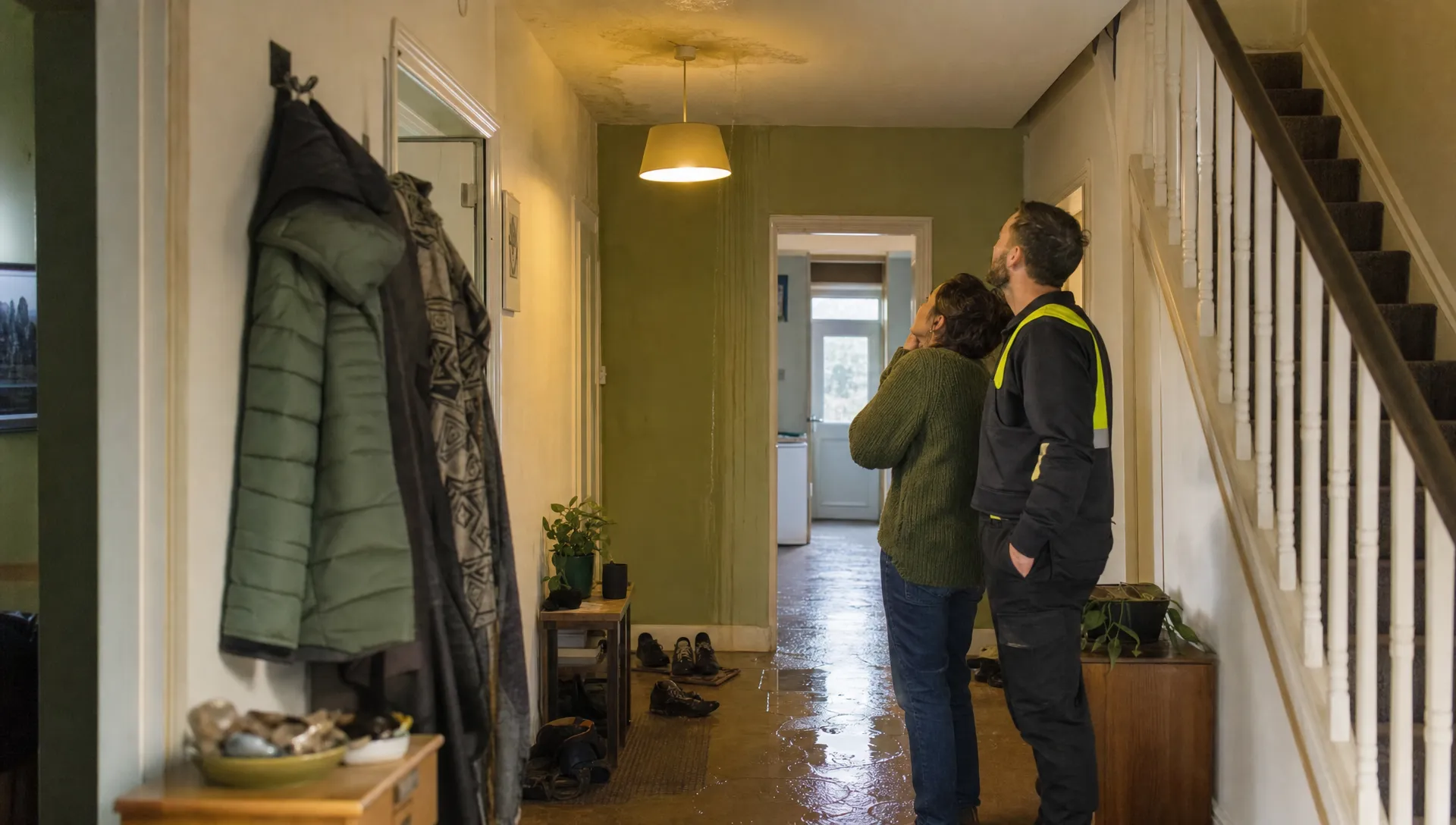
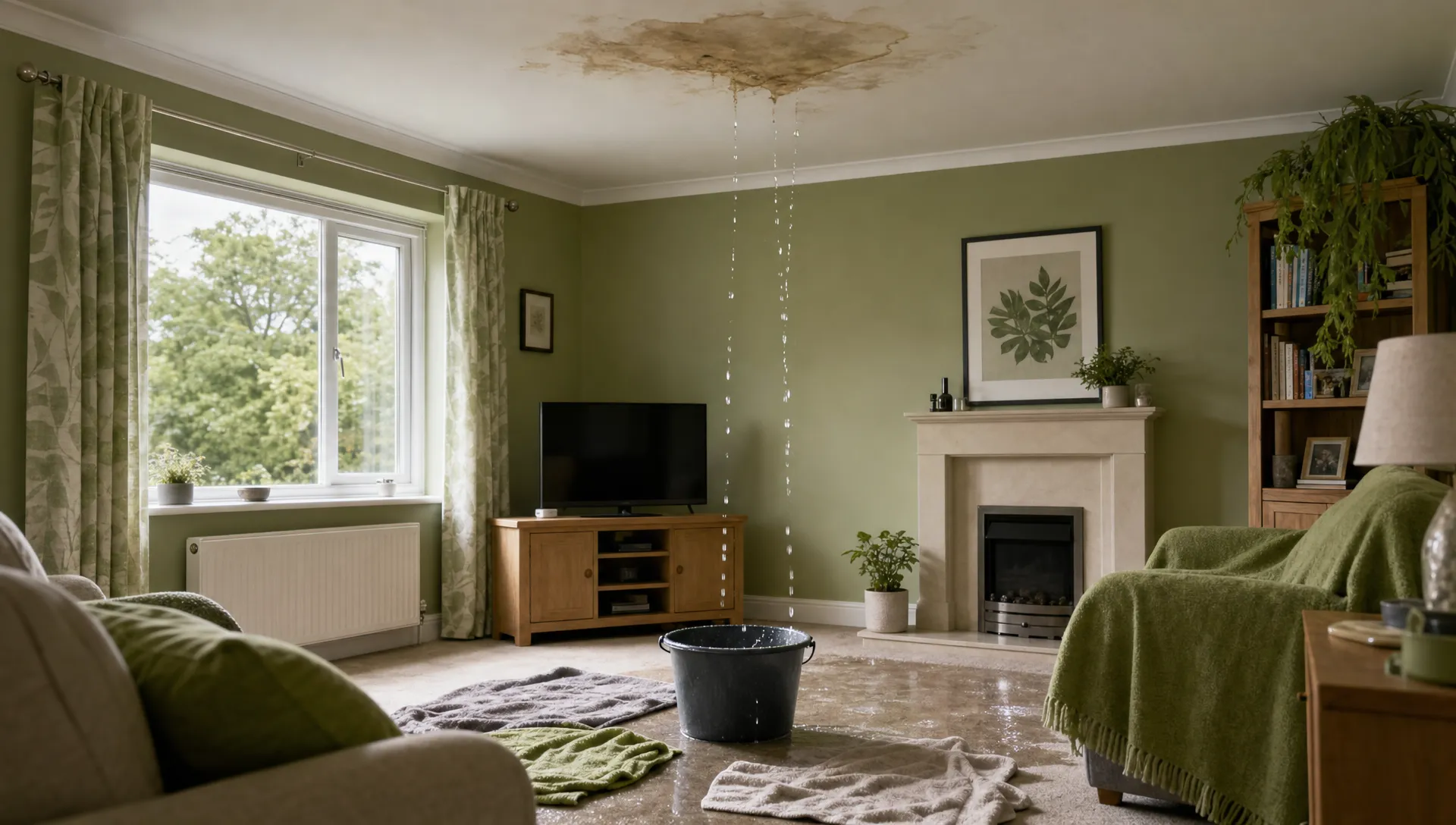
A UK living room has a damp ceiling stain with water dripping into a bucket while towels and furniture sit moved back from the leak.

Should you make a hole in a bulging ceiling?

A bulging ceiling means water is collecting above the plasterboard. Some tradespeople may create a controlled drain point to release water, but this can be dangerous if you do not know what is above the ceiling or whether electrics are nearby.

For a homeowner, the safer advice is simple: do not stand underneath it and do not poke the ceiling yourself if there is any risk of collapse or water near electrics. Clear the room if you can, keep the door closed to stop pets or children going in and wait for an emergency plumber or suitable tradesperson.

If the bulge is small and a tradesperson advises you over the phone to place buckets or move furniture, follow their guidance carefully. But do not turn a ceiling leak into a ceiling collapse by prodding, cutting or pulling at wet plasterboard.

What to tell the tradesperson when you call

The clearer you are, the faster a plumber or electrician can decide what tools, parts and access they may need. This also helps you get more accurate quotes when the immediate emergency is under control.

Have these details ready if you can:

  • Whether water is still pouring, dripping slowly or has stopped
  • Which room is above the leak, such as a bathroom, kitchen, loft or flat above
  • Whether water is near lights, sockets or the fuse box
  • Whether you have turned off the stopcock or local water valve
  • Whether the leak happens after showering, flushing, heating coming on or heavy rain
  • Photos or a short video of the leak, taken from a safe distance
  • Your property type, access details and parking information

Do not worry if you cannot answer everything. A good tradesperson will talk you through what matters first. If the leak is contained and you are no longer in emergency mode, HaMuch also has a practical checklist for finding a reliable plumber before you book further repairs.

What happens after the leak is stopped?

Stopping the leak is only the first stage. Water can sit above the ceiling, soak insulation, damage plasterboard and stain paint. If the plasterboard has sagged, cracked or gone soft, it may need cutting out and replacing rather than simply painting over.

Give the area time to dry properly before cosmetic work. Opening windows, using heating carefully and running a dehumidifier can help, but do not use electrical equipment in a wet area unless the electrics have been checked and it is safe to do so.

The follow-up trades usually depend on the damage:

  • A plumber repairs the leaking pipe, toilet, bath waste, tap, shower or appliance connection.
  • A heating engineer handles leaks connected to boilers, heating controls or sealed heating systems.
  • An electrician checks lights, sockets or wiring that may have been wet.
  • A plasterer repairs or replaces damaged ceiling plasterboard.
  • A painter and decorator finishes the area once it is fully dry and stain-blocked.
  • A builder or roofer deals with roof, gutter, chimney or structural water entry.

If you are claiming on insurance, take photos before moving too much, keep invoices and contact your insurer early for guidance. Many policies have specific rules about emergency repairs, trace and access work, excesses and approved contractors, so check your own cover rather than assuming everything is included.

What if you are a landlord or tenant?

For tenants, report the leak to your landlord or letting agent as soon as possible and keep a written record. If there is water near electrics, say so clearly. You should still take reasonable steps to limit damage, such as moving belongings away and not using affected lights, but emergency repair arrangements are normally handled by the landlord or managing agent.

For landlords, speed matters. A small delay can turn a plumbing repair into ceiling replacement, electrical checks and redecoration. Ask the tenant for photos, confirm whether the stopcock has been turned off and arrange the right trade based on whether the leak is plumbing, roof-related or from another property.

HaMuch is useful here because you can compare local tradespeople, rates and genuine customer reviews before booking. That helps landlords and property managers choose quickly without relying on guesswork.

Frequently Asked Questions

Is water pouring through the ceiling an emergency? Yes. Active water pouring through a ceiling should be treated as urgent, especially if the ceiling is sagging or water is near lights, sockets or the fuse box. Make the area safe, turn off the water if you can and call an emergency plumber.

Should I turn off the electricity? If water is near electrics and your fuse box is dry and safe to reach, turn off the affected circuit or the whole supply. If the fuse box is wet or you would need to enter the leaking area to reach it, do not touch it. Keep away and call an electrician.

Do I need a plumber or a roofer? If the leak is below a bathroom, kitchen, toilet, radiator or pipework, call a plumber first. If it only happens during heavy rain or is on the top floor with no plumbing above, the source may be roof-related and a roofer or builder may be needed.

Can I paint over the stain once it dries? Not straight away. The source of the leak must be fixed first and the ceiling needs to dry fully. If the plasterboard is soft, cracked or sagging, it may need repair before decorating.

Will my home insurance cover a ceiling leak? It depends on your policy and the cause. Many home insurance policies include some cover for escape of water, but limits, excesses and trace and access cover vary. Take photos, keep receipts and contact your insurer early.

Need help with an active ceiling leak?

If water is still coming through, make the area safe, turn off the water supply if you can and keep away from affected electrics. Then post your urgent leak job on HaMuch so local tradespeople can respond.

HaMuch helps you compare real local rates, customer reviews and available tradespeople before you decide who to book. For an active leak, speed matters, but you should still be able to see clear pricing and choose with confidence.

Radiator Cold at the Top But Hot at the Bottom

Radiator Cold at the Top But Hot at the Bottom

If your radiator is cold at the top but hot at the bottom, the good news is that the most common cause is simple: trapped air. Hot water is still reaching the lower part of the radiator, but air has c

If your radiator is cold at the top but hot at the bottom, the good news is that the most common cause is simple: trapped air. Hot water is still reaching the lower part of the radiator, but air has collected at the top, stopping that section from heating properly.

In many homes, this can be sorted by bleeding the radiator. It is usually a quick job, but there are a few situations where it is better to stop and call a professional, especially if the problem keeps coming back, several radiators are affected, or your boiler pressure drops.

Quick answer: what does a cold top mean?

A water-filled central heating radiator should heat fairly evenly from top to bottom once the system has been running for a while. When the bottom is hot but the top stays cool or cold, air is normally sitting in the top of the radiator.

What you notice Most likely cause Who usually handles it What to do next
One radiator cold at the top but hot at the bottom Trapped air Homeowner, heating engineer if unsure Bleed the radiator safely
Several radiators cold at the top Air in the system or low pressure Heating engineer or plumber Check boiler pressure and get advice if unsure
Radiator warms after bleeding but goes cold again Recurring air, corrosion, pressure issue or small leak Heating engineer or plumber Book a central heating check
Radiator has cold patches at the bottom too Sludge or poor circulation Heating engineer or plumber Ask about system cleaning or balancing
No heating, no hot water, or boiler fault code Boiler, pump or control issue Gas Safe registered heating engineer if gas boiler Do not open the boiler, call a qualified professional
Electric radiator is cold at the top Not a bleedable wet radiator issue Electrician Do not try to bleed it

This guide assumes you have a normal water-filled radiator connected to a central heating system. If you have an electric radiator, storage heater, or panel heater, do not try to bleed it, as it works differently.

Why radiators go cold at the top

Central heating radiators work by filling with hot water from your boiler or heat source. Air can enter or form inside the system over time. Because air rises, it gathers at the top of the radiator. That trapped air takes up space where hot water should be, so the top section stays cold while the lower section heats up.

This can happen after a radiator has been removed and refitted, after plumbing work, after the heating has been off for a long period, or simply as the system ages. It is also common at the start of colder weather, when heating systems are switched back on more regularly.

A small amount of air in one radiator is not usually a sign of a major failure. However, frequent air build-up can point to another problem, such as corrosion inside the system, incorrect pressure, poor circulation, or a small leak letting air in.

Is it safe to keep the heating on?

If one radiator is partly cold at the top but the rest of the heating works normally, it is usually not an emergency. You can normally continue using the heating until you have time to bleed the radiator. The room may simply take longer to warm up.

You should be more cautious if you notice water leaking, a sudden drop in boiler pressure, unusual boiler noises, repeated fault codes, or no heating across the property. In those cases, avoid guessing and get a heating engineer to check the system.

If you ever smell gas, stop troubleshooting immediately. Open doors and windows, avoid flames and electrical switches, leave the property if needed, and call the National Gas Emergency Service on 0800 111 999. The Gas Safe Register gas emergency advice explains what to do and why only Gas Safe registered engineers should work on gas appliances.

How to bleed a radiator that is cold at the top

Bleeding a radiator releases trapped air. It is a common homeowner job, but only do it if you feel comfortable. If you are a tenant, check with your landlord or managing agent first, particularly if the boiler pressure needs topping up afterwards.

  1. Turn the heating off: Let the radiator cool enough to touch comfortably. Bleeding a radiator while the pump is running can draw more air into the system.
  2. Protect the floor: Put a towel under the bleed valve and hold a small container nearby to catch water.
  3. Find the bleed valve: This is usually at the top corner of the radiator. Use a radiator key or the correct tool for your valve.
  4. Open it slowly: Turn the valve a small amount anticlockwise. You should hear a hissing sound as air escapes.
  5. Close it when water appears: Once water starts to dribble steadily, close the valve gently. Do not overtighten it.
  6. Check the boiler pressure: On sealed systems, bleeding can lower the pressure. If the pressure is below the recommended range in your boiler manual and you are not sure how to top it up, call a heating engineer.
  7. Turn the heating back on: After the system has run for a while, check whether the radiator now heats evenly.

Never remove the bleed valve completely. If water sprays out, the valve will not close, or the radiator leaks afterwards, turn the heating off and get help.

What if bleeding does not fix it?

If the radiator heats properly after bleeding, you may not need to do anything else. But if the same radiator keeps becoming cold at the top, or more radiators start doing it, there is probably an underlying issue.

One common cause is low system pressure. Many modern boilers work on a sealed system, which needs the right pressure to circulate water properly. Bleeding radiators releases air, but it can also reduce pressure. If the pressure keeps dropping after you top it up, there may be a leak or a boiler-related fault.

Another possibility is corrosion inside the heating system. Over time, metal radiators and pipework can react with oxygen in the water. This can produce gas and sludge. The gas can collect at the top of radiators, while sludge often causes cold patches lower down. A heating engineer or plumber may recommend cleaning, adding inhibitor, or checking whether the system needs balancing.

If only radiators far from the boiler are affected, the problem may be circulation rather than trapped air alone. A pump issue, partially closed valve, or unbalanced system can leave some rooms colder than others. These are not usually DIY jobs because the cause needs to be diagnosed properly.

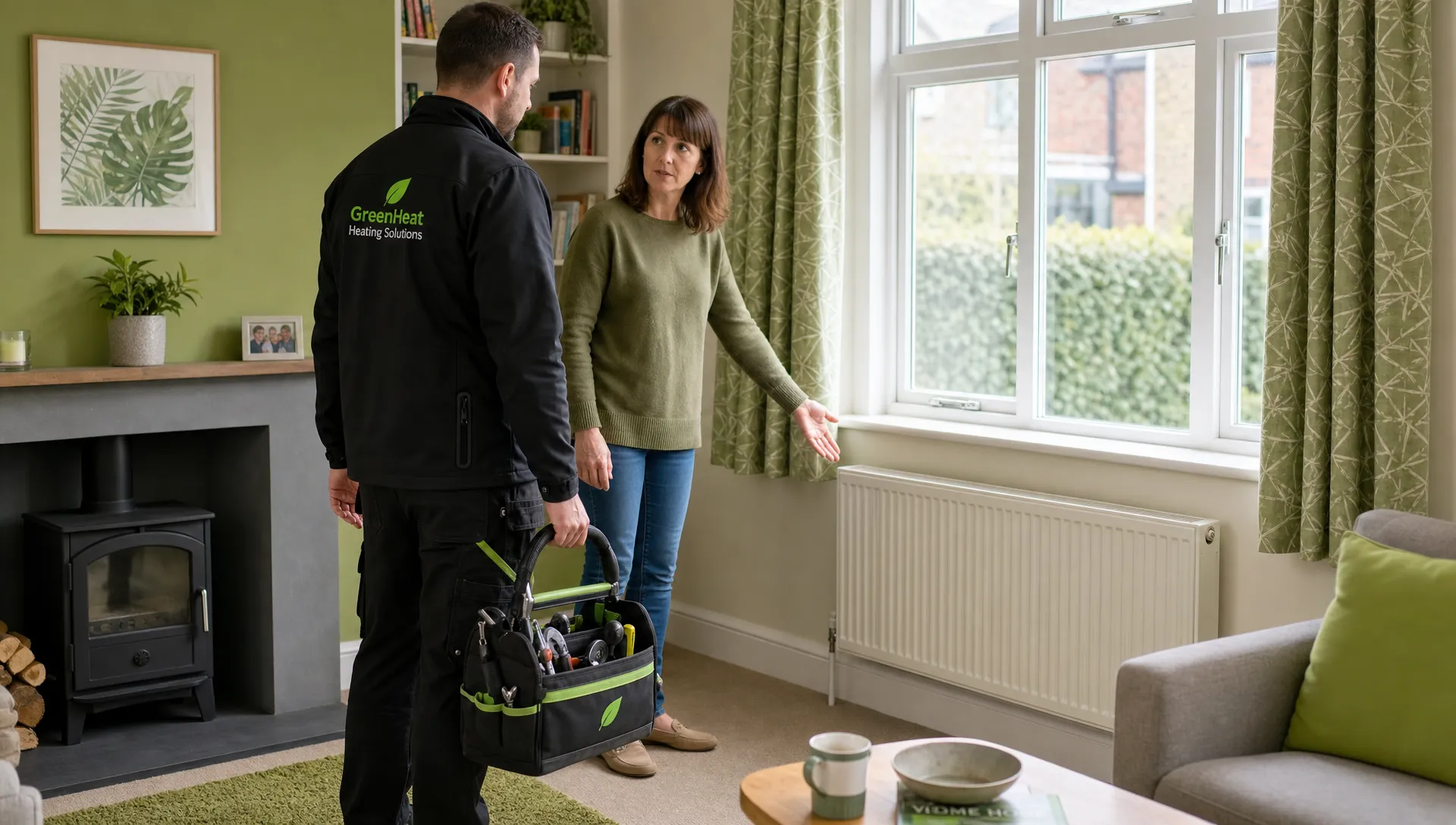
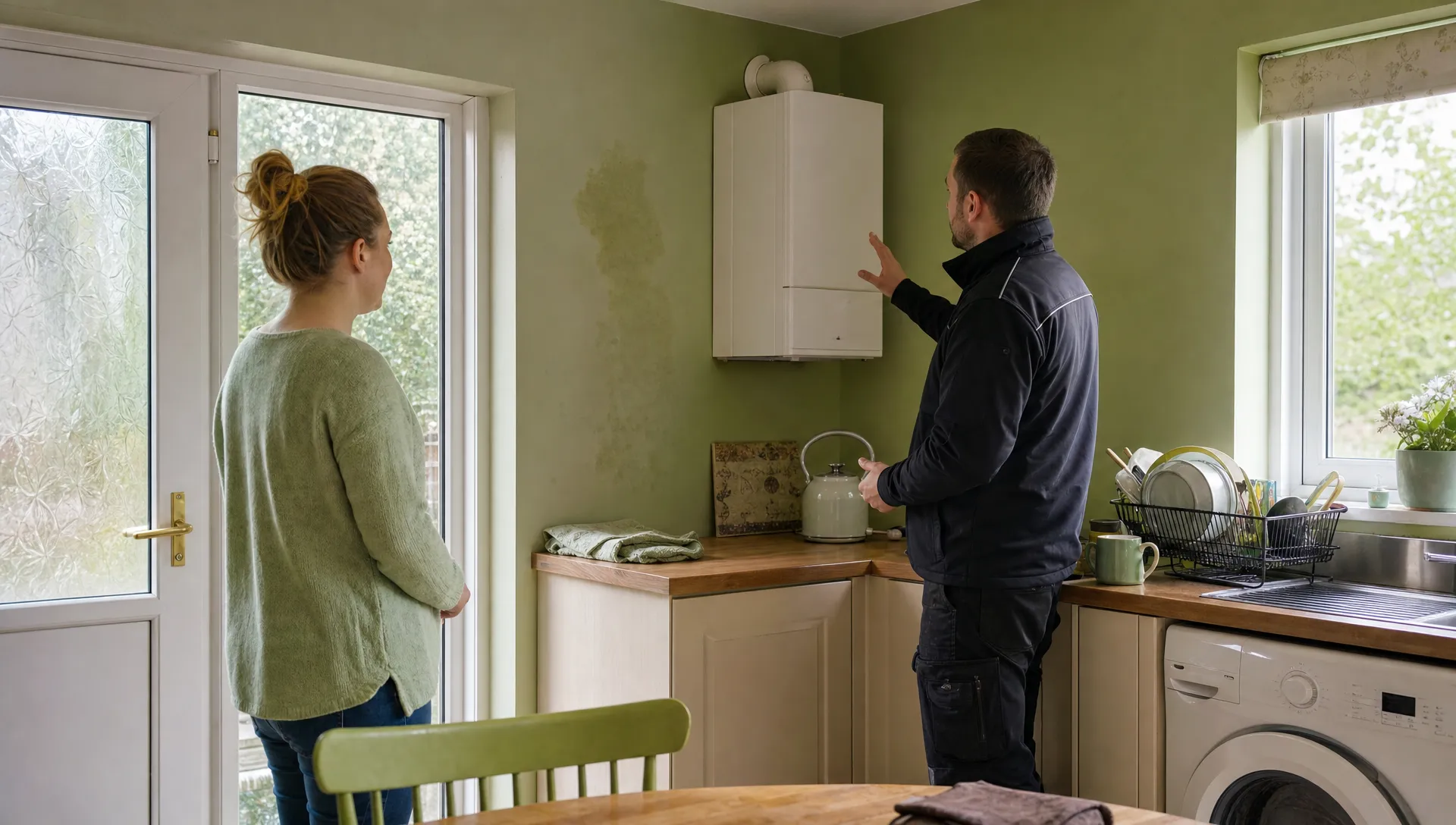
A UK living room with a wall radiator in the background, a homeowner standing nearby while a heating engineer with a tool bag checks notes on a clipboard, with natural daylight and an ordinary lived-in home setting.

Which trade should you call?

For a radiator cold at the top, the most relevant trade is usually a heating engineer. A plumber can also help with many radiator and central heating pipework issues, especially if there is a visible leak at a radiator valve or nearby pipework. If the problem involves the boiler, gas supply, flue, combustion, or a gas appliance casing, you need a Gas Safe registered heating engineer.

HaMuch is useful here because you can compare real, transparent rates before you book, rather than having to make a blind enquiry and wait for vague estimates. If you are in London, Birmingham, Manchester, or surrounding areas, you can compare current heating engineer rates on HaMuch by trade and location before deciding who to contact.

If the problem looks more like a plumbing repair, such as a leaking radiator valve, damp flooring around the radiator, or pipework that needs attention, you can also check local plumber rates so you know what a fair call-out or hourly rate looks like in your area.

When it is more than a simple trapped-air problem

A single radiator cold at the top is normally straightforward. The following signs suggest it is time to get a professional opinion rather than repeatedly bleeding the radiator.

Sign What it may mean Best next step
You need to bleed the same radiator every few weeks Air or gas is being created or entering the system Ask a heating engineer to check pressure, corrosion and leaks
Boiler pressure keeps dropping Possible leak, pressure vessel issue or boiler fault Book a qualified heating engineer
Several upstairs radiators are affected Air collecting at high points or pressure too low Get the central heating system checked
Radiator water is very dark when bled Sludge or corrosion in the system Ask about cleaning, inhibitor and balancing
Radiator is cold at the bottom as well Sludge, blocked valve or poor circulation Heating engineer or plumber diagnosis needed
Boiler shows a fault code Boiler or control issue Use a Gas Safe registered heating engineer for gas boilers

The key point is not to keep treating the symptom if it returns quickly. Regular air in the system can reduce heating efficiency, make rooms uncomfortable, and point to problems that are cheaper to deal with before they get worse.

What to tell the tradesperson before they arrive

A clear description helps the tradesperson diagnose the issue faster. Before posting the job or calling someone out, make a note of what you have noticed.

  • Which radiator is affected and whether it is upstairs or downstairs.
  • Whether the top is cold but the bottom is hot, or whether there are cold patches elsewhere.
  • Whether you have already bled the radiator and what happened.
  • Whether the boiler pressure has changed.
  • Whether other radiators, hot water, or the boiler display are affected.
  • Whether you have seen leaks, damp patches, or staining near radiators.

Photos can also help, but avoid opening boiler covers or removing radiator parts. A professional does not need you to dismantle anything before they arrive.

Advice for landlords and property managers

For landlords, a radiator cold at the top can start as a minor comfort issue, but it should still be dealt with promptly, especially in colder months. Tenants may be able to describe the symptom, but you should be careful about asking them to repressurise boilers or carry out repeated bleeding if they are not confident.

If the same property has repeated radiator air problems, it is worth getting the system checked properly rather than arranging quick fixes every time. This is particularly important in rental properties where heating reliability affects tenant safety, comfort and legal responsibilities.

Using HaMuch can help landlords and managing agents compare local tradespeople, see customer reviews, and understand likely pricing by location before booking work across multiple properties.

How to reduce the chance of it happening again

Some trapped air is normal, but good maintenance can reduce repeat problems. Bleed radiators at the start of the heating season if they are not warming evenly. Keep an eye on boiler pressure after any bleeding. If you have a gas boiler, arrange servicing by a Gas Safe registered engineer in line with the manufacturer’s guidance and legal requirements for rented homes.

If radiators often need bleeding, ask a heating engineer whether the system has the correct inhibitor, whether it needs balancing, or whether sludge is affecting circulation. These checks can improve comfort and help the system run more reliably.

Frequently Asked Questions

Why is my radiator cold at the top but hot at the bottom? The most common reason is trapped air. Air rises to the top of the radiator and stops hot water filling that section properly.

Can I bleed the radiator myself? Yes, many homeowners can bleed a radiator safely if they turn the heating off, open the bleed valve slowly, and close it when water appears. If you are unsure, or if the boiler pressure drops, call a heating engineer.

How long should it take to bleed a radiator? The bleeding itself often takes only a few minutes. Allow extra time for the heating to cool first and for checking the boiler pressure afterwards.

What if the radiator is cold at the bottom instead? A radiator cold at the bottom is more often linked to sludge, a blockage, or poor circulation rather than trapped air. That usually needs a heating engineer or plumber to diagnose.

Will bleeding a radiator affect boiler pressure? It can. Releasing air and a small amount of water may reduce pressure on sealed systems. If you do not know how to check or top up the pressure safely, get professional help.

Do I need a plumber or a heating engineer? For trapped air and central heating performance, a heating engineer is usually the best fit. A plumber may be suitable for radiator leaks or valve issues. Anything involving a gas boiler must be handled by a Gas Safe registered engineer.

Is a radiator cold at the top dangerous? On its own, it is not usually dangerous. However, leaks, boiler faults, pressure loss, no heating, or any smell of gas should be treated seriously and checked quickly.

Need someone to check your radiator?

If bleeding the radiator does not solve it, the problem keeps returning, or you simply want a professional to deal with it, post the job on HaMuch. You can compare local heating engineers and plumbers, see genuine reviews, and check transparent pricing before you decide who to hire.

For active leaks, no heating in cold weather, or any boiler concern you are not confident about, do not wait. Get a qualified local tradesperson to inspect the system and make it safe.

Boiler Making a Loud Banging Noise: What It Means

Boiler Making a Loud Banging Noise: What It Means

If your boiler is making a loud banging noise, it is understandable to worry. The good news is that many causes are fixable, especially if you stop using the boiler before the problem gets worse. The

If your boiler is making a loud banging noise, it is understandable to worry. The good news is that many causes are fixable, especially if you stop using the boiler before the problem gets worse. The important thing is knowing when it is safe to do a simple check, and when you need a Gas Safe registered heating engineer urgently.

A banging boiler can point to anything from trapped air in the heating system to a circulation fault, limescale build-up, loose pipework, or delayed ignition. Some are not immediately dangerous, but any noise that is new, very loud, repeated, or paired with a gas smell, burning smell, leak, pressure loss, or boiler lockout should be taken seriously.

First: when to switch the boiler off

Before trying to work out the cause, use the noise and any other symptoms to decide whether the boiler should stay off.

What you notice What to do
A single loud bang or boom when the boiler fires up Turn the boiler off and arrange a Gas Safe registered heating engineer. This can be delayed ignition.
Banging plus a smell of gas Do not use the boiler. Open windows, avoid switches and flames, leave the property if needed, and call the National Gas Emergency Service on 0800 111 999.
Banging plus a carbon monoxide alarm, dizziness, headaches, nausea, or breathlessness Leave the property and get emergency help. Do not use the boiler again until it has been checked by a Gas Safe registered engineer.
Repeated banging, kettling, rumbling, or clunking while heating is on Turn the boiler off if the noise is severe, then book a heating engineer inspection.
Mild ticking or clicking as pipes warm up and cool down This may be normal expansion, but book a check if it is getting louder or has recently started.
Banging after taps, showers, washing machines, or dishwashers stop running This may be water hammer, usually a plumber or heating engineer job.

For gas emergencies, follow Gas Safe Register’s gas emergency advice and do not remove the boiler casing or attempt repairs yourself. In the UK, work on a gas boiler must be carried out by a Gas Safe registered engineer.

What a loud banging boiler usually means

A boiler should not sound like someone knocking inside it. Occasional gentle ticking from pipes can happen as metal expands and contracts, but loud bangs, thuds, clunks, or a kettle-like rumble usually mean something in the heating system is not behaving as it should.

The cause is often one of three broad issues:

  • Water is not moving smoothly through the boiler or heating system.
  • Heat is building up in the wrong place because of sludge, limescale, or a faulty part.
  • Pipework is moving or shaking when water flow changes suddenly.

Most boiler banging noises are handled by a heating engineer, especially if the noise is coming from the boiler itself. If the banging seems to come from pipework when taps or appliances stop, a plumber may be the right first call. If you are unsure, describe when the bang happens and where it sounds loudest when requesting quotes.

You can compare local pricing before booking by checking HaMuch’s heating engineer rates, including live, comparable rates across the UK rather than relying on vague estimates. If the problem turns out to be pipework rather than the boiler, HaMuch also lists plumber rates so you can see typical local pricing before deciding who to contact.

The most likely causes of a boiler making a banging noise

Kettling from limescale or sludge

Kettling is one of the most common explanations for a boiler making a banging noise. It can sound like rumbling, popping, knocking, or a kettle boiling. It happens when water inside the boiler is not flowing properly, so heat builds up and creates steam bubbles or pressure changes.

In hard water areas, limescale can build up inside the boiler’s heat exchanger. In older central heating systems, sludge and debris can also restrict water flow. London and parts of the South East are particularly known for hard water, so kettling can be more common there, although it can happen anywhere.

This is usually a heating engineer job. The engineer may check circulation, water quality, filters, valves, and whether the system needs cleaning or further treatment. Do not try to open the boiler or descale internal parts yourself.

Trapped air in the heating system

Air in radiators or pipework can cause knocking, gurgling, bubbling, or banging noises, especially when the heating first comes on. You may also notice radiators that are cold at the top but warm at the bottom.

Some homeowners are comfortable bleeding radiators, but it should be done carefully and only if you know how to repressurise your boiler afterwards using the manufacturer’s instructions. If the pressure keeps dropping, the banging continues, or you are not confident, call a heating engineer.

Repeated air in the system can point to a leak, pressure issue, or another fault that needs proper diagnosis.

Low boiler pressure or pressure changes

Low pressure can stop water circulating properly, which may lead to banging, clunking, poor heating, or the boiler switching itself off. A pressure gauge reading below the normal range shown in your boiler manual may be a clue.

Topping up pressure can be a simple task on some boilers, but not all systems are the same. If the pressure drops again after topping up, there may be a leak, faulty expansion vessel, or pressure relief issue. Those are jobs for a heating engineer.

Pump or circulation problems

The pump helps move hot water around your heating system. If it is failing, blocked, incorrectly set, or struggling against sludge in the system, the boiler may heat water faster than it can move away. That can lead to banging or overheating noises.

You might also notice radiators taking a long time to warm up, some rooms staying cold, or the boiler starting and stopping more often than usual. A heating engineer can test the pump and circulation without guessing.

A Gas Safe heating engineer with a tool bag standing in a lived-in UK hallway, speaking calmly with a homeowner near the boiler area from a normal room distance, with no close-up of boiler parts or pipework.

Loose or expanding pipework

Sometimes the boiler is blamed when the noise is actually coming from the central heating pipes. Pipes can knock against joists, floorboards, walls, or clips as they heat up and cool down. This often sounds like tapping, ticking, or knocking from under floors or behind walls.

If the noise only happens as the heating warms up, then fades, it may be expansion. If the banging is loud, sudden, or worsening, pipework may need securing, insulating, or rerouting. A plumber or heating engineer would usually investigate this. If floorboards or boxing need repair afterwards, a carpenter or joiner may be needed too, but they are not usually the first trade to call.

Water hammer

Water hammer is a sharp bang caused by a sudden change in water flow. It often happens when a tap is turned off quickly, a washing machine stops filling, or a valve closes suddenly. The bang may sound like it is coming from near the boiler, but the issue is usually in the plumbing pipework.

A plumber can check water pressure, pipe support, valves, and any devices that may be causing the shock. A heating engineer may be involved if the banging is connected to heating controls or hot water components.

Delayed ignition

Delayed ignition is one of the more serious possibilities. It can cause a loud bang or boom when a gas boiler starts. This may happen because gas builds up briefly before igniting. It is not something to monitor or test repeatedly.

If the boiler bangs when firing up, turn it off and book a Gas Safe registered heating engineer. If you also smell gas, treat it as a gas emergency and call 0800 111 999.

Faulty thermostat, valve, or boiler control

Controls help the boiler know when to fire, stop, and move water through the system. A faulty thermostat, motorised valve, diverter valve, or internal sensor can cause odd heating behaviour, short cycling, pressure changes, or banging.

These faults are difficult to diagnose by sound alone. A heating engineer can test the system safely and identify whether the issue is with the boiler, controls, valves, or wider heating system.

What you can safely check before calling someone

There are a few safe observations you can make without touching the boiler internals. These can help the tradesperson understand the problem more quickly.

  • Note when the bang happens: when the boiler fires up, when heating is running, when hot water is used, or when taps and appliances stop.
  • Check whether the noise is from the boiler casing area, radiators, walls, floors, airing cupboard, or pipework.
  • Look at the boiler display for error codes or warning lights, then write them down.
  • Check the pressure gauge against the normal range in your boiler manual, without opening the boiler casing.
  • Feel whether radiators are cold at the top, cold at the bottom, or uneven across the house.
  • Check for obvious leaks around radiators, visible pipes, or the boiler area, but do not remove covers.

If you are a landlord or property manager, ask the tenant to record when the noise happens and whether there are any error codes, but arrange a qualified inspection promptly. Boiler problems in rental properties can affect heating, hot water, and safety, so it is better not to let a loud new noise run on for days.

Which trade should you call?

For most boiler banging noises, the right trade is a heating engineer. If it is a gas boiler, make sure they are Gas Safe registered. A plumber may be the better first call if the bang clearly happens after taps, toilets, showers, washing machines, or dishwashers stop running, because that points more towards pipework and water hammer.

Symptom pattern Most likely trade
Loud bang when the boiler ignites Gas Safe registered heating engineer
Rumbling or kettling while boiler is running Heating engineer
Banging with low pressure or repeated pressure loss Heating engineer
Gurgling radiators and uneven heat Heating engineer
Sharp bang when taps or appliances stop Plumber, sometimes heating engineer
Tapping from under floors as heating warms up Plumber or heating engineer
Boiler beyond economical repair Heating engineer or boiler installer

If the engineer finds that the boiler is old, unreliable, or unsafe to repair, replacement may be discussed. Before making that decision, it is worth checking what affects new boiler installation costs so you can compare repair versus replacement properly.

Will a boiler service fix a banging noise?

Sometimes, but not always. A standard annual service is mainly about checking the boiler’s safe operation, condition, and performance. It may reveal signs of poor combustion, leaks, pressure issues, or wear, but a loud banging noise may need diagnostic work beyond a routine service.

If your boiler has not been serviced recently, booking one is sensible, especially before winter. HaMuch has a separate guide to annual boiler service costs if you want to understand what is usually included. When you contact an engineer, be clear that there is an active banging noise, not just a routine service request, so they allow time to investigate.

How urgent is a banging boiler?

A mild tapping sound that has been present for years may not be urgent. A new, loud, repeated bang is different. The more severe, sudden, or unusual the sound is, the sooner you should get it checked.

Treat it as urgent if:

  • The boiler bangs when it fires up.
  • The noise is getting louder or more frequent.
  • The boiler locks out, shows an error code, or loses pressure.
  • You notice leaks, burning smells, soot marks, or scorch marks.
  • There is a gas smell or carbon monoxide alarm.
  • You have vulnerable occupants relying on heating or hot water.

For a gas smell, do not post a normal job request first. Call the National Gas Emergency Service on 0800 111 999. After the immediate emergency has been dealt with, you can arrange a Gas Safe registered engineer to inspect and repair the boiler.

How to explain the problem when requesting quotes

You do not need to know the technical cause before asking for help. A clear description is enough. Include the boiler make and model if you know it, the age of the boiler, when it was last serviced, where the noise seems to come from, and whether it happens during heating, hot water, or start-up.

Also mention your location, because labour rates vary across the UK. A heating engineer in London may charge differently from one in Birmingham or Manchester, and HaMuch is built to show real, comparable local pricing so you can make a more informed decision before booking.

This is especially useful if you are managing more than one property, because you can compare tradespeople by area, rate, and reviews rather than starting from scratch each time.

Frequently asked questions

Is a banging boiler dangerous? It can be. Some causes, such as trapped air or loose pipework, are usually less serious. Others, such as delayed ignition, overheating, or gas-related faults, need urgent attention. If the bang is loud, new, or happens when the boiler fires up, turn it off and call a Gas Safe registered heating engineer.

Can I keep using my boiler if it is banging? If the sound is loud, repeated, or unusual, it is safer to stop using the boiler until it has been checked. If there is a gas smell, carbon monoxide alarm, burning smell, leak, or error code, do not use it.

Why does my boiler bang when the heating comes on? Common causes include trapped air, sludge, limescale, pump problems, pressure issues, or delayed ignition. The timing of the bang matters, so note whether it happens at start-up, during heating, or when the system switches off.

Who fixes a boiler making a banging noise? Most boiler noises need a heating engineer. If it is a gas boiler, the engineer must be Gas Safe registered. If the bang is linked to taps or appliances turning off, a plumber may be needed for water hammer or pipework issues.

Can bleeding radiators stop boiler banging? It may help if trapped air is the cause, but it will not fix limescale, sludge, pump faults, delayed ignition, or pressure problems. If bleeding radiators does not solve it, or the pressure keeps dropping, book a heating engineer.

Need a heating engineer now?

A loud banging boiler is not something to ignore, especially if it is new or happening when the boiler starts. If you smell gas, call 0800 111 999 immediately and follow emergency gas safety advice.

For non-emergency banging, post the job on HaMuch and compare local Gas Safe registered heating engineers before you book. HaMuch helps you see transparent, comparable pricing and genuine customer reviews, so you can choose with more confidence rather than guessing what a fair call-out or hourly rate should be.

How Much Does a New Boiler and Fitting Cost?

How Much Does a New Boiler and Fitting Cost?

A new boiler is one of those home improvements where the appliance price only tells half the story. What most homeowners and landlords really need to know is the new boiler and fitting cost, because t

A new boiler is one of those home improvements where the appliance price only tells half the story. What most homeowners and landlords really need to know is the new boiler and fitting cost, because the final bill includes the boiler, labour, materials, safety checks, controls, waste removal and sometimes extra pipework.

As a practical UK guide, a standard new boiler and fitting will often cost around £2,000 to £5,500 for many like-for-like replacements. More complicated work, such as changing from an old hot water cylinder system to a combi boiler, moving the boiler to a new room, or removing an old back boiler, can cost £6,000 or more.

The safest way to budget is to compare quotes from qualified local heating engineers, not just look at the price of the boiler online. HaMuch is built for exactly that: helping you see real, comparable local prices before you decide who to contact.

Quick answer: typical new boiler and fitting costs

The figures below are broad UK guide prices for a gas boiler supplied and fitted. Your quote may be higher or lower depending on the boiler brand, property size, flue position, controls, pipework and where you live.

Boiler job Typical fitted cost What it usually includes
Combi boiler replacement in the same position £2,000 to £3,500 New combi boiler, basic materials, labour, testing and removal of the old boiler
Higher output or premium combi boiler fitting £2,800 to £4,500 Larger or higher-spec boiler, often for bigger homes or higher hot water demand
System boiler replacement £2,500 to £4,500 Boiler replacement while keeping a hot water cylinder
Regular or heat-only boiler replacement £2,500 to £5,000 Boiler replacement for a traditional system with cylinder and tanks
Converting from a regular/system boiler to a combi £3,500 to £6,000+ Removing or bypassing tanks/cylinder, extra pipework and more labour
Back boiler removal and modern boiler fitting £4,000 to £7,000+ Removing an old back boiler and fitting a modern wall-mounted boiler system
Moving a boiler to a new location Add around £500 to £1,500+ Extra pipework, flue changes, condensate route and making good, depending on distance

For a fuller breakdown by boiler type and installation complexity, HaMuch also has a dedicated new boiler installation cost guide that goes deeper into replacement and conversion prices.

Why the fitted price matters more than the boiler price

It is easy to find a boiler online for a fixed appliance price, but that number does not mean much on its own. A boiler sitting in a box is not a working heating system.

The fitted price is the figure that matters because it includes the work needed to install it safely and legally. For gas boilers, that work must be carried out by a Gas Safe registered engineer. You can check registration details through the official Gas Safe Register, and you should never allow unregistered gas work in your home or rental property.

A proper quote for new boiler and fitting should normally set out what is included, what is excluded, and whether VAT is included. If two quotes look very different, check the detail before assuming one engineer is expensive and another is cheap. One may include upgraded controls, a system clean, extra pipework or a longer manufacturer warranty, while another may only cover the basics.

What should be included in a new boiler fitting quote?

A clear quote should make it obvious what you are paying for. If anything is vague, ask the heating engineer to spell it out before you agree to the job.

Most new boiler and fitting quotes should include:

  • The boiler make, model and output size
  • Labour to remove the old boiler and fit the new one
  • Standard flue and fittings, where required
  • Basic pipework and valves needed for the installation
  • Connection to existing heating and hot water pipework
  • Heating controls, if included in the quote
  • Filling, testing and commissioning the boiler
  • Disposal of the old boiler and packaging
  • Building Regulations notification, where required
  • Details of the manufacturer warranty or guarantee

The quote should also say if anything is not included. Common exclusions can include redecorating, boxing in pipework, repairing walls or floors, upgrading radiators, removing large hot water cylinders, or major changes to gas pipe routes.

Main factors that affect the cost

No two homes are exactly the same, which is why fixed national prices can be misleading. The following factors usually have the biggest effect on what you pay.

Boiler type and size

A small flat with one bathroom will usually need a different boiler from a four-bedroom house with two bathrooms. A larger output boiler generally costs more to buy and may take longer to fit, especially if the current pipework or controls need upgrading.

Combi boilers are popular because they provide heating and hot water from one unit without a separate cylinder. However, they are not automatically the best choice for every home. Larger properties with strong hot water demand may be better suited to a system boiler and cylinder. A good heating engineer should size the boiler to the property, not simply replace the old one with the same output.

Like-for-like replacement or conversion

A like-for-like replacement in the same position is usually the simplest and cheapest option. The engineer removes the old boiler, fits the new one in roughly the same place, connects it to the existing pipework, tests it and registers the installation.

A conversion takes more time. For example, changing from a traditional boiler with a hot water cylinder to a combi boiler may involve removing tanks, altering pipework, changing controls and adapting the heating system. That extra labour and material cost is why conversions are often much more expensive than straightforward swaps.

Boiler location and flue route

Keeping the boiler in the same place usually keeps the cost down. Moving it to a loft, garage, utility room or different wall can add a significant amount because the engineer may need to run new gas, water and condensate pipework.

The flue route matters too. A simple flue through an external wall is usually easier than a more complex route through a roof or awkward space. If scaffolding, specialist access or extra making good is needed, expect the quote to rise.

Controls and smart thermostats

Modern controls can make your heating easier to manage, but they affect the quote. Some boiler packages include basic controls, while others price them separately. Smart thermostats may add to the upfront cost, but many homeowners like the convenience of controlling heating from a phone and setting more accurate schedules.

Ask what controls are included and whether they are compatible with the boiler and your heating system. If you are comparing quotes, make sure you are comparing the same level of controls.

Local labour rates

Labour costs vary across the UK. Parking, travel time, congestion, local demand and business overheads all affect pricing.

Area Why prices may differ Where to compare local rates
London Higher travel, parking and overhead costs can push fitting quotes up Check London heating engineer rates
Birmingham Costs can vary between central areas, suburbs and surrounding towns Check Birmingham heating engineer rates
Manchester Demand, access and property type can affect fitted boiler pricing Check Manchester heating engineer rates

This is where HaMuch differs from many comparison sites. Instead of leaving you to guess, HaMuch shows transparent, comparable pricing information so you can sense-check quotes before booking.

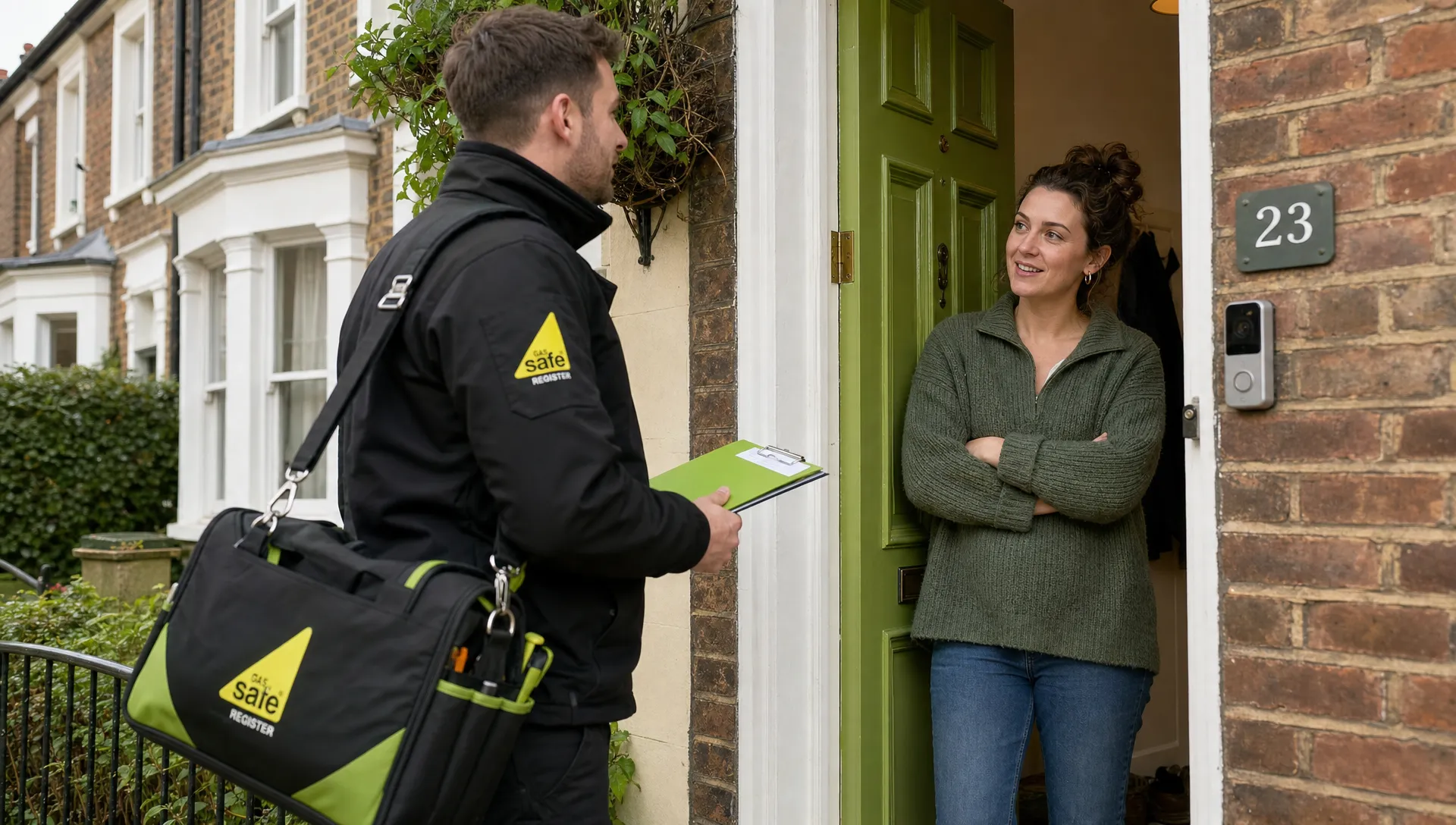
A Gas Safe heating engineer with a tool bag and clipboard talks with a homeowner at the open front door of a modest UK terraced house, with natural daylight, everyday clutter and no close-up view of pipework or boiler parts.

How long does a new boiler fitting take?

A straightforward boiler swap in the same position can often be completed in one day, although some jobs take longer. A more involved replacement may take two days. A conversion, relocation or back boiler removal can take several days depending on the layout and how much pipework needs changing.

Time matters because labour is a major part of the final cost. If one engineer quotes for a one-day swap and another quotes for three days, ask why. There may be a good reason, such as extra system cleaning, access difficulties or additional safety work.

For landlords, timescale also affects tenants. If the property is occupied, ask how long the heating and hot water will be off, whether temporary arrangements are needed, and how the engineer will manage access.

Should you buy the boiler yourself?

Some homeowners wonder whether buying the boiler separately will reduce the fitted cost. It can work in a few cases, but it is not always the best route.

Many heating engineers prefer to supply the boiler because they know which models they are happy to install, can source compatible flues and controls, and can handle warranty registration more easily. If you buy the boiler yourself, you may be responsible if parts are missing, the appliance is unsuitable, or the warranty process becomes more complicated.

Before buying a boiler online, ask your chosen engineer whether they are willing to fit customer-supplied boilers and whether the warranty would still be straightforward. A slightly cheaper appliance price can become poor value if it causes delays or warranty issues.

New boiler costs for landlords and rental properties

Landlords and property managers usually have a slightly different set of priorities. Price still matters, but so do reliability, documentation and tenant disruption.

For a rental property, make sure the quote covers all necessary safety checks, commissioning paperwork and Building Regulations notification. You will also need to keep your annual gas safety responsibilities separate from the installation itself. A new boiler does not remove the need for ongoing checks and maintenance.

It is also worth planning around void periods where possible. Replacing a boiler between tenancies can be less stressful than arranging work around tenants, especially if access is limited or the property is in a managed block.

After fitting, keep copies of the invoice, warranty, service instructions and safety paperwork. These records are useful for future maintenance, tenant queries and property management.

Is a new boiler always the right choice?

Not always. If your boiler is fairly modern and the fault is minor, a repair may be more sensible. But replacement often becomes worth considering when the boiler is old, unreliable, expensive to repair, inefficient, or when parts are becoming hard to source.

A heating engineer can inspect the system and explain whether repair or replacement is the better option. Be cautious of anyone who pushes an immediate replacement without explaining the fault, likely repair cost and realistic life left in the existing boiler.

If you do go ahead, plan for maintenance from the start. An annual service helps keep the boiler safe, supports warranty conditions and can catch small issues early. You can see typical prices in HaMuch’s annual boiler service cost guide.

How to compare new boiler and fitting quotes fairly

The cheapest quote is not always the best quote, and the highest quote is not automatically the safest. The aim is to compare like with like.

Before you choose an engineer, check:

  • Whether the engineer is Gas Safe registered for the type of work
  • The exact boiler make, model and output being quoted
  • Whether controls, flue, filters and system cleaning are included
  • Whether VAT is included or added later
  • How long the work will take and when it can start
  • What warranty is included and who registers it
  • Whether old materials and waste will be removed
  • Whether the quote includes making good, or only installation work

If you receive several quotes, place them side by side and look for missing details. A quote that seems low may exclude controls or system cleaning. A higher quote may include a better warranty or extra work that another engineer has not allowed for.

This is also why upfront pricing information is so useful. With HaMuch, you can compare local tradesperson rates and customer reviews before requesting quotes, giving you a clearer starting point than guesswork alone.

Ways to keep the cost sensible without cutting corners

There are sensible ways to manage the cost of a new boiler and fitting, but safety and quality should not be compromised.

The easiest win is to avoid unnecessary changes. If the current boiler location works well and is safe, keeping the new one in the same place will usually be cheaper than moving it. Planning ahead can also help, because emergency winter replacements often leave you with fewer options and less time to compare quotes.

It is also worth being clear about what you actually need. A larger or more expensive boiler is not automatically better. The right boiler is the one correctly sized for your home, hot water demand and heating system.

Finally, ask more than one qualified heating engineer to quote. You do not need to choose purely on price, but multiple quotes help you understand the fair range for your property and location.

Frequently asked questions

How much does a new boiler and fitting cost in the UK? Most standard new boiler and fitting jobs cost around £2,000 to £5,500, depending on the boiler type, property size and installation complexity. Conversions, relocations and back boiler removals can cost more.

Is fitting included when I buy a new boiler? Not always. Some prices are for the boiler only, while others are fully fitted packages. Always check whether labour, flue, controls, materials, testing, waste removal and VAT are included.

Can any plumber fit a gas boiler? No. Gas boiler work must be carried out by a Gas Safe registered engineer who is qualified for the type of gas work required. Always check their registration before the job starts.

How long should a new boiler installation take? A simple like-for-like boiler replacement may take one day. A conversion, relocation or back boiler replacement can take two or more days, depending on the work involved.

Do landlords need extra paperwork after a new boiler is fitted? Landlords should keep the invoice, warranty details, Building Regulations notification and any safety paperwork. Annual gas safety duties still apply after the new boiler is installed.

Ready to compare new boiler and fitting quotes?

Before you agree to a boiler quote, compare real local pricing and reviews so you know what is reasonable for your area. HaMuch helps homeowners, landlords and property managers find vetted local heating engineers, compare transparent prices and request quotes without obligation.

Start by using HaMuch to compare local tradesperson prices and request boiler fitting quotes from heating engineers near you.

How Much Does an Annual Boiler Service Cost in London?

How Much Does an Annual Boiler Service Cost in London?

For a standard gas boiler, an annual boiler service in London usually costs around £90£140. If you need a landlord gas safety record at the same appointment, budget roughly £110£180. Oil boilers, urge

For a standard gas boiler, an annual boiler service in London usually costs around £90-£140. If you need a landlord gas safety record at the same appointment, budget roughly £110-£180. Oil boilers, urgent appointments and awkward access can cost more.

That is a practical London budgeting range, not a fixed price. The best way to know what is fair for your postcode is to compare real local rates before you book. HaMuch lets you check transparent pricing for a heating engineer in London, so you can see what local tradespeople charge rather than relying on vague national averages.

If you want the wider UK picture as well, HaMuch also has a full annual boiler service cost guide covering common service types across the country. This article focuses on what changes when the job is in London.

Typical boiler service costs in London

Most London homeowners booking a routine annual service for a gas combi, system or regular boiler should expect a quote in the low hundreds, provided the boiler is working and easy to access.

Boiler service job in London Typical budget What to know
Standard annual gas boiler service £90-£140 For a routine service on a working domestic boiler
Larger, older or more time-consuming gas boiler service £110-£170 More likely if the boiler has not been serviced recently
Landlord gas safety check only £70-£120 A legal safety check, not always the same as a full service
Boiler service plus landlord gas safety record £110-£180 Common for rental properties when arranged together
Oil boiler service £140-£240 Less common in London and often more specialist
Urgent or out-of-hours attendance £140-£250+ Usually more expensive than a planned annual service

Always check whether VAT, parking, congestion charges or certificate paperwork are included. A quote that looks cheap at first can end up similar to others once extras are added.

Why boiler servicing can cost more in London

London boiler service prices are often higher than in many other parts of the UK because heating engineers have higher operating costs. Travel time, parking, van running costs, insurance, local demand and time spent moving between jobs all affect the final quote.

The exact borough can also make a difference. A straightforward service in an outer London home with easy parking may cost less than the same job in a central flat where the engineer has to pay for parking, carry tools further or work around building access rules.

Other factors that can push the price up include:

  • A boiler that has not been serviced for several years
  • A very old boiler or a model that needs more care
  • Poor access, such as a boiler inside a tight cupboard
  • A service booked at short notice during winter
  • A landlord certificate needed alongside the service
  • More than one gas appliance to check at the same property

A routine service is different from a repair visit. If the engineer finds a fault, the cost of parts and repair labour will usually be quoted separately.

A Gas Safe heating engineer with a tool bag and clipboard speaking with a homeowner on the doorstep of a typical London terraced house, with natural daylight, everyday household clutter visible inside and no close-up technical details.

What should be included in an annual boiler service?

A good boiler service is not just a quick glance at the boiler. The engineer should check that the appliance is operating safely, inspect key components, test safety controls and look for signs of wear, leaks or poor combustion.

For gas boilers, the work must be carried out by a Gas Safe registered engineer. The Gas Safe Register advises that gas appliances should be checked and serviced regularly by a qualified professional. Before the appointment starts, it is sensible to ask to see the engineer's Gas Safe ID card.

A standard domestic boiler service will usually include a visual inspection of the boiler and flue, operational checks, safety checks, cleaning of parts where required by the manufacturer, and a service record. The engineer may also check boiler pressure, controls and any obvious warning signs that could lead to future breakdowns.

It will not normally include replacement parts, major repairs, a power flush, radiator balancing, moving pipework or fixing unrelated heating problems. If you want any of those jobs done, ask for a separate quote so the service price stays clear.

Homeowners vs landlords: what is the difference?

For homeowners, an annual boiler service is not usually a legal requirement. However, it is strongly recommended for safety, reliability and keeping many manufacturer warranties valid. If your boiler warranty says it must be serviced every year, missing a service could cause problems if you later need to make a claim.

For landlords, the rules are stricter. If you rent out a property with gas appliances, you must arrange an annual gas safety check by a Gas Safe registered engineer. The Health and Safety Executive explains the landlord duties for gas safety checks and records, including providing tenants with the correct record.

A landlord gas safety check is often called a CP12, although the official wording is usually Landlord Gas Safety Record. It confirms that gas appliances have been checked for safety. A full boiler service goes further because it is maintenance as well as safety checking. Many landlords choose to book both together to save time and reduce disruption for tenants.

How to compare London boiler service quotes fairly

When you compare quotes, do not look at the headline price alone. A slightly higher quote may be better value if it includes VAT, parking, a written service record and a clear appointment window.

Before booking, ask the heating engineer:

  • Is the price for a full boiler service or only a safety check?
  • Is VAT included?
  • Are parking or congestion charges included?
  • Will I receive a written service record?
  • Are you Gas Safe registered for this type of boiler?
  • How much would a follow-up repair visit cost if a fault is found?

You should also give accurate details when requesting quotes. Tell the engineer the boiler make and model if you know it, the property type, where the boiler is located, whether you need a landlord certificate and whether there are any current faults.

This is where HaMuch is useful. Instead of guessing what a fair London price might be, you can compare local tradespeople, genuine reviews and pricing information in one place. HaMuch is free for homeowners to use, and there is no obligation to book.

When should you book your boiler service?

The best time to book is usually spring, summer or early autumn, before the coldest months arrive. Heating engineers are often busiest when temperatures drop, because breakdowns increase and emergency heating jobs take priority.

If your boiler is due for its annual service in winter, do not skip it, but try to book ahead rather than waiting until you urgently need heating. For landlords, diarise the gas safety check early so you do not risk missing the renewal date.

It is also worth booking a service before buying or selling a property, before new tenants move in, or after moving into a home where you cannot see evidence of recent boiler maintenance.

What if the service shows you need a new boiler?

A boiler service may reveal that the appliance is unsafe, inefficient or becoming uneconomical to repair. That does not automatically mean you need a replacement, but it is a sign to ask clear questions.

Ask the engineer what the fault is, whether repair parts are readily available, how long the repair is likely to last and whether the boiler has any safety concerns. If replacement is recommended, take time to compare options and costs. HaMuch has a separate guide explaining new boiler installation costs if you need to plan for a bigger job.

For most working boilers, though, annual servicing is a relatively small cost compared with the inconvenience of a winter breakdown.

Frequently Asked Questions

How much does an annual boiler service cost in London? A standard annual gas boiler service in London usually costs around £90-£140. Landlord certificates, urgent visits, older boilers and difficult access can increase the price.

Is a boiler service the same as a gas safety certificate? No. A gas safety certificate, often called a Landlord Gas Safety Record, is a safety check. A boiler service is maintenance and normally includes additional checks and cleaning in line with the boiler manufacturer's instructions.

Do I need a Gas Safe engineer for a boiler service? Yes, if it is a gas boiler. Always use a Gas Safe registered engineer and ask to see their ID card before work starts.

How long does a boiler service take? A straightforward domestic boiler service often takes around 30 to 60 minutes. It can take longer if the boiler is old, hard to access or has not been maintained recently.

Are repairs included in the boiler service cost? Usually not. The service price normally covers inspection, testing and routine servicing. If faults are found, replacement parts and repair labour are normally quoted separately.

Can landlords book several boiler services together? Often, yes. If you manage several London rental properties, ask whether the engineer can group appointments by area. This may make scheduling easier, although the final price depends on the work required.

Compare London boiler service quotes with HaMuch

A fair boiler service price should be clear before you book. With HaMuch, you can compare local heating engineers, see real pricing information and read genuine customer reviews without any obligation.

If your boiler is due for its annual check, request quotes through HaMuch and compare your options before choosing a London heating engineer.

How to Check If a Tradesperson Is Properly Qualified

How to Check If a Tradesperson Is Properly Qualified - Main Image

If you are wondering how to check if a tradesperson is qualified, the safest approach is simple: verify the person, the business and the specific work they are allowed to do before you agree to anythi

If you are wondering how to check if a tradesperson is qualified, the safest approach is simple: verify the person, the business and the specific work they are allowed to do before you agree to anything.

A tidy van, a confident manner and a few good reviews can be reassuring, but they are not proof of competence. In the UK, some trades and job types are legally regulated, while others rely more on training, trade body membership, experience, insurance and customer feedback.

That can feel confusing if you are a homeowner arranging a one-off repair, or a landlord responsible for keeping a rental property safe. This guide explains what to ask for, where to check it, and how to compare quotes without getting caught out by vague claims or unusually low prices.

What properly qualified really means

There is no single UK licence that covers every tradesperson. A qualified tradesperson may have formal training, apprenticeship experience, industry certificates, scheme membership, years of proven work, or a combination of these.

For the person hiring them, the key question is not whether they have a certificate somewhere. It is whether they are competent and authorised for your exact job.

In practice, you are checking three things:

  • The tradesperson has suitable skills and experience for the work.
  • They are registered with the correct official scheme where the law or Building Regulations require it.
  • They carry appropriate insurance and are willing to provide written paperwork.

For example, a decorator does not need the same kind of registration as a gas engineer. A general plumber may be perfectly competent to replace taps, but that does not mean they are legally allowed to work on a gas boiler. A builder may be experienced with extensions, but certain structural, drainage or window work may still need Building Control sign-off.

Start with the trade and the job type

The quickest way to avoid confusion is to start with the work you need done. Some jobs carry a higher safety or compliance risk, so the checks are stricter.

Trade or job type What to check Where to verify
Gas boiler, gas cooker or gas fire work Gas Safe registration, photo ID card and the exact gas work categories listed on the card Gas Safe Register
Domestic electrical work Competent person scheme registration for notifiable work, plus evidence of suitable electrical qualifications and experience Competent Person Register
Landlord electrical inspection or EICR A competent and qualified inspector, suitable insurance and a proper Electrical Installation Condition Report Scheme provider checks and written evidence from the electrician
Oil boiler or oil tank work OFTEC registration for oil-fired heating work OFTEC
Solid fuel stove installation HETAS registration or Building Control approval HETAS
Replacement windows and doors FENSA, CERTASS or Building Control sign-off FENSA or the installer’s scheme provider
General plumbing No universal UK plumber licence, so check experience, insurance, reviews and optional trade membership WaterSafe can help for approved plumbers
Locksmith work No statutory locksmith licence in the UK, so check reviews, ID, insurance and optional trade membership Master Locksmiths Association
Building, carpentry, plastering, tiling, decorating, gardening and cleaning Relevant experience, references, photos of similar work, insurance and written terms Customer reviews, references and any job-specific paperwork

The important point is that a logo on a website is not enough. Always check the official register yourself, using the business name, registration number or postcode. If the work is safety-critical, ask the tradesperson to show their ID card when they arrive.

How to check a tradesperson’s qualifications step by step

Ask for their full business details

Before arranging a visit, ask for the tradesperson’s trading name, full name, business address, phone number and email address. If they say they are registered with a trade body or official scheme, ask for the registration number too.

A genuine professional should not be offended by this. Qualified tradespeople are used to being asked, especially for gas, electrical and landlord safety work.

Be cautious if someone only gives a mobile number, refuses to share a surname, or wants to keep everything informal. That does not automatically mean they are unqualified, but it makes your checks much harder.

Check the official register yourself

Do not rely on screenshots, old certificates or website badges alone. Go to the official register and search for the business or individual.

For gas work, check the Gas Safe Register and make sure the engineer is listed for the exact type of appliance. Gas Safe ID cards include categories of work, so a person registered for one type of gas work may not be covered for every gas job.

For electrical work, check whether the electrician or business is part of a recognised competent person scheme. In England and Wales, some domestic electrical work is notifiable under Building Regulations. A registered competent person can usually self-certify that work, which avoids you having to arrange Building Control approval separately.

For rented properties, landlords should also check that electrical inspections are carried out by someone competent to produce a valid EICR. If you are budgeting for this, HaMuch has a guide to how much an EICR electrical safety certificate costs, which explains typical cost factors and what affects the quote.

Match the person at the door to the paperwork

This is especially important for gas and electrical jobs. A company may be registered, but you still want to know who is actually doing the work.

Ask who will attend and whether they are covered under the business registration. When they arrive, check ID if the job is regulated. For Gas Safe work, the engineer should be able to show a current Gas Safe ID card. For electrical work, the person or business should be able to explain what certification you will receive once the work is complete.

If a subcontractor turns up and you have never been given their details, pause and ask for confirmation before they start.

Ask for insurance proof

Qualifications show competence. Insurance protects you if something goes wrong.

At a minimum, ask whether the tradesperson has public liability insurance. If they employ other people, employers’ liability insurance may also be relevant. For inspection and reporting work, such as certain surveys or safety reports, professional indemnity insurance can be useful too.

Ask for the insurance certificate and check that the business name, expiry date and level of cover look sensible for the job. You do not need to become an insurance expert, but you should be able to see that cover is current and not in someone else’s name.

A tradesperson with a tool bag standing in the doorway of a modest UK hallway while speaking with a homeowner, with natural daylight, ordinary household clutter and no close-up view of technical equipment.

Look for evidence of similar work

A tradesperson can be qualified and still be a poor fit for your job. A small repair, a full bathroom refit, a garden clearance and a rental safety inspection all need different experience.

Ask whether they have completed similar work recently. Photos, references and reviews are useful here. For larger projects, ask how they plan to handle access, waste, materials, timescales and any approvals.

For homeowners, this helps you understand whether the tradesperson is comfortable with the scale of the job. For landlords and property managers, it also helps you judge whether they can work around tenants, provide paperwork promptly and communicate clearly.

Get a proper written quote

A qualified tradesperson should be willing to put the basics in writing. A clear quote reduces misunderstandings and makes it easier to compare like for like.

A good written quote should include the scope of work, labour, materials, VAT if applicable, start date or expected timescale, payment terms, waste disposal, and which certificates or guarantees will be provided.

Avoid making a decision based only on a single total price. One quote may include certification, disposal and making good, while another may leave those out. If a quote is much cheaper than the others, ask what is included and what is not.

How qualifications affect price

A properly qualified and insured tradesperson will not always be the cheapest option. They have training, scheme fees, insurance, tools, travel time and admin costs to cover. That does not mean you should overpay, but it does mean the lowest quote is not automatically the best quote.

This is where transparent local pricing helps. HaMuch is built to show real, comparable pricing by trade and location, not vague guesswork. If you are booking electrical work in busy areas such as London, Birmingham or Manchester, checking local electrician rates on HaMuch gives you a better starting point before you request quotes.

The same principle applies to plumbing. If you are not sure what is normal for call-outs, hourly labour or day rates, the HaMuch guide to the average plumber hourly rate in the UK can help you sense-check a quote before you commit.

The aim is not to find the cheapest person at any cost. It is to find someone qualified, reliable and fairly priced for your area.

Extra checks for landlords and property managers

Landlords have additional duties because the property is being let to tenants. You need reliable work, but you also need paperwork that proves key safety checks have been done properly.

For gas appliances, use a Gas Safe registered engineer and keep the gas safety record. For electrical safety in England, private landlords must have electrical installations inspected and tested at least every five years by a qualified and competent person. The GOV.UK landlord guidance on electrical safety explains the current requirements in more detail.

Rules can differ across England, Scotland, Wales and Northern Ireland, so check the requirements for your property’s location. If you manage several properties, it is worth keeping a simple record of each tradesperson’s registration, insurance expiry date, certificates supplied and invoice history.

Red flags that should make you pause

Most tradespeople are honest and hard-working, but it is still worth knowing the warning signs. Be cautious if you notice any of the following:

  • They refuse to provide a registration number for regulated work.
  • They say certificates are not needed for gas, electrical or Building Regulations work without a clear explanation.
  • The name on the register does not match the person or business you are dealing with.
  • They pressure you to agree immediately or pay a large cash amount upfront.
  • They only provide a verbal price for a job that clearly needs a written quote.
  • They cannot explain what is included in the quote.
  • They dismiss your questions about insurance, references or certification.

One red flag does not always mean someone is unsafe, but it does mean you should slow down. A trustworthy tradesperson will usually be happy to explain their credentials in plain English.

Are reviews enough to prove qualification?

Reviews are valuable, but they are not a substitute for qualification checks. A customer review can tell you whether someone turned up on time, communicated well and left the property tidy. It cannot prove they are legally registered for gas work or competent to inspect an electrical installation.

Use reviews as one part of the decision, alongside official registers, written quotes, insurance and evidence of similar work. On HaMuch, local tradesperson listings include genuine customer reviews and comparable pricing, so you can look at reputation and cost together rather than guessing.

Frequently Asked Questions

Can I check a tradesperson’s qualifications online? Yes. For regulated work, use the official register, such as Gas Safe for gas engineers or the Competent Person Register for certain domestic electrical work. For other trades, check trade body membership, reviews, references and insurance.

Does every tradesperson need a licence in the UK? No. The UK does not have one universal tradesperson licence. Gas work is strictly regulated, and some electrical and building-related jobs need specific registration or Building Control sign-off. Many other trades rely on training, experience, insurance and reputation.

Is a recommendation from a friend enough? A recommendation is useful, but it should not replace basic checks. Even if a friend had a good experience, you still need to confirm that the tradesperson is suitable for your exact job and properly registered where required.

What should landlords check before hiring a tradesperson? Landlords should check registration for regulated work, insurance, written quotes and whether the tradesperson can provide the certificates or reports needed for rental compliance. Keep copies of all paperwork with your property records.

Should I avoid the cheapest quote? Not automatically. A low quote may be fine if the scope is clear and the tradesperson is properly qualified. Be careful if it is much lower than other quotes and important items such as certification, materials or waste disposal are missing.

Compare qualified local tradespeople with clearer prices

Checking qualifications does not have to be awkward. It is a normal part of hiring someone to work in your home or rental property.

With HaMuch, you can compare local, vetted tradespeople, see genuine customer reviews and check transparent pricing data before you decide. It is free for homeowners to use and there is no obligation to book.

If you need work done, request quotes through HaMuch and compare properly qualified tradespeople in your area before you choose who to hire.