Need help with a job?

Find affordable tradespeople

Need help with a job?

HaMuch is Excellent

Currently Viewing Posts Tagged locks

Front Door Sticking and Won’t Close Properly

Front Door Sticking and Won't Close Properly

A front door sticking can be annoying, but it is also worth sorting quickly. If the door will not close properly, you may lose heat, damage the lock by forcing it or, in the worst case, leave the prop

A front door sticking can be annoying, but it is also worth sorting quickly. If the door will not close properly, you may lose heat, damage the lock by forcing it or, in the worst case, leave the property less secure.

The good news is that most sticking front doors have straightforward causes. Damp weather, loose hinges, a slightly dropped door, swollen timber or a misaligned lock can all make a door catch. For most homes, the right first call is a carpenter and joiner. If the key or locking mechanism is the main problem, a locksmith is usually better placed to help.

If the door cannot be locked at all, treat it as a same-day security issue. Avoid forcing the key or handle, especially on uPVC or composite doors with multi-point locks, as this can turn a simple adjustment into a more expensive lock repair.

First, work out where the door is sticking

Before calling anyone, take two minutes to observe what is happening. You do not need tools or trade knowledge, just a careful look at the door while opening and closing it slowly.

Check whether the door catches at the top, bottom, hinge side or latch side. A door scraping the floor or threshold often points to dropped hinges or swelling at the bottom. A door catching at the top corner may mean the door has twisted, the frame has moved slightly or the hinges are pulling loose. If the door closes but the latch or key will not engage, the lock and keep may be out of line.

Try the handle and key while the door is open. If the key turns smoothly and the handle works normally when open, the lock itself may be fine and the door is probably misaligned in the frame. If the key is stiff even when the door is open, or the handle feels loose or crunchy, call a locksmith rather than a carpenter.

Do not repeatedly slam the door to make it shut. That can loosen hinges, split timber around the frame or damage the lock. It also makes it harder for a tradesperson to see the original fault.

Common causes of a front door sticking and who to call

A sticking front door is a symptom, not a single fault. The table below gives a quick guide to the most likely causes and the trade that usually deals with each one.

What you notice Likely cause Who to call
Door rubs at the bottom or threshold Dropped hinges, swollen timber or raised flooring Carpenter and joiner
Door catches along the latch side Door has expanded, frame has shifted or hinges need adjustment Carpenter and joiner
Key will not turn properly when the door is closed Lock and keep are out of alignment Locksmith
Handle lifts but the door will not lock Multi-point locking system may be misaligned or strained Locksmith
Door sticks only in wet or cold weather Timber swelling, paint build-up or weather exposure Carpenter and joiner, sometimes painter and decorator after repair
Cracks around the door frame or movement in brickwork Possible frame movement, damp damage or structural issue Builder, then carpenter if repairs are needed
Door started sticking after new flooring was fitted Floor level or threshold may now be too high Carpenter and joiner

In older properties, a small amount of seasonal movement is normal. Timber doors in particular can expand in damp weather and contract again when conditions dry out. If the door only sticks lightly for a few days each winter, it may just need minor adjustment and resealing. If it is getting worse, leaves visible scuff marks or no longer locks cleanly, book someone before the lock or frame is damaged.

Timber front doors: swelling, paint build-up and weather exposure

Timber front doors are common in period homes, terraces, cottages and many rental properties. They look good and can last for decades, but they react to moisture more than uPVC or composite doors.

A timber door may stick because the edge has swollen, the bottom rail has absorbed rainwater or layers of old paint have built up around the closing edge. Sometimes the door itself is not the real problem. The frame may have been painted too thickly, the weather strip may have moved or a threshold may have lifted.

A carpenter and joiner can usually identify whether the door needs adjusting, easing, planing, rehanging or repairing. If timber has been shaved or sanded, it should be sealed properly afterwards, otherwise the same edge can absorb moisture again. For a painted timber door, a painter and decorator may be needed after the joinery repair to finish and protect the surface.

This is one reason DIY planing can go wrong. Removing too much timber can leave draught gaps, make the latch sit badly or expose bare wood to rain. If the door is expensive, original to the property or part of a managed rental, it is usually better to get a tradesperson to assess it first.

uPVC and composite front doors: avoid forcing the handle

uPVC and composite doors often use multi-point locking systems. That means the handle and key may operate more than one locking point along the door edge. When the door drops slightly or the frame shifts, those locking points can stop lining up cleanly.

A common sign is that the door closes but you have to lift the handle harder than usual, or the key only turns if you pull or push the door at the same time. This often starts as a small alignment issue. If you keep forcing it, the internal mechanism can fail.

For uPVC and composite doors, a locksmith is usually the best first call if the lock, key or handle is affected. If the door is clearly rubbing at the bottom with no lock issue, a carpenter and joiner may be able to help, though some jobs may need a specialist door repairer depending on the door type.

If you are comparing tradespeople in larger cities, check the local going rate before you book. HaMuch shows real, comparable rates for trades by location, including carpenter and joiner rates in London, carpenter and joiner rates in Birmingham and carpenter and joiner rates in Manchester. If the lock is the main issue, you can also compare local locksmith rates before deciding who to contact.

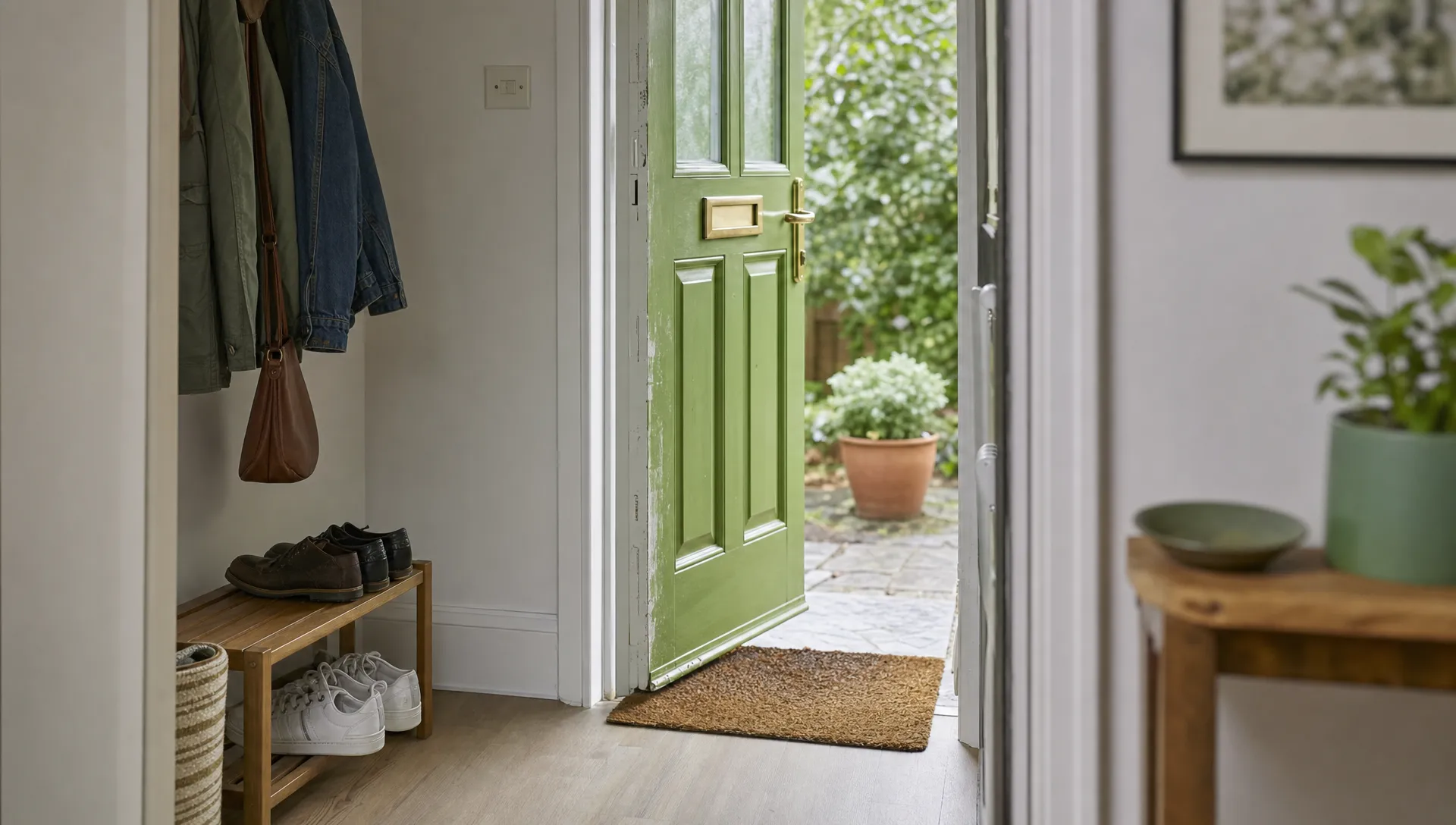
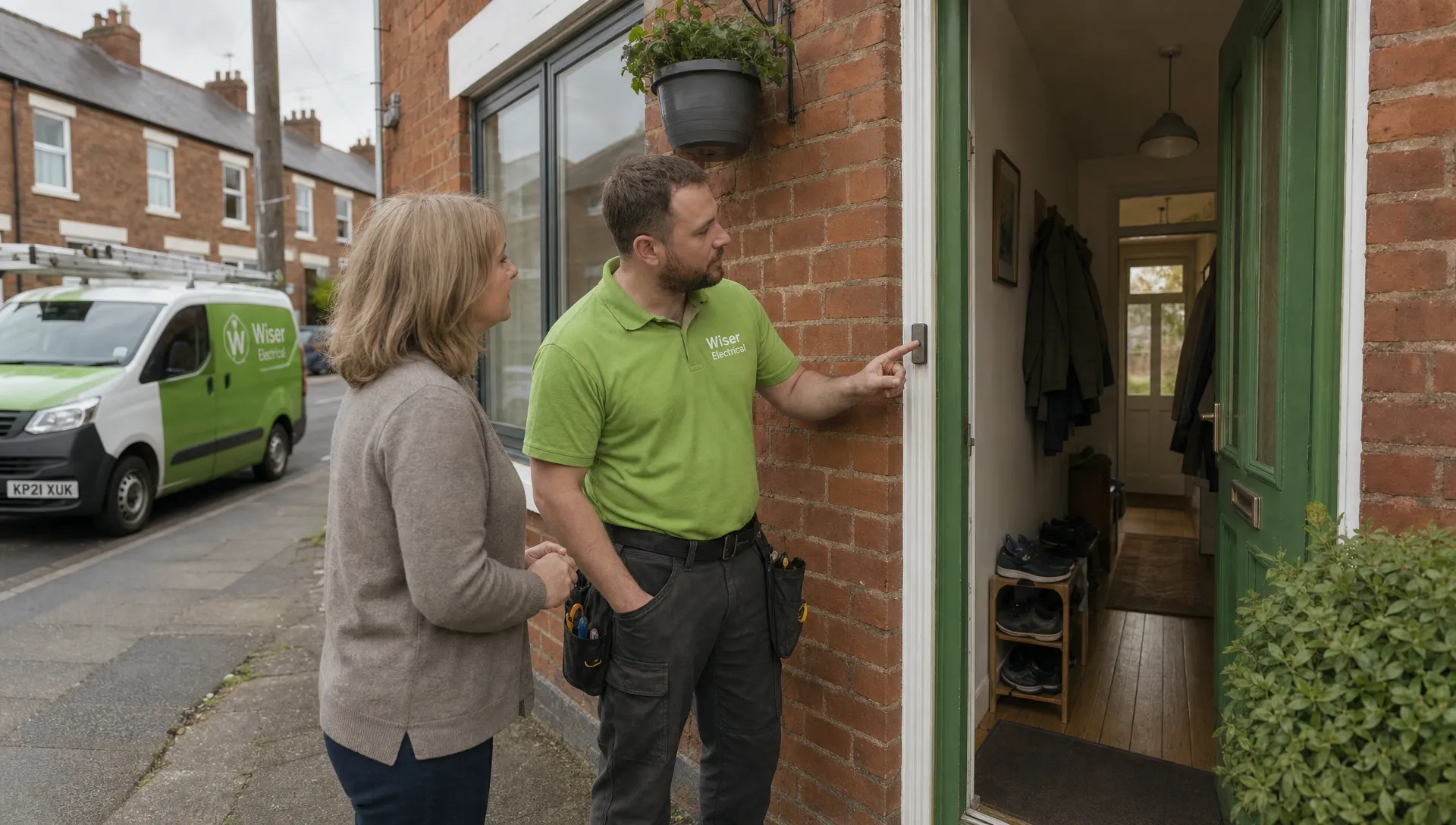
A realistic UK hallway with a painted timber front door slightly ajar, showing light scuff marks near the door edge and threshold. The scene is viewed from a normal standing distance with natural daylight and ordinary household items near the entrance.

Can you fix a sticking front door yourself?

There are a few safe checks you can do before hiring someone. Keep them simple. The aim is to rule out obvious obstructions, not to reshape the door or dismantle the lock.

You can try the following:

  • Clear grit, leaves or loose paint from the threshold and door frame.
  • Check that a doormat, rug or draught excluder is not stopping the door closing.
  • Look for visibly loose hinge screws on a timber door, but do not over-tighten them.
  • Wipe moisture from the bottom edge of the door and check whether rainwater is sitting against it.
  • Test the key and handle with the door open, so you can tell whether the lock works freely.

Stop there if the problem continues. Do not chisel the frame, plane the door heavily or oil every part of the lock in the hope that it frees up. Wrong products can attract dirt inside a lock, and heavy DIY adjustment can make the final repair harder.

If the door is in a rented property, report it with photos and a short description of the problem. Mention whether the tenant can lock the door, whether it sticks all the time or only in wet weather, and whether the key works when the door is open. That information helps a landlord or property manager send the right trade first time.

When a sticking front door may point to a bigger problem

Most sticking doors are not structural emergencies. Still, some signs suggest the issue is beyond a simple hinge or lock adjustment.

Cracks spreading from the corners of the door frame, gaps opening between the frame and wall, damp or rotten timber around the frame, or a door that suddenly becomes badly out of square can indicate movement or decay around the opening. A builder may need to inspect the surrounding wall, lintel or brickwork before a carpenter repairs or refits the door.

If the front door has swollen after a leak, gutter problem or repeated rain exposure, the cause of the moisture needs fixing too. Otherwise, a newly adjusted door may start sticking again. In many UK homes, especially older terraces and bay-fronted houses, front doors are exposed to wind-driven rain and can deteriorate faster if paint or sealant has failed.

For landlords, this is also a security and habitability issue. A tenant who cannot close or lock a front door properly should not be left waiting for a routine repair slot. Even if the final repair is minor, arrange an assessment promptly and keep a record of the work.

What a tradesperson may do to repair it

The repair depends on the door type and the cause. A carpenter and joiner may adjust hinges, rehang the door, ease a tight edge, repair part of the frame or adjust the strike plate so the latch sits correctly. With a timber door, they may recommend sealing or repainting any exposed edge after the adjustment.

A locksmith may adjust the lock keep, realign a uPVC or composite door lock, repair a stiff mechanism or replace worn parts if the lock has been strained. If the lock has already failed and the door cannot be secured, the job may become more urgent and parts may be needed.

A builder may be needed if the frame has moved because of damp, rot, failed masonry or a problem with the opening itself. Once the underlying issue is resolved, a carpenter can usually complete the door and frame work.

When requesting quotes, describe the symptoms rather than guessing the repair. For example, say “the door catches at the top right and the key only turns when I pull the door towards me” instead of “the lock is broken”. Clear symptoms help tradespeople quote more accurately.

Questions to ask before booking

A good tradesperson should be able to explain the likely cause in plain English and tell you whether they expect to repair, adjust or replace anything.

Useful questions include:

  • Do you repair this type of door, timber, uPVC or composite?
  • Is this likely to be a hinge, frame or lock alignment problem?
  • Do you charge a call-out fee, and is it included in the quote?
  • Can you make the door secure on the first visit if parts are needed later?
  • Will you separate labour and parts on the invoice?
  • For timber doors, will any planed or sanded areas be sealed afterwards?

Price matters, but so does choosing the right trade. A cheaper visit from the wrong person can cost more if they cannot complete the repair. HaMuch helps by showing local tradespeople, genuine customer reviews and comparable pricing information upfront, so you can see how rates differ before you make contact.

Frequently Asked Questions

Why is my front door suddenly sticking? Sudden sticking is often caused by damp weather, a dropped hinge, swelling timber or a lock that has moved out of alignment. If it happened after heavy rain, new flooring or decorating, mention that when requesting a quote.

Who do I call for a front door sticking, a carpenter or locksmith? Call a carpenter and joiner if the door is rubbing, swollen, dropped or catching on the frame. Call a locksmith if the key, handle or locking mechanism is the main problem, especially on uPVC or composite doors.

Can a sticking front door fix itself when the weather changes? A timber door may ease slightly when the weather dries out, but repeated sticking usually means the door needs adjustment or sealing. If the door will not lock properly, do not wait for the weather to change.

Is it safe to plane a sticking front door myself? Light DIY checks are fine, but planing can create gaps, expose unsealed timber or make the lock line up badly. For a front door, especially one exposed to rain or needed for security, a carpenter is usually the safer option.

What should I do if my front door will not lock? Treat it as a security issue and contact a locksmith as soon as possible. Avoid forcing the key or handle, as this can damage the mechanism and make the repair more expensive.

Get your front door closing properly again

If your front door is sticking and will not close properly, do not keep forcing it. Make a note of where it catches, check whether the lock works with the door open and then get the right trade to look at it.

You can post your job on HaMuch for free, compare local carpenters, joiners and locksmiths, check transparent pricing information and request quotes with no obligation to book. If the door cannot be locked, say so in the job description so local tradespeople know it needs urgent attention.

How to Check If a Tradesperson Is Properly Qualified

How to Check If a Tradesperson Is Properly Qualified - Main Image

If you are wondering how to check if a tradesperson is qualified, the safest approach is simple: verify the person, the business and the specific work they are allowed to do before you agree to anythi

If you are wondering how to check if a tradesperson is qualified, the safest approach is simple: verify the person, the business and the specific work they are allowed to do before you agree to anything.

A tidy van, a confident manner and a few good reviews can be reassuring, but they are not proof of competence. In the UK, some trades and job types are legally regulated, while others rely more on training, trade body membership, experience, insurance and customer feedback.

That can feel confusing if you are a homeowner arranging a one-off repair, or a landlord responsible for keeping a rental property safe. This guide explains what to ask for, where to check it, and how to compare quotes without getting caught out by vague claims or unusually low prices.

What properly qualified really means

There is no single UK licence that covers every tradesperson. A qualified tradesperson may have formal training, apprenticeship experience, industry certificates, scheme membership, years of proven work, or a combination of these.

For the person hiring them, the key question is not whether they have a certificate somewhere. It is whether they are competent and authorised for your exact job.

In practice, you are checking three things:

  • The tradesperson has suitable skills and experience for the work.
  • They are registered with the correct official scheme where the law or Building Regulations require it.
  • They carry appropriate insurance and are willing to provide written paperwork.

For example, a decorator does not need the same kind of registration as a gas engineer. A general plumber may be perfectly competent to replace taps, but that does not mean they are legally allowed to work on a gas boiler. A builder may be experienced with extensions, but certain structural, drainage or window work may still need Building Control sign-off.

Start with the trade and the job type

The quickest way to avoid confusion is to start with the work you need done. Some jobs carry a higher safety or compliance risk, so the checks are stricter.

Trade or job type What to check Where to verify
Gas boiler, gas cooker or gas fire work Gas Safe registration, photo ID card and the exact gas work categories listed on the card Gas Safe Register
Domestic electrical work Competent person scheme registration for notifiable work, plus evidence of suitable electrical qualifications and experience Competent Person Register
Landlord electrical inspection or EICR A competent and qualified inspector, suitable insurance and a proper Electrical Installation Condition Report Scheme provider checks and written evidence from the electrician
Oil boiler or oil tank work OFTEC registration for oil-fired heating work OFTEC
Solid fuel stove installation HETAS registration or Building Control approval HETAS
Replacement windows and doors FENSA, CERTASS or Building Control sign-off FENSA or the installer’s scheme provider
General plumbing No universal UK plumber licence, so check experience, insurance, reviews and optional trade membership WaterSafe can help for approved plumbers
Locksmith work No statutory locksmith licence in the UK, so check reviews, ID, insurance and optional trade membership Master Locksmiths Association
Building, carpentry, plastering, tiling, decorating, gardening and cleaning Relevant experience, references, photos of similar work, insurance and written terms Customer reviews, references and any job-specific paperwork

The important point is that a logo on a website is not enough. Always check the official register yourself, using the business name, registration number or postcode. If the work is safety-critical, ask the tradesperson to show their ID card when they arrive.

How to check a tradesperson’s qualifications step by step

Ask for their full business details

Before arranging a visit, ask for the tradesperson’s trading name, full name, business address, phone number and email address. If they say they are registered with a trade body or official scheme, ask for the registration number too.

A genuine professional should not be offended by this. Qualified tradespeople are used to being asked, especially for gas, electrical and landlord safety work.

Be cautious if someone only gives a mobile number, refuses to share a surname, or wants to keep everything informal. That does not automatically mean they are unqualified, but it makes your checks much harder.

Check the official register yourself

Do not rely on screenshots, old certificates or website badges alone. Go to the official register and search for the business or individual.

For gas work, check the Gas Safe Register and make sure the engineer is listed for the exact type of appliance. Gas Safe ID cards include categories of work, so a person registered for one type of gas work may not be covered for every gas job.

For electrical work, check whether the electrician or business is part of a recognised competent person scheme. In England and Wales, some domestic electrical work is notifiable under Building Regulations. A registered competent person can usually self-certify that work, which avoids you having to arrange Building Control approval separately.

For rented properties, landlords should also check that electrical inspections are carried out by someone competent to produce a valid EICR. If you are budgeting for this, HaMuch has a guide to how much an EICR electrical safety certificate costs, which explains typical cost factors and what affects the quote.

Match the person at the door to the paperwork

This is especially important for gas and electrical jobs. A company may be registered, but you still want to know who is actually doing the work.

Ask who will attend and whether they are covered under the business registration. When they arrive, check ID if the job is regulated. For Gas Safe work, the engineer should be able to show a current Gas Safe ID card. For electrical work, the person or business should be able to explain what certification you will receive once the work is complete.

If a subcontractor turns up and you have never been given their details, pause and ask for confirmation before they start.

Ask for insurance proof

Qualifications show competence. Insurance protects you if something goes wrong.

At a minimum, ask whether the tradesperson has public liability insurance. If they employ other people, employers’ liability insurance may also be relevant. For inspection and reporting work, such as certain surveys or safety reports, professional indemnity insurance can be useful too.

Ask for the insurance certificate and check that the business name, expiry date and level of cover look sensible for the job. You do not need to become an insurance expert, but you should be able to see that cover is current and not in someone else’s name.

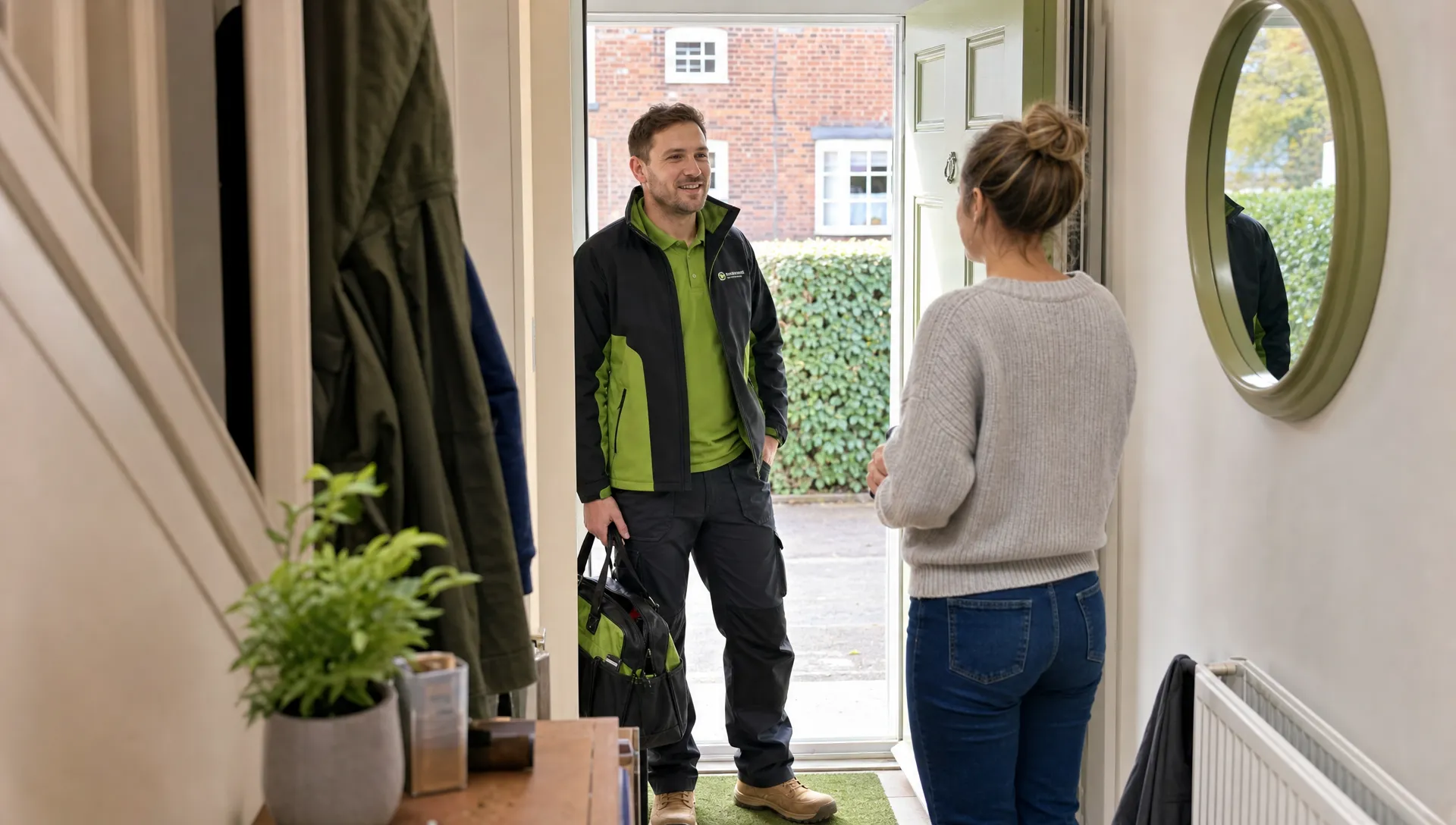
A tradesperson with a tool bag standing in the doorway of a modest UK hallway while speaking with a homeowner, with natural daylight, ordinary household clutter and no close-up view of technical equipment.

Look for evidence of similar work

A tradesperson can be qualified and still be a poor fit for your job. A small repair, a full bathroom refit, a garden clearance and a rental safety inspection all need different experience.

Ask whether they have completed similar work recently. Photos, references and reviews are useful here. For larger projects, ask how they plan to handle access, waste, materials, timescales and any approvals.

For homeowners, this helps you understand whether the tradesperson is comfortable with the scale of the job. For landlords and property managers, it also helps you judge whether they can work around tenants, provide paperwork promptly and communicate clearly.

Get a proper written quote

A qualified tradesperson should be willing to put the basics in writing. A clear quote reduces misunderstandings and makes it easier to compare like for like.

A good written quote should include the scope of work, labour, materials, VAT if applicable, start date or expected timescale, payment terms, waste disposal, and which certificates or guarantees will be provided.

Avoid making a decision based only on a single total price. One quote may include certification, disposal and making good, while another may leave those out. If a quote is much cheaper than the others, ask what is included and what is not.

How qualifications affect price

A properly qualified and insured tradesperson will not always be the cheapest option. They have training, scheme fees, insurance, tools, travel time and admin costs to cover. That does not mean you should overpay, but it does mean the lowest quote is not automatically the best quote.

This is where transparent local pricing helps. HaMuch is built to show real, comparable pricing by trade and location, not vague guesswork. If you are booking electrical work in busy areas such as London, Birmingham or Manchester, checking local electrician rates on HaMuch gives you a better starting point before you request quotes.

The same principle applies to plumbing. If you are not sure what is normal for call-outs, hourly labour or day rates, the HaMuch guide to the average plumber hourly rate in the UK can help you sense-check a quote before you commit.

The aim is not to find the cheapest person at any cost. It is to find someone qualified, reliable and fairly priced for your area.

Extra checks for landlords and property managers

Landlords have additional duties because the property is being let to tenants. You need reliable work, but you also need paperwork that proves key safety checks have been done properly.

For gas appliances, use a Gas Safe registered engineer and keep the gas safety record. For electrical safety in England, private landlords must have electrical installations inspected and tested at least every five years by a qualified and competent person. The GOV.UK landlord guidance on electrical safety explains the current requirements in more detail.

Rules can differ across England, Scotland, Wales and Northern Ireland, so check the requirements for your property’s location. If you manage several properties, it is worth keeping a simple record of each tradesperson’s registration, insurance expiry date, certificates supplied and invoice history.

Red flags that should make you pause

Most tradespeople are honest and hard-working, but it is still worth knowing the warning signs. Be cautious if you notice any of the following:

  • They refuse to provide a registration number for regulated work.
  • They say certificates are not needed for gas, electrical or Building Regulations work without a clear explanation.
  • The name on the register does not match the person or business you are dealing with.
  • They pressure you to agree immediately or pay a large cash amount upfront.
  • They only provide a verbal price for a job that clearly needs a written quote.
  • They cannot explain what is included in the quote.
  • They dismiss your questions about insurance, references or certification.

One red flag does not always mean someone is unsafe, but it does mean you should slow down. A trustworthy tradesperson will usually be happy to explain their credentials in plain English.

Are reviews enough to prove qualification?

Reviews are valuable, but they are not a substitute for qualification checks. A customer review can tell you whether someone turned up on time, communicated well and left the property tidy. It cannot prove they are legally registered for gas work or competent to inspect an electrical installation.

Use reviews as one part of the decision, alongside official registers, written quotes, insurance and evidence of similar work. On HaMuch, local tradesperson listings include genuine customer reviews and comparable pricing, so you can look at reputation and cost together rather than guessing.

Frequently Asked Questions

Can I check a tradesperson’s qualifications online? Yes. For regulated work, use the official register, such as Gas Safe for gas engineers or the Competent Person Register for certain domestic electrical work. For other trades, check trade body membership, reviews, references and insurance.

Does every tradesperson need a licence in the UK? No. The UK does not have one universal tradesperson licence. Gas work is strictly regulated, and some electrical and building-related jobs need specific registration or Building Control sign-off. Many other trades rely on training, experience, insurance and reputation.

Is a recommendation from a friend enough? A recommendation is useful, but it should not replace basic checks. Even if a friend had a good experience, you still need to confirm that the tradesperson is suitable for your exact job and properly registered where required.

What should landlords check before hiring a tradesperson? Landlords should check registration for regulated work, insurance, written quotes and whether the tradesperson can provide the certificates or reports needed for rental compliance. Keep copies of all paperwork with your property records.

Should I avoid the cheapest quote? Not automatically. A low quote may be fine if the scope is clear and the tradesperson is properly qualified. Be careful if it is much lower than other quotes and important items such as certification, materials or waste disposal are missing.

Compare qualified local tradespeople with clearer prices

Checking qualifications does not have to be awkward. It is a normal part of hiring someone to work in your home or rental property.

With HaMuch, you can compare local, vetted tradespeople, see genuine customer reviews and check transparent pricing data before you decide. It is free for homeowners to use and there is no obligation to book.

If you need work done, request quotes through HaMuch and compare properly qualified tradespeople in your area before you choose who to hire.

Make Home Safe: Upgrading Locks

door repairs

Everyone wants to feel safe in their own homes, which is why you should consider upgrading or changing your home locks for added security. As a home owner, you want to feel confident that your loved ones and your belongings are safe and secure, which is why so many people are considering installing additional home security measures.

When you think about locks for your home, you should not only think in terms of security but also the practicality of it. Home locks can also reduce your monthly insurance premium, which is an added benefit for any home owner.

Let’s take a quick look at the various types of locks you can have installed at your home:

Mortice Lock

These locks are generally available in two different sizes. To install these locks, your locksmith will measure the backset for your door to choose the right size lock. These mortice locks are considered to be among the best in the industry and often have double length deadbolts as well as built-in night latches for added security.

Euro Cylinder Lock

These locks are similar to mortice locks that also use cylinders; Euro cylinder locks are often used with PVC doors and they are available in different lengths. Manufacturers have begun adding an anti-snap feature to prevent criminals from snapping the lock with pressure.

Nightlatch

Nightlatches are recommended for doors with smaller backsets. These types of locks will usually be seen with a thumb turn attachment on the inside piece. It is slightly more vulnerable since it can be opened if you have a glass window in the front door. That’s why they are often used in conjunction with a mortice lock.

Apart from installing secure home locks throughout your home, you should also consider other safety measures to ensure you maximise your home security. Make sure you close all your doors and windows before you leave, including ones at the back and upstairs rooms.

There are different types of home locks available and finding the right one will generally depend on the type of door you have as well as the spacing between the edge of your door and the centre of the hole where your lock will be fitted.

A professional locksmith can help you to choose the best locks for your home as well as have them installed professionally and properly. It’s a great way to increase your home’s security and to give you the peace of mind you need in terms of security.

If you are looking to upgrade your home locks, visit HaMuch to find a reliable and qualified security installer in your area and make your home a safer place.