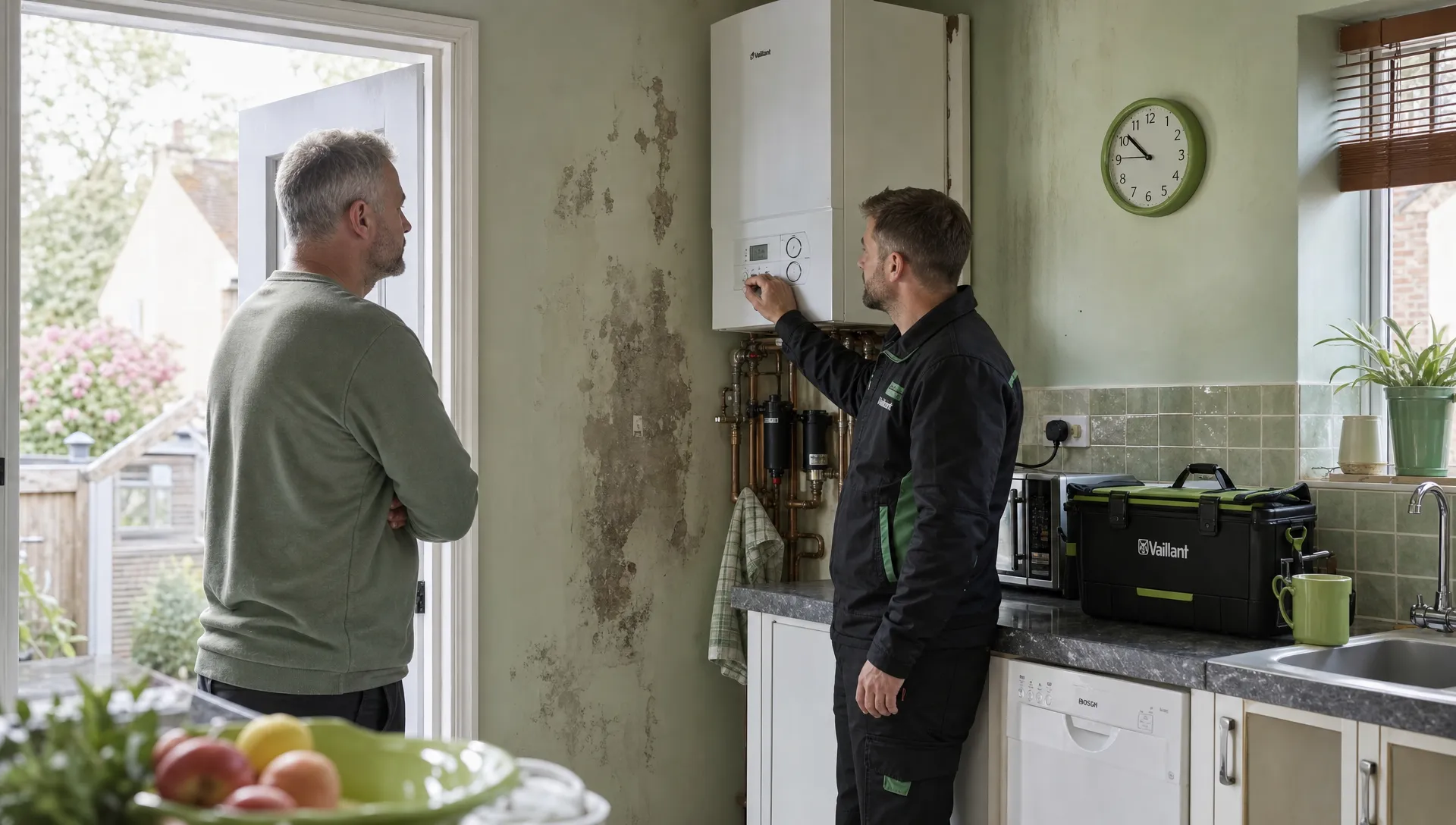
If your boiler is making a loud banging noise, it is understandable to worry. The good news is that many causes are fixable, especially if you stop using the boiler before the problem gets worse. The
If your boiler is making a loud banging noise, it is understandable to worry. The good news is that many causes are fixable, especially if you stop using the boiler before the problem gets worse. The important thing is knowing when it is safe to do a simple check, and when you need a Gas Safe registered heating engineer urgently.
A banging boiler can point to anything from trapped air in the heating system to a circulation fault, limescale build-up, loose pipework, or delayed ignition. Some are not immediately dangerous, but any noise that is new, very loud, repeated, or paired with a gas smell, burning smell, leak, pressure loss, or boiler lockout should be taken seriously.
First: when to switch the boiler off
Before trying to work out the cause, use the noise and any other symptoms to decide whether the boiler should stay off.
| What you notice | What to do |
|---|---|
| A single loud bang or boom when the boiler fires up | Turn the boiler off and arrange a Gas Safe registered heating engineer. This can be delayed ignition. |
| Banging plus a smell of gas | Do not use the boiler. Open windows, avoid switches and flames, leave the property if needed, and call the National Gas Emergency Service on 0800 111 999. |
| Banging plus a carbon monoxide alarm, dizziness, headaches, nausea, or breathlessness | Leave the property and get emergency help. Do not use the boiler again until it has been checked by a Gas Safe registered engineer. |
| Repeated banging, kettling, rumbling, or clunking while heating is on | Turn the boiler off if the noise is severe, then book a heating engineer inspection. |
| Mild ticking or clicking as pipes warm up and cool down | This may be normal expansion, but book a check if it is getting louder or has recently started. |
| Banging after taps, showers, washing machines, or dishwashers stop running | This may be water hammer, usually a plumber or heating engineer job. |
For gas emergencies, follow Gas Safe Register’s gas emergency advice and do not remove the boiler casing or attempt repairs yourself. In the UK, work on a gas boiler must be carried out by a Gas Safe registered engineer.
What a loud banging boiler usually means
A boiler should not sound like someone knocking inside it. Occasional gentle ticking from pipes can happen as metal expands and contracts, but loud bangs, thuds, clunks, or a kettle-like rumble usually mean something in the heating system is not behaving as it should.
The cause is often one of three broad issues:
- Water is not moving smoothly through the boiler or heating system.
- Heat is building up in the wrong place because of sludge, limescale, or a faulty part.
- Pipework is moving or shaking when water flow changes suddenly.
Most boiler banging noises are handled by a heating engineer, especially if the noise is coming from the boiler itself. If the banging seems to come from pipework when taps or appliances stop, a plumber may be the right first call. If you are unsure, describe when the bang happens and where it sounds loudest when requesting quotes.
You can compare local pricing before booking by checking HaMuch’s heating engineer rates, including live, comparable rates across the UK rather than relying on vague estimates. If the problem turns out to be pipework rather than the boiler, HaMuch also lists plumber rates so you can see typical local pricing before deciding who to contact.
The most likely causes of a boiler making a banging noise
Kettling from limescale or sludge
Kettling is one of the most common explanations for a boiler making a banging noise. It can sound like rumbling, popping, knocking, or a kettle boiling. It happens when water inside the boiler is not flowing properly, so heat builds up and creates steam bubbles or pressure changes.
In hard water areas, limescale can build up inside the boiler’s heat exchanger. In older central heating systems, sludge and debris can also restrict water flow. London and parts of the South East are particularly known for hard water, so kettling can be more common there, although it can happen anywhere.
This is usually a heating engineer job. The engineer may check circulation, water quality, filters, valves, and whether the system needs cleaning or further treatment. Do not try to open the boiler or descale internal parts yourself.
Trapped air in the heating system
Air in radiators or pipework can cause knocking, gurgling, bubbling, or banging noises, especially when the heating first comes on. You may also notice radiators that are cold at the top but warm at the bottom.
Some homeowners are comfortable bleeding radiators, but it should be done carefully and only if you know how to repressurise your boiler afterwards using the manufacturer’s instructions. If the pressure keeps dropping, the banging continues, or you are not confident, call a heating engineer.
Repeated air in the system can point to a leak, pressure issue, or another fault that needs proper diagnosis.
Low boiler pressure or pressure changes
Low pressure can stop water circulating properly, which may lead to banging, clunking, poor heating, or the boiler switching itself off. A pressure gauge reading below the normal range shown in your boiler manual may be a clue.
Topping up pressure can be a simple task on some boilers, but not all systems are the same. If the pressure drops again after topping up, there may be a leak, faulty expansion vessel, or pressure relief issue. Those are jobs for a heating engineer.
Pump or circulation problems
The pump helps move hot water around your heating system. If it is failing, blocked, incorrectly set, or struggling against sludge in the system, the boiler may heat water faster than it can move away. That can lead to banging or overheating noises.
You might also notice radiators taking a long time to warm up, some rooms staying cold, or the boiler starting and stopping more often than usual. A heating engineer can test the pump and circulation without guessing.
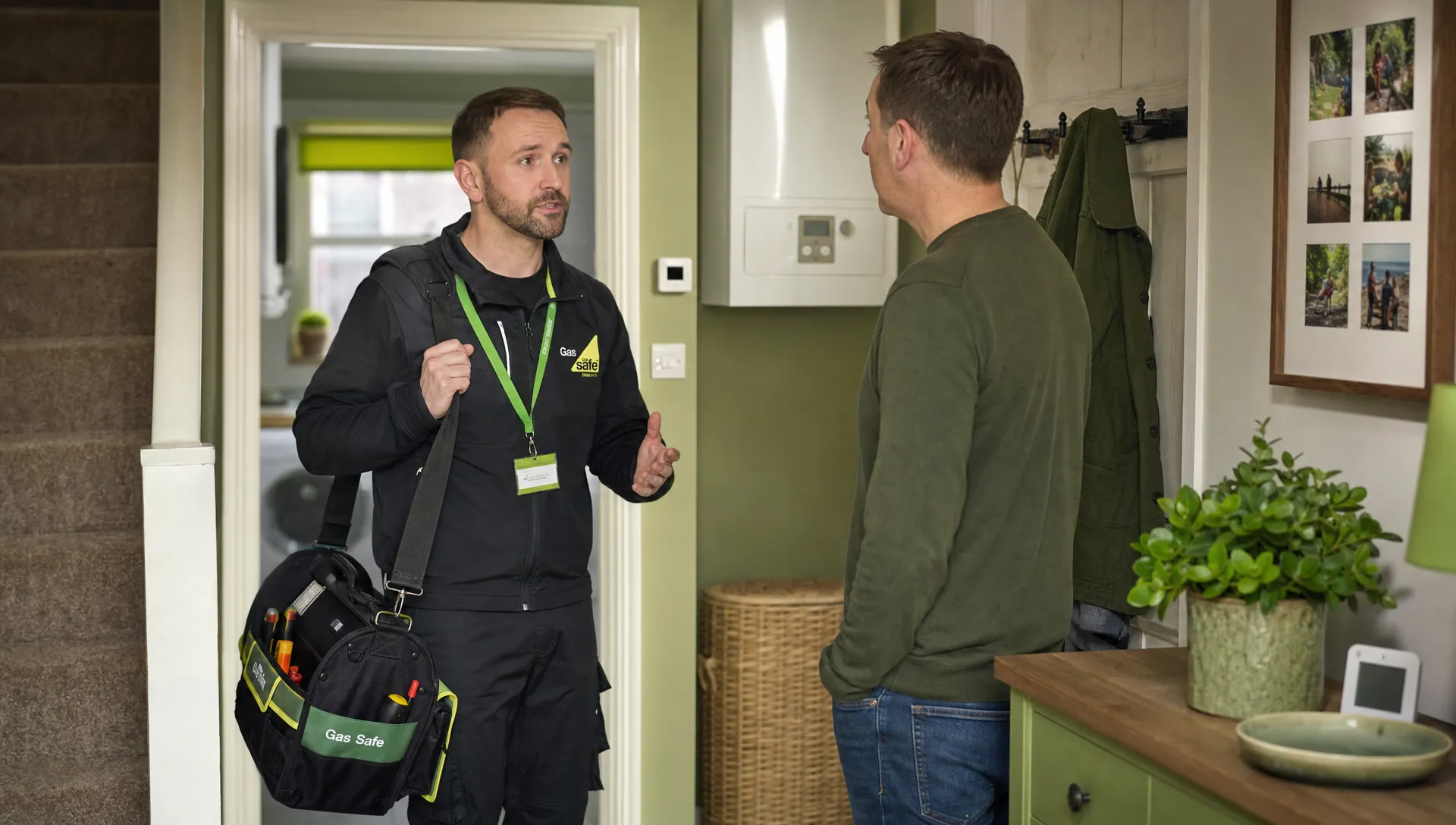
Loose or expanding pipework
Sometimes the boiler is blamed when the noise is actually coming from the central heating pipes. Pipes can knock against joists, floorboards, walls, or clips as they heat up and cool down. This often sounds like tapping, ticking, or knocking from under floors or behind walls.
If the noise only happens as the heating warms up, then fades, it may be expansion. If the banging is loud, sudden, or worsening, pipework may need securing, insulating, or rerouting. A plumber or heating engineer would usually investigate this. If floorboards or boxing need repair afterwards, a carpenter or joiner may be needed too, but they are not usually the first trade to call.
Water hammer
Water hammer is a sharp bang caused by a sudden change in water flow. It often happens when a tap is turned off quickly, a washing machine stops filling, or a valve closes suddenly. The bang may sound like it is coming from near the boiler, but the issue is usually in the plumbing pipework.
A plumber can check water pressure, pipe support, valves, and any devices that may be causing the shock. A heating engineer may be involved if the banging is connected to heating controls or hot water components.
Delayed ignition
Delayed ignition is one of the more serious possibilities. It can cause a loud bang or boom when a gas boiler starts. This may happen because gas builds up briefly before igniting. It is not something to monitor or test repeatedly.
If the boiler bangs when firing up, turn it off and book a Gas Safe registered heating engineer. If you also smell gas, treat it as a gas emergency and call 0800 111 999.
Faulty thermostat, valve, or boiler control
Controls help the boiler know when to fire, stop, and move water through the system. A faulty thermostat, motorised valve, diverter valve, or internal sensor can cause odd heating behaviour, short cycling, pressure changes, or banging.
These faults are difficult to diagnose by sound alone. A heating engineer can test the system safely and identify whether the issue is with the boiler, controls, valves, or wider heating system.
What you can safely check before calling someone
There are a few safe observations you can make without touching the boiler internals. These can help the tradesperson understand the problem more quickly.
- Note when the bang happens: when the boiler fires up, when heating is running, when hot water is used, or when taps and appliances stop.
- Check whether the noise is from the boiler casing area, radiators, walls, floors, airing cupboard, or pipework.
- Look at the boiler display for error codes or warning lights, then write them down.
- Check the pressure gauge against the normal range in your boiler manual, without opening the boiler casing.
- Feel whether radiators are cold at the top, cold at the bottom, or uneven across the house.
- Check for obvious leaks around radiators, visible pipes, or the boiler area, but do not remove covers.
If you are a landlord or property manager, ask the tenant to record when the noise happens and whether there are any error codes, but arrange a qualified inspection promptly. Boiler problems in rental properties can affect heating, hot water, and safety, so it is better not to let a loud new noise run on for days.
Which trade should you call?
For most boiler banging noises, the right trade is a heating engineer. If it is a gas boiler, make sure they are Gas Safe registered. A plumber may be the better first call if the bang clearly happens after taps, toilets, showers, washing machines, or dishwashers stop running, because that points more towards pipework and water hammer.
| Symptom pattern | Most likely trade |
|---|---|
| Loud bang when the boiler ignites | Gas Safe registered heating engineer |
| Rumbling or kettling while boiler is running | Heating engineer |
| Banging with low pressure or repeated pressure loss | Heating engineer |
| Gurgling radiators and uneven heat | Heating engineer |
| Sharp bang when taps or appliances stop | Plumber, sometimes heating engineer |
| Tapping from under floors as heating warms up | Plumber or heating engineer |
| Boiler beyond economical repair | Heating engineer or boiler installer |
If the engineer finds that the boiler is old, unreliable, or unsafe to repair, replacement may be discussed. Before making that decision, it is worth checking what affects new boiler installation costs so you can compare repair versus replacement properly.
Will a boiler service fix a banging noise?
Sometimes, but not always. A standard annual service is mainly about checking the boiler’s safe operation, condition, and performance. It may reveal signs of poor combustion, leaks, pressure issues, or wear, but a loud banging noise may need diagnostic work beyond a routine service.
If your boiler has not been serviced recently, booking one is sensible, especially before winter. HaMuch has a separate guide to annual boiler service costs if you want to understand what is usually included. When you contact an engineer, be clear that there is an active banging noise, not just a routine service request, so they allow time to investigate.
How urgent is a banging boiler?
A mild tapping sound that has been present for years may not be urgent. A new, loud, repeated bang is different. The more severe, sudden, or unusual the sound is, the sooner you should get it checked.
Treat it as urgent if:
- The boiler bangs when it fires up.
- The noise is getting louder or more frequent.
- The boiler locks out, shows an error code, or loses pressure.
- You notice leaks, burning smells, soot marks, or scorch marks.
- There is a gas smell or carbon monoxide alarm.
- You have vulnerable occupants relying on heating or hot water.
For a gas smell, do not post a normal job request first. Call the National Gas Emergency Service on 0800 111 999. After the immediate emergency has been dealt with, you can arrange a Gas Safe registered engineer to inspect and repair the boiler.
How to explain the problem when requesting quotes
You do not need to know the technical cause before asking for help. A clear description is enough. Include the boiler make and model if you know it, the age of the boiler, when it was last serviced, where the noise seems to come from, and whether it happens during heating, hot water, or start-up.
Also mention your location, because labour rates vary across the UK. A heating engineer in London may charge differently from one in Birmingham or Manchester, and HaMuch is built to show real, comparable local pricing so you can make a more informed decision before booking.
This is especially useful if you are managing more than one property, because you can compare tradespeople by area, rate, and reviews rather than starting from scratch each time.
Frequently asked questions
Is a banging boiler dangerous? It can be. Some causes, such as trapped air or loose pipework, are usually less serious. Others, such as delayed ignition, overheating, or gas-related faults, need urgent attention. If the bang is loud, new, or happens when the boiler fires up, turn it off and call a Gas Safe registered heating engineer.
Can I keep using my boiler if it is banging? If the sound is loud, repeated, or unusual, it is safer to stop using the boiler until it has been checked. If there is a gas smell, carbon monoxide alarm, burning smell, leak, or error code, do not use it.
Why does my boiler bang when the heating comes on? Common causes include trapped air, sludge, limescale, pump problems, pressure issues, or delayed ignition. The timing of the bang matters, so note whether it happens at start-up, during heating, or when the system switches off.
Who fixes a boiler making a banging noise? Most boiler noises need a heating engineer. If it is a gas boiler, the engineer must be Gas Safe registered. If the bang is linked to taps or appliances turning off, a plumber may be needed for water hammer or pipework issues.
Can bleeding radiators stop boiler banging? It may help if trapped air is the cause, but it will not fix limescale, sludge, pump faults, delayed ignition, or pressure problems. If bleeding radiators does not solve it, or the pressure keeps dropping, book a heating engineer.
Need a heating engineer now?
A loud banging boiler is not something to ignore, especially if it is new or happening when the boiler starts. If you smell gas, call 0800 111 999 immediately and follow emergency gas safety advice.
For non-emergency banging, post the job on HaMuch and compare local Gas Safe registered heating engineers before you book. HaMuch helps you see transparent, comparable pricing and genuine customer reviews, so you can choose with more confidence rather than guessing what a fair call-out or hourly rate should be.