Find affordable tradespeople

HaMuch is Excellent

Currently Viewing Posts Tagged boiler

How Much Does an Annual Boiler Service Cost in London?

How Much Does an Annual Boiler Service Cost in London?

For a standard gas boiler, an annual boiler service in London usually costs around £90£140. If you need a landlord gas safety record at the same appointment, budget roughly £110£180. Oil boilers, urge

For a standard gas boiler, an annual boiler service in London usually costs around £90-£140. If you need a landlord gas safety record at the same appointment, budget roughly £110-£180. Oil boilers, urgent appointments and awkward access can cost more.

That is a practical London budgeting range, not a fixed price. The best way to know what is fair for your postcode is to compare real local rates before you book. HaMuch lets you check transparent pricing for a heating engineer in London, so you can see what local tradespeople charge rather than relying on vague national averages.

If you want the wider UK picture as well, HaMuch also has a full annual boiler service cost guide covering common service types across the country. This article focuses on what changes when the job is in London.

Typical boiler service costs in London

Most London homeowners booking a routine annual service for a gas combi, system or regular boiler should expect a quote in the low hundreds, provided the boiler is working and easy to access.

Boiler service job in London Typical budget What to know
Standard annual gas boiler service £90-£140 For a routine service on a working domestic boiler
Larger, older or more time-consuming gas boiler service £110-£170 More likely if the boiler has not been serviced recently
Landlord gas safety check only £70-£120 A legal safety check, not always the same as a full service
Boiler service plus landlord gas safety record £110-£180 Common for rental properties when arranged together
Oil boiler service £140-£240 Less common in London and often more specialist
Urgent or out-of-hours attendance £140-£250+ Usually more expensive than a planned annual service

Always check whether VAT, parking, congestion charges or certificate paperwork are included. A quote that looks cheap at first can end up similar to others once extras are added.

Why boiler servicing can cost more in London

London boiler service prices are often higher than in many other parts of the UK because heating engineers have higher operating costs. Travel time, parking, van running costs, insurance, local demand and time spent moving between jobs all affect the final quote.

The exact borough can also make a difference. A straightforward service in an outer London home with easy parking may cost less than the same job in a central flat where the engineer has to pay for parking, carry tools further or work around building access rules.

Other factors that can push the price up include:

  • A boiler that has not been serviced for several years
  • A very old boiler or a model that needs more care
  • Poor access, such as a boiler inside a tight cupboard
  • A service booked at short notice during winter
  • A landlord certificate needed alongside the service
  • More than one gas appliance to check at the same property

A routine service is different from a repair visit. If the engineer finds a fault, the cost of parts and repair labour will usually be quoted separately.

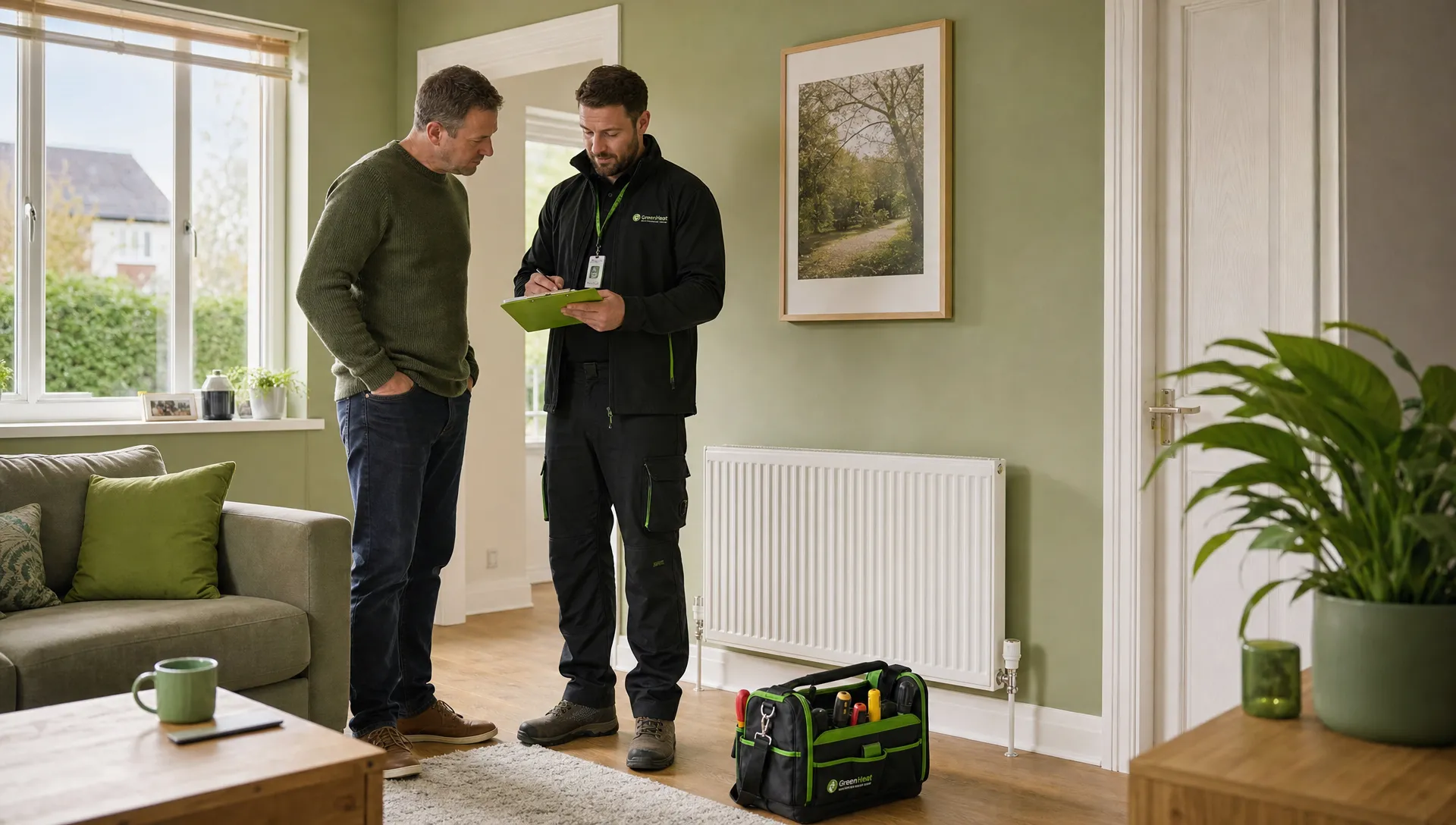
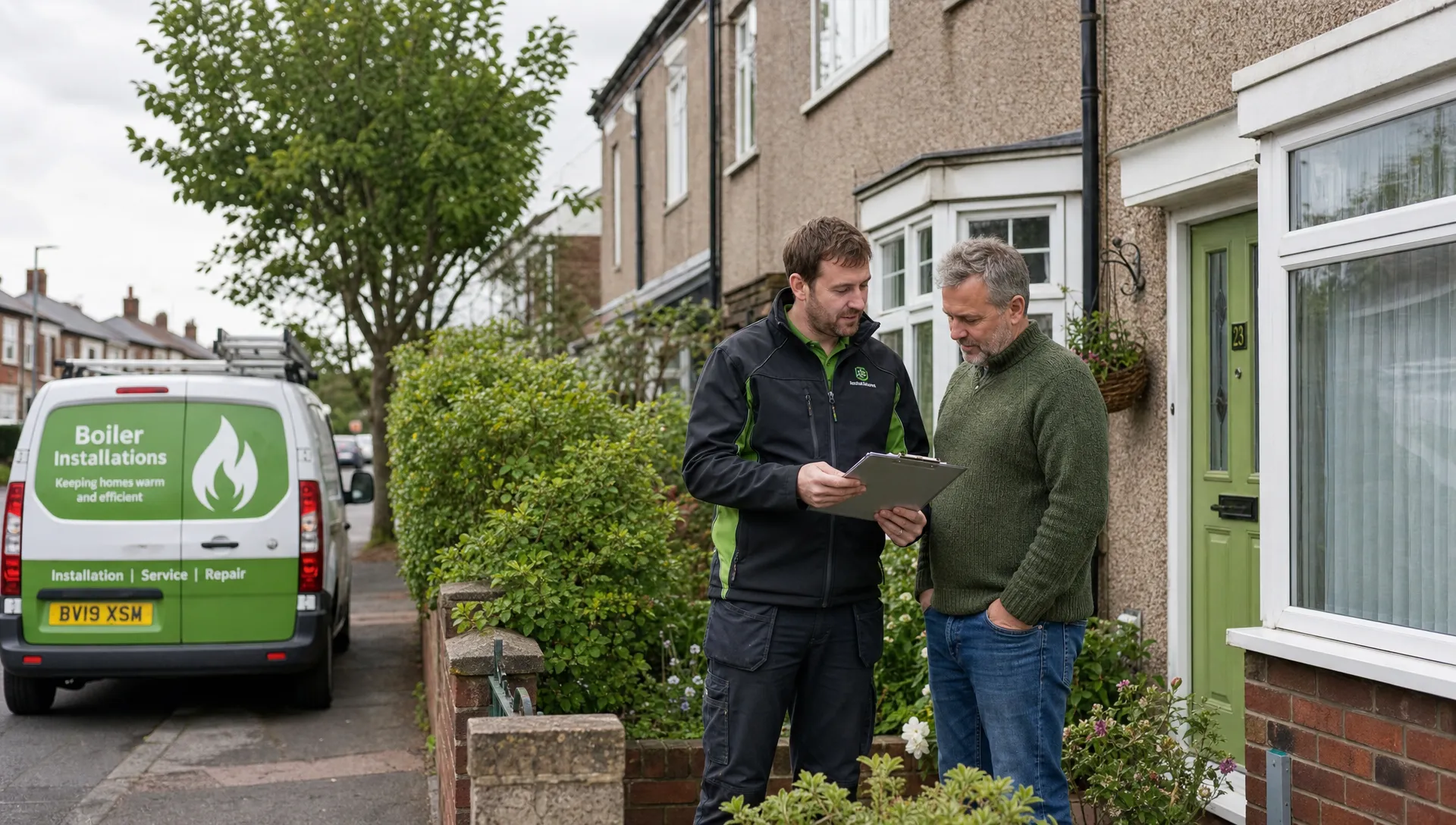
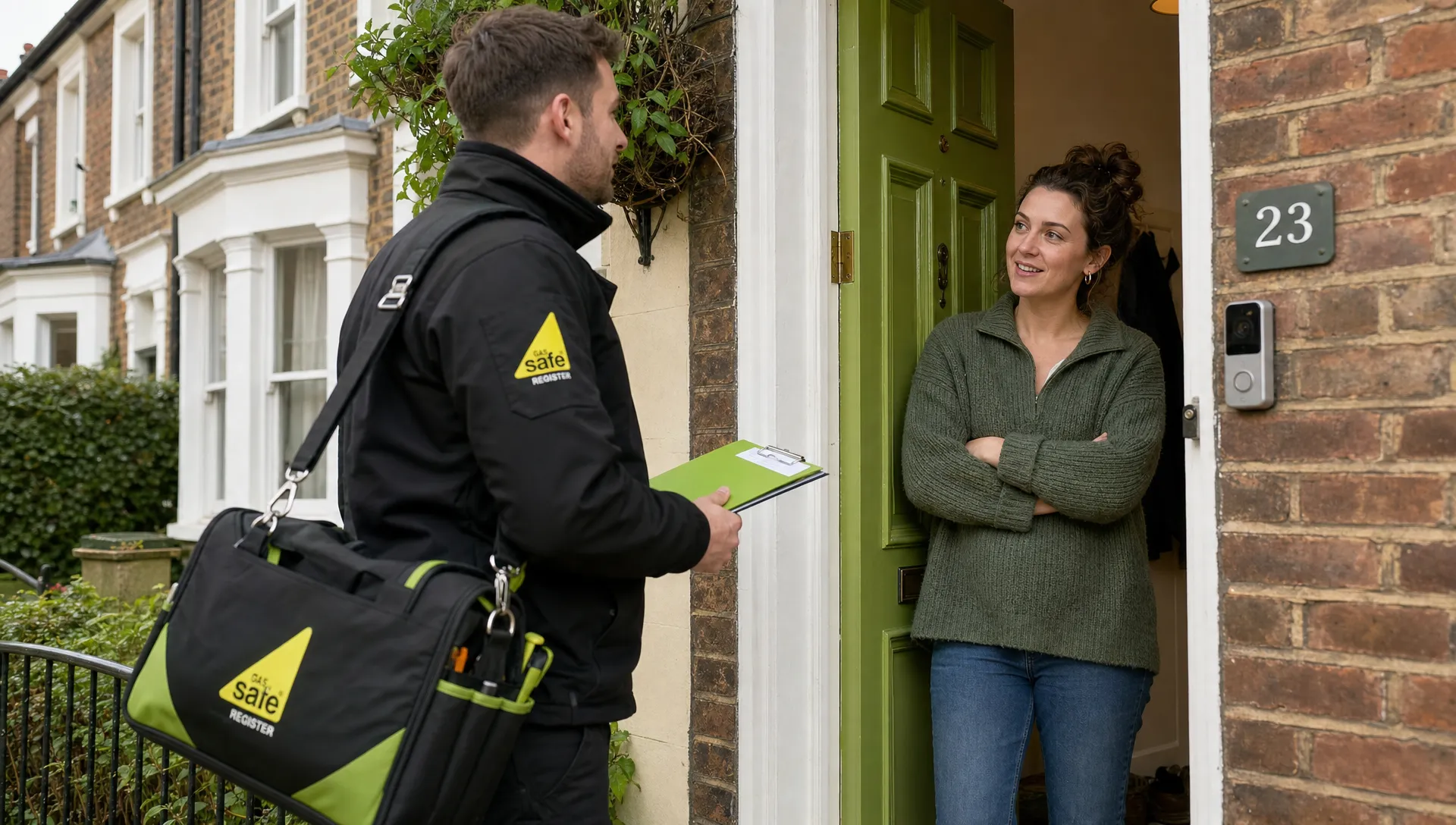
A Gas Safe heating engineer with a tool bag and clipboard speaking with a homeowner on the doorstep of a typical London terraced house, with natural daylight, everyday household clutter visible inside and no close-up technical details.

What should be included in an annual boiler service?

A good boiler service is not just a quick glance at the boiler. The engineer should check that the appliance is operating safely, inspect key components, test safety controls and look for signs of wear, leaks or poor combustion.

For gas boilers, the work must be carried out by a Gas Safe registered engineer. The Gas Safe Register advises that gas appliances should be checked and serviced regularly by a qualified professional. Before the appointment starts, it is sensible to ask to see the engineer's Gas Safe ID card.

A standard domestic boiler service will usually include a visual inspection of the boiler and flue, operational checks, safety checks, cleaning of parts where required by the manufacturer, and a service record. The engineer may also check boiler pressure, controls and any obvious warning signs that could lead to future breakdowns.

It will not normally include replacement parts, major repairs, a power flush, radiator balancing, moving pipework or fixing unrelated heating problems. If you want any of those jobs done, ask for a separate quote so the service price stays clear.

Homeowners vs landlords: what is the difference?

For homeowners, an annual boiler service is not usually a legal requirement. However, it is strongly recommended for safety, reliability and keeping many manufacturer warranties valid. If your boiler warranty says it must be serviced every year, missing a service could cause problems if you later need to make a claim.

For landlords, the rules are stricter. If you rent out a property with gas appliances, you must arrange an annual gas safety check by a Gas Safe registered engineer. The Health and Safety Executive explains the landlord duties for gas safety checks and records, including providing tenants with the correct record.

A landlord gas safety check is often called a CP12, although the official wording is usually Landlord Gas Safety Record. It confirms that gas appliances have been checked for safety. A full boiler service goes further because it is maintenance as well as safety checking. Many landlords choose to book both together to save time and reduce disruption for tenants.

How to compare London boiler service quotes fairly

When you compare quotes, do not look at the headline price alone. A slightly higher quote may be better value if it includes VAT, parking, a written service record and a clear appointment window.

Before booking, ask the heating engineer:

  • Is the price for a full boiler service or only a safety check?
  • Is VAT included?
  • Are parking or congestion charges included?
  • Will I receive a written service record?
  • Are you Gas Safe registered for this type of boiler?
  • How much would a follow-up repair visit cost if a fault is found?

You should also give accurate details when requesting quotes. Tell the engineer the boiler make and model if you know it, the property type, where the boiler is located, whether you need a landlord certificate and whether there are any current faults.

This is where HaMuch is useful. Instead of guessing what a fair London price might be, you can compare local tradespeople, genuine reviews and pricing information in one place. HaMuch is free for homeowners to use, and there is no obligation to book.

When should you book your boiler service?

The best time to book is usually spring, summer or early autumn, before the coldest months arrive. Heating engineers are often busiest when temperatures drop, because breakdowns increase and emergency heating jobs take priority.

If your boiler is due for its annual service in winter, do not skip it, but try to book ahead rather than waiting until you urgently need heating. For landlords, diarise the gas safety check early so you do not risk missing the renewal date.

It is also worth booking a service before buying or selling a property, before new tenants move in, or after moving into a home where you cannot see evidence of recent boiler maintenance.

What if the service shows you need a new boiler?

A boiler service may reveal that the appliance is unsafe, inefficient or becoming uneconomical to repair. That does not automatically mean you need a replacement, but it is a sign to ask clear questions.

Ask the engineer what the fault is, whether repair parts are readily available, how long the repair is likely to last and whether the boiler has any safety concerns. If replacement is recommended, take time to compare options and costs. HaMuch has a separate guide explaining new boiler installation costs if you need to plan for a bigger job.

For most working boilers, though, annual servicing is a relatively small cost compared with the inconvenience of a winter breakdown.

Frequently Asked Questions

How much does an annual boiler service cost in London? A standard annual gas boiler service in London usually costs around £90-£140. Landlord certificates, urgent visits, older boilers and difficult access can increase the price.

Is a boiler service the same as a gas safety certificate? No. A gas safety certificate, often called a Landlord Gas Safety Record, is a safety check. A boiler service is maintenance and normally includes additional checks and cleaning in line with the boiler manufacturer's instructions.

Do I need a Gas Safe engineer for a boiler service? Yes, if it is a gas boiler. Always use a Gas Safe registered engineer and ask to see their ID card before work starts.

How long does a boiler service take? A straightforward domestic boiler service often takes around 30 to 60 minutes. It can take longer if the boiler is old, hard to access or has not been maintained recently.

Are repairs included in the boiler service cost? Usually not. The service price normally covers inspection, testing and routine servicing. If faults are found, replacement parts and repair labour are normally quoted separately.

Can landlords book several boiler services together? Often, yes. If you manage several London rental properties, ask whether the engineer can group appointments by area. This may make scheduling easier, although the final price depends on the work required.

Compare London boiler service quotes with HaMuch

A fair boiler service price should be clear before you book. With HaMuch, you can compare local heating engineers, see real pricing information and read genuine customer reviews without any obligation.

If your boiler is due for its annual check, request quotes through HaMuch and compare your options before choosing a London heating engineer.

How to Find a Reliable Plumber: A Homeowner’s Checklist

How to Find a Reliable Plumber: A Homeowner's Checklist - Main Image

Finding a good plumber should not feel like guesswork. Whether you have a dripping tap, a faulty toilet, a leak under the sink or a rental property that needs regular maintenance, the same principle a

Finding a good plumber should not feel like guesswork. Whether you have a dripping tap, a faulty toilet, a leak under the sink or a rental property that needs regular maintenance, the same principle applies: check the person, check the price and get the job clearly agreed before anyone starts work.

The difficulty is that plumbing problems often feel urgent. When water is escaping or a tenant is waiting, it is tempting to book the first person who answers the phone. That can work out, but it is not the safest way to hire. If you are wondering how to find a reliable plumber, use this homeowner’s checklist to slow the process down just enough to make a confident decision.

Start by being clear about the job

A reliable quote starts with a clear description. Before you contact a plumber, write down what is happening, where it is happening and how long it has been going on. You do not need trade knowledge. Plain-English details are enough.

For example, “the kitchen tap drips when turned off” is more useful than “tap problem”. “Water is staining the ceiling below the bathroom” tells the plumber the problem may need investigation. If you are a landlord, add whether the property is occupied, whether the tenant can provide access and whether there are any parking restrictions.

Try to include photos if you are requesting quotes online. A good plumber will not always be able to diagnose the issue from a photo, but it can help them understand the likely scale of the job and whether parts may be needed.

For common small repairs, it is worth checking typical prices before you call. For example, if your issue is a dripping or faulty tap, HaMuch’s guide to how much it costs to fix a leaking tap can help you understand what usually affects the final bill.

Compare local pricing before you choose

Price is not the only sign of reliability, but transparent pricing is one of the easiest ways to spot whether a quote feels reasonable. A plumber who is open about labour, call-out charges, materials and VAT is usually easier to deal with than someone who gives only a vague verbal estimate.

Plumbing rates vary by location, availability and urgency. A planned repair during normal working hours will usually be priced differently from a late-night leak. Large cities can also differ from nearby towns because travel time, parking and demand affect what tradespeople charge.

If you are comparing plumbers in major UK cities, start by checking current local rate information for plumbers in London, plumbers in Birmingham or plumbers in Manchester. HaMuch is built around real, comparable pricing by trade and location, so you can check what plumbers typically charge before requesting quotes rather than relying on vague guesswork.

When you speak to a plumber, ask whether the price is:

  • An hourly rate, day rate or fixed job price
  • Inclusive or exclusive of VAT
  • Inclusive of the call-out charge
  • Inclusive of parts and materials
  • Subject to a minimum first-hour charge
  • Different for evenings, weekends or emergencies

You are not trying to choose the cheapest person automatically. You are trying to understand what is included, what is not included and whether the quote is clear enough to compare fairly.

Check qualifications, registration and insurance

In the UK, not every plumbing task requires a formal licence. However, certain types of work do have strict requirements. The most important example is gas. If the job involves a gas boiler, gas pipework or a gas appliance, the tradesperson must be on the Gas Safe Register. You can check the engineer’s licence number and confirm the types of gas work they are allowed to do.

For general plumbing, look for signs that the person works professionally. That can include relevant training, trade memberships, experience in similar jobs, public liability insurance and a willingness to provide written details before work begins.

If you are unsure what to ask for, HaMuch has a separate guide on checking whether a tradesperson is properly qualified, which is useful before hiring any trade, not just plumbers.

Insurance matters because even careful plumbers can run into problems. A burst fitting, accidental damage or a leak discovered during repair work can become expensive quickly. Ask whether the plumber has public liability insurance and, for larger jobs, whether they can provide evidence of cover.

Read reviews properly, not just the star rating

Reviews are useful, but only if you read them closely. A perfect rating with very little detail is less helpful than several specific reviews explaining what the plumber did, whether they arrived on time, how they communicated and whether the price matched the quote.

Look for patterns. A single bad review does not always mean a plumber is unreliable, especially if they have responded calmly and professionally. Repeated complaints about missed appointments, unclear pricing or unfinished work are more concerning.

Good review signals include comments such as:

  • Turned up when agreed
  • Explained the problem clearly
  • Provided a written quote
  • Left the area tidy
  • Charged what was agreed
  • Returned promptly if there was a follow-up issue

For landlords and property managers, reviews that mention communication are especially important. You need someone who can coordinate with tenants, provide updates and send invoices or photos after the job.

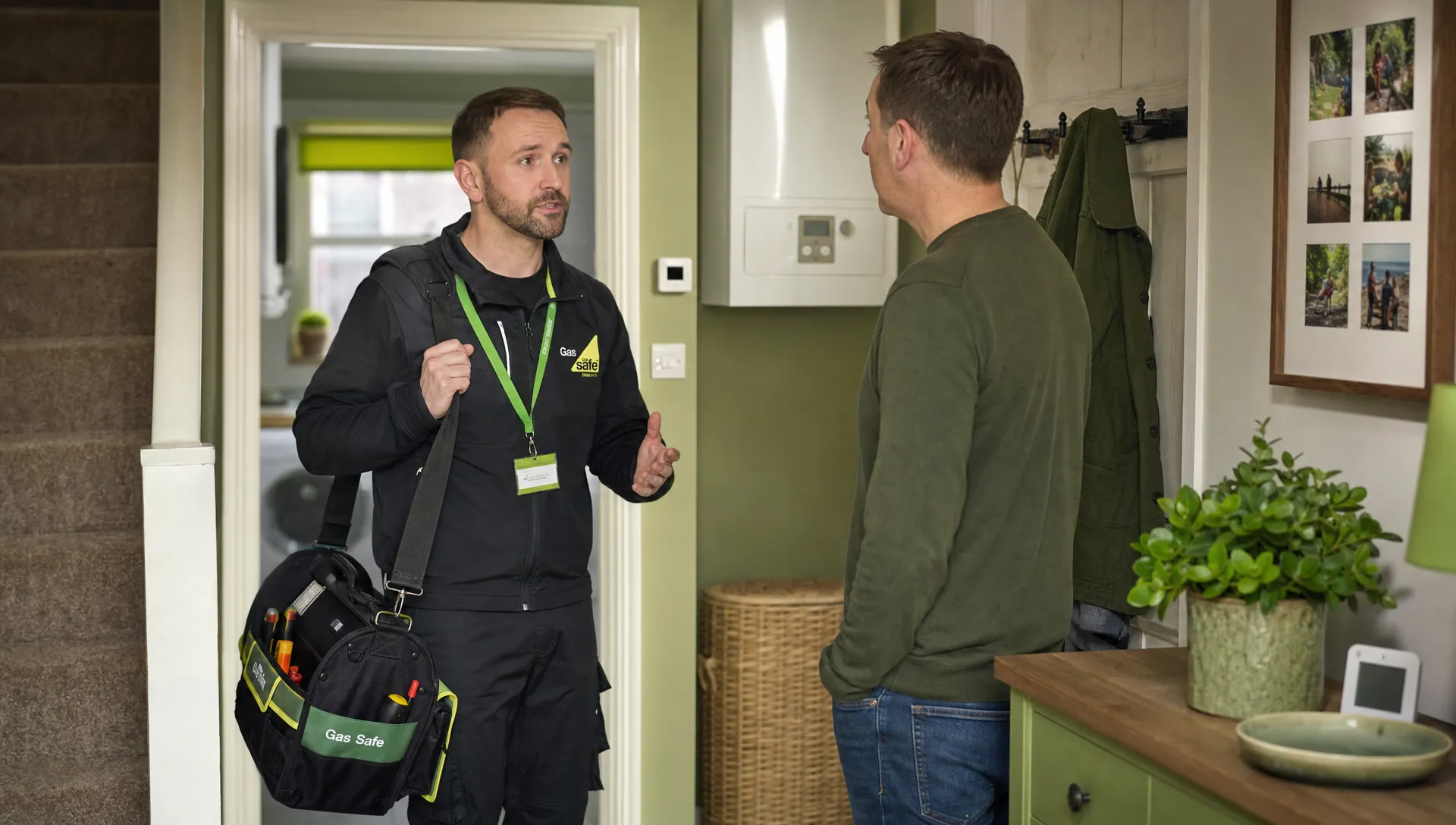
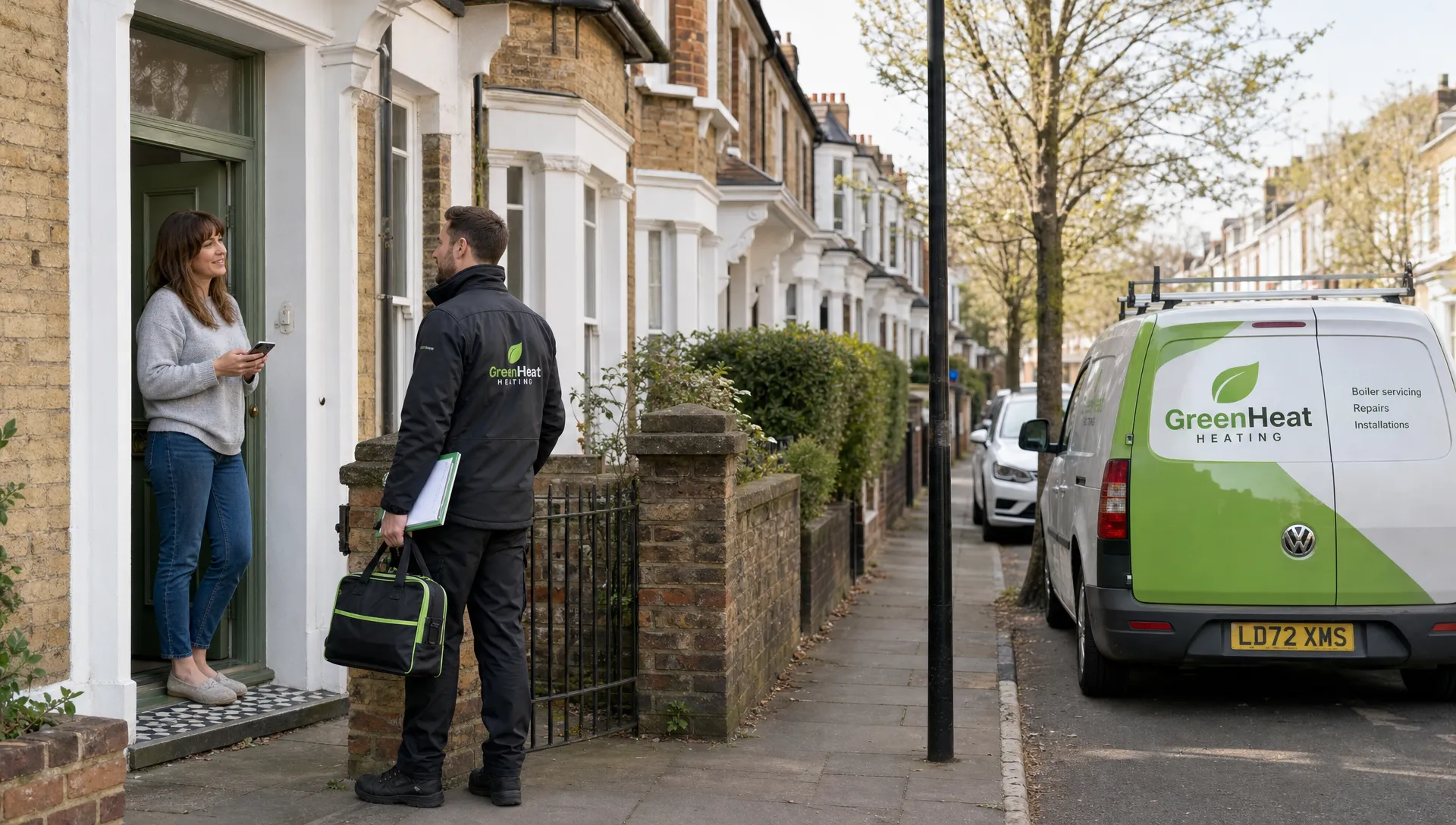
A UK plumber with a tool bag standing in a modest hallway talking to a homeowner, with natural daylight, ordinary home clutter and no close-up view of pipework or technical details.

Ask the right questions before booking

You do not need to interrogate a plumber, but a few direct questions can reveal a lot. Reliable plumbers are usually happy to explain how they work, especially if you ask politely and keep it practical.

Use this checklist before you agree to a visit:

Question to ask Why it matters
Have you done this type of job recently? Experience with similar work reduces the chance of surprises.
Is there a call-out charge or minimum charge? It helps you compare quotes fairly.
What is included in the price? Labour, parts, VAT and waste disposal can all affect the total.
Can you provide a written quote or estimate? Written details reduce disputes later.
Are you insured? Insurance protects both sides if something goes wrong.
Do you guarantee your work? A clear guarantee shows accountability after the visit.
When can you attend and how long should it take? Good scheduling matters, especially for tenants or urgent repairs.

If the plumber refuses to answer basic questions, rushes you into booking or says the final price cannot be discussed at all until they arrive, take care. Some jobs genuinely cannot be priced exactly without inspection, but a reliable plumber should still be able to explain their charging structure.

Get a written quote for anything beyond a small repair

For a small job, a written estimate by text or email may be enough. For larger work, ask for a proper written quote with the scope clearly described. This does not need to be complicated, but it should state what the plumber is doing and what the price includes.

A good written quote should usually cover labour, materials, VAT where applicable, expected start date, payment terms and any assumptions. If the plumber may need to investigate before confirming the full repair, the quote should explain that too.

Be cautious with very low quotes that do not explain what is included. A cheaper headline price can become more expensive if parts, parking, VAT, waste removal or return visits are added later. The best quote is the one you can understand and compare.

Know the warning signs of an unreliable plumber

Most plumbers are honest professionals, but homeowners and landlords still need to protect themselves. A few red flags should make you pause before booking.

Be careful if a plumber:

  • Will only accept cash with no receipt
  • Refuses to give a written quote or clear pricing structure
  • Cannot explain whether VAT is included
  • Pressures you to decide immediately for non-urgent work
  • Has no visible reviews or references and gives no reassurance
  • Claims gas work is “simple” but cannot provide a Gas Safe number
  • Wants a large upfront payment for a small job

Emergencies are different because you may not have time to do a full comparison. Even then, ask the basics: call-out charge, hourly rate, expected arrival time and whether parts are included. If your issue is urgent and you are in the West Midlands, HaMuch’s article on emergency plumber costs in Birmingham explains what can affect the price of urgent call-outs.

For landlords, think beyond the first job

If you manage rental properties, reliability is not just about one repair. You need a plumber who communicates well, can work around tenants, sends clear invoices and keeps a record of what was done.

Ask whether the plumber is comfortable dealing directly with tenants for access, while keeping you updated on cost and progress. Make it clear who can authorise extra work. For example, you might allow them to fix a minor issue up to an agreed limit, but require approval for anything larger.

Keep copies of quotes, invoices, photos and messages. This helps with maintenance records, deposit disputes and future repairs. It also makes it easier to decide whether to use the same plumber again.

After the job, check the finish and paperwork

Reliability does not end when the plumber packs up. Before you pay the final bill, check that the agreed work has been completed, the area has been left reasonably tidy and the invoice matches the quote or estimate.

Ask the plumber to explain what they did in plain English. If parts were replaced, ask what was changed and whether there is any product warranty. If the work involved gas, make sure you receive the correct safety documentation from a Gas Safe registered engineer.

For small repairs, simply checking that the leak has stopped may be enough. For bigger work, take photos and keep the paperwork somewhere easy to find. If there is a guarantee, confirm how long it lasts and what to do if the problem returns.

Frequently Asked Questions

How do I find a reliable plumber near me? Start by describing the job clearly, comparing local prices, reading detailed reviews and checking insurance or relevant registration. Use a platform such as HaMuch to compare local plumbers, see transparent pricing and request quotes before deciding.

Should I always choose the cheapest plumber? Not necessarily. A very low quote may not include parts, VAT, call-out charges or follow-up work. Choose the plumber who offers clear pricing, good reviews, relevant experience and a quote you can understand.

Does a plumber need to be Gas Safe registered? Only if the work involves gas appliances, gas pipework or gas boilers. For gas work, always check the engineer on the Gas Safe Register before letting them start.

How many quotes should I get for plumbing work? For non-urgent work, aim to compare at least two or three quotes. For emergencies, you may have less time, but you should still ask about call-out fees, hourly rates and what is included.

What should be included in a plumber’s quote? A good quote should explain the labour cost, materials, VAT if applicable, call-out fees, expected timescale and what work is included. For larger jobs, it should also include payment terms and any exclusions.

Ready to compare reliable local plumbers?

The safest way to find a reliable plumber is to combine common sense checks with transparent pricing. Look at reviews, ask the right questions, check qualifications where needed and make sure the quote is clear before work begins.

HaMuch helps homeowners, landlords and property managers compare local plumbers with genuine reviews and real pricing information by trade and location. You can check typical rates first, then request quotes with no obligation to book.

If you need plumbing help, request quotes from local plumbers through HaMuch and compare your options before you decide.

How Much Does a New Boiler Installation Cost?

How Much Does a New Boiler Installation Cost? - Main Image

If your boiler is nearing the end of its life, breaking down regularly or struggling to heat your home, the big question is simple: what will a replacement actually cost? As a broad UK guide, a new bo

If your boiler is nearing the end of its life, breaking down regularly or struggling to heat your home, the big question is simple: what will a replacement actually cost?

As a broad UK guide, a new boiler installation cost is usually around £2,000-£4,500 for a straightforward like-for-like replacement. More complicated work, such as changing from a conventional boiler with tanks to a combi boiler, moving the boiler to a new room or upgrading old pipework, can push the total to £5,000-£7,000+.

Those figures include more than the boiler itself. You are paying for the appliance, labour, fittings, flue work, controls, safety checks, removal of the old boiler and the engineer’s responsibility for signing off the installation. That is why two homes with the same boiler brand can still receive very different quotes.

Typical new boiler installation cost in the UK

The table below gives realistic guide prices for common domestic gas boiler installation jobs. Treat these as planning figures, not fixed quotes, because the layout and condition of your property make a big difference.

Type of boiler installation Typical UK installed cost What it usually involves
Combi boiler replacement, like-for-like £2,000-£4,000 Replacing an existing combi in the same position with standard flue and controls
System boiler replacement £2,500-£4,500 Replacing a system boiler connected to a hot water cylinder
Heat-only or regular boiler replacement £2,500-£5,000 Replacing a boiler that works with a hot water cylinder and cold water tanks
Conventional boiler to combi conversion £3,500-£6,500 Removing or disconnecting tanks and cylinder, altering pipework and fitting a combi
Back boiler replacement or conversion £4,000-£7,000+ Removing an older back boiler setup and installing a modern boiler elsewhere
Boiler relocation £500-£1,500+ extra Moving the boiler to another wall, cupboard, loft, garage or utility space

The cheapest installations are normally like-for-like swaps where the new boiler goes in the same place, with no major changes to pipework, flue route or heating controls. The most expensive jobs tend to involve conversions, awkward access, old systems that need cleaning, or homes that need pipework upgrades before the new boiler can run safely and efficiently.

Why location changes the price

Labour is a major part of boiler installation cost, and labour rates vary across the UK. London is often more expensive because engineers have higher operating costs, parking charges, congestion issues and heavier demand. Birmingham and Manchester can be more competitive, but prices still depend on the exact property, availability and urgency of the job.

Before you rely on a national average, it is worth checking local pricing. HaMuch shows comparable heating engineer pricing by area, including London heating engineer rates, Birmingham heating engineer rates and Manchester heating engineer rates, so you can see how your local market compares before you request quotes.

This is one of the main advantages of using HaMuch. Instead of starting with vague estimates, you can compare real, location-based pricing and then contact local tradespeople with a clearer idea of what the work should cost.

What affects the final boiler installation cost?

A boiler quote is not just a price for a box on the wall. A heating engineer has to look at the full heating system, the property layout and the safety requirements. These are the main factors that change the total.

Boiler type and size

Combi boilers are popular in UK homes because they heat water on demand and do not usually need a separate hot water cylinder. They can be cost-effective to install when replacing another combi, but they are not automatically the right choice for every home.

A small flat with one bathroom will usually need a different boiler output from a larger family house with multiple bathrooms. If the boiler is too small, it may struggle with heating and hot water demand. If it is oversized, you may pay more than necessary and run the system less efficiently. A good engineer should size the boiler properly rather than simply recommending the biggest model.

Like-for-like replacement or conversion

A like-for-like replacement is usually cheaper because much of the existing setup can remain in place. For example, swapping an old combi boiler for a new combi in the same kitchen cupboard is usually simpler than converting a traditional system to a combi.

Conversions cost more because the engineer may need to alter pipework, remove or isolate tanks, disconnect an old cylinder, fit new controls and test the whole system more extensively. The extra work can easily add a day or more to the job.

Boiler position and flue route

If your new boiler is going in the same place and the flue can exit through the same wall, installation is usually more straightforward. If the boiler is being moved, the engineer may need to run new gas, water and condensate pipework, create a new flue route and make good around the old position.

A boiler in a loft, garage or awkward cupboard can also take longer to install. Access matters because engineers need safe working space, suitable lighting and enough room to service the boiler in future.

Condition of your existing heating system

Older heating systems can contain sludge, corrosion or undersized pipework. If the system is dirty, fitting a new boiler without cleaning it may affect performance and could cause faults later. This is why engineers may recommend a chemical clean or power flush before or during the installation.

In some homes, the gas supply pipe may also need upgrading if it is too small for the new boiler. This is not a cosmetic extra. It can be required for safe operation and proper gas pressure.

What should a new boiler quote include?

A clear boiler installation quote should show exactly what is included, so you can compare like with like. If one quote is much cheaper than another, check whether it has left out important parts of the job.

A typical quote should explain:

  • The boiler make, model and output being supplied
  • Whether VAT is included
  • Labour for removing the old boiler and fitting the new one
  • Standard fittings, flue components and condensate pipework
  • Heating controls, such as a room thermostat or programmer
  • System cleaning, if included
  • Building Regulations notification and commissioning paperwork
  • Warranty registration and any servicing conditions
  • Disposal of the old boiler and waste materials

Gas boiler work must be carried out by a Gas Safe registered engineer. In England and Wales, replacement boiler installations must also comply with relevant Building Regulations, and homeowners can find general guidance on building control approval through GOV.UK.

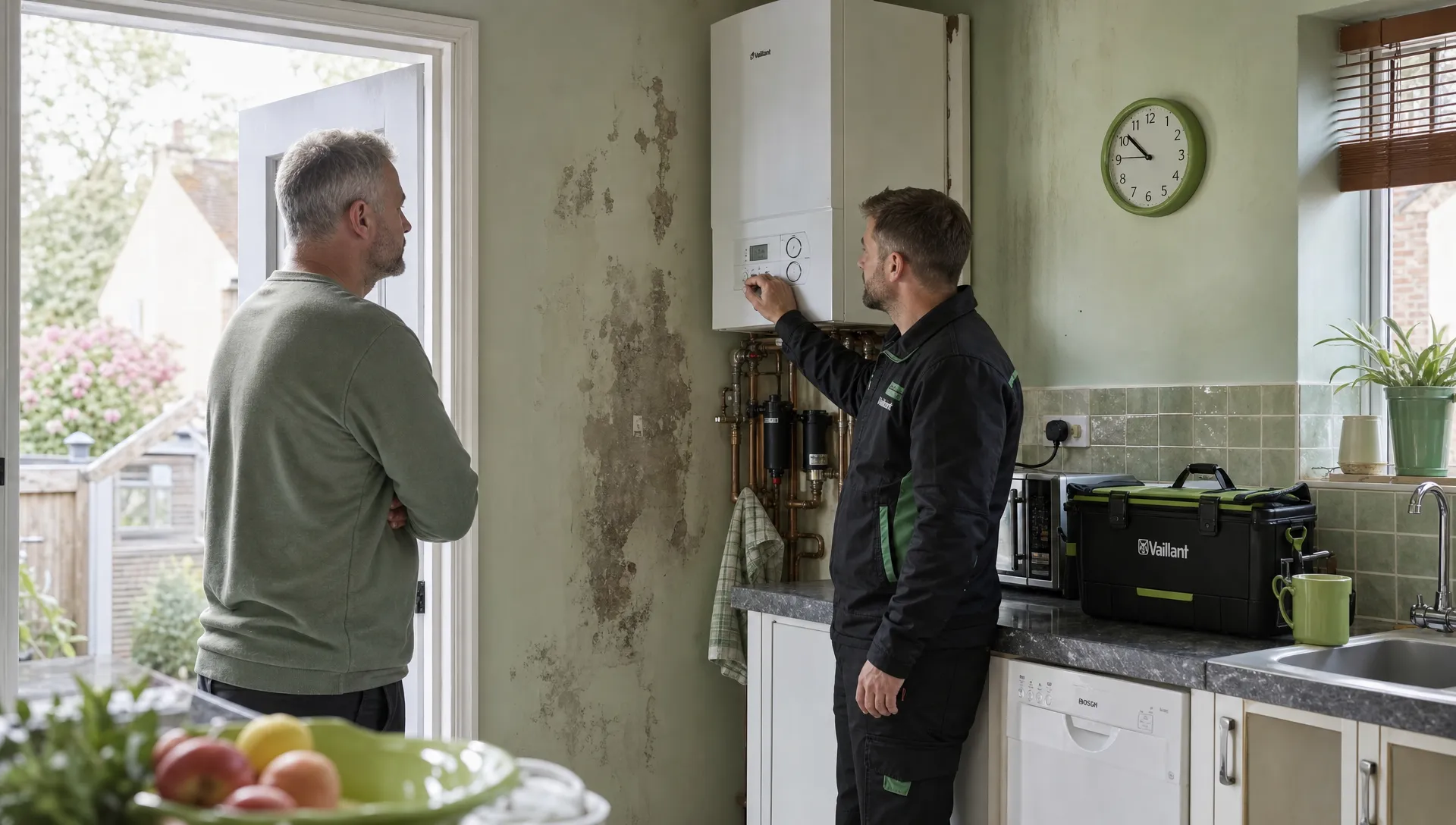
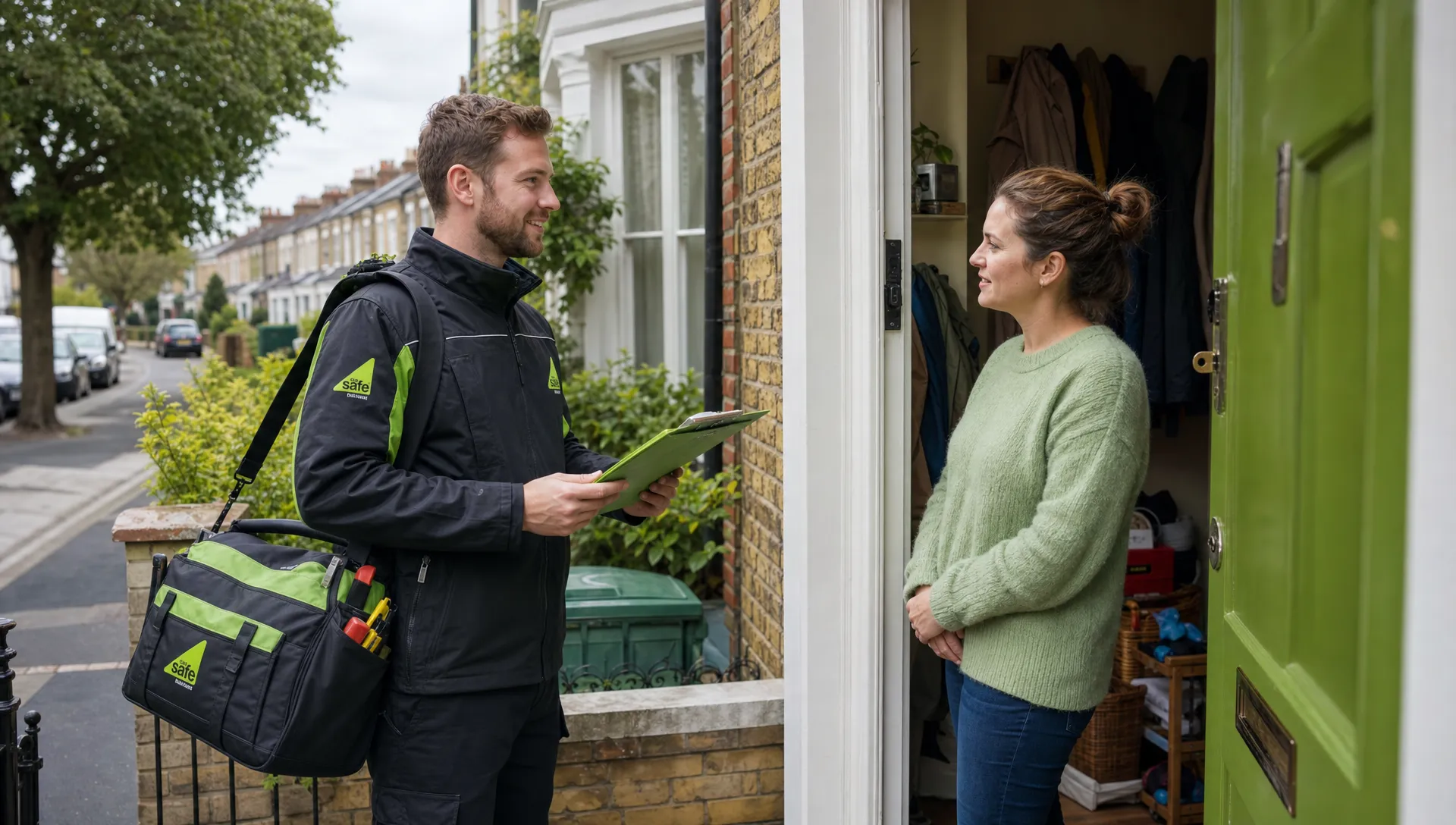
A Gas Safe heating engineer stands in the kitchen doorway of a modest UK home, talking with a homeowner and holding a clipboard while a tool bag rests by the wall. The room feels lived-in, with a kettle, shopping bags and everyday clutter visible, and no close-up technical details.

Common extras that can increase the price

Some extras are optional upgrades. Others are necessary because of safety, warranty or system condition. The important thing is that the quote explains them clearly before work starts.

Possible extra Typical cost impact Why it may be needed
Chemical clean or power flush £300-£800 Helps remove sludge and debris from older heating systems
Magnetic filter £100-£250 Helps protect the new boiler from circulating debris
Smart thermostat or upgraded controls £150-£350 Gives better control over heating schedules and temperatures
Gas pipe upgrade £300-£1,000+ May be needed if the existing supply pipe is too small
New flue route or extensions £200-£1,000+ Needed if the boiler position or flue exit changes
Radiator valve upgrades £40-£100 per radiator Often recommended when improving heating control room by room
Making good after removal Varies Covers boxing in, plastering, decorating or cupboard changes

Do not assume an extra is unfair just because it increases the price. For example, a magnetic filter and proper system cleaning may help protect the new boiler, while a gas pipe upgrade may be a safety and performance requirement. What matters is whether the engineer has explained why the item is needed and whether it is included in the total.

How long does boiler installation take?

A straightforward combi boiler replacement in the same position can often be completed in one day, although the engineer may need longer if access is poor or the system needs cleaning.

A system boiler or heat-only boiler replacement might take one to two days. A conversion from a conventional system to a combi boiler can take two to three days, sometimes longer if tanks need removing, pipework is difficult to access or extra making good is required.

If you are a landlord, it is worth planning the work around tenant access, hot water downtime and any safety documentation you need afterwards. A new installation does not remove the need for ongoing maintenance. For future budgeting, HaMuch also has a guide to annual boiler service costs.

Should you repair or replace your boiler?

If your boiler is fairly new and the fault is minor, repair may be the sensible option. But replacement becomes more appealing when the boiler is old, parts are difficult to source, repair bills are becoming frequent or the appliance is no longer efficient enough for your home.

As a rough decision point, think about the total picture rather than a single repair bill. If you have paid for several callouts in the past year, the boiler is out of warranty and another major component has failed, putting that money towards a planned replacement may be more sensible than waiting for an emergency breakdown in winter.

You should also consider how disruptive the work will be. A planned summer installation gives you more time to compare quotes and choose a suitable engineer. An emergency winter replacement often means less choice and higher urgency.

How to compare boiler installation quotes properly

When comparing quotes, do not only look at the final number. A cheaper quote may be good value, but only if it includes the same level of work, safety checks and aftercare.

Ask each heating engineer to confirm the boiler model, warranty length, whether the system will be cleaned, whether controls are included, how long the job will take and whether Building Regulations notification is included. You should also check customer reviews and make sure the engineer is qualified for gas work.

HaMuch helps with this stage because it is designed around transparent, comparable pricing. You can see local tradesperson listings, genuine customer reviews and pricing information before deciding who to contact. It is free for homeowners to request quotes, and there is no obligation to book.

Frequently Asked Questions

How much does a new boiler installation cost in the UK? A straightforward new boiler installation usually costs around £2,000-£4,500. More complex jobs, such as conversions, relocations or back boiler replacements, can cost £5,000-£7,000+ depending on the property.

Is a combi boiler cheaper to install? A combi boiler can be cheaper when replacing an existing combi in the same position. It can be more expensive if you are converting from a system with tanks and a hot water cylinder because pipework and controls may need changing.

Can I install a gas boiler myself? No. Gas boiler installation must be carried out by a Gas Safe registered engineer. DIY gas work is unsafe and can invalidate insurance, warranties and safety certification.

Does the boiler price include labour? A proper installation quote should include both the boiler and labour, but always check. Some headline prices may exclude extras such as system cleaning, upgraded controls, flue changes or pipework alterations.

How often should a new boiler be serviced? Most manufacturers recommend an annual service, and annual servicing is often required to keep the warranty valid. Landlords also have separate gas safety responsibilities for rental properties.

Why are London boiler installation quotes often higher? London quotes are often higher because heating engineers face higher business costs, travel time, parking issues and strong demand. That is why checking local pricing is more useful than relying only on a national average.

Compare boiler installation quotes with HaMuch

A new boiler is too important to price by guesswork. Before you book, compare local heating engineers, reviews and transparent pricing so you know whether a quote looks fair for your area.

You can request free boiler installation quotes through HaMuch and compare before you decide. There is no obligation to book, and you get a clearer view of local costs before committing to the work.

What’s the Average Plumber Hourly Rate in the UK? (2026)

What's the Average Plumber Hourly Rate in the UK? (2026) - Main Image

For most standard plumbing work in 2026, a realistic plumber hourly rate in the UK is usually around £40 to £80 per hour, before parts and any VAT. In highercost areas, urgent jobs, or specialist work

For most standard plumbing work in 2026, a realistic plumber hourly rate in the UK is usually around £40 to £80 per hour, before parts and any VAT. In higher-cost areas, urgent jobs, or specialist work, it can be more. A sensible UK-wide planning average is roughly £55 to £65 per hour for normal weekday work.

That said, the hourly rate is only one part of the bill. Many plumbers charge a minimum first-hour fee, a call-out charge, or a fixed price for common jobs such as replacing a tap, unblocking a sink, repairing a toilet or tracing a leak. That is why it is worth checking local pricing before you book, rather than relying on a national average.

HaMuch is built around that idea: showing real, comparable pricing by trade and location, so homeowners and landlords can see what plumbers near them typically charge before requesting quotes. You can check the latest plumber hourly and daily rates on HaMuch and compare local tradespeople with genuine customer reviews.

Average plumber hourly rate in the UK in 2026

A plumber’s hourly rate depends on where you live, the type of work, whether it is urgent, and whether the plumber is self-employed, part of a larger firm, or VAT registered.

As a broad 2026 guide, these are typical labour-only figures for domestic plumbing work:

Type of plumbing work Typical 2026 labour rate
Standard weekday plumbing £40 to £80 per hour
First-hour or minimum visit charge £60 to £120
Full day rate £300 to £500 per day
Evening, weekend or emergency work £90 to £150+ per hour
Larger quoted jobs Often priced as a fixed quote rather than hourly

These figures are best used as a starting point. A small job may not cost “one hour x hourly rate” because the plumber still has to allow for travel, diagnosis, parking, admin and the risk that a simple job takes longer than expected.

For example, if you have a dripping tap, the repair might be quick if it only needs a washer or cartridge. But if the tap is seized, access is awkward, or the whole tap needs replacing, the cost can change. For a closer look at that specific job, see HaMuch’s guide to how much it costs to fix a leaking tap.

How plumber hourly rates vary by location

Location is one of the biggest reasons plumbing prices vary. Labour costs, parking, congestion, travel time and local demand all affect the rate you are quoted.

In larger cities, especially the capital, plumber rates are often higher than the UK average. In busy rental areas, landlords may also pay more for short-notice appointments because demand is steady and tenants need issues fixed quickly.

Area What to expect
London plumber rates Usually above the UK average, especially for urgent or central appointments
Birmingham plumber rates Often closer to the national average, though prices vary by availability and job type
Manchester plumber rates Similar to many large UK cities, with higher rates for emergency and out-of-hours work

The simplest way to avoid guessing is to compare plumbers in your area before you call. A national average is useful, but a local rate is more useful when you are deciding whether a quote is fair.

Why the first hour often costs more

Many homeowners are surprised when a short plumbing visit costs more than a simple hourly calculation. For example, a plumber charging £60 per hour may still quote £90 or £100 for a small job.

That does not always mean you are being overcharged. The first hour commonly includes:

  • Travel time to and from your property
  • Initial diagnosis and testing
  • Setting up tools and protecting the work area
  • A minimum charge to make small jobs viable
  • Basic admin, insurance and business overheads

This is why it helps to ask whether the quote includes a minimum charge, call-out fee, parts, VAT and waste disposal if anything is being removed.

For landlords and property managers, this matters even more. A plumber may attend a rental property, diagnose a problem, need permission for extra work, then return with parts. Clear pricing helps avoid disputes between landlord, tenant and contractor.

Hourly rate vs fixed quote: which is better?

An hourly rate is useful for comparing plumbers, but it is not always the best way to price the job. For simple repairs, the plumber may offer a fixed price. For investigative work, an hourly rate may be fairer because nobody knows how long it will take until the issue is found.

A fixed quote is often better for clearly defined work, such as replacing a toilet, changing taps, installing a washing machine connection or fitting a new radiator valve. You know the agreed price before work starts, and the plumber has allowed for the expected labour and materials.

An hourly rate is often more suitable for leak tracing, intermittent faults, low water pressure, hidden pipework issues or multiple small jobs around the home. In those cases, the plumber cannot always predict the time needed until they have inspected the property.

The key is not whether the plumber charges hourly or fixed price. The key is whether the quote is clear.

A plumber in work clothes stands in the doorway of a typical British kitchen with a tool bag on the floor, talking to a homeowner holding paperwork. The room has ordinary household clutter and natural daylight, with no close-up view of pipes or fittings.

What affects the final plumber bill?

The hourly rate gives you a starting point, but the final bill depends on several practical factors.

1. The urgency of the job

Emergency plumbing costs more because the plumber may be rearranging other work, travelling outside normal hours, or attending during evenings, weekends or bank holidays. A burst pipe at 10pm will almost always cost more than replacing a tap on a Tuesday morning.

If the issue is serious but safe to leave temporarily, ask whether the plumber can isolate the problem first, then return during normal hours to complete the repair. That can sometimes keep the overall bill more manageable.

2. The complexity of the repair

Two jobs that sound similar can take very different amounts of time. A toilet that keeps running may need a simple valve adjustment, or it may need replacement parts. A leak under a sink may be visible and easy to reach, or it may involve units, flooring or boxed-in pipework.

A good plumber should explain what they have found, what needs doing, and whether there is a risk the job may grow once they start.

3. Parts and materials

Hourly rates usually cover labour only. Parts are normally charged separately, and the cost can vary widely depending on the quality, brand and availability.

For small repairs, parts may only be a few pounds. For larger jobs, such as replacing several taps, fitting new radiators or changing pipework, materials can become a major part of the quote.

4. Access and working conditions

A job is usually quicker when everything is easy to reach. If the plumber has to work in a cramped cupboard, remove panels, drain down part of the system, lift flooring or deal with old fittings that have seized, the labour time can increase.

This is not always obvious until the plumber sees the property, which is why photos and a clear description can help when requesting quotes.

5. Qualifications needed

Not every plumber can legally work on gas appliances. If the job involves a gas boiler, gas pipework or gas safety checks, you need a properly qualified Gas Safe registered engineer. You can check registration directly through the Gas Safe Register.

If your job is specifically a boiler service, it may be priced differently from general plumbing work. HaMuch has a separate guide explaining annual boiler service costs and what is normally included.

How to compare plumber quotes fairly

When comparing plumbers, try not to look at the hourly rate in isolation. A plumber with a slightly higher rate may be better value if they diagnose the issue quickly, bring the right parts, explain the work clearly and complete the job without repeat visits.

Before booking, ask for the basics in writing. You do not need a complicated contract for a small repair, but you do need clarity.

Useful questions include:

  • Is there a call-out charge or minimum first-hour fee?
  • Is the rate different after the first hour?
  • Are parts included or charged separately?
  • Is VAT included in the price?
  • What happens if extra work is needed?
  • Is the work guaranteed?
  • When can the plumber attend?

For larger jobs, get more than one quote where possible. This gives you a better sense of the going rate and helps you spot quotes that are unusually high or suspiciously low.

HaMuch makes this easier because you can compare local plumbers, see genuine reviews and request quotes without being pushed to book before you are ready.

What is a fair plumber call-out charge?

A typical call-out or minimum attendance charge in 2026 is often around £60 to £120, depending on location, time of day and the plumber’s pricing model.

Some plumbers do not separate the call-out charge from the first hour. Instead, they may say the first hour is £90, then additional hours are £60. Others may charge a flat visit fee plus labour. Neither approach is automatically wrong, provided it is explained before they attend.

Be cautious if the pricing is vague. Phrases such as “from £30” can look attractive, but they may not reflect the real amount you will pay once minimum charges, parts and VAT are added.

This is where transparent local pricing helps. With HaMuch, you can compare what plumbers in your area typically charge, rather than working from a vague national estimate.

How landlords should budget for plumbing work

Landlords and property managers often need plumbing work done quickly, especially when tenants have no hot water, a leaking pipe, a blocked toilet or an unusable shower.

For rental properties, it is worth keeping a list of common plumbing costs and agreed rates with trusted local tradespeople. You may not always have time to gather several quotes during an emergency, but you can still compare local rates in advance and understand what is reasonable for your area.

It is also helpful to give the plumber clear access details, tenant contact information, photos of the issue and any known stopcock location. The less time wasted on diagnosis and access, the more predictable the final bill is likely to be.

Red flags to watch out for

Most plumbers want to do a fair job for a fair price, but it is still sensible to protect yourself before agreeing to work.

Be careful if a plumber will not explain their hourly rate, refuses to put anything in writing, asks for full payment upfront for a small job, or cannot confirm whether VAT is included. For gas work, never accept “I can do boilers too” as proof of qualification. Always check the engineer is Gas Safe registered for the type of work needed.

A very cheap quote can be just as concerning as a very expensive one. It may exclude important items, use low-quality parts or lead to extra charges later. Comparing several plumbers gives you a more balanced view.

Frequently Asked Questions

What is the average plumber hourly rate in the UK in 2026? A typical plumber hourly rate in the UK is around £40 to £80 per hour for standard weekday domestic work, with a planning average of roughly £55 to £65 per hour. Rates are often higher for urgent, specialist or out-of-hours jobs.

Do plumbers charge a call-out fee as well as an hourly rate? Many plumbers charge a call-out fee or a minimum first-hour rate. This often covers travel, diagnosis and the cost of attending a small job. Always ask whether the first hour, parts and VAT are included.

Why are plumbers more expensive in some cities? Local labour costs, parking, congestion, travel time and demand all affect plumber rates. Large cities and busy rental areas often have higher prices, especially for short-notice appointments.

Is it cheaper to pay a plumber by the hour or get a fixed quote? It depends on the job. A fixed quote is usually best for clear, predictable work. An hourly rate can be fairer for fault finding, leak tracing or jobs where the plumber cannot know the full scope until they inspect it.

Can any plumber work on a boiler? No. If the work involves gas, you need a Gas Safe registered engineer. General plumbing skills are not enough for gas appliances, gas pipework or gas safety checks.

Compare plumber hourly rates near you

The best way to know whether a quote is fair is to compare it with real local pricing. National averages are helpful, but your area, job type and urgency matter most.

With HaMuch, you can check transparent plumber rates, compare local vetted tradespeople, read genuine customer reviews and request quotes for free. There is no obligation to book, so you can compare first, then decide with confidence.

How Much Does an Annual Boiler Service Cost?

How Much Does an Annual Boiler Service Cost? - Main Image

For most UK homes, the annual boiler service cost is usually £80£120 for a straightforward gas boiler that is working normally. In highercost areas, for older boilers, or where the engineer needs extr

For most UK homes, the annual boiler service cost is usually £80-£120 for a straightforward gas boiler that is working normally. In higher-cost areas, for older boilers, or where the engineer needs extra time, it can be closer to £100-£160. Oil boilers and emergency visits normally cost more.

That is the useful short answer. The better answer is that a boiler service is not just a quick tick-box job, and the price should reflect who is doing it, where you live, what type of boiler you have, and whether you need any paperwork for a rental property.

HaMuch helps with the part most homeowners find frustrating: comparing realistic local prices before you book. Instead of relying on a vague national average, you can check transparent, comparable heating engineer prices and request quotes with no obligation.

Typical annual boiler service cost in the UK

A standard annual boiler service is commonly quoted as a fixed-price visit. The engineer checks the boiler, carries out safety and performance checks, and records what they have done. If they find a fault, any repair work or replacement parts are normally quoted separately.

For a simple domestic boiler service, these are sensible 2026 budgeting figures:

Service type Typical cost What to expect
Standard annual gas boiler service £80-£120 A routine service for a working, accessible domestic boiler
Higher-cost areas or more complex visits £100-£160 Common where travel, parking, access, age or boiler condition adds time
Boiler service with landlord gas safety record £90-£150 Often arranged in the same visit, but check exactly what is included
Oil boiler service £120-£220 Usually more involved and may need a specialist oil boiler engineer
Emergency or out-of-hours attendance £120-£250+ Best avoided for routine servicing if you can book ahead

If you are comparing prices, make sure you are comparing like for like. One engineer may include VAT, a service record and basic cleaning in the price, while another may quote a lower headline figure but charge extra for travel, parking or paperwork.

For a more local starting point, you can compare current prices through HaMuch's boiler service cost guide and check what heating engineers near you are charging before you request quotes.

Why location changes the price

Boiler servicing is labour-led, so local rates matter. A service in a city centre flat can cost more than a similar job in a suburban house if the engineer has to allow for parking, congestion, longer travel time or restricted access.

That is why a single UK average can be misleading. If you are booking in a major city, check local pricing first rather than assuming the national range will match your quote. HaMuch lets you compare London heating engineer rates, Birmingham heating engineer rates and Manchester heating engineer rates so you can see how local labour costs compare.

Smaller towns can also vary. A rural property may have a lower hourly rate but a higher travel charge. A busy commuter area may have strong demand in autumn and winter, which can push prices up if you leave servicing until the first cold week of the year.

What is included in an annual boiler service?

A proper service is more than turning the boiler on and off. The exact process depends on the boiler, manufacturer guidance and the engineer's findings, but a typical service should include checks on safety, condition and performance.

During a routine visit, the heating engineer may:

  • Check the boiler and controls are operating correctly
  • Inspect the flue and ventilation where relevant
  • Look for signs of leaks, corrosion or unsafe wear
  • Check gas pressure and combustion where appropriate
  • Clean key internal components if the boiler design and condition require it
  • Check seals, case condition and safety devices
  • Confirm the appliance is safe to use at the time of the visit
  • Complete a service record for your own records or warranty needs

For gas boilers, the engineer should be Gas Safe registered. You can check registration directly through the Gas Safe Register, which is the official register for gas engineers in the UK.

A service does not normally include repairs. If the engineer finds a faulty pump, leaking valve, damaged seal, failed control or pressure issue, they should explain the problem and provide a separate quote before carrying out extra work. Do not assume parts are included unless the quote says so clearly.

Boiler service cost for landlords

Landlords often book a boiler service at the same time as the annual gas safety check, but they are not exactly the same thing.

A gas safety check is a legal requirement for most rented homes with gas appliances. The Health and Safety Executive explains that landlords must arrange an annual gas safety check by a registered engineer and keep the relevant record. You can read the official guidance on the HSE landlord gas safety page.

A boiler service is maintenance. It helps keep the appliance working safely and efficiently, and it may be required to keep a manufacturer warranty valid, but the service record itself is not a replacement for a landlord gas safety record unless the engineer has specifically carried out and documented both.

If you manage several properties, ask whether the engineer can service multiple boilers or complete gas safety checks during the same round of visits. That can reduce admin time and make scheduling easier, even if the price per property still needs to be quoted properly.

Landlords planning wider compliance work should also budget separately for electrical safety checks. HaMuch has a separate guide to the cost of an EICR landlord certificate, which is a different inspection carried out by a different trade.

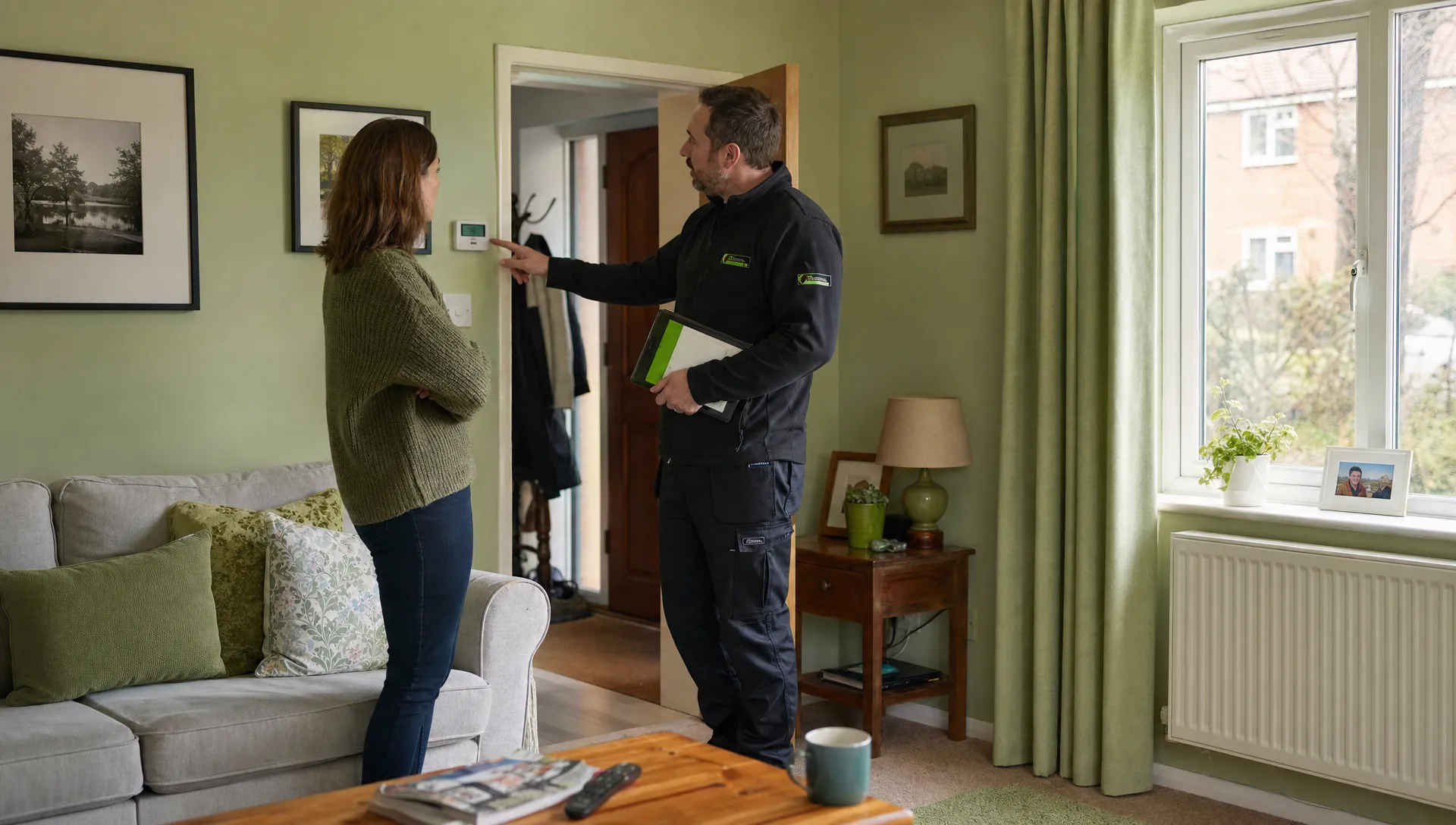
A heating engineer with a tool bag and a tablet held with the screen not visible, standing at the open doorway of a modest British home and speaking with a homeowner near the front step. The entrance area has everyday shoes and coats, natural daylight and no close-up view of boiler parts.

What affects the final boiler service price?

Most annual boiler services are fairly predictable, but a few details can change the quote. The more information you give when requesting prices, the easier it is for engineers to quote accurately.

Cost factor How it can affect the quote
Boiler type Gas combi boilers are often straightforward, while oil, LPG or older systems may need a specialist or longer visit
Boiler age and condition An older boiler may take longer to inspect and may reveal worn parts or previous poor maintenance
Access A boiler in a cramped cupboard, loft or awkward utility space can take more time than one with clear access
Paperwork A service record is usually included, but landlord gas safety paperwork may be priced separately
Location City parking, travel time and local labour rates can affect the price
Time of year Autumn and winter are busier, so booking ahead can give you more choice of engineers
Repairs found during the service Faults, parts and return visits are normally extra and should be quoted separately

The cheapest quote is not always the best quote. A very low price may not include VAT, paperwork, enough time on site or travel. A good quote should be clear about what is included, what is not included, and what happens if the engineer finds a fault.

One-off boiler service or service plan?

Many homeowners choose a one-off annual service because it is simple: you pay for the visit, receive the service record, and decide separately if any repairs are needed.

A service plan or boiler cover package can make sense if you want predictable monthly payments or repair cover, but it is important to compare the full annual cost against the price of a one-off service. Check the excess, exclusions, age limits, call-out rules and whether the plan actually includes an annual service.

If your boiler is relatively new and under warranty, read the manufacturer terms carefully. Many warranties require an annual service by a suitably qualified engineer. Missing a service can make a later warranty claim harder, even if the boiler has been working fine.

How to compare boiler service quotes properly

When you request quotes, give engineers the same information so their prices are easy to compare. At a minimum, tell them the boiler make and model if you know it, whether it is gas, oil or LPG, where it is located in the property, and whether you need landlord paperwork.

Before booking, ask these questions:

  • Is the price fixed for a standard annual boiler service?
  • Is VAT included?
  • Does the quote include a service record?
  • Is a landlord gas safety record included or priced separately?
  • Are travel, parking or congestion charges included?
  • What happens if a fault is found during the service?
  • Can the engineer provide their Gas Safe registration details for gas work?

This is where HaMuch is useful. You can compare local heating engineers, see genuine customer reviews, check real pricing information by trade and location, and request quotes without being pushed into booking before you are ready.

When should you book an annual boiler service?

The best time to service a boiler is usually late spring, summer or early autumn. Engineers are often less stretched than during the first cold snap, and you have time to deal with any small issues before winter.

You should also consider booking a service:

  • Before a boiler warranty anniversary
  • Before new tenants move in
  • After buying a property if there is no recent service record
  • If the boiler has been unused for a long period
  • If you notice unusual noises, pressure loss or repeated fault codes

If there are warning signs such as a smell of gas, soot marks, a yellow flame on an older appliance, or a carbon monoxide alarm activation, treat it as a safety issue rather than a routine service. Turn off the appliance if safe to do so, ventilate the area and contact the appropriate emergency gas service or a registered engineer.

Frequently Asked Questions

How much does an annual boiler service cost? A standard annual gas boiler service usually costs around £80-£120 in the UK. In higher-cost areas or for more complex visits, it can be £100-£160. Oil boiler servicing usually costs more.

Is a boiler service a legal requirement? Homeowners are not usually legally required to service their own boiler, but annual servicing is strongly recommended and may be needed for warranties. Landlords have separate legal duties for annual gas safety checks in rented properties.

Does a boiler service include repairs? No, not normally. A service checks and maintains the boiler, but replacement parts and fault repairs are usually charged separately. Ask the engineer for a separate quote before approving repair work.

How long does a boiler service take? A straightforward domestic gas boiler service often takes around 30-60 minutes. Older boilers, awkward access, faults or extra paperwork can make the visit longer.

Can I service my own boiler? You should not attempt gas boiler servicing yourself. Gas work must be carried out by a competent, Gas Safe registered engineer. DIY checks such as keeping the area clear and testing your carbon monoxide alarm are useful, but they do not replace a professional service.

Is a landlord gas safety certificate included in the service price? Not always. Some engineers offer a combined boiler service and gas safety record, while others price them separately. Make sure your quote clearly states what paperwork is included.

Compare annual boiler service quotes near you

Before you book, check what a fair local price looks like. HaMuch gives homeowners, landlords and property managers a clearer way to compare real heating engineer prices, local reviews and quotes in one place.

You can request boiler service quotes through HaMuch for free, compare your options, and decide who to hire with no obligation. It is a simple way to avoid guesswork and book a qualified local heating engineer at a price that makes sense for your property.

How Much Does a New Boiler Installation Cost in Birmingham?

How Much Does a New Boiler Installation Cost in Birmingham?

A new boiler is one of the bigger home maintenance costs you are likely to face, so it is worth getting clear on the numbers before you start booking visits. In Birmingham, the price depends on the ty

A new boiler is one of the bigger home maintenance costs you are likely to face, so it is worth getting clear on the numbers before you start booking visits. In Birmingham, the price depends on the type of boiler, how much pipework needs changing, where the boiler is fitted, and whether you are doing a simple swap or a more involved conversion.

The good news is that you do not have to rely on vague national averages. HaMuch helps homeowners and landlords compare real local prices from tradespeople, so you can check what heating engineers typically charge before deciding who to contact.

The short answer: typical new boiler installation costs in Birmingham

For a standard domestic gas boiler installation in Birmingham, a sensible 2026 budgeting range is usually around £2,000 to £4,500. A simple combi boiler replacement is normally at the lower end. A conversion, relocation, cylinder work, or awkward installation can push the cost higher.

These figures are broad guide prices, not fixed quotes. Always compare them with written quotes from Gas Safe registered engineers and check what is included.

Type of boiler job Typical total budget in Birmingham What it usually involves
Straight combi boiler replacement £2,000 to £3,200 Replacing an old combi with a new combi in roughly the same position
System boiler replacement £2,300 to £3,800 Replacing the boiler while keeping a hot water cylinder setup
Conventional or heat-only boiler replacement £2,400 to £4,000 Replacing a boiler connected to tanks or a cylinder
Conversion to a combi boiler £3,000 to £4,500 Removing or bypassing older tanks or cylinder equipment and changing pipework
Boiler relocation £3,500 to £5,500+ Moving the boiler to another wall, room, loft, garage, or utility space

Before you accept a quote, it is worth checking heating engineer rates on HaMuch, where you can compare pricing by trade and location rather than guessing from a single national average.

Why boiler installation prices vary so much

Two Birmingham homes can both need a “new boiler”, but the work behind that phrase can be very different. A modern flat in the Jewellery Quarter with an accessible combi boiler is not the same job as a 1930s semi-detached house in Kings Heath with older pipework, tanks in the loft, and a boiler that needs moving.

The boiler itself is only part of the cost. Your quote will usually also include labour, flue parts, controls, system protection, disposal of the old boiler, and the engineer’s time for testing and commissioning. If the engineer finds that your gas pipe is undersized, your flue route is no longer suitable, or the system needs extra cleaning, the price can change.

The main cost factors are:

  • Boiler type and output: Larger homes with more bathrooms may need a boiler with a higher output, which usually costs more.
  • Like-for-like replacement or conversion: Swapping one combi for another is normally cheaper than converting from a conventional system to a combi.
  • Location of the boiler: Keeping the boiler in the same place helps control labour and materials. Moving it often means extra pipework, flue work, and making good.
  • Condition of existing pipework and radiators: Older systems may need cleaning, upgrades, or repairs before a new boiler is fitted.
  • Controls and accessories: Thermostats, smart controls, magnetic filters, and weather compensation can add to the quote.
  • Access and parking: City properties, flats, narrow streets, and restricted parking can affect how long the job takes.

A higher quote is not always a bad quote if the scope is more complete. The key is to compare like with like.

Combi, system, or conventional boiler: what are you paying for?

Most homeowners replacing a boiler in Birmingham will be looking at one of three main options.

A combi boiler heats your hot water on demand and does not need a separate hot water cylinder. It is popular in smaller homes, flats, and many terraces because it saves space and can be efficient for households with moderate hot water demand.

A system boiler works with a hot water cylinder, which can suit homes with more than one bathroom or higher hot water use. It can be a good option where the existing cylinder setup is in good condition and still suits the household.

A conventional boiler, sometimes called a heat-only boiler, is often found in older homes with tanks and a cylinder. Replacing one can be straightforward if the existing setup is sound, but converting away from it can add labour and materials.

If you are unsure which type you have, do not worry. A heating engineer should be able to explain it in plain English during the survey. You should not be expected to diagnose your system yourself.

What should be included in a new boiler quote?

A boiler quote that looks cheap at first can become expensive if important items are missing. When comparing quotes, ask each engineer to break down what is included rather than giving only a single total.

A good quote should usually make clear whether it includes:

  • The boiler make, model, and output size
  • Labour for removing the old boiler and fitting the new one
  • Flue parts and any required plume management kit
  • Controls, such as a room thermostat or programmer
  • A magnetic filter or scale protection where recommended
  • System cleaning, flushing, or inhibitor treatment
  • Making good around the boiler area, if included
  • Disposal of the old boiler and packaging
  • VAT, if the business is VAT registered
  • Warranty registration and Building Regulations notification

Gas boiler work must be carried out by a Gas Safe registered engineer. You can check an engineer or business on the Gas Safe Register. After installation, the boiler should be tested, commissioned, and left with the correct paperwork.

A UK heating engineer with a tool bag standing in the hallway of a modest Birmingham terraced house, speaking with a homeowner while holding a clipboard. The home looks lived-in and naturally lit, with coats by the door and ordinary household details.

Birmingham-specific things that can affect the price

Birmingham has a wide mix of property types, from city-centre flats and converted buildings to Victorian terraces, post-war semis, and newer estates. That variety matters because boiler installation is not priced only by postcode. It is priced by how difficult the job is in that particular property.

In older terraces, engineers may find older pipework, awkward flue routes, or limited space around the existing boiler. In flats, access arrangements, leasehold rules, and flue positioning can affect the installation. In larger family homes, hot water demand may mean a more powerful boiler or a system boiler is a better fit.

Parking and access can also matter. If an engineer needs to carry equipment a long distance, book building access, or work around restricted parking, that can add time. It may not be a huge cost on its own, but it can make one job more expensive than another.

This is why it helps to compare local quotes rather than rely on a single “UK average”. HaMuch is built around transparent, comparable pricing, so you can see how local heating engineer costs compare before choosing who to invite.

How to compare boiler installation quotes fairly

When you receive two or three quotes, do not simply choose the lowest number. A cheaper quote may exclude controls, flushing, a filter, VAT, or making good. It might also specify a different boiler with a shorter warranty or less suitable output.

A fair comparison should look at the full package. Ask yourself whether each quote covers the same boiler type, the same installation location, the same system cleaning, and the same warranty registration. If one quote is much lower, ask what has been left out.

It is also sensible to check reviews and availability. A good heating engineer should be clear, punctual, and willing to explain what they are recommending. If they push you into a decision without surveying the property or answering basic questions, take your time and compare another option.

Extra costs to ask about before work starts

Most new boiler installations are completed without major surprises, but there are some common extras to clarify early. These may be necessary, but they should not come as a shock after the work begins.

Ask whether the engineer has allowed for system cleaning, especially if your radiators have cold spots or the water in the system is dirty. Ask whether your gas pipe is likely to need upgrading. Ask whether the condensate pipe can run to a suitable drain without problems. If the boiler is being moved, ask who is responsible for patching walls, boxing in pipes, or redecorating afterwards.

For landlords, there is one more point to remember. A boiler installation is not the same as your annual gas safety record. If the property is rented, you still need to meet your legal gas safety duties. Landlords who manage multiple properties often budget heating, gas safety, and electrical checks together. For example, if you also manage homes in the North West, HaMuch has a separate guide to EICR electrical safety certificate costs in Manchester.

Is replacing the boiler better than repairing it?

A repair can be the right choice if the boiler is fairly modern, parts are available, and the fault is minor. But replacement becomes more sensible when the boiler is old, unreliable, inefficient, or repeatedly breaking down.

Many homeowners start looking at replacement when the boiler is around 10 to 15 years old, especially if repair bills are becoming regular. You might also consider a new boiler if hot water performance is poor, the heating takes a long time to warm up, or an engineer says key parts are becoming hard to source.

Do not assume you need a new boiler just because one fault has appeared. A trustworthy heating engineer should tell you whether repair is realistic and cost-effective. If the advice is unclear, get a second opinion before committing to a major installation.

Frequently Asked Questions

How much does a combi boiler installation cost in Birmingham? A straightforward combi boiler replacement in Birmingham will often fall somewhere around £2,000 to £3,200, depending on the boiler chosen, access, controls, and whether extra pipework or cleaning is needed.

Why is my boiler quote higher than the guide price? Your quote may be higher if the boiler is being moved, the gas pipe needs upgrading, the flue route is awkward, the system needs extra cleaning, or you are converting from an older cylinder and tank setup.

Do I need a Gas Safe registered engineer? Yes. Any gas boiler installation must be carried out by a Gas Safe registered engineer. Always check the engineer’s registration before work starts and make sure you receive the correct paperwork after installation.

How long does a new boiler installation take? A simple like-for-like boiler replacement can often take around a day. More complex work, such as moving the boiler or converting the system, can take longer.

Should landlords in Birmingham replace boilers before they fail? Not always, but planned replacement can reduce disruption for tenants if the boiler is old or unreliable. Landlords should also keep annual gas safety duties separate from the installation itself.

Ready to compare new boiler quotes in Birmingham?

If you are planning a boiler replacement, the best next step is to compare real local prices before you book. HaMuch lets you check transparent heating engineer pricing, read genuine customer reviews, and request quotes from vetted tradespeople without any obligation to hire.

Start by comparing local heating engineer rates, then request boiler installation quotes through HaMuch so you can choose with confidence rather than guesswork.

Hiring heating engineers to fit, service and repair your boiler…what’s the best option?

heating engineer

Like many purchases, when it’s time to get a new boiler or maintain your existing heating system, the different service provider choices and how much they all charge can be baffling.

So, whether you’re installing a new Valliant combi boiler, servicing an old Worcester or your Baxi boiler has stopped working and needs urgent repair the following are your three options;

  1. Hire an independent local heating engineer
  2. Hire a medium sized regional or national company
    which has a team of heating engineers
  3. Take out a home insurance plan from one of the
    large national providers

The pros and cons of each option;

Independent Heating Engineers

Cost

Independent heating engineers will charge you what they pay for boilers plus a bit more (e.g. 10%) for organising collection and to earn a bit of profit which is perfectly normal for any business. They then charge you an hourly rate or a fixed price based on their estimate of how many hours/days are required for the job.

Independent heating engineers will usually charge the most reasonable hourly rate as they do not have costs such as admin staff, layer upon layer of managers with flashy offices, an additional team of sales staff to pay for or expensive marketing such as tv or google ad words to pay for.

When you need help later the independent engineer will charge you parts and labour each time you need them. Occasionally this will mean a big bill however there is no fixed monthly cost.

Quality

If you find a responsible, intelligent independent heating engineer they will advise an appropriate for you design heating and hot water system i.e. with an affordable pressurised water cylinder or a simple compact combi boiler depending on your family needs. They will know what to do regards maintenance and competently fix problems such as boiler circuit board electrical faults or motorised valves inevitably failing. It is easy to manage problems when the same person attends who knows your system and doesn’t blame other engineers who may have attended…as he installed and maintained it.

Service

An independent heating engineer is most likely a sole trader or at most has a tiny team, they may not have fancy vans or smart uniforms. In winter he/she will struggle to rush to all emergencies at once but normally will have serviced your boiler in the summer and tried to avoid you having problems. Winter is the time independent engineers struggle and a broken-down van can cause havoc to their ability to respond to clients if it snows over the weekend.

Medium Sized regional or national company

Cost

A large company with fleets of smart vans, uniformed employees, franchisees or subcontractors, large offices a team of sales and admin people, driving around quoting, answering phones and designing google friendly websites……etc obviously has a lot more overheads than a sole trader and guess who is going to pay for that?

Yes, you need to pay for all that fancy stuff…. plus, the cost of the new boiler or repair you need.

So, any well-known large heating business is going to cost you significantly more than a small local sole trader.

Quality

A well run medium sized business MAY have a good team of intelligent engineers but most likely they will have some senior specialists and trouble shooters with a fair number of average engineers competent when jobs are simple. If for example your heating system has a complex electrical error or requires a thorough powerflush then they will arrange a second visit with their appropriate engineer in attendance. You will get the job done as these businesses are serious but it will never be cheap.

Service

Attendance will be prompt, professional without drama. And if there is a disagreement then they will try to help you as reputation is important to these businesses.

National insurance companies

Cost

The huge insurance model businesses who charge a monthly fee and provide cover when you have a problem operate a very different model. First, if you need a new boiler installed, they will probably charge 100% more than an independent installer even though they will be getting discounts by ordering 10,000s of boilers at a time. The problem they have is a huge pyramid of management costs plus advertising budgets running into the millions. For some the pay every month is good value eg for landlords who have sensitive tenants. However eventually when a big problem arises, they often insist they replace your system at hugely inflated costs otherwise cover is voided. Many of there clients are older, wealthier or more nervous people who value the security as much as the service. Most of the visits will not really be of much benefit to your heating system as that would go against the profitability of the business model. E.g. adding inhibitor to systems annually never occurs in practice even though all boiler manufacturers state it is required.

Quality

The products installed should be good but the detail of installation will depend on who turns up and could vary considerably.

Service

When a business employs and subcontracts literally thousands of engineers then quality will always be mixed including the downright useless. Eventually any problem will be resolved but may involve various engineers attending until a good one is available who knows how to resolve the problem. Each engineer will need to be booked in, be waited for and explained the problem as it’s the first and probably last time you will see each one. You can rest assured that problems will always be fixed eventually and that money will leave your bank account every month for ever.

So if you are a landlord maybe get insurance, if you are desperate call a big well known expensive business but if you want an intelligent reasonable cost long term solution then find a local independent engineer you trust, treat them well and they will return the favour.