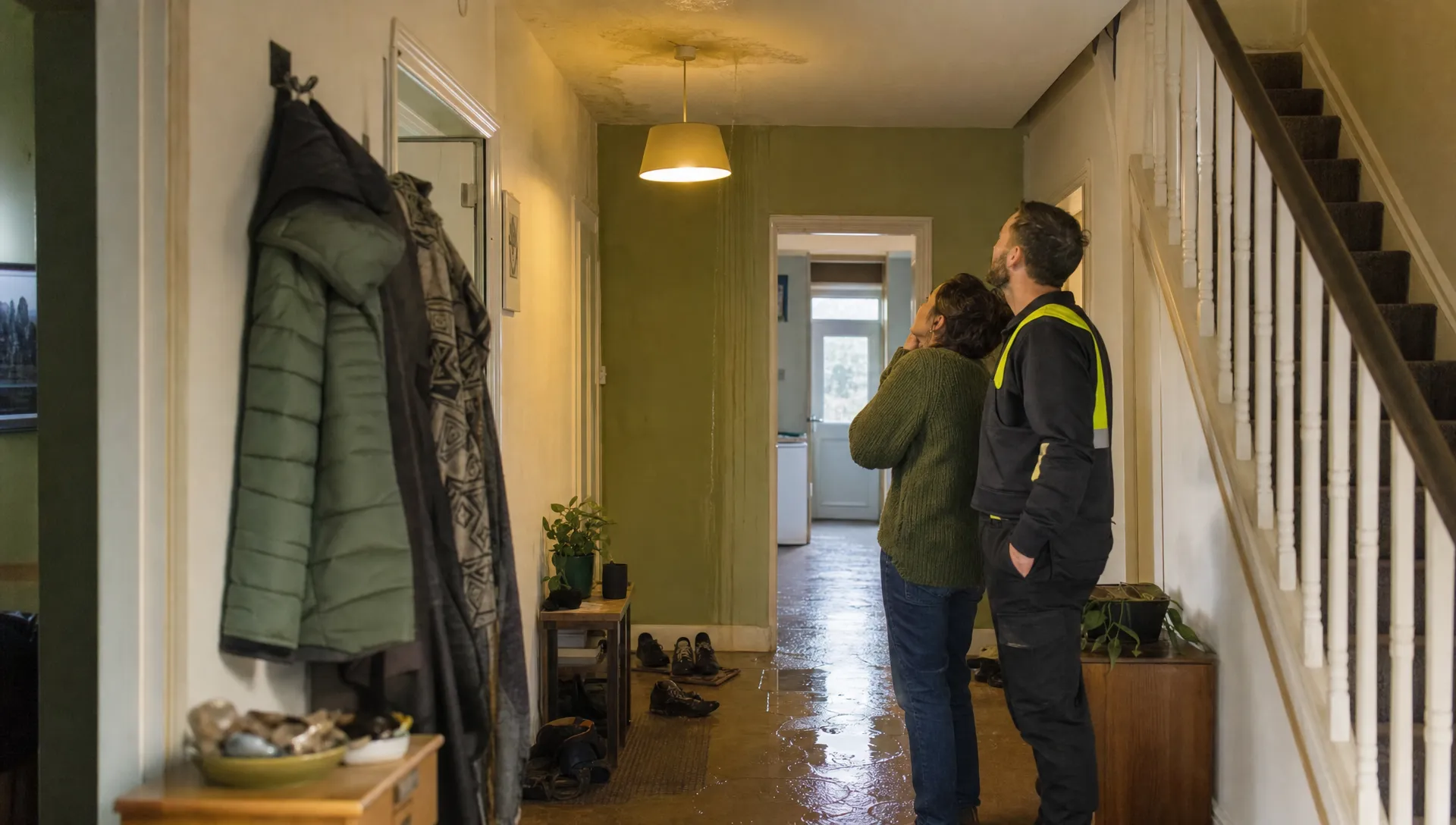
If water is pouring through the ceiling, your first job is not to find the perfect fix. It is to make the area safe, stop the water if you can and call the right tradesperson quickly. A leak like this
If water is pouring through the ceiling, your first job is not to find the perfect fix. It is to make the area safe, stop the water if you can and call the right tradesperson quickly.
A leak like this is stressful, especially if it is coming through a light fitting or spreading across plasterboard. Stay calm and work through the steps below in order. Most ceiling leaks are handled first by a plumber, but the right trade can change depending on whether the source is a pipe, bathroom fitting, roof, heating system or electrics affected by water.
If you have searched for a water leak through ceiling emergency because it is happening right now, start here.
What to do in the first few minutes
Move people, pets and valuables away from the affected area. If the ceiling is bulging, bowing, cracking or making creaking sounds, do not stand under it. Wet plasterboard can become heavy and may give way with little warning.
Put a bucket, bowl or towels under the drip only if it is safe to do so. If water is coming through quickly, use more than one container and check them often. Do not climb on furniture or ladders under a wet ceiling.
Next, try to stop the water at the source. If you know the leak is from an upstairs bathroom, toilet, sink, washing machine or pipe, turn off the water supply. In many UK homes, the main stopcock is under the kitchen sink, in a downstairs cupboard, near the front door or in a utility area. Turn it clockwise to shut the water off. If there is a small isolation valve near the leaking appliance or toilet, you may be able to turn that off instead.
If you live in a flat and the water seems to be coming from the property above, contact the neighbour, landlord, managing agent or building concierge immediately. You may still need to protect your own electrics and ceiling, but the leak may need stopping from another property.
If water is near electrics, treat it as unsafe
Water coming through or near a light fitting, switch, socket or fuse box is a safety risk. Do not touch wet switches, do not use the ceiling light and do not stand in water while handling anything electrical.
If your fuse box is dry, easy to reach and away from the leak, switch off the affected circuit or the whole supply. If the fuse box is wet, in the leaking area or you would need to walk through water to reach it, stay away and call an electrician urgently.
Electrical Safety First advises that electrical items affected by water should not be used until checked by a competent person. Even after the leak has stopped, a light fitting or socket that has been wet may need inspecting before it is safe to use again.
If there is any smell of gas near a boiler, airing cupboard or gas appliance, do not try to investigate. Call the National Gas Emergency Service on 0800 111 999 and use a Gas Safe registered engineer for any gas-related work.
Who should you call first?
For most active ceiling leaks, the first call is an emergency plumber. A plumber can isolate the leak, repair burst or failed pipework, deal with leaking toilets, find bathroom leaks and advise whether further trades are needed.
Because call-out rates can vary by area and by time of day, it is worth checking local pricing before you agree to non-urgent follow-up work. HaMuch shows real, comparable rates rather than vague estimates, including plumber rates in London, Birmingham plumber rates and Manchester plumber rates.
If water has reached lighting, sockets or wiring, you may also need an electrician once the leak is controlled. You can compare current electrician rates on HaMuch before booking inspection or repair work.
If the leak is related to the roof, guttering, chimney area or building fabric, a roofer or builder may be needed. HaMuch does not ask you to guess blindly: you can compare builder rates and local reviews if the problem turns out to be roof or structural rather than plumbing.
Common causes of water pouring through a ceiling
A ceiling leak can look the same from below even when the source is completely different. The room above, the weather and when the water appears are the best clues.
| What you notice | Likely cause | Trade to call |
|---|---|---|
| Water appears below a bathroom after a shower or bath | Failed bath seal, shower leak, waste pipe leak or cracked grout around tiles | Plumber first, then possibly a tiler |
| Water appears below a toilet or basin | Leaking toilet connector, cistern, basin trap, tap or pipework | Plumber |
| Water appears near a radiator, boiler area or airing cupboard | Central heating pipe, radiator valve or heating system leak | Plumber or heating engineer |
| Water appears only during or after heavy rain | Roof, gutter, flashing, chimney or flat roof issue | Roofer or builder |
| Water comes from a ceiling in a flat | Neighbouring flat, communal pipework or roof space | Managing agent, landlord and plumber |
| Dripping has stopped but staining keeps spreading | Soaked plasterboard, insulation or hidden damp from an earlier leak | Plumber, builder or plasterer depending on source and damage |
A bathroom above the leak is the most common clue in many homes. Bath seals, shower trays, loose wastes and leaking toilet fittings can release a surprising amount of water into the floor void before it appears downstairs. If the water starts after someone showers, flushes the toilet or empties a bath, tell the plumber exactly that.
If the ceiling leak happens during heavy rain, particularly on a top floor, around a bay window, near a chimney breast or beneath a flat roof, the source may not be plumbing at all. In that case, the immediate job is to limit internal damage, then arrange for a roofer or builder to check the outside of the property when safe.
Should you make a hole in a bulging ceiling?
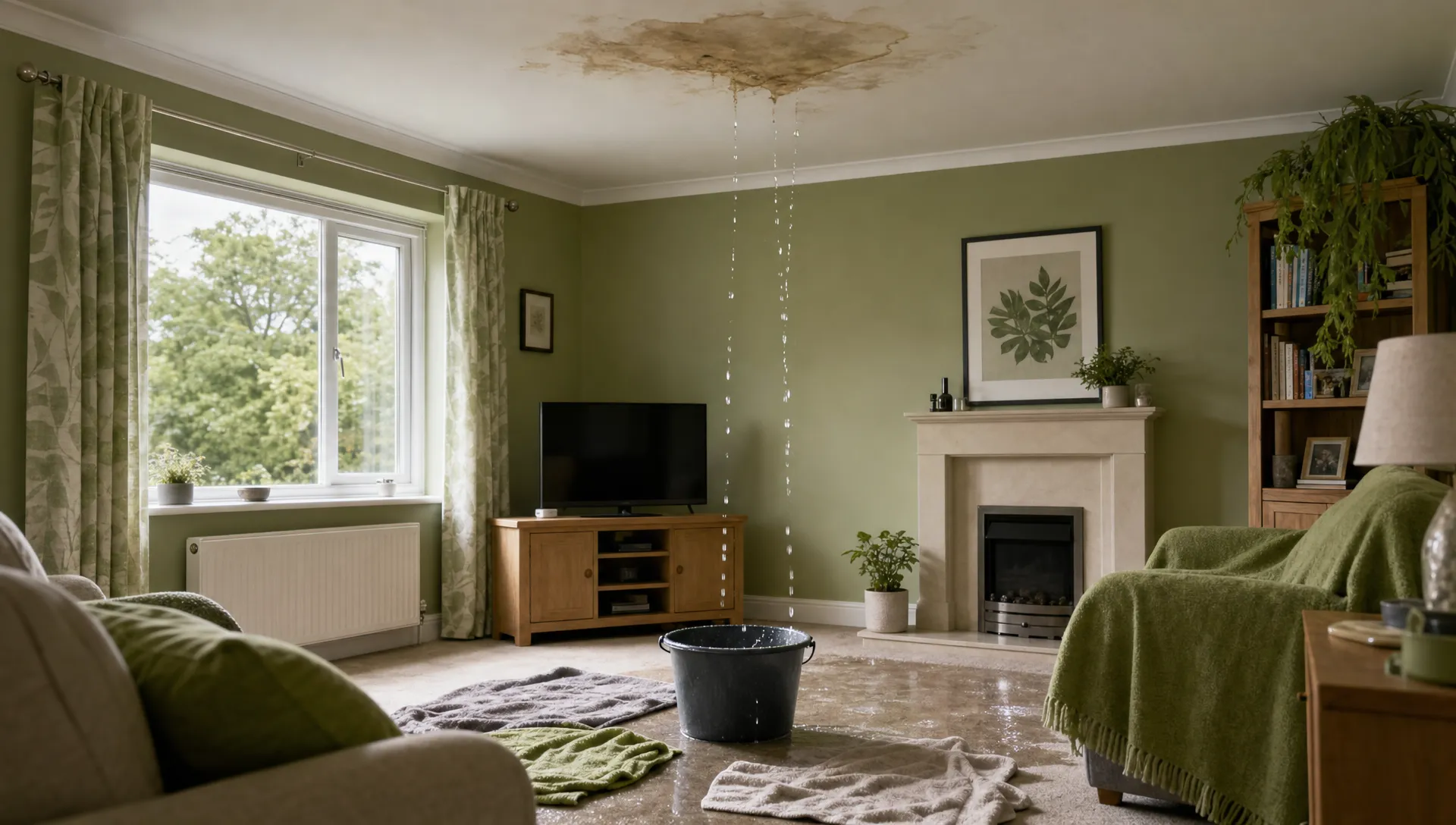
A bulging ceiling means water is collecting above the plasterboard. Some tradespeople may create a controlled drain point to release water, but this can be dangerous if you do not know what is above the ceiling or whether electrics are nearby.
For a homeowner, the safer advice is simple: do not stand underneath it and do not poke the ceiling yourself if there is any risk of collapse or water near electrics. Clear the room if you can, keep the door closed to stop pets or children going in and wait for an emergency plumber or suitable tradesperson.
If the bulge is small and a tradesperson advises you over the phone to place buckets or move furniture, follow their guidance carefully. But do not turn a ceiling leak into a ceiling collapse by prodding, cutting or pulling at wet plasterboard.
What to tell the tradesperson when you call
The clearer you are, the faster a plumber or electrician can decide what tools, parts and access they may need. This also helps you get more accurate quotes when the immediate emergency is under control.
Have these details ready if you can:
- Whether water is still pouring, dripping slowly or has stopped
- Which room is above the leak, such as a bathroom, kitchen, loft or flat above
- Whether water is near lights, sockets or the fuse box
- Whether you have turned off the stopcock or local water valve
- Whether the leak happens after showering, flushing, heating coming on or heavy rain
- Photos or a short video of the leak, taken from a safe distance
- Your property type, access details and parking information
Do not worry if you cannot answer everything. A good tradesperson will talk you through what matters first. If the leak is contained and you are no longer in emergency mode, HaMuch also has a practical checklist for finding a reliable plumber before you book further repairs.
What happens after the leak is stopped?
Stopping the leak is only the first stage. Water can sit above the ceiling, soak insulation, damage plasterboard and stain paint. If the plasterboard has sagged, cracked or gone soft, it may need cutting out and replacing rather than simply painting over.
Give the area time to dry properly before cosmetic work. Opening windows, using heating carefully and running a dehumidifier can help, but do not use electrical equipment in a wet area unless the electrics have been checked and it is safe to do so.
The follow-up trades usually depend on the damage:
- A plumber repairs the leaking pipe, toilet, bath waste, tap, shower or appliance connection.
- A heating engineer handles leaks connected to boilers, heating controls or sealed heating systems.
- An electrician checks lights, sockets or wiring that may have been wet.
- A plasterer repairs or replaces damaged ceiling plasterboard.
- A painter and decorator finishes the area once it is fully dry and stain-blocked.
- A builder or roofer deals with roof, gutter, chimney or structural water entry.
If you are claiming on insurance, take photos before moving too much, keep invoices and contact your insurer early for guidance. Many policies have specific rules about emergency repairs, trace and access work, excesses and approved contractors, so check your own cover rather than assuming everything is included.
What if you are a landlord or tenant?
For tenants, report the leak to your landlord or letting agent as soon as possible and keep a written record. If there is water near electrics, say so clearly. You should still take reasonable steps to limit damage, such as moving belongings away and not using affected lights, but emergency repair arrangements are normally handled by the landlord or managing agent.
For landlords, speed matters. A small delay can turn a plumbing repair into ceiling replacement, electrical checks and redecoration. Ask the tenant for photos, confirm whether the stopcock has been turned off and arrange the right trade based on whether the leak is plumbing, roof-related or from another property.
HaMuch is useful here because you can compare local tradespeople, rates and genuine customer reviews before booking. That helps landlords and property managers choose quickly without relying on guesswork.
Frequently Asked Questions
Is water pouring through the ceiling an emergency? Yes. Active water pouring through a ceiling should be treated as urgent, especially if the ceiling is sagging or water is near lights, sockets or the fuse box. Make the area safe, turn off the water if you can and call an emergency plumber.
Should I turn off the electricity? If water is near electrics and your fuse box is dry and safe to reach, turn off the affected circuit or the whole supply. If the fuse box is wet or you would need to enter the leaking area to reach it, do not touch it. Keep away and call an electrician.
Do I need a plumber or a roofer? If the leak is below a bathroom, kitchen, toilet, radiator or pipework, call a plumber first. If it only happens during heavy rain or is on the top floor with no plumbing above, the source may be roof-related and a roofer or builder may be needed.
Can I paint over the stain once it dries? Not straight away. The source of the leak must be fixed first and the ceiling needs to dry fully. If the plasterboard is soft, cracked or sagging, it may need repair before decorating.
Will my home insurance cover a ceiling leak? It depends on your policy and the cause. Many home insurance policies include some cover for escape of water, but limits, excesses and trace and access cover vary. Take photos, keep receipts and contact your insurer early.
Need help with an active ceiling leak?
If water is still coming through, make the area safe, turn off the water supply if you can and keep away from affected electrics. Then post your urgent leak job on HaMuch so local tradespeople can respond.
HaMuch helps you compare real local rates, customer reviews and available tradespeople before you decide who to book. For an active leak, speed matters, but you should still be able to see clear pricing and choose with confidence.