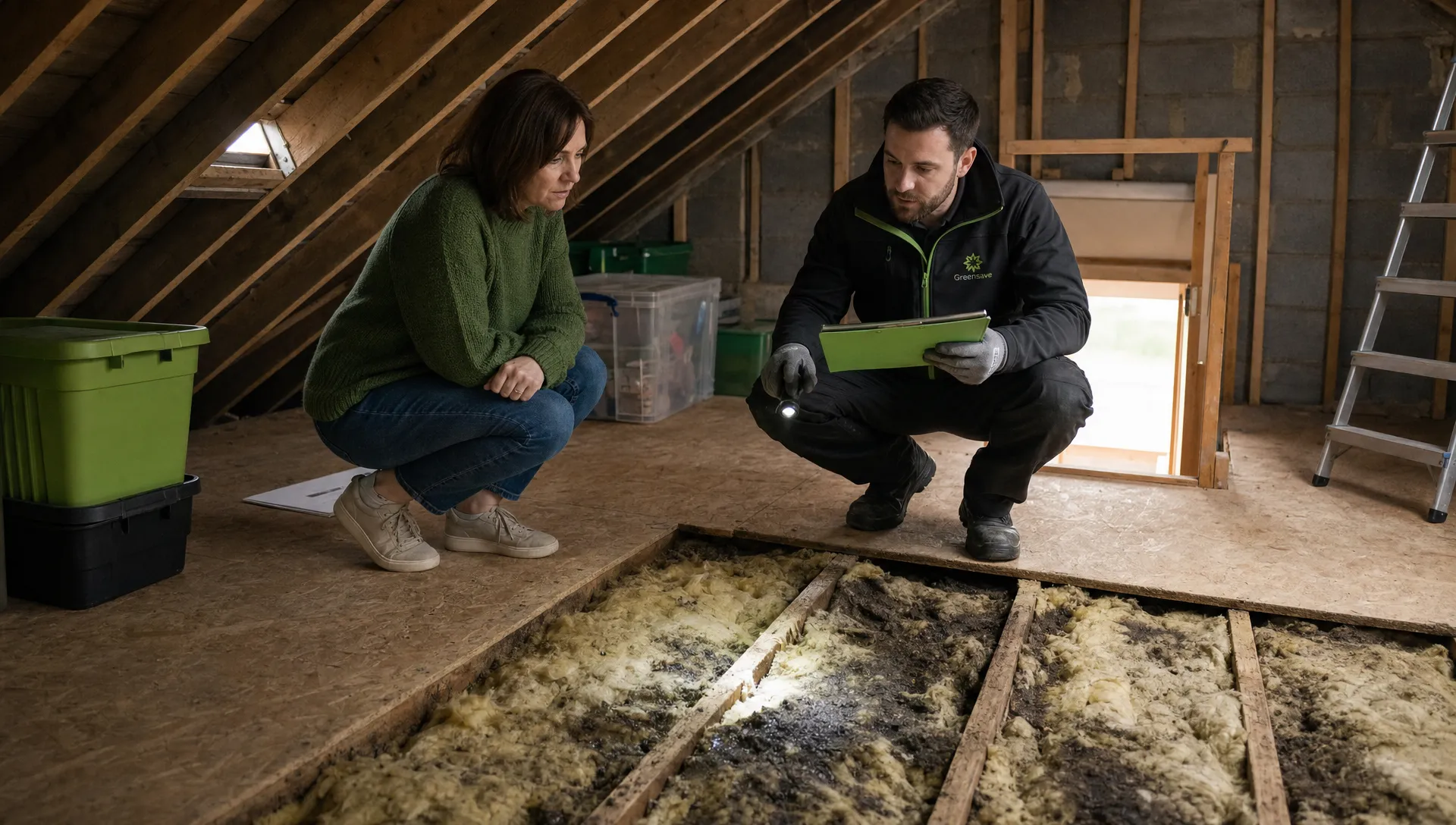
If your loft insulation looks damp, darker than usual, mouldy, or flattened down, the main thing is not to rush into adding more insulation on top. Damp loft insulation is usually a symptom, not the o
If your loft insulation looks damp, darker than usual, mouldy, or flattened down, the main thing is not to rush into adding more insulation on top. Damp loft insulation is usually a symptom, not the original problem. Water may be getting in from outside, warm moist air may be condensing in the loft, or the insulation may simply have been squashed by storage or poor loft boarding.
The right fix depends on the cause. A roof leak is normally handled by a roofer or a builder with roofing experience. A leaking tank or pipe needs a plumber. Condensation linked to poor airflow or extractor ducts may need a ventilation engineer, builder, or sometimes an electrician if a fan is involved.
This guide explains what to check safely, which tradesperson to call and how to get sensible quotes before the damage spreads.
First, check the loft safely
Before you inspect anything, remember that most loft floors are not designed to take weight between the joists. Ceiling plasterboard can crack or give way if you step in the wrong place.
If you can safely look from the loft hatch or a boarded area, take a few photos and note where the damp or compressed insulation is. Avoid pulling lots of insulation around, especially if it is old, dusty, mouldy, or loose-fill material you do not recognise.
Take these immediate precautions:
- Do not step between joists or onto bare plasterboard.
- Do not touch damp insulation near electrical cables, lights, or sockets.
- Do not cover damp insulation with new insulation.
- If water is actively dripping through a ceiling, move belongings, use a bucket only where safe and arrange an urgent inspection.
- If any electrics are wet or tripping, keep away and call a qualified electrician.
If the insulation is only slightly flattened where boxes have been stored, it is usually less urgent. If it is wet to the touch, stained, smells musty, or appears after rain, it needs investigating.
Why damp loft insulation matters
Loft insulation works by trapping still air within the material. When it becomes wet or heavily compressed, it traps less air, so it cannot do its job properly. That can mean colder rooms below, higher heating use and more condensation elsewhere in the home.
The Energy Saving Trust explains that many UK homes use mineral wool loft insulation, commonly installed to a total depth of around 270mm. That depth only helps if the insulation is in good condition and fitted without blocking ventilation.
Damp loft insulation can also point to problems that need attention, such as a roof defect, a leaking pipe, blocked eaves ventilation, or a bathroom fan venting warm moist air into the loft instead of outside. Left alone, moisture can encourage mould, damage stored items and contribute to timber decay.
Common causes and who to call
The table below gives a quick way to narrow down the most likely cause.
| What you notice | Likely cause | Trade to contact |
|---|---|---|
| Wet patch appears or worsens after rain | Slipped tile, damaged flashing, leaking roof valley, chimney issue, or gutter problem | Roofer, or builder with roofing experience |
| Droplets on the underside of the roof felt, worse in cold weather | Condensation from warm moist air reaching the loft | Builder, ventilation and AC engineer, or insulation specialist |
| Damp insulation below a tank, pipe, or overflow | Plumbing leak, tank issue, or pipework condensation | Plumber |
| Insulation flattened under boxes, boards, or walking routes | Compression from storage or badly fitted loft boarding | Builder, carpenter and joiner, or loft boarding specialist |
| Damp area close to bathroom or kitchen extractor ducting | Loose, damaged, or poorly insulated duct releasing moist air into the loft | Ventilation and AC engineer, or electrician for fan-related work |
Cause 1: A roof leak
A roof leak is more likely if the damp patch is localised, close to the eaves, chimney breast, party wall, roof valley, skylight, or where an extension roof meets the main roof. It may also get noticeably worse after heavy rain or wind.
You may see staining on the timbers, darker insulation in one area, water marks on the ceiling below, or daylight where it should not be visible. Do not climb onto the roof yourself. A tradesperson can check tiles, felt, lead flashing, guttering, valleys and the condition of the roofline from a safe position.
For this type of problem, start with a builder who handles roofing repairs or a local roofer. Costs vary widely because a small slipped tile is a very different job from renewing flashing or repairing a valley. If you are comparing prices in a larger city, check local builder rates before you book. HaMuch lets you compare current rates for builders in London, builders in Birmingham and builders in Manchester, so you are not relying on a vague national estimate.
Cause 2: Condensation in the loft
Condensation is one of the most common reasons loft insulation looks damp without an obvious roof leak. It happens when warm moist air from the home rises into a cold loft and turns back into water on cold surfaces.
Common sources include gaps around the loft hatch, unsealed ceiling penetrations, bathroom extractor fans discharging into the loft, tumble dryer vents routed incorrectly, or insulation pushed too far into the eaves and blocking airflow. In winter, you may see beads of water on roofing felt, damp patches across a wider area and a musty smell.
UK homes need suitable ventilation, and Building Regulations guidance in Approved Document F covers ventilation standards for building work. In plain English, the loft needs to stay cold and ventilated, while moist air from bathrooms and kitchens should be sent outside, not into the roof space.
If extractor ducting or poor airflow appears to be the issue, compare ventilation and AC engineer rates on HaMuch before arranging a visit. A builder or insulation specialist may also be able to unblock eaves ventilation, fit suitable vents, or correct insulation that has been pushed into the wrong place.
Cause 3: A leak from a tank or pipe
Some homes have cold water storage tanks, expansion tanks, overflow pipes, or central heating pipework in the loft. If damp insulation sits directly under or beside these, a plumbing issue is a strong possibility.
Look for staining under joints, damp timber below pipe runs, a tank that is overflowing, or moisture around pipe lagging. Pipes can also sweat with condensation if they are cold and poorly insulated, though a steady wet patch should be treated as a possible leak until checked.
A plumber is the right trade for tanks, overflows, leaking joints and pipework. You can compare local plumber rates on HaMuch, and if you want a practical hiring checklist, use our guide on how to find a reliable plumber before booking.
Cause 4: Compressed insulation from storage or loft boarding
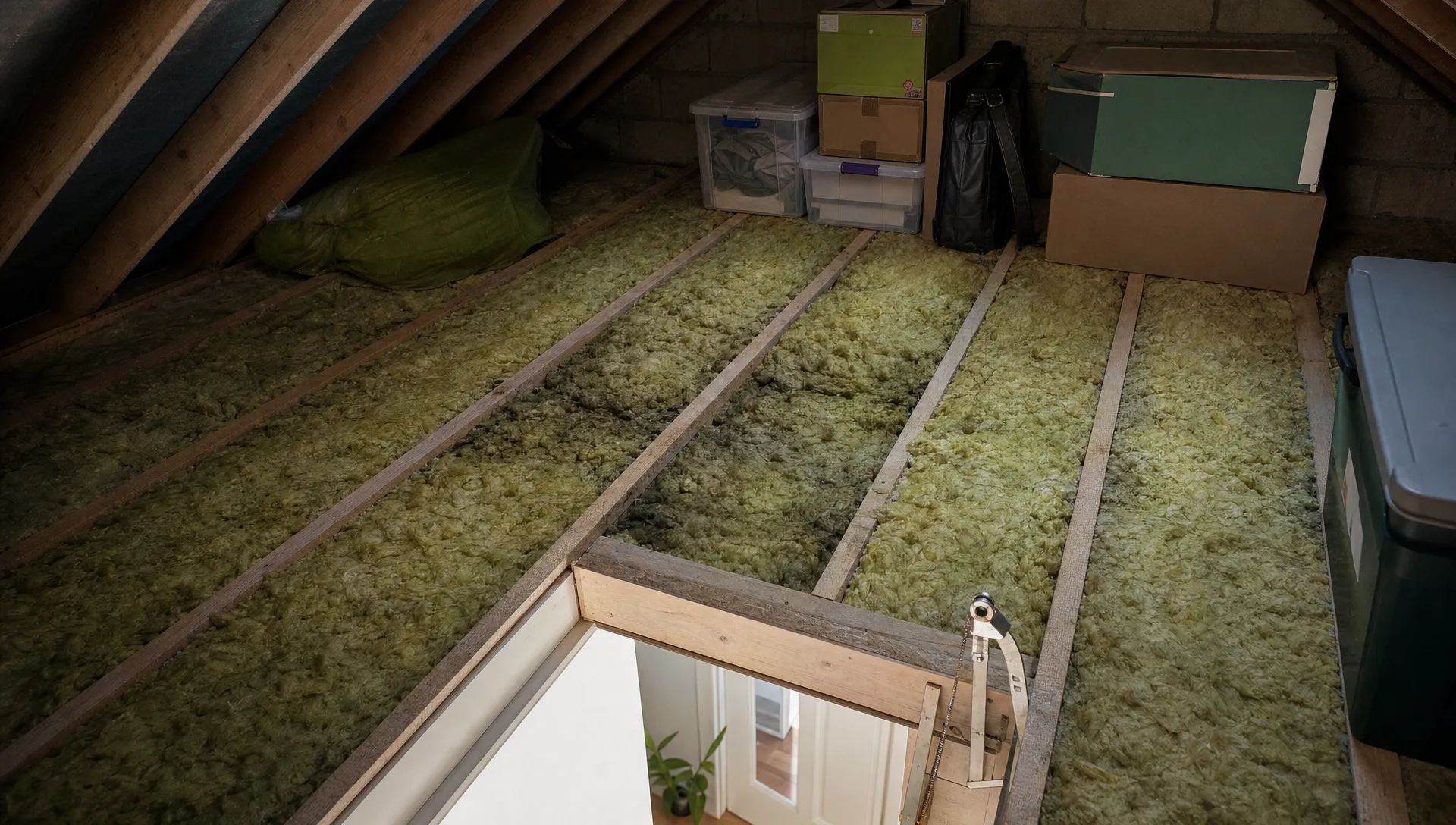
Not all damaged loft insulation is wet. Sometimes it is simply squashed flat under boxes, suitcases, old furniture, or boards laid directly over the insulation.
Compressed insulation is less effective because the trapped air has been squeezed out. If the insulation is dry, the fix may involve lifting stored items, replacing badly flattened areas and using raised loft boarding so there is still enough space for insulation underneath.
This is normally a job for a builder, carpenter and joiner, or loft boarding installer. It is especially worth getting a proper quote if you use the loft for storage, because overloading or poorly boarding a loft can damage ceilings, restrict ventilation and make future access harder.
Should you remove damp loft insulation?
Do not remove large amounts until the cause has been found. If you take out wet insulation without fixing the leak or condensation problem, the replacement material may become damp too.
Slight surface damp from a one-off condensation event may dry once airflow is corrected, but soaked, mouldy, smelly, collapsed, or contaminated insulation usually needs removing and replacing. If insulation has been wet for some time, a tradesperson should also check the surrounding timber and ceiling below.
Never add new insulation over damp insulation. It can trap moisture, hide the problem and make the loft colder in the wrong places. If the insulation is old loose-fill material, or you are unsure what it is, avoid disturbing it and ask a professional to assess it safely.
What a tradesperson will usually check
A good tradesperson should not just quote to replace the insulation. They should look for the moisture source first.
| Area checked | Why it matters |
|---|---|
| Roof covering, flashing, valleys and gutters | Finds rainwater entry points that may only show during bad weather |
| Loft ventilation and eaves | Checks whether airflow is blocked by insulation, storage, or previous work |
| Bathroom and kitchen extractor ducting | Confirms moist air is being vented outside rather than into the loft |
| Pipes, tanks and overflows | Rules out leaks and poorly lagged pipework |
| Loft boarding and stored items | Identifies areas where insulation has been compressed |
| Ceiling below and roof timbers | Looks for staining, mould, rot, or signs of long-term damp |
Ask the tradesperson to explain what they believe caused the damp, what repair is needed and whether the insulation can be dried, partly replaced, or fully replaced. This helps you compare quotes fairly.
How much will it cost to fix?
There is no single honest price for fixing damp loft insulation because the insulation may not be the main cost. The job might be a small roof repair, a plumbing repair, improved ventilation, new extractor ducting, insulation replacement, loft boarding correction, or a combination of these.
The final price usually depends on:
- The cause of the damp.
- How much insulation is affected.
- Whether access is safe and boarded.
- The height, age and layout of the property.
- Whether roof, plumbing, ventilation, electrical, or carpentry work is needed.
- Your local labour rates.
This is where HaMuch is useful. Instead of making decisions from broad guesses, you can compare real, transparent tradesperson pricing by trade and location, then request quotes with no obligation to book.
What to include when requesting quotes
The clearer your job post, the easier it is for the right tradesperson to respond. Include photos if you can take them safely from the hatch or a boarded area.
Mention these details:
- Whether the insulation is wet, mouldy, smelly, or just compressed.
- Where in the loft the problem is located.
- Whether it gets worse after rain or during cold weather.
- Whether there are tanks, pipes, extractor ducts, or stored items nearby.
- Whether you have seen ceiling stains, dripping water, or electrical issues.
- Your property type, such as terraced house, semi-detached house, flat, rental property, or converted loft.
For landlords and property managers, it is also worth noting whether the property is occupied, whether the tenant has reported mould or ceiling staining and whether access can be arranged during working hours.
Frequently Asked Questions
Can damp loft insulation dry out on its own? Sometimes, if it is only slightly damp from a short-lived condensation issue and the ventilation problem is corrected. If it is soaked, mouldy, smelly, or keeps becoming damp, the cause needs fixing and the affected insulation may need replacing.
Does damp loft insulation always mean the roof is leaking? No. Roof leaks are common, but condensation and plumbing leaks can look very similar from inside the loft. The pattern of damp, the weather and what sits above the wet patch all help identify the cause.
Who should I call for damp loft insulation? Call a builder or roofer if the damp appears after rain, a plumber if it is near a tank or pipe, and a ventilation engineer if it seems linked to condensation or extractor ducting. If damp is close to electrics, keep away and call a qualified electrician.
Can I put new insulation over compressed insulation? Only if the existing insulation is dry and suitable to remain in place. If it is damp, mouldy, contaminated, or blocking ventilation, deal with that first. For loft storage, raised boarding is usually better than compressing insulation under standard boards.
Is damp loft insulation urgent? It can be urgent if water is actively dripping, a ceiling is bulging, electrics are affected, or the damp follows heavy rain. If the insulation is only compressed from storage and dry, it is usually less urgent but still worth correcting.
Get the right tradesperson to check your loft
Damp loft insulation is fixable, but guessing the cause can waste time and money. Post the job on HaMuch and compare local tradespeople with transparent pricing, real customer reviews and no obligation to book.
If water is actively coming in, describe it as urgent when you request quotes. If the problem is near wiring, lights, or electrical fittings, do not touch the affected area and arrange a qualified electrician as well as the trade needed to fix the moisture source.