Need help with a job?

Find affordable tradespeople

Need help with a job?

HaMuch is Excellent

Currently Viewing Posts in Builder

Slates or Tiles Missing From the Roof After a Storm

Slates or Tiles Missing From the Roof After a Storm

If you have spotted slates or roof tiles missing after a storm, the main thing is not to panic and not to climb onto the roof. A missing tile can look small from the garden or street, but it can expos

If you have spotted slates or roof tiles missing after a storm, the main thing is not to panic and not to climb onto the roof. A missing tile can look small from the garden or street, but it can expose the felt, battens or loft space underneath, especially if more rain is due.

In most cases, this is a job for a roofing contractor or a builder who carries out roof repairs. If water has reached lights, sockets or the consumer unit, you may also need an electrician. If the ceiling or plaster has been damaged, that comes later, once the roof is watertight.

This guide explains what to do now, what the damage might mean, who to call and how to compare local repair costs before booking anyone.

What to do first if roof tiles are missing after a storm

Start with safe checks from ground level. Do not go onto the roof, lean out of upstairs windows or try to refit tiles yourself. Roofs can be slippery after rain, and storm damage can leave surrounding tiles loose even if they still look attached.

Your first steps should be simple and practical:

  • Check the roof from the ground, the garden or the opposite side of the road if it is safe to do so.
  • Take clear photos of the missing slates or tiles, plus any broken pieces on the ground.
  • Move furniture, electrical items and valuables away from any damp ceiling areas inside.
  • Put a bucket or container under an active drip, but do not touch light fittings or switches if water is nearby.
  • Check the loft only if it is safe, well lit and you can stay on boarded areas.
  • Contact your insurer if you think the damage was caused by a named storm or severe weather.

If there is water coming through the ceiling near electrics, treat that as urgent. Switch off the affected circuit only if you can do so safely and without touching wet surfaces. Then contact a qualified electrician and a roof repair tradesperson. You can compare local electrician rates on HaMuch if electrical safety needs checking after water ingress.

What missing slates or tiles can mean

A roof covering is designed to overlap so rain is shed downwards and away from the structure. When a slate or tile is missing, that protective pattern is broken. Sometimes the underlay beneath the tiles will keep out light rain for a short time, but it is not meant to act as the main weatherproof layer.

Storms can also cause damage you cannot see from the ground. A tile may have blown off because it was already cracked, the fixing had corroded or the batten underneath had weakened. That is why a good tradesperson will usually check the surrounding area, not just replace one visible tile.

What you can see Possible cause Trade to call
One or two missing roof tiles or slates Wind uplift, old fixings or previous cracking Roofer or builder who handles roof repairs
Several missing tiles in one area Wider storm damage, failed battens or loose surrounding tiles Roofer or builder, possibly with scaffolding
Missing ridge or hip tiles Mortar failure or storm movement along the roof peak Roofer or builder
Damp patch on upstairs ceiling Rain getting through the roof covering, flashing or chimney area Roofer or builder first, plasterer later if needed
Water near light fittings Roof leak reaching electrical fittings Electrician urgently, plus roofer or builder
Loose guttering or fascia damage Wind has pulled fixings away Builder, roofer or guttering specialist

The key point is that the visible missing tile may only be the first sign. A proper inspection helps stop repeat leaks, especially before the next spell of bad weather.

Who should you call for missing roof tiles?

For most storm-related missing slates or tiles, call a roofing contractor or a builder experienced in roof repairs. On HaMuch, homeowners can compare tradespeople by location, reviews and clear local rates, rather than trying to guess what a fair price should be.

If you are in London, Birmingham, Manchester or the surrounding areas, labour rates and access costs can vary a lot from one property to another. A terraced house with restricted rear access is not the same job as a low roof on a detached home with space for ladders or scaffolding. Checking local builder rates on HaMuch gives you a clearer starting point before you request quotes.

You may need more than one trade if the storm damage has spread inside the property. The usual order is roof first, electrics if water has got near fittings, then plastering or redecoration after the affected area has dried. If the ceiling is stained, cracked or blown after the leak has been repaired, compare plasterer rates near you before arranging internal repairs.

How urgent is a missing roof tile?

A missing tile is not always an emergency in the same way as water pouring through the ceiling, but it should not be left for weeks. The risk depends on the weather forecast, how many tiles are missing and whether water is already getting inside.

If the weather is dry and only one tile has slipped, you may be able to book the repair for the next available visit. If rain is forecast, there are several missing slates or you can see daylight in the loft, ask for a prompt inspection. If water is actively entering the property, tell the tradesperson it is an active roof leak caused by storm damage.

You can also check the Met Office weather warnings if another storm is due. That can help you explain the urgency when requesting quotes and decide whether a temporary weatherproofing visit is needed before a full repair.

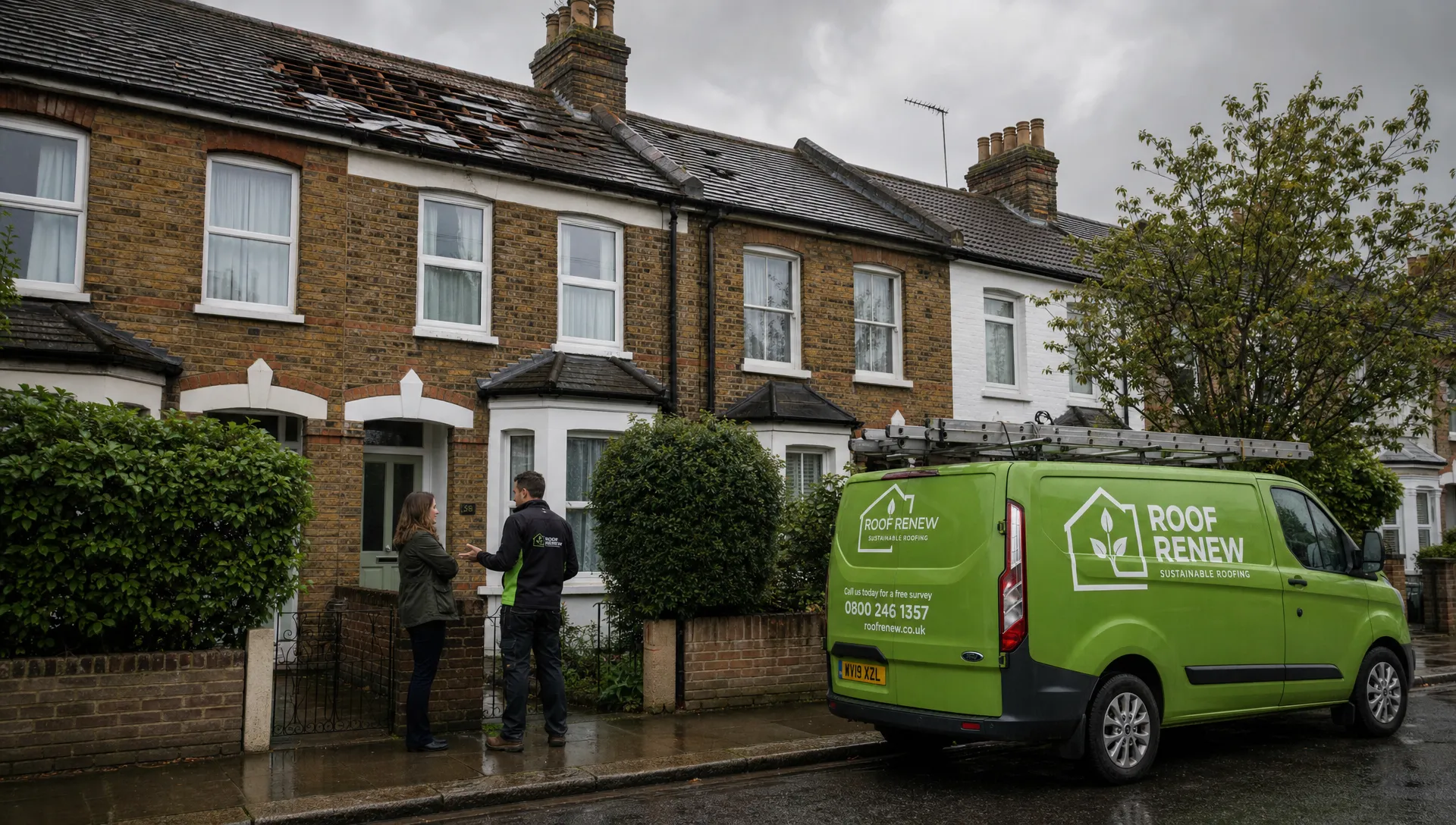
A UK terraced house after a storm with missing roof tiles visible from the street, damp paving and a tradesperson speaking with the homeowner at ground level.

What affects the cost of replacing missing roof tiles?

It is difficult to give one sensible price without seeing the roof, because the visible repair can be the smallest part of the job. A straightforward replacement of a few accessible tiles is very different from storm damage on a steep roof, a third storey roofline or a chimney area that needs scaffolding.

The main cost factors are usually:

  • How many slates or tiles are missing, cracked or loose.
  • Whether matching replacement tiles are easy to source.
  • The height and pitch of the roof.
  • Whether safe ladder access is enough or scaffolding is needed.
  • Whether the underlay, battens, flashing, ridge tiles or chimney pointing are also damaged.
  • Whether it is an emergency callout after a storm.
  • Your location, especially in high-demand areas after severe weather.

This is where upfront comparison helps. HaMuch shows real, comparable pricing by trade and location, so you can sense-check quotes rather than relying on vague estimates. After a storm, many homeowners contact the first available tradesperson, but you can still ask for a clear breakdown of labour, materials, access equipment and any temporary weatherproofing.

Can you temporarily cover the gap yourself?

Only do what you can do safely from inside the property. If you can access the loft without stepping off boarded areas, you may be able to place a container under a drip or move stored items away from the wet area. Avoid stapling, nailing or fixing anything to roof timbers unless you know what you are doing.

Do not climb onto the roof to fit a tarpaulin, replace a tile or inspect a chimney. It may look like a quick job, but roofs are dangerous after high winds and rain. A professional will also know whether the surrounding tiles are secure enough to work around and whether extra access equipment is needed.

If broken tiles have fallen into a garden, driveway or path, move people away from the area until it has been checked. If there are loose tiles over a public pavement or shared entrance, make that clear when you request quotes so the job is treated with the right urgency.

What a tradesperson will usually check

A good roof repair visit should go beyond replacing the most obvious missing tile. The aim is to make the roof watertight and reduce the chance of the same area failing again in the next storm.

The tradesperson may check:

  • The surrounding tiles or slates for cracks, looseness or slipped fixings.
  • The condition of the battens and felt beneath the damaged area.
  • Ridge tiles, hip tiles and verge edges where wind damage is common.
  • Lead flashing around chimneys, roof windows or joins.
  • Gutters, fascia boards and downpipes affected by wind or falling debris.
  • Internal signs of water entry in the loft or top floor rooms.

Ask whether the quote includes removing broken debris, matching the replacement tiles as closely as possible and making good any small associated defects found during the repair. If the tradesperson says extra work is needed once they are on the roof, ask for photos so you can see what has changed.

What landlords and property managers should do

If a tenant reports missing roof tiles after a storm, ask for photos from a safe distance and whether there is any water inside. Do not ask tenants to inspect the roof or enter unsafe loft spaces.

For rental properties, speed matters because a small leak can quickly affect ceilings, electrics and decoration. Keep a written record of when the issue was reported, what photos were supplied, which tradespeople you contacted and any temporary measures taken. If an insurance claim is likely, those records can be useful.

It is also worth arranging the roof repair first rather than decorating straight away. Plaster and paint repairs should wait until the source of water ingress is fixed and the affected area has had time to dry.

How to describe the job when requesting quotes

The clearer your job description, the easier it is for tradespeople to respond with useful information. You do not need to diagnose the roof yourself. Just describe what you can see and what is happening inside.

Include:

  • The type of property, such as terraced, semi-detached, detached or flat.
  • The number of storeys.
  • Whether the missing slates or tiles are at the front, rear or side.
  • Whether water is coming inside now or there are only external signs.
  • Whether access is easy from a driveway, garden or shared area.
  • Photos from ground level, if you have them.
  • Whether you need a temporary repair, a full repair or both.

For example, you might write: "Several roof tiles are missing at the rear of a two-storey terraced house after last night’s storm. There is a damp patch on the upstairs bedroom ceiling but no active dripping at the moment. Photos attached. Please quote for inspection and repair."

That gives a tradesperson enough detail to judge urgency, likely access needs and whether they should ask follow-up questions before visiting.

Frequently Asked Questions

Can rain get in through one missing roof tile? Yes, it can. The underlay may resist some rain for a short time, but it is not designed to be the main waterproof layer. One missing tile should still be checked and repaired before more bad weather.

Is a missing roof tile an emergency? It is urgent if water is coming in, several tiles are missing, loose tiles could fall or more stormy weather is forecast. If the weather is dry and there is no internal leak, it may be a prompt repair rather than an emergency callout.

Can I replace a missing roof tile myself? It is not recommended unless you are trained and have proper roof access equipment. The fall risk is serious, and nearby tiles may also be loose after a storm.

Will home insurance cover missing roof tiles after a storm? It depends on your policy, the cause of damage and the condition of the roof before the storm. Take photos, keep invoices and contact your insurer before authorising non-urgent work if you plan to claim.

Do I need a roofer or a builder? A roofer is the most direct choice, but many builders also handle roof repairs such as replacing tiles, fixing ridge tiles and repairing storm damage. If water has reached electrics, call an electrician as well.

Should I repair the ceiling straight away? No. Fix the roof first, then allow the affected ceiling or wall to dry properly. Plastering and decorating too soon can trap moisture and lead to further staining or mould.

Get missing roof tiles repaired before the next storm

If slates or tiles are missing from your roof after a storm, act early and stay off the roof yourself. Post the job on HaMuch, add photos if you have them and compare local tradespeople with transparent rates and genuine customer reviews.

If water is coming in now, say that clearly in the job description so local roof repair tradespeople can understand the urgency. HaMuch is free for homeowners to use, and there is no obligation to book until you have compared your options and chosen the right person for the job.

Cracks Appearing Above a Door Frame

Cracks Appearing Above a Door Frame

Spotting cracks above a door frame can be unsettling, especially if they seem to have appeared overnight. The good news is that many cracks in this area are minor plaster movement, not a serious struc

Spotting cracks above a door frame can be unsettling, especially if they seem to have appeared overnight. The good news is that many cracks in this area are minor plaster movement, not a serious structural problem. But because doorways are weak points in a wall, some cracks do need a closer look.

This guide explains the most common causes of cracks above door frames, what warning signs to check for, and which trade to call. If you decide to get the crack inspected or repaired, HaMuch helps you compare local tradespeople with transparent, comparable pricing, so you are not guessing before you ask for quotes.

First, check what type of crack you have

Before you start worrying about major movement, take a calm look at the crack and the area around it. A thin hairline crack in the plaster is very different from a wide, jagged crack that runs through the wall and keeps growing.

Look for these clues:

  • Width: Is it a hairline crack, or can you fit the edge of a coin into it?
  • Direction: Does it run straight up, diagonally from the corner of the door, or across the wall?
  • Change over time: Has it stayed the same, or is it getting longer or wider?
  • Door movement: Has the door started sticking, rubbing, or not closing properly?
  • Other signs: Are there cracks outside, damp patches, sagging plaster, or gaps around skirting boards and architraves?

If the crack is thin, dry and stable, it is often a plastering or decorating issue. If the crack is widening, the door is sticking, or there are matching cracks on nearby walls or outside brickwork, a builder or structural professional may need to inspect it.

Why cracks often appear above door frames

Door openings naturally create a break in a wall. That means stress is more likely to show around the corners of the opening, especially above the frame. This is why cracks above door frames are common in older houses, newly plastered rooms, extensions and properties that have had layout changes.

The key is not just where the crack is, but what else is happening around it.

1. Normal plaster shrinkage or settlement

Small cracks above a door frame are often caused by normal drying, shrinkage or minor settlement. This is especially common after recent plastering, decorating, refurbishment, or building work.

You might notice:

  • A thin, straight or slightly diagonal hairline crack
  • No damp staining
  • No sticking door
  • No matching crack on the other side of the wall
  • No sign that the crack is widening

This type of crack is usually dealt with by a plasterer or painter and decorator. A plasterer can rake out and refill the crack properly if the surface has failed, while a decorator may be enough if it is only a fine surface crack before repainting.

The important point is to wait until you are confident the crack has stopped moving. Filling it too soon can mean it reappears quickly.

2. Movement around the doorway opening

A doorway is one of the weaker points in a wall because material has been removed to create the opening. Over time, tiny movements can show at the top corners of the frame. This does not automatically mean the wall is unsafe, but it is worth monitoring.

This can happen in older homes where the building has settled over decades, or in busy areas of the home where doors are opened, closed and sometimes slammed every day. You may also see fine cracks where the architrave meets the wall or where old filler has failed.

A plasterer can usually repair the finish if the wall itself is stable. If the crack is repeatedly coming back after repair, or if the door lining looks out of square, it may be better to ask a builder to inspect the opening first.

3. Door frame or timber movement

Sometimes the problem is not the wall itself, but the timber door frame, lining or architrave moving slightly. Timber expands and contracts with changes in temperature and moisture. New doors, newly fitted frames, or older timber that has dried out can all create small gaps and cracks where the plaster meets the frame.

Common signs include a crack tight against the door frame, a gap between the architrave and wall, or a door that rubs in one season but not another. If the frame is loose, twisted or poorly fitted, a carpenter and joiner is usually the right person to call. Once the timber issue is sorted, a plasterer or decorator can make good the surrounding finish.

If the door is suddenly badly sticking and the wall above it is cracking, treat that as a bigger warning sign and speak to a builder rather than assuming it is only joinery movement.

4. Lintel or support movement above the doorway

Most door openings need some form of support above them. This may be a lintel, timber support, steel beam, or another structural arrangement depending on the age and construction of the property. If that support is missing, undersized, damaged or disturbed by previous building work, cracks can appear above the frame.

Signs that the issue could be structural include:

  • A diagonal crack starting from the top corner of the frame
  • Cracks on both sides of the same doorway
  • A crack that keeps widening
  • The wall or plaster above the door looking bowed or uneven
  • A door that has started jamming at the top
  • Cracking near a wall that has been removed or altered

A builder is usually the first trade to contact for this kind of issue. They can assess whether the opening needs repair, reinforcement, or further investigation by a structural engineer. If the problem relates to a steel beam or a widened opening, HaMuch's guide to RSJ installation costs is a useful next step for understanding what may be involved.

For structural alterations, Building Regulations may apply. The UK Planning Portal guidance on internal walls and Building Regulations explains why load bearing walls and supports need proper care.

5. General house movement or subsidence

Most cracks above door frames are not subsidence. However, wider or spreading cracks can sometimes point to wider movement in the property, especially if they appear alongside other signs.

Take extra care if you notice cracks running through external brickwork, gaps opening around windows, sloping floors, or several doors and windows sticking at once. In that situation, a builder may still be your first practical contact, but you may also need advice from a structural engineer or building surveyor.

If you are a landlord, do not ignore repeated or worsening cracks in a rental property. Record the issue, take dated photos, and get it assessed promptly, especially if tenants report doors sticking or plaster falling away.

6. Damp, leaks or blown plaster

A crack above a door frame can also be linked to moisture. This is more likely if the plaster looks stained, soft, bubbling, powdery or darker than the surrounding wall. The cause might be a leak from above, a bathroom issue, roof defect, guttering problem, or condensation affecting the plaster.

If there is active water or damp staining, fix the moisture source before repairing the crack. A plumber is usually the right trade if the water is coming from pipework, a bathroom, or a heating system. A builder or roofing specialist may be needed if the water is coming through the roof, wall, guttering or external fabric.

Once the area has dried properly, a plasterer can repair the damaged surface. If you only fill and paint over damp plaster, the crack or stain is likely to return.

Quick guide: what the crack may mean and who to call

What you can see Most likely cause Who to call first
Thin hairline crack, no movement, no damp Plaster shrinkage or minor settlement Plasterer or painter and decorator
Crack tight against the frame or architrave Timber frame movement or poor fit Carpenter and joiner, then plasterer if needed
Diagonal crack from the top corner of the door Movement around opening or possible lintel issue Builder
Crack is getting wider or door is sticking Possible structural movement Builder, possibly structural engineer
Damp stain, bubbling paint or soft plaster Leak or moisture damage Plumber, builder, then plasterer
Cracks inside and outside in the same area Wider building movement Builder or structural engineer

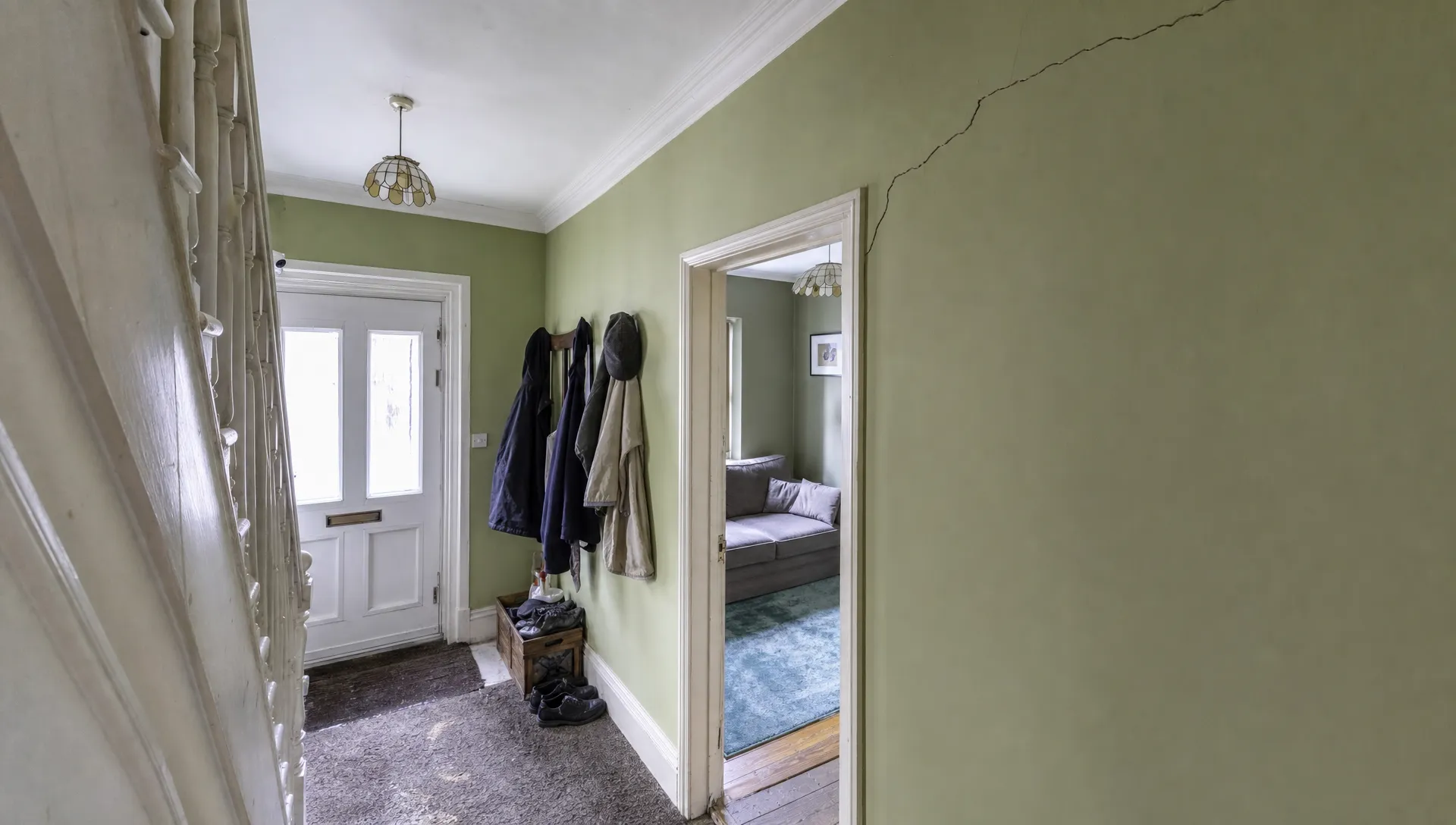
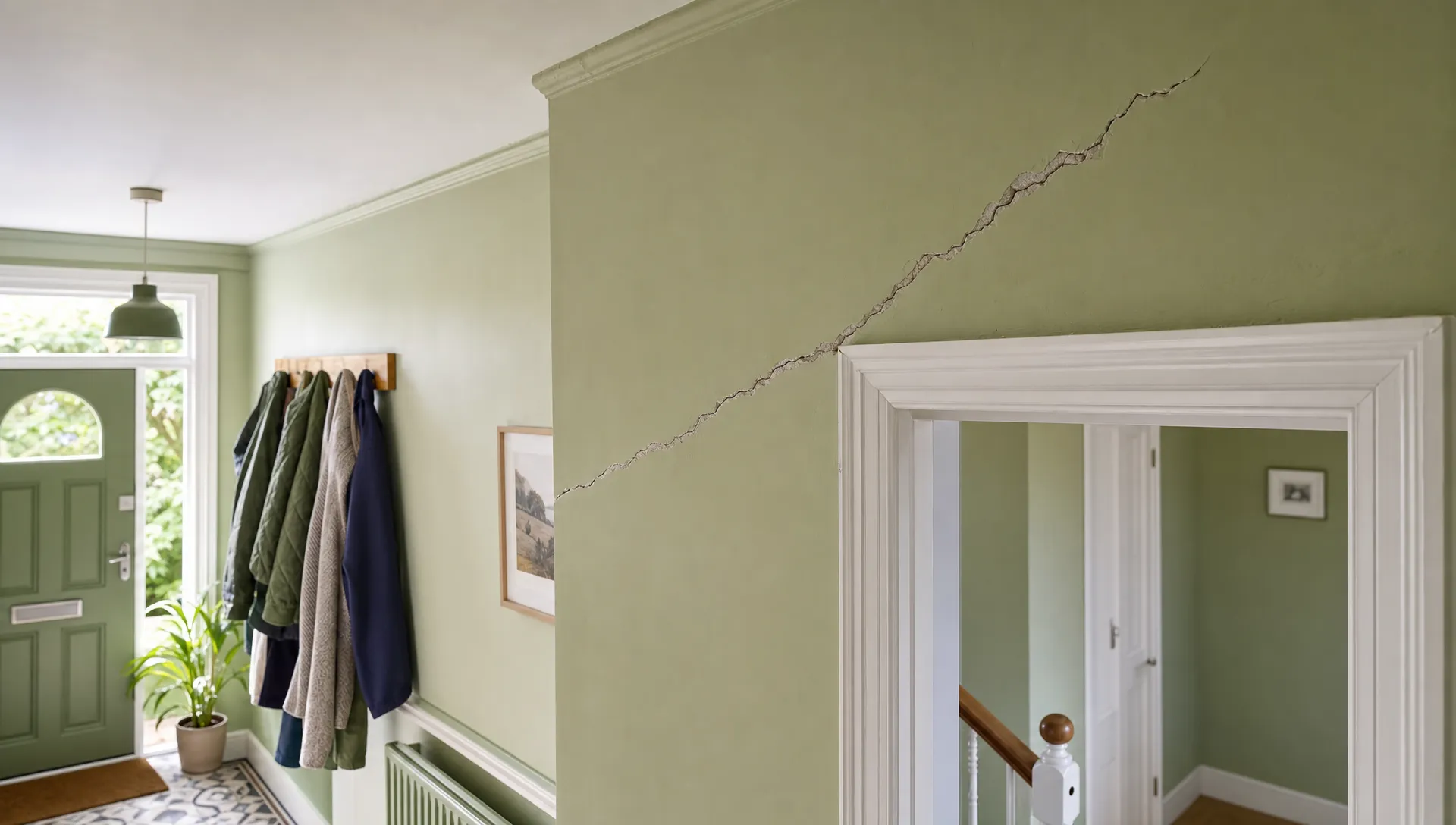
A UK hallway shows a diagonal plaster crack above an internal door frame, with coats, skirting boards and natural daylight nearby.

How to tell whether the crack is getting worse

If the crack does not look urgent, monitor it before spending money on a repair. This is especially helpful for landlords and homeowners who need to explain the issue clearly when requesting quotes.

Take a photo from the same position every week or two. Place a ruler or coin nearby for scale, but do not damage the wall. You can also make a tiny pencil mark at each end of the crack with the date, as long as the wall finish allows it.

Check whether the door still opens and closes normally. If it begins to rub, latch poorly, or stick at the top, that is useful information for a tradesperson. Also look at the other side of the wall and the outside of the property if the doorway is near an external wall.

If the crack changes quickly, plaster starts falling away, or the door becomes difficult to use, do not just fill it. Get it inspected.

Can you repair cracks above a door frame yourself?

You may be able to repair a very fine, stable surface crack yourself if you are confident there is no damp, no movement and no door problem. A basic cosmetic repair usually involves opening the crack slightly, filling it with a suitable filler, sanding, priming and repainting.

However, DIY filler is not the right answer if the crack keeps returning. It also will not solve a loose frame, failed lintel, damp plaster, or movement in the wall. In those cases, filling the surface simply hides the clue rather than dealing with the cause.

For a neat finish, a plasterer or decorator will usually get a better result, particularly if the crack is in a visible hallway, living room or rental property. For suspected movement, start with a builder before paying for cosmetic repairs.

What affects the cost of fixing cracks above a door frame?

The cost depends on what is causing the crack, not just the crack itself. A small plaster repair is very different from investigating a possible support issue above an opening.

The main cost factors are the trade needed, the size of the affected area, whether the cause is still active, how easy the wall is to access, and how much making good is required afterwards. In London, Birmingham, Manchester and surrounding areas, labour rates can vary by location and demand, so it is sensible to compare current local rates before booking.

HaMuch publishes transparent trade pricing so you can check what local tradespeople charge rather than relying on vague estimates. For example, you can compare current builder rates if the crack may involve movement above the opening, or check plasterer rates if it looks like a surface repair.

If damp is involved, compare plumber rates before arranging leak investigation or repair. The final plastering and decorating should usually wait until the source of moisture has been fixed and the wall has dried.

What to tell a tradesperson when asking for a quote

A clear job description helps you get better quotes and avoids wasted callouts. You do not need to diagnose the problem yourself, but you should describe what you can see.

Useful details include:

  • Where the crack is and which room it is in
  • Whether it is above an internal or external doorway
  • How long it has been there
  • Whether it is getting longer or wider
  • Whether the door sticks or the frame has moved
  • Whether there is damp staining, bubbling paint or soft plaster
  • Whether any building work has been done nearby
  • Whether there are matching cracks outside or on the other side of the wall

Photos are especially helpful. Include one close enough to show the crack and one wider photo showing the whole doorway and surrounding wall. This helps a builder, plasterer or carpenter understand the context before quoting.

When should you act quickly?

You do not need to panic about every crack above a door frame. But you should arrange an inspection sooner rather than later if the crack is widening, the door is suddenly sticking, plaster is bulging or falling away, or there are cracks on both sides of the wall.

Act promptly if there is damp staining or active water, because moisture can damage plaster, timber and finishes. If you are dealing with a rental property, it is also better to address visible cracks early, before tenants become concerned or the damage spreads.

If you are unsure whether the issue is cosmetic or structural, choose a builder for the first visit. They can tell you whether a plasterer, carpenter, plumber, or structural engineer is needed next.

Frequently asked questions

Are cracks above door frames serious? Not always. Many are minor plaster cracks caused by shrinkage, settlement or movement around the frame. They become more concerning if they widen, run diagonally, appear with sticking doors, or match cracks elsewhere in the property.

Why do cracks start at the corner of a door frame? Corners of openings are stress points in a wall. Small movements often show there first, which is why cracks commonly appear from the top corner of a door or window.

Should I call a builder or plasterer for cracks above a door frame? Call a plasterer if the crack is fine, stable and cosmetic. Call a builder if it is widening, diagonal, linked to a sticking door, or could involve the support above the opening.

Can a sticking door be linked to wall cracks? Yes. A sticking door can mean the frame has moved, the timber has swollen, or the wall around the opening has shifted. If the sticking appears at the same time as new cracking, get it checked.

Should I repair the crack before selling or renting out a property? It is usually better to understand the cause first. A neat cosmetic repair is fine for a stable plaster crack, but repeated or widening cracks should be inspected and properly fixed before decorating.

Compare local tradespeople before you book

If you have cracks above a door frame and are not sure who to call, post the job on HaMuch. Describe the crack, add photos, and compare local builders, plasterers, carpenters or plumbers depending on the likely cause.

HaMuch is free for homeowners to use and there is no obligation to book. You can compare real local pricing, check customer reviews, and choose the right tradesperson with more confidence before the work starts.

Which home improvements add the most value to your property

Research by HaMuch.com reveals that installing a conservatory is the most cost-effective home improvement, increasing property value by £7,387 after costs. Other beneficial improvements include kitchen renovations and redecorations. Loft conversions add significant value but are costly, while solar panels provide minimal immediate value benefits, mainly reducing electricity bills.

best home improvements

A conservatory is best home improvement to add value to your home

Adding a conservatory is the most cost-effective way of adding value to your property, research from tradespeople comparison site HaMuch.com has revealed.

Christmas can be a tough time to sell in a quieter market and ensuring your property stands out from the crowd can cost money.

HaMuch.com looked at the percentage value added by a number of home improvements on the average house once you’ve accounted for the cost of the work and found that installing a conservatory costs £6,675 but increases the price by £14,062, or 6.0%.

This means you increase the property value by £7,387 after factoring in the money spent on the installation.

Kitchen and all-over redecoration – good options

Other value-for-money home improvements you can make are installing a kitchen, adding £4,890 of value after taking costs into account.

Meanwhile conducting an all-over redecoration adds £4,765 to the house price after costs.

Loft conversions – a big difference

Converting your loft into a living area increases the property value by 10.8%, or £25,312, but it’s an expensive affair.

It’s estimated to cost £21,000 to carry out and you may need to gain planning permission, while there are practical barriers, as you may have to alter the roof structure, add windows and/or a staircase.

Solar panels – a slow burn

While solar panels may be environmentally friendly, it’s very much a slow burn in terms of getting value from them.

They cost £4,000 to install and only increase a property’s value by £1,172, or 0.5%,

Therefore savings with solar panels are generally limited to lowering your electricity bills.

Landscaped gardens – a negligible difference

Landscaping your garden makes little difference to the value of your home.

It only increases the value by £3,281 but the landscaping costs £3,000 – so you only gain £281.

Founder and CEO of HaMuch.com, Tarquin Purdie, commented:

“Revamping your property is a viable alternative to moving to a bigger home and you don’t have to worry about associated costs above and beyond the price of a job while moving will include other costs such as stamp duty.

Improving your home can also help increase its value in the event that you are looking to sell and adding a conservatory is the most cost-effective way of increasing your property’s value.

However, not every improvement will add value so it’s worth researching first, although if you want to make a guaranteed difference to your home’s value, a loft conversion is the way to go despite the high up-front costs.

Solar panels are the only improvement where you lose money in terms of adding immediate value, but if you aren’t looking to sell, you should be able to profit from lower electricity bills on a longer-term basis, and that’s not to mention the obvious environmental benefits.”

Renovation / improvement Added value (%) Estimated average cost UK Average House Price Added value (£) Difference (Added value – cost)
Conservatory

6.0%

£6,675

£234,370

£14,062

£7,387

Kitchen

5.5%

£8,000

£234,370

£12,890

£4,890

All over re-decoration

3.1%

£2,500

£234,370

£7,265

£4,765

Loft conversion

10.8%

£21,000

£234,370

£25,312

£4,312

Boiler / central heating

1.9%

£2,375

£234,370

£4,453

£2,078

Roof

3.1%

£5,750

£234,370

£7,265

£1,515

Bathroom

2.6%

£4,625

£234,370

£6,094

£1,469

Double glazing

3.0%

£6,250

£234,370

£7,031

£781

Landscaped Garden

1.4%

£3,000

£234,370

£3,281

£281

Fitting solar panels

0.5%

£4,000

£234,370

£1,172

-£2,828

Founder and CEO of HaMuch.com, Tarquin Purdie, commented:
Notes to editors: –

  1. Data source for average costs: HaMuch database and the Land Registry.
  2. HaMuch was founded since 2015.
  3. Tarquin Purdie has over two decades of experience working within the trade sector.
  4. Tarquin has been involved, owned and ran a number of businesses across property ownership, plumbing and heating and continues to do so today.
  5. HaMuch is the tradesperson comparison site that finds the best value trades people – based on price and transparency.

Let’s ditch reviews for builders

positive feedback
  • Reviews and stars tell customers little about actual quality or reliability
  • HaMuch.com to start deleting stars and reviews for tradesmen
  • Tradesmen game reviews by offering cash discount for positive feedback
  • HaMuch.com boss says review sites may suffer same fake reviews as TripAdvisor

We have all become used to reading online reviews of tradesmen and tradeswomen before hiring them. But these reviews have now become worthless and should be done away with, says controversial builder-pricing website owner Tarquin Purdie.

Purdie’s HaMuch.com site shows details of how much tradesmen charge in your local area and had previously accepted reviews and stars out of five. These will now be deleted from the website.

Many popular websites who charge builders for job leads offer feedback and a marks system. But Purdie believes that customers can end up being fobbed off with poor tradesmen who game the system. He also believes that good builders who stick to the rules can be punished by unscrupulous homeowners.

“The review system has become a sort of two-way intimidation,” says Purdie. “Builders pressure customers to leave a good review and even offer cash discounts as a part of this. Customers ask tradesmen to include extras, endlessly snag or offer heavy discounts before agreeing to leave good feedback.

“A good tradesman can be ruined by one bad review, but a poor one can just bribe their way to positive feedback. It has become a bad joke. And one that many of these companies profit from. It’s time for homeowners and tradesmen to leave them behind.”

Websites such as TripAdvisor and Yell.com have recently been rocked by claims of fake and paid-for reviews and Purdie believes that the same problems may dog some of the tradesmen review sites. He is now calling for the industry and customers to re-think how they work together in an honest way.

“The review system has become entirely worthless,” says Purdie. “Although tradesmen and women are paying a lot to be a part of it. The problem is that there is no real way of checking that the work has been done, if it is any good and whether bad reviews have been removed at the request of tradesmen, who are the paying customer for review companies.

“To be effective, the system requires a regulator, although I’m not sure these companies would be willing to stump up for that. False reviews are like fake news, but no one is taking any action to either regulate or clean up the sizeable builder review industry. We only welcome builders, plumbers or electricians who are clear and open on price and who are willing to show customers prior work.”

HaMuch.com guide to finding a good builder without review sites

  1. Work out your budget and choose a tradesman who can meet it
  2. Ask to see previous work, preferably in your own neighbourhood
  3. Get a quote from two or three different businesses
  4. Read the small print and check what is included in the price
  5. Ask what guarantees are included and for details of membership of professional bodies

Never mind the rogue builders: Pricing website starts rogue customer list

builders tools
  • HaMuch.com
    to compile list of debtor customers, complainers and con-men
  • Builders report increase in non-paying
    customers, rogue complainers & cancellations
  • Some customers hire tradesmen with no intention
    of paying quoted price

We are all used to seeing rogue tradesmen on early morning television shows, BBC’s Watchdog and regional news shows, but what these programmes never portray is the number of rogue customers that builders and other trades have to deal with.

Are customer who fail to pay up rogues too?

Building work-pricing website HaMuch.com is now attempting to redress the balance by compiling a list of customers who have failed to pay up, cancelled major jobs at short notice or consistently made unjustified complaints to get significant discounts. This list of nightmare customers will be compiled via feedback from plumbers, electricians, roofers, bricklayers and other tradesmen and tradeswomen who use the unique pricing website, before being made available to trades who sign up for the service.

“For far too long, the emphasis has been on the occasional bad builder,” says HaMuch.com founder Tarquin Purdie. “We hope that this list of bad customers can do something to redress the balance. A small number of customers have no intention of paying a quoted price in full and will pick and pick at work until the tradesman just gives in. It is certainly on the increase. Perhaps the BBC will even commission a show from Matt Allwright called Rogue Customers.”

Keep cost clear to avoid rogue customers

Purdie estimates that his users will have lost tens of thousands of pounds over the years to rogue customers. He cites cases of builders who have had to sue customers who refused to pay for an extension, one who paid for the kitchen but none of the labour to install it and another who cancelled a loft extension on the day work was to start, with all materials purchased. The list will help tradesmen and tradeswomen to avoid customers who are likely to cause them similar problems.

“I founded the site to help clean up the industry and create more transparency,” says Purdie. “We have made labour costs clear for all customers across the UK and we always act when we hear about poor tradesmen. So, this is the next step to creating a fair industry for all. We all need builders, plumbers and carpenters to work on our home and they need us. So these exchanges should always be fair and above board. We think this list will help to achieve that.”

Builders and Plumbers in the southeast 25 times more expensive

Regional / local: The UK’s cheapest tradesmen are in Birmingham / Nottingham / Nuneaton / Blackwood / Doncaster

  • North-south divide in builder costs as much as £240-per-hour
  • Surrey and London most expensive for tradesmen/women
  • Midlands offers best value to homeowners, according to HaMuch.com

A new data survey by building work pricing site HaMuch.com has revealed the stark differences between the southeast and the rest of the UK when it comes to the cost of building work. The divide appears to be drawn at Watford Gap, with the Midlands offering best value, whilst Surrey and London have the most expensive tradesmen.

The spread of prices for common household jobs across the recently-launched website’s 12,000 tradesmen ranged from £10-per-hour to an incredible £250-per-hour, with builders in Surrey charging as much as 25-times more than their counterparts in Nottingham. Plumbers in Surrey also charged an eye-watering 20-times more than those in Caerphilly. Meanwhile, hiring an electrician in London could cost you £250-per-hour, compared with a bargain basement £10-per-hour in Birmingham. 

The startling prices were uncovered by the data processing team for https://www.hamuch.com as part of their efforts to ensure that homeowners know the cost of jobs up-front. The website lists a labour cost for each tradesman/tradeswoman listed on the service and allows homeowners to search trades in their area by cost, so that no one busts their budget building an extension to having a boiler serviced. So if you are searching ” heating engineer near me

“We knew there was a wide disparity in charges between the southeast and the rest of the UK, but we were shocked just how wide that was”, says HaMuch.com founder Tarquin Purdie. “The prices show that the market can take a lot in the southeast, whereas rates in parts of the Midlands and north may not have increased for several years. It is certainly something that will make the industry and even government ministers sit up and pay attention.

“We are committed to making sure homeowners and renters alike know the cost of a job before they even approach a plumber or a painter. Not all builders and trades will like it, but we think that the best are only too happy to be honest and up-front on costs.”

The most inexpensive painter and decorator and carpenter both charged £10-per-hour and were in Nuneaton and Doncaster respectively. The most costly were in Brighton and Islington, at £150 and £100. 

The full breakdown of low and high prices is as follows:

Building work: Cheapest, £10-per-hour in Nottingham, East Midlands. Most costly, £250-per-hour in Camberley, Surrey.

Electricians: Cheapest, £10-per-hour in Birmingham, West Midlands. Most costly, £250 in Edgware, London. 

Plumbing:  Cheapest, £10-per-hour in Blackwood, Caerphilly. Most costly, £200-per-hour in Addlestone, Surrey. 

Painting and decorating: Cheapest, £10-per-hour in Nuneaton, Warwickshire. Most costly, £150-per-hour in Brighton, East Sussex. 

Carpenters: Cheapest, £10-per-hour in Doncaster, South Yorkshire. Most costly, £100 in Islington, London. 

Banish Builder cash-in-hand payments for trades

money
  •  HaMuch.com announce New Year’s resolution is no more cash-in-hand for builders
  • Portable card machines have revolutionised payment for tradespeople
  • Does away with the industry’s reputation for tax-dodging

Building work pricing website HaMuch.com is set to put a cat among the building site pigeons by calling time on cash-in-hand payments for plumbers, electricians and bricklayers alike. 

The bundle of used notes was once standard payment for tradesmen, but the website’s founder Tarquin Purdie believes that abandoning cash payments for 2019 will allow builders to fully embrace the 21st century and rescue the industry’s reputation in one fell swoop. He is now calling for home-owners to reject calls for cash payment, even if that comes with a discount.

“It’s not hard to see why builders have traditionally dealt in cash,” says HaMuch.com Managing Director Tarquin Purdie. “They have to buy materials and pay sub-contractors and that was traditionally all done with cash. But now they buy on-account or with credit cards, and their sub-contractors or workers all have bank accounts. Many builders used cash work to stay under the VAT threshold – and I have some sympathy with that for the one-man business – but a good building business should be VAT registered nowadays, withthe accounting wherewithal to deal with that.”

Purdie points to the prevalence of iZettle and other portable card readers among many tradesmen, with modern technology also allowing them to scan receipts and manage their money far better than their forebears. Tradespeople may have been seen as luddites in the past, but they now receive work via smartphone apps, advertise on social media and use WhatsApp to send images to customers. 

“If they are offering you a substantial cash discount, then that is nothing to do with convenience or cashflow,” says Purdie. “HaMuch.com was founded to make pricing clear for customers and builders alike, but we understand some firms may offer a small discount to get the work. However, anyoneoffering as much 10% or 15% cash discount nowadays is asking you to be complicit in tax-avoidance. It is as simple as that. Ask your tradesman for their bank account details, or simply use their card reader.”

Purdie expects the growth of the ‘cashless society’ will see far fewer customers feeling the pressure to pay cash for the likes of plumbing, roofingglazing or gardening work. Although he recognises that some tradesmen may be reluctant to let go of cash payments.

“There will always be a handful of builders who want to have that roll of fifties to pull out in the pub on a Friday night,” he says. “But more and more home-owners are joining up the dots between that cash discount and how the NHS or local services may miss out on the lost tax money.”

Over 75% of builders have charged extra to homeowners with a ‘posh’ name

Posh customer with builder
  • Pricing website HaMuch.com survey shows 75.5% have charged customers more when hearing their ‘posh’ name.
  • 81.5% of tradesmen charged more after realising a client lives in a fancy house
  • 79% of builders have charged more when working in an upmarket area

A new survey by tradesman-pricing website HaMuch.com has uncovered bad news for those called Tarquin, Rupert or Quentin, as more than three-quarters of builders admitted to charging them far more than Daves, Mikes and Deans. A slice of class war set in brickwork and cement. 

75.5% of the tradesman questioned said that they have given a higher quote when the customer is a Henrietta, Harriet or Cassandra, with 51.5% saying they have added their ‘posh name tax’ many times. 24% said they had boosted their prices once or twice.

The survey for HaMuch.com, which lets you see labour charges up front for over 12,000 tradesmen and tradeswomen, also revealed that the place where you live could also see you charged more. 

Nearly 8-in-10 of the UK builders, plumbers, carpenters and electricians questioned said that they have upped their prices when quoting for work in what they perceived as an upmarket part of their patch. Meanwhile, 81.5% admitted to having inflated charges when realising the customer lived in a large or fancy house. 

The survey certainly hit home for HaMuch.com founder Tarquin Purdie, who started the site in 2016 to end rip-off pricing and had long-suspected he paid more for jobs around the house than his friends. It allows those searching for someone to work on their home to search by trade, price and area. 

“Being called Tarquin, I have definitely experienced the ‘posh name’ trades surcharge,” says Purdie. “It’s not a big surpriseto me, personally. But our service now means that this can bea thing of the past, as the rates are there in black-and-white for you to compare before you get in touch with a tradesman. Good news for Tarquins and Henriettas everywhere.

“I was genuinely surprised by just how prevalent this over-charging has been, but I hope that more people will now start to research prices up-front and stop themselves being scalped.You will always get unscrupulous tradesmen, but those signing up to our website know that they are setting new industry standards in pricing transparency. It can only be good for builders and customers alike.”

The full survey results.

Have you ever given a customer a higher quote as they have a ‘posh’ name (such as Tarquin or Henrietta)? 

Never 24.5%

Once or twice 24% 

Done it many times 51.5%

Have you ever given a customer a higher quote as they live in what you think of as a ‘posh’ area?

Never 21%

Once or twice 26.5%

Done it many times 52.5%

Have you ever given a customer a higher quote after realising they live in a large/fancy house?

Never 18.5%

Once or twice 25.5%

Done it many times 56%

Sample of 230 tradesmen. 1 October 2018.