
Black mould appearing around window frames is usually a sign that moisture is collecting on cold surfaces. In many UK homes, the cause is condensation rather than a serious structural fault. That said
Black mould appearing around window frames is usually a sign that moisture is collecting on cold surfaces. In many UK homes, the cause is condensation rather than a serious structural fault. That said, it is still worth dealing with properly, because mould can come back quickly if you only wipe the surface and leave the cause untouched.
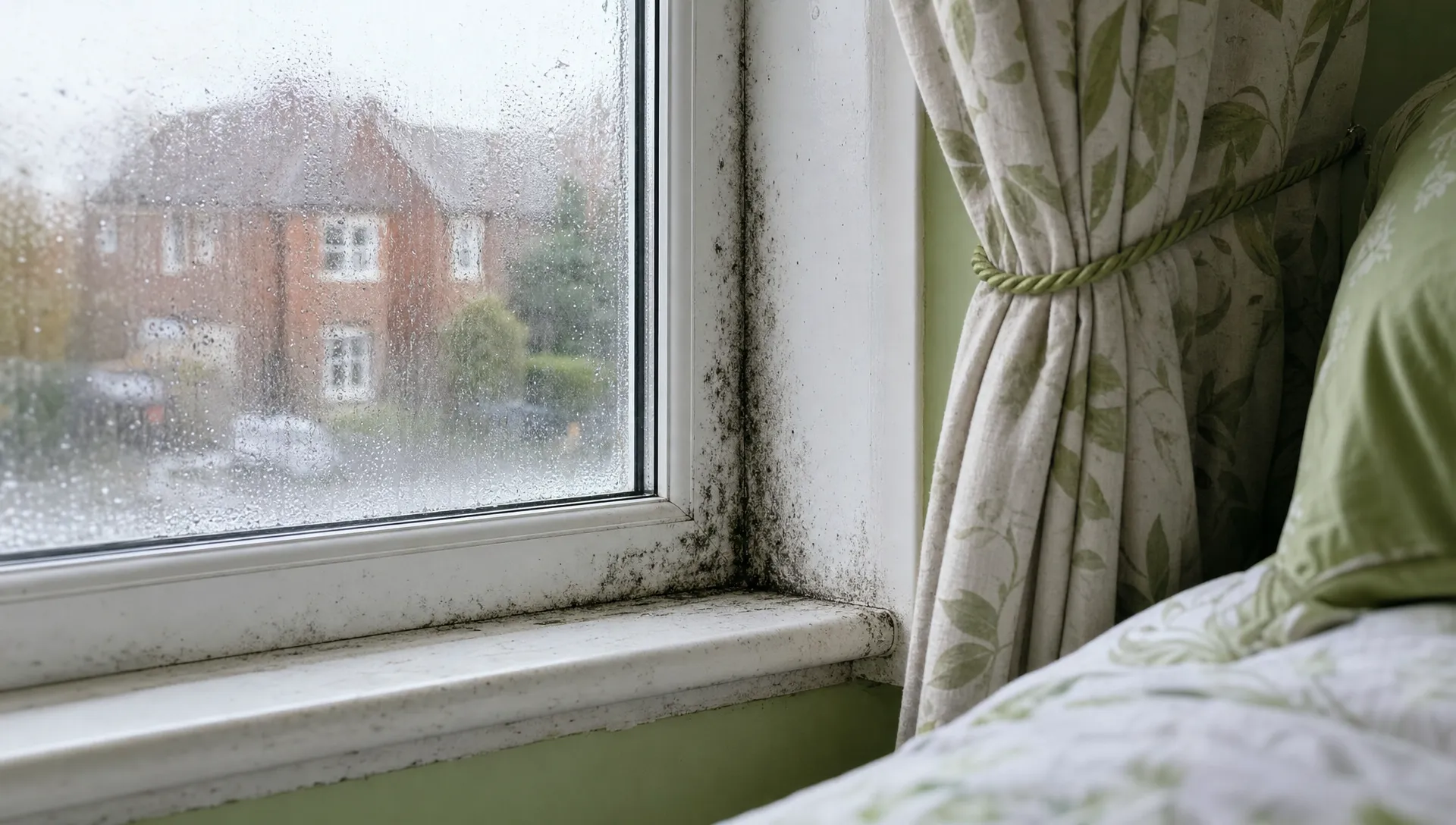
The reassuring part is that the pattern of the mould often gives you useful clues. Mould on the silicone, along the bottom of the glass or in the corners of the window reveal usually points to everyday condensation and poor airflow. Mould spreading into plaster, bubbling paint or damp timber can suggest a leak, failed seal or damp problem that needs a tradesperson to investigate.
This guide explains the likely causes, what you can safely do today and which trade to call if black mould around your window frames keeps returning.
Why black mould grows around window frames
Black mould needs moisture, a food source and a surface where spores can settle. Window frames often provide all three. They are colder than the surrounding room, they collect dust and they can trap moisture behind curtains, blinds and window recesses.
In winter, warm indoor air holds more moisture. When that air touches cold glass or a cold frame, the moisture turns into condensation. If the condensation sits there for hours, especially overnight, mould can start to grow on silicone, painted timber, uPVC frames and the plaster around the window.
Common household sources of moisture include showers, cooking, drying clothes indoors, unvented tumble dryers, people breathing overnight and rooms that are kept shut for long periods. Bedrooms, bathrooms and kitchens are often the first rooms to show the problem.
The NHS explains that damp and mould can affect health, particularly for babies, older people and anyone with asthma, allergies or a weakened immune system. You do not need to panic, but you should remove mould safely and tackle the moisture source.
Quick checks before you call anyone
Before booking a tradesperson, spend a few minutes looking at where the mould is and when it appears. This can help you describe the problem clearly and avoid paying for the wrong fix.
If the mould is worst first thing in the morning, appears mainly on the glass, frame and silicone, and improves when windows are opened, condensation is the most likely cause. If the area feels damp even on dry days, paint is flaking or plaster is soft around the reveal, there may be a leak or damp issue.
Use this simple guide as a starting point:
| What you notice | Most likely cause | Trade to consider |
|---|---|---|
| Water droplets on glass and black mould on silicone | Condensation and poor airflow | Ventilation & AC engineer, cleaner for light mould removal |
| Mould behind blinds or curtains but wall feels dry | Trapped moisture and poor circulation | Ventilation & AC engineer, cleaner |
| Peeling paint, soft plaster or damp patches around the window reveal | Damp entering around the opening | Builder or plasterer |
| Rotten timber frame or cracked sealant | Failed frame seal, damaged timber or poor maintenance | Carpenter & joiner, builder or window specialist |
| Mould below a window with damp marks from above | External leak, guttering issue or roofline problem | Builder or roofer |
| Mould near pipework, an upstairs bathroom or a radiator pipe route | Possible plumbing leak | Plumber |
If the mould is small and clearly linked to condensation, you may be able to clean it and improve ventilation yourself. If it returns quickly, spreads into surrounding plaster or keeps the wall damp, it is time to get professional advice.
The most common causes in more detail
Condensation from everyday moisture
Condensation is the most common reason for black mould around window frames. It is especially common in well-sealed homes where old draughts have been removed but ventilation has not been improved at the same time.
You might notice condensation on bedroom windows in the morning, bathroom windows after showers or kitchen windows after cooking. If the frame is wet most days, mould has a reliable moisture supply.
A ventilation specialist can check whether extractor fans are working properly, whether trickle vents are blocked or missing and whether the room needs better background ventilation. If you want to understand likely labour costs before booking, HaMuch lets you compare local ventilation and AC engineer rates rather than relying on vague estimates.
Poor heating patterns and cold spots
Mould often appears where part of a room is colder than the rest. A window recess, external wall corner or area hidden behind heavy curtains can become a cold spot. Warm moist air then condenses there first.
This does not always mean you need a major repair. Sometimes the answer is better airflow, steadier heating and keeping curtains slightly away from the glass. In other cases, a builder may need to check for missing insulation, a badly fitted window or cold bridging around the opening.
Damaged sealant or ageing window frames
If black mould is sitting on old silicone, cracked caulk or bare timber, the surface itself may be part of the problem. Mould can become embedded in damaged sealant, so cleaning may only improve it for a short time.
Replacing mouldy silicone can help, but it should not be treated as the whole solution if the frame is constantly wet. The new sealant will go the same way unless the moisture issue is fixed.
Timber windows need extra attention. Soft wood, flaking paint or a musty smell can point to rot. A carpenter and joiner can inspect the frame and advise whether it can be repaired or needs more extensive work.
Leaks around the window opening
Sometimes mould around a window is not mainly caused by indoor condensation. Rain can enter through damaged pointing, cracked render, poor flashing, blocked gutters or gaps around the external frame.
Clues include damp that appears after rain, staining on the wall around the top or sides of the window, bubbling plaster and a patch that stays wet even when the room is ventilated. In this situation, cleaning the mould will not solve the problem because moisture is still entering the wall.
A builder can check the outside of the window opening and surrounding masonry. If the plaster has been damaged, a plasterer may be needed after the leak is fixed and the wall has dried.
Hidden plumbing leaks
Less commonly, black mould near a window can be linked to a plumbing leak, especially where there is a bathroom above, radiator pipework in the wall or a leak tracking along a ceiling or reveal.
Look for water staining, a damp smell, a patch that grows regardless of weather or condensation that seems out of proportion to normal room use. If there are signs of a leak, compare local plumber rates and get it checked before paying for cosmetic repairs.
What you can do today
For a small patch of mould on a window frame, start by reducing the moisture and cleaning the visible mould safely. Avoid dry brushing, as this can spread spores into the air. Wear gloves, ventilate the room and follow the instructions on any mould removal product you use. Never mix cleaning products, especially bleach with anything containing ammonia.
After cleaning, dry the area thoroughly. Keep an eye on how quickly the mould returns. If it reappears within days, the underlying moisture problem has not been solved.
Practical steps that often help include:
- Wipe condensation from windows each morning during colder months.
- Open trickle vents if your windows have them.
- Use extractor fans during showers and cooking, then leave them running for a short while afterwards.
- Keep bathroom and kitchen doors closed when producing steam, then ventilate those rooms directly.
- Avoid drying clothes on radiators if possible.
- Leave a small gap between curtains, blinds and the window frame so air can circulate.
- Keep rooms heated more steadily rather than allowing them to become very cold and then heating them quickly.
If the mould covers a large area, has spread into plasterboard, keeps returning after cleaning or affects someone with breathing problems, it is sensible to call a professional rather than continuing to scrub it yourself.
When to call a tradesperson
Call a tradesperson if you are seeing more than surface mould, if the wall feels damp or if you cannot identify why the area is staying wet. You should also get help if you are a landlord or property manager and the issue is in a rental property, as mould complaints need to be handled promptly and documented properly.
The right trade depends on what the mould is telling you:
| Situation | Best next step |
|---|---|
| Mould is mainly on glass, silicone and frame | Ask a ventilation specialist to assess airflow and extraction |
| Mould is established but surfaces are otherwise sound | A cleaner may be able to remove it safely, then ventilation still needs attention |
| Sealant is black, cracked or peeling | Ask a suitable tradesperson to reseal after the moisture cause is addressed |
| Plaster is stained, soft or blown | Builder or plasterer investigation before redecorating |
| Timber is soft or rotten | Carpenter and joiner inspection |
| There are signs of a water leak | Plumber, builder or roofer depending on the source |
Try not to jump straight to repainting. Anti-mould paint can be useful once the problem is fixed, but it is not a cure for a damp wall or poor ventilation. If the surface is still wet, new paint is likely to fail.
After the cause has been repaired and the wall has dried, you may need a decorator to stain-block and repaint the area. HaMuch can help you compare painter and decorator rates so you can see local pricing before asking for quotes.
What a good tradesperson should check
A good visit should involve more than a quick look at the mould. The tradesperson should ask when the mould appears, which rooms are affected, whether condensation forms on the glass and whether the issue changes with weather.
They may check extractor fans, trickle vents, window seals, external walls, guttering, surrounding plaster and signs of leaks. They should explain whether they think the problem is condensation, water ingress or a mix of both.
Be cautious if the only recommendation is to paint over the mould without dealing with moisture. That may hide the staining for a while, but it usually does not stop it returning.
When comparing quotes, ask each tradesperson to separate investigation, repair, cleaning and decorating costs. This makes it easier to compare like for like. HaMuch is useful here because it shows real, comparable pricing by trade and location, with local reviews, so homeowners and landlords can check the market before deciding who to contact.
Advice for landlords and property managers
If black mould around window frames is reported in a rental property, deal with it as a repair and health concern rather than a housekeeping issue. Ask for clear photos, note which rooms are affected and arrange an inspection if the mould is recurring or spreading.
Landlords should check whether extractor fans work, whether windows open properly, whether seals and frames are sound and whether any structural damp or leaks are present. Tenants can help by using ventilation and reporting condensation, but they cannot fix a faulty fan, leaking frame or damp wall.
Keeping a record of reports, visits, findings and completed repairs is important. It protects the tenant, helps the landlord show the issue has been handled properly and gives future tradespeople useful context if the mould returns.
How to stop black mould returning
Long-term prevention is about keeping window areas dry enough that mould cannot thrive. That usually means balancing heating, ventilation and moisture control.
Aim to remove moisture at source where possible. Use lids on pans, run the extractor when showering, avoid drying laundry indoors without ventilation and keep air moving around window recesses. If you regularly see heavy condensation despite doing these things, your home may need better extraction or background ventilation.
It also helps to maintain the window area itself. Replace failed sealant, repair flaking paint on timber frames and fix external defects before water gets into the wall. Once the surface is dry and sound, mould-resistant products can help slow future growth, but they work best as a finishing measure, not as the main fix.
Frequently Asked Questions
Is black mould around window frames dangerous? Small areas are common in UK homes, but mould should still be removed and the cause fixed. It can aggravate asthma, allergies and respiratory conditions, so take extra care if anyone in the home is vulnerable.
Can I just clean black mould off the window frame? You can clean a small surface patch, but cleaning alone will not stop it returning if the frame keeps getting wet. If mould comes back quickly, look at ventilation, condensation, leaks or damaged sealant.
Why is mould worse around bedroom windows? Bedrooms often have closed doors, lower overnight temperatures and moisture from breathing while people sleep. That moisture condenses on cold glass and frames, especially in winter.
Who should I call for black mould around window frames? For condensation and poor airflow, start with a ventilation specialist. For damp plaster, damaged walls or external leaks, a builder or plasterer may be needed. For suspected pipe leaks, call a plumber.
Should landlords pay to fix mould around windows? If the mould is linked to disrepair, poor ventilation, faulty windows, damp or leaks, landlords should arrange appropriate repairs. Tenants should report the issue promptly and provide photos.
Need someone to check the mould around your window frames?
If black mould keeps appearing around your window frames, post the job on HaMuch and compare local tradespeople before you book. You can see transparent pricing, genuine customer reviews and relevant trades in your area, then decide who to contact with no obligation.


