Find affordable tradespeople

HaMuch is Excellent

Matt Warren

https://www.seobridge.co.uk

Content partner for HaMuch, drawing on HaMuch's live database of UK tradesperson rates and pricing data.

How Much Does an Annual Boiler Service Cost?

How Much Does an Annual Boiler Service Cost? - Main Image

For most UK homes, the annual boiler service cost is usually £80£120 for a straightforward gas boiler that is working normally. In highercost areas, for older boilers, or where the engineer needs extr

For most UK homes, the annual boiler service cost is usually £80-£120 for a straightforward gas boiler that is working normally. In higher-cost areas, for older boilers, or where the engineer needs extra time, it can be closer to £100-£160. Oil boilers and emergency visits normally cost more.

That is the useful short answer. The better answer is that a boiler service is not just a quick tick-box job, and the price should reflect who is doing it, where you live, what type of boiler you have, and whether you need any paperwork for a rental property.

HaMuch helps with the part most homeowners find frustrating: comparing realistic local prices before you book. Instead of relying on a vague national average, you can check transparent, comparable heating engineer prices and request quotes with no obligation.

Typical annual boiler service cost in the UK

A standard annual boiler service is commonly quoted as a fixed-price visit. The engineer checks the boiler, carries out safety and performance checks, and records what they have done. If they find a fault, any repair work or replacement parts are normally quoted separately.

For a simple domestic boiler service, these are sensible 2026 budgeting figures:

Service type Typical cost What to expect
Standard annual gas boiler service £80-£120 A routine service for a working, accessible domestic boiler
Higher-cost areas or more complex visits £100-£160 Common where travel, parking, access, age or boiler condition adds time
Boiler service with landlord gas safety record £90-£150 Often arranged in the same visit, but check exactly what is included
Oil boiler service £120-£220 Usually more involved and may need a specialist oil boiler engineer
Emergency or out-of-hours attendance £120-£250+ Best avoided for routine servicing if you can book ahead

If you are comparing prices, make sure you are comparing like for like. One engineer may include VAT, a service record and basic cleaning in the price, while another may quote a lower headline figure but charge extra for travel, parking or paperwork.

For a more local starting point, you can compare current prices through HaMuch's boiler service cost guide and check what heating engineers near you are charging before you request quotes.

Why location changes the price

Boiler servicing is labour-led, so local rates matter. A service in a city centre flat can cost more than a similar job in a suburban house if the engineer has to allow for parking, congestion, longer travel time or restricted access.

That is why a single UK average can be misleading. If you are booking in a major city, check local pricing first rather than assuming the national range will match your quote. HaMuch lets you compare London heating engineer rates, Birmingham heating engineer rates and Manchester heating engineer rates so you can see how local labour costs compare.

Smaller towns can also vary. A rural property may have a lower hourly rate but a higher travel charge. A busy commuter area may have strong demand in autumn and winter, which can push prices up if you leave servicing until the first cold week of the year.

What is included in an annual boiler service?

A proper service is more than turning the boiler on and off. The exact process depends on the boiler, manufacturer guidance and the engineer's findings, but a typical service should include checks on safety, condition and performance.

During a routine visit, the heating engineer may:

  • Check the boiler and controls are operating correctly
  • Inspect the flue and ventilation where relevant
  • Look for signs of leaks, corrosion or unsafe wear
  • Check gas pressure and combustion where appropriate
  • Clean key internal components if the boiler design and condition require it
  • Check seals, case condition and safety devices
  • Confirm the appliance is safe to use at the time of the visit
  • Complete a service record for your own records or warranty needs

For gas boilers, the engineer should be Gas Safe registered. You can check registration directly through the Gas Safe Register, which is the official register for gas engineers in the UK.

A service does not normally include repairs. If the engineer finds a faulty pump, leaking valve, damaged seal, failed control or pressure issue, they should explain the problem and provide a separate quote before carrying out extra work. Do not assume parts are included unless the quote says so clearly.

Boiler service cost for landlords

Landlords often book a boiler service at the same time as the annual gas safety check, but they are not exactly the same thing.

A gas safety check is a legal requirement for most rented homes with gas appliances. The Health and Safety Executive explains that landlords must arrange an annual gas safety check by a registered engineer and keep the relevant record. You can read the official guidance on the HSE landlord gas safety page.

A boiler service is maintenance. It helps keep the appliance working safely and efficiently, and it may be required to keep a manufacturer warranty valid, but the service record itself is not a replacement for a landlord gas safety record unless the engineer has specifically carried out and documented both.

If you manage several properties, ask whether the engineer can service multiple boilers or complete gas safety checks during the same round of visits. That can reduce admin time and make scheduling easier, even if the price per property still needs to be quoted properly.

Landlords planning wider compliance work should also budget separately for electrical safety checks. HaMuch has a separate guide to the cost of an EICR landlord certificate, which is a different inspection carried out by a different trade.

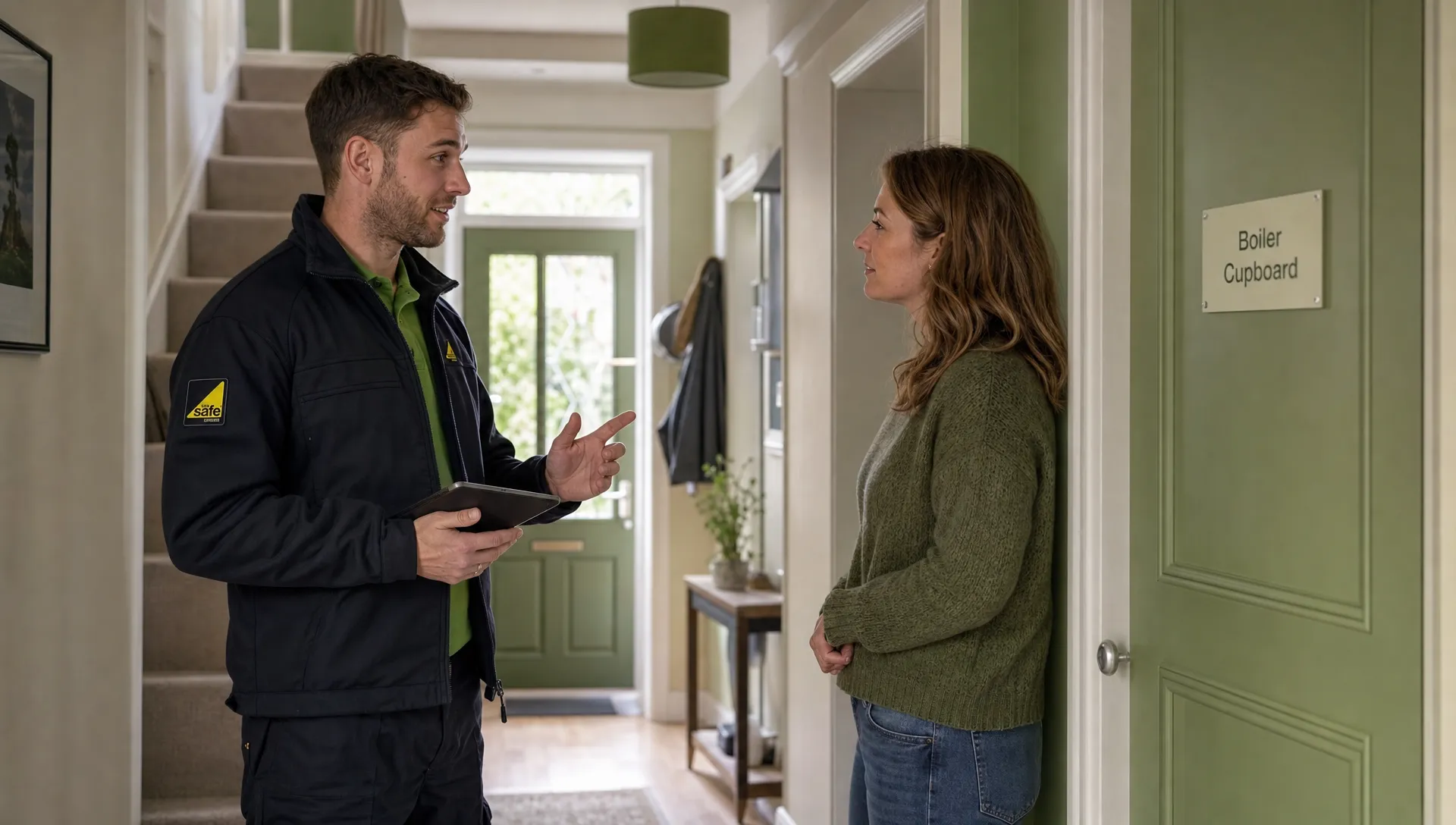
A heating engineer with a tool bag and a tablet held with the screen not visible, standing at the open doorway of a modest British home and speaking with a homeowner near the front step. The entrance area has everyday shoes and coats, natural daylight and no close-up view of boiler parts.

What affects the final boiler service price?

Most annual boiler services are fairly predictable, but a few details can change the quote. The more information you give when requesting prices, the easier it is for engineers to quote accurately.

Cost factor How it can affect the quote
Boiler type Gas combi boilers are often straightforward, while oil, LPG or older systems may need a specialist or longer visit
Boiler age and condition An older boiler may take longer to inspect and may reveal worn parts or previous poor maintenance
Access A boiler in a cramped cupboard, loft or awkward utility space can take more time than one with clear access
Paperwork A service record is usually included, but landlord gas safety paperwork may be priced separately
Location City parking, travel time and local labour rates can affect the price
Time of year Autumn and winter are busier, so booking ahead can give you more choice of engineers
Repairs found during the service Faults, parts and return visits are normally extra and should be quoted separately

The cheapest quote is not always the best quote. A very low price may not include VAT, paperwork, enough time on site or travel. A good quote should be clear about what is included, what is not included, and what happens if the engineer finds a fault.

One-off boiler service or service plan?

Many homeowners choose a one-off annual service because it is simple: you pay for the visit, receive the service record, and decide separately if any repairs are needed.

A service plan or boiler cover package can make sense if you want predictable monthly payments or repair cover, but it is important to compare the full annual cost against the price of a one-off service. Check the excess, exclusions, age limits, call-out rules and whether the plan actually includes an annual service.

If your boiler is relatively new and under warranty, read the manufacturer terms carefully. Many warranties require an annual service by a suitably qualified engineer. Missing a service can make a later warranty claim harder, even if the boiler has been working fine.

How to compare boiler service quotes properly

When you request quotes, give engineers the same information so their prices are easy to compare. At a minimum, tell them the boiler make and model if you know it, whether it is gas, oil or LPG, where it is located in the property, and whether you need landlord paperwork.

Before booking, ask these questions:

  • Is the price fixed for a standard annual boiler service?
  • Is VAT included?
  • Does the quote include a service record?
  • Is a landlord gas safety record included or priced separately?
  • Are travel, parking or congestion charges included?
  • What happens if a fault is found during the service?
  • Can the engineer provide their Gas Safe registration details for gas work?

This is where HaMuch is useful. You can compare local heating engineers, see genuine customer reviews, check real pricing information by trade and location, and request quotes without being pushed into booking before you are ready.

When should you book an annual boiler service?

The best time to service a boiler is usually late spring, summer or early autumn. Engineers are often less stretched than during the first cold snap, and you have time to deal with any small issues before winter.

You should also consider booking a service:

  • Before a boiler warranty anniversary
  • Before new tenants move in
  • After buying a property if there is no recent service record
  • If the boiler has been unused for a long period
  • If you notice unusual noises, pressure loss or repeated fault codes

If there are warning signs such as a smell of gas, soot marks, a yellow flame on an older appliance, or a carbon monoxide alarm activation, treat it as a safety issue rather than a routine service. Turn off the appliance if safe to do so, ventilate the area and contact the appropriate emergency gas service or a registered engineer.

Frequently Asked Questions

How much does an annual boiler service cost? A standard annual gas boiler service usually costs around £80-£120 in the UK. In higher-cost areas or for more complex visits, it can be £100-£160. Oil boiler servicing usually costs more.

Is a boiler service a legal requirement? Homeowners are not usually legally required to service their own boiler, but annual servicing is strongly recommended and may be needed for warranties. Landlords have separate legal duties for annual gas safety checks in rented properties.

Does a boiler service include repairs? No, not normally. A service checks and maintains the boiler, but replacement parts and fault repairs are usually charged separately. Ask the engineer for a separate quote before approving repair work.

How long does a boiler service take? A straightforward domestic gas boiler service often takes around 30-60 minutes. Older boilers, awkward access, faults or extra paperwork can make the visit longer.

Can I service my own boiler? You should not attempt gas boiler servicing yourself. Gas work must be carried out by a competent, Gas Safe registered engineer. DIY checks such as keeping the area clear and testing your carbon monoxide alarm are useful, but they do not replace a professional service.

Is a landlord gas safety certificate included in the service price? Not always. Some engineers offer a combined boiler service and gas safety record, while others price them separately. Make sure your quote clearly states what paperwork is included.

Compare annual boiler service quotes near you

Before you book, check what a fair local price looks like. HaMuch gives homeowners, landlords and property managers a clearer way to compare real heating engineer prices, local reviews and quotes in one place.

You can request boiler service quotes through HaMuch for free, compare your options, and decide who to hire with no obligation. It is a simple way to avoid guesswork and book a qualified local heating engineer at a price that makes sense for your property.

How Much Does It Cost to Fix a Leaking Tap?

How Much Does It Cost to Fix a Leaking Tap? - Main Image

A dripping tap is easy to ignore, but it is usually one of the cheaper plumbing problems to put right if you deal with it early. For a straightforward domestic repair, the cost to fix a leaking tap is

A dripping tap is easy to ignore, but it is usually one of the cheaper plumbing problems to put right if you deal with it early. For a straightforward domestic repair, the cost to fix a leaking tap is usually around £70 to £150 during normal working hours, including labour and basic small parts.

The final price depends on what is causing the leak, the type of tap, whether parts are easy to source and how your plumber charges for small jobs. If the tap is old, badly corroded or difficult to access, replacing it can sometimes make more sense than repairing it.

Quick answer: typical leaking tap repair costs

As a budgeting guide, here is what homeowners and landlords in the UK can usually expect for common leaking tap jobs in 2026.

Job type Typical cost What it usually covers
Replace a washer or O-ring £70 to £120 A simple repair on an accessible tap, often completed in one visit
Replace a ceramic disc cartridge £80 to £160 Labour plus a standard cartridge if the correct part is available
Repair a leaking mixer tap £90 to £180 Diagnosis, dismantling and replacing small internal parts where possible
Replace a standard tap £120 to £250+ Labour to remove the old tap and fit a new one, with the tap itself adding to the cost
Emergency or out-of-hours visit £120 to £250+ Higher call-out charges for evenings, weekends or urgent leaks

These are typical ranges, not fixed prices. VAT, parking, congestion charges, specialist branded parts or a second visit can all increase the bill. This is where HaMuch is useful, because it helps you compare real, local plumber prices rather than relying on vague national averages.

Why a small leak is worth fixing quickly

A leaking tap may look minor, especially if it is only dripping into a sink or bath. The problem is that small leaks often get worse. A worn washer can turn into a constant trickle, and a leak around the base of a tap can damage worktops, cupboards, flooring or plasterboard if water is escaping where you cannot see it.

There is also the water waste to think about. Waterwise notes that a dripping tap can waste thousands of litres of water a year, which matters even more if the property is on a water meter.

For landlords and property managers, dealing with a leaking tap promptly can help avoid tenant complaints, water damage and repeat call-outs. If you manage several properties, it is often worth grouping minor plumbing jobs together so one plumber can deal with them in a single visit.

What does a plumber do when fixing a leaking tap?

Most leaking tap repairs start with a quick diagnosis. The plumber will check where the water is coming from, whether the tap can be isolated safely and what type of mechanism is inside. Traditional taps often use rubber washers. Many modern mixer taps use ceramic disc cartridges, which are usually replaced rather than repaired.

If the leak is from the spout, the issue is often inside the tap. If water is pooling around the base, the seal or the pipe connections under the sink may be the cause. If the tap body is cracked, corroded or badly worn, a repair may not be reliable and replacement is usually the better option.

A simple washer replacement can take less than an hour if the tap comes apart easily and the water can be turned off nearby. A mixer tap can take longer, especially if the cartridge is not a common size or the fixings under the sink are awkward to reach.

What affects the cost to fix a leaking tap?

The biggest cost factor is usually not the part itself. A washer may cost only a few pounds, but you are paying for a qualified plumber's time, travel, call-out charge and experience. That is why a small repair can still cost £70 or more.

The type of tap

Basic pillar taps are usually cheaper to repair than mixer taps. Modern mixer taps can have cartridges that vary by brand, size and fitting. If the plumber has the correct cartridge in the van, the job may be simple. If they need to identify and order a part, the total cost can rise.

Whether the water can be isolated easily

Many sinks have a small shut-off valve under the basin or in the cupboard. If this works, the plumber can turn off water to that tap only. If it does not work, or there is no local valve, they may need to turn off the property's main stopcock. If the stopcock is stiff, hidden or faulty, the job can take longer.

Access under the sink or bath

A tap on an open basin is normally easier to work on than a tap behind a bath panel, inside a cramped vanity unit or below a deep kitchen sink. Poor access can turn a quick repair into a longer job.

Parts and tap quality

Cheap taps are not always economical to repair. If the tap is low quality and the cartridge is hard to identify, replacing the whole tap may cost little more than repairing it. On the other hand, good-quality branded taps are often worth repairing, especially if parts are available.

Timing and urgency

A slow drip during working hours is usually a standard appointment. A leak that cannot be turned off, is damaging a surface or is affecting a tenant's use of the property may need a faster response. Evening, weekend and bank holiday visits normally cost more.

How location changes the price

Plumbing rates vary across the UK because travel time, parking, demand and business costs differ by area. A leaking tap repair in a major city may cost more than the same job in a smaller town, especially if the plumber has to allow for traffic or parking.

Area What usually changes How to compare sensibly
Plumber rates in London Repairs often sit towards the upper end because of travel time, parking and higher local operating costs Ask whether the call-out includes the first 30 or 60 minutes
Plumber rates in Birmingham Prices can vary by suburb, availability and whether the job is booked during normal hours Compare hourly rates and recent customer reviews before choosing
Plumber rates in Manchester Demand can affect price, especially after cold weather or at weekends Book a standard appointment where possible rather than an urgent visit

This is one of the main reasons to compare locally. A fair quote is not just about the cheapest headline figure. It is about what is included, how quickly the plumber can attend and whether their rate is clear before you agree to the job.

A UK plumber with a tool bag standing in an ordinary home hallway, speaking with a homeowner near the kitchen doorway, with natural daylight, everyday household clutter and no close-up view of pipework or tap parts.

Repair or replace: which is cheaper?

For a newer tap with a simple washer or a standard cartridge, repair is usually the cheaper option. If the tap is old, stiff, corroded or has leaked more than once, replacement may give better value.

Situation Repair is usually sensible Replacement may be better
The tap is fairly new Yes, especially if parts are easy to get Not usually needed
The leak is from a worn washer Yes, this is often a quick fix Only if the tap is also damaged
The cartridge is rare or expensive Sometimes, if the tap is high quality Often, if the tap is a cheaper mixer
The tap body is cracked or corroded Usually no Yes, repair is unlikely to last
You want to update the sink or bathroom Not if appearance matters Yes, fitting a new tap may be worthwhile

If you are unsure, ask the plumber to price both options. A good quote should make clear whether the tap is likely to repair well or whether you may be paying for a temporary fix.

Can you fix a leaking tap yourself?

Some confident DIYers can replace a basic washer, especially on an older tap where the water can be turned off easily. Parts are cheap, and the job can be simple with the right tools.

However, it is not always worth the risk. If you cannot isolate the water, the tap will not come apart easily, the leak is under the sink or you are dealing with a rental property, hiring a plumber is usually the safer choice. Forcing a seized tap or damaging a connection can quickly turn a small repair into a much larger plumbing bill.

If you do try a simple DIY fix, turn the water off first, open the tap to release pressure and avoid overtightening anything when you put it back together. If the leak continues after replacing a washer, stop and get professional advice.

How to get a fair quote for a leaking tap repair

For small plumbing jobs, clarity matters. Before you book, give the plumber enough information to price the job properly and reduce the chance of surprises.

  • Explain where the tap is leaking from, such as the spout, base or under the sink.
  • Share the tap type if you know it, such as separate hot and cold taps or a mixer tap.
  • Ask whether the quote includes the call-out charge, labour, VAT and standard parts.
  • Check whether there is a minimum charge for the first hour.
  • Confirm if extra costs apply for parking, congestion charges or collecting parts.
  • If you are a landlord, ask for an invoice and keep it with your property maintenance records.

It is sensible to compare more than one quote, especially if the first price seems high or the plumber recommends replacing the whole tap. HaMuch makes this easier by showing comparable local pricing and genuine customer reviews, so you can make a decision with more confidence.

When is a leaking tap urgent?

A steady drip into a sink is annoying, but it is not usually an emergency. You can normally book a standard plumbing appointment and avoid out-of-hours charges.

It becomes more urgent if water is escaping into a cupboard, running behind a bath panel, damaging flooring or cannot be turned off. In that situation, turn off the local isolation valve if there is one. If not, use the main stopcock and arrange a plumber as soon as possible.

For rental properties, ask tenants to report where the water is coming from and whether they can safely turn it off. Do not ask tenants to dismantle taps or attempt repairs unless they are competent and it is agreed in the tenancy arrangements.

Frequently Asked Questions

How much does a plumber charge to fix a leaking tap? For a straightforward repair, many UK homeowners pay around £70 to £150 during normal working hours. The price can be higher if the tap needs a special cartridge, is difficult to access or needs replacing.

Is it cheaper to repair or replace a leaking tap? Repair is usually cheaper if the tap is in good condition and needs a washer, O-ring or common cartridge. Replacement may be better value if the tap is corroded, cracked, very old or has hard-to-find parts.

How long does it take to fix a leaking tap? A simple washer replacement can often be completed in under an hour. Mixer taps, awkward access or parts that need sourcing can make the job take longer or require a second visit.

Can a dripping tap increase my water bill? Yes, it can if your property has a water meter. Even a small drip can waste a surprising amount of water over time, so it is usually worth fixing sooner rather than later.

Who pays for a leaking tap in a rental property? Normal wear and tear repairs are usually handled by the landlord, but tenancy agreements can vary. Tenants should report leaks promptly, and landlords or property managers should arrange a suitable repair.

Get a clear local quote before you book

The best way to know the real cost of fixing your leaking tap is to compare local plumbers before agreeing to the work. HaMuch helps homeowners, landlords and property managers see transparent, comparable pricing, check genuine reviews and request free, no-obligation quotes from vetted tradespeople.

If the tap is dripping, leaking under the sink or getting worse, do not wait for it to cause damage. Compare local plumber prices on HaMuch, request quotes and choose the right tradesperson for the job with confidence.

Which Trades Are in Demand Near You Right Now

Which Trades Are in Demand Near You Right Now - Main Image

If you are a tradesperson trying to decide where to put your effort this month, the question is not simply which trade is busy nationally. It is which trade jobs are being searched for, compared and b

If you are a tradesperson trying to decide where to put your effort this month, the question is not simply which trade is busy nationally. It is which trade jobs are being searched for, compared and booked in your patch.

Demand is local. It changes with the weather, rental turnover, property age, landlord compliance dates and household budgets. A plumber in one part of Manchester may be getting urgent leak enquiries, while a painter across Birmingham is busy with rental refreshes and a gardener in outer London is turning away summer work.

That is where HaMuch is different from many comparison sites. Homeowners and landlords do not just see a list of names. They can compare local tradespeople, reviews and real pricing guidance by trade and location before they request quotes. For good tradespeople, that means better informed customers and fewer completely blind conversations about cost.

The quick answer: five trades with strong local demand

For tradespeople considering listing on HaMuch right now, the strongest opportunities are commonly in these areas: electricians, plumbers, painters and decorators, gardeners and cleaners. The exact order depends on your location, your availability and the type of work you want.

Trade Why demand is strong Jobs that often bring enquiries Best fit for
Electricians Safety checks, landlord compliance, faults and upgrades EICRs, fault finding, lighting, consumer unit queries Qualified electricians who can handle both planned and urgent work
Plumbers Urgent problems rarely wait Leaks, taps, toilets, showers, pipework, small repairs Plumbers happy to take smaller local jobs as well as planned work
Painters & decorators Rental refreshes and home improvements keep moving Interior rooms, touch-ups, exterior painting in warmer months Decorators with clear availability and tidy, reliable service
Gardeners Seasonal peaks create short-term pressure Lawn care, hedge cutting, garden clearances, regular maintenance Gardeners who can offer one-off and repeat visits
Cleaners Rental turnover and busy households create repeat work End-of-tenancy cleaning, deep cleans, regular cleaning Cleaners who can be reliable, punctual and clear about scope

This does not mean every enquiry is automatically worth taking. A job is only good demand if it fits your skills, your travel radius and your rates. The aim is to be visible where customers are already comparing local options.

How to judge demand near you, not across the whole UK

National trade shortages and broad market trends can be interesting, but they are not enough to run your diary. What matters is whether local homeowners and landlords are actively looking for your type of work.

Start with property mix. Areas with lots of rented flats tend to produce regular electrical safety, cleaning, plumbing and decorating work. Streets with older terraces may generate more maintenance and repair enquiries. Suburbs with larger gardens can be excellent for gardeners during spring and summer, but quieter in winter unless you offer clearance, pruning or regular maintenance.

Next, look at urgency. Plumbing and electrical faults often create faster decisions because customers need the problem handled quickly. Painting, gardening and cleaning can be more flexible, but they often provide repeat work or larger blocks of time when customers are preparing a property for sale, rent or move-in.

Pricing also matters. If customers in your area are comparing several tradespeople, vague prices can put them off. HaMuch’s rate pages help customers understand typical local pricing, and they also help tradespeople see how their own pricing sits in the market. If you work across London, Birmingham or Manchester, it is worth checking local rate data for your trade, starting with pages such as electrician rates and plumber rates.

Electricians: steady demand from safety, faults and compliance

Electricians often benefit from a mix of urgent and planned enquiries. Faults, loss of power, lighting issues and small installation jobs can come in year-round. On top of that, landlords need to keep properties compliant, which can create steady demand in areas with high rental activity.

One important driver is the Electrical Installation Condition Report, usually called an EICR. In England, private landlords must have electrical installations inspected and tested at least every five years, according to GOV.UK guidance on electrical safety standards in the private rented sector. That does not mean every electrician should take on every report, but if you are qualified and experienced in this work, it is a clear service to highlight.

Customers researching this job often want to know what is included and what it may cost before they contact anyone. HaMuch’s guide to EICR landlord certificate costs is a useful example of how customers compare the job before requesting quotes. If you offer EICRs, make sure your listing and service description are clear, especially if you work with landlords, letting agents or property managers.

In London, Birmingham and Manchester, rental demand can make electrical compliance work especially visible. But competition can also be stronger, so the tradespeople who stand out are usually those with clear coverage areas, reliable communication and genuine customer reviews.

Plumbers: small urgent jobs can keep a diary moving

Plumbing demand is often driven by inconvenience. A leaking pipe, broken toilet, dripping tap or faulty shower can quickly become a same-day priority for a homeowner or landlord. That makes plumbing one of the trades where local visibility matters most.

The best opportunities are not always the biggest jobs. Small repairs can lead to repeat customers, landlord contacts and future bathroom or kitchen work. If you are willing to handle local maintenance jobs, make that obvious. Many customers are not looking for a major installation first. They simply need someone trustworthy who will turn up, explain the issue and charge fairly.

Plumbers working in large cities should also think carefully about travel time. A job that looks simple can become less worthwhile if it involves long parking searches, congestion or too much unpaid travel. HaMuch’s local pricing approach helps customers compare expectations before they contact tradespeople, which can reduce awkward conversations later.

A tradesperson with a tool bag and clipboard speaking with a homeowner at the front door of a brick terraced house, with a small UK-style van parked on the street and an ordinary residential setting in natural daylight.

Painters and decorators: rental refreshes and seasonal work

Painting and decorating demand tends to follow life events and property turnover. People decorate before selling, after moving in, between tenancies or when a room has started to look tired. Landlords and property managers may need reliable decorators for quick turnaround work, especially when a tenant has moved out and the next one is due in.

Summer can bring more exterior enquiries, although the British weather always has a say. Interior work can be steadier throughout the year, particularly in flats and rental properties. If you prefer occupied homes, say so. If you are used to empty properties, quick refreshes or working around other trades, say that too.

For painters and decorators, photos and reviews matter because customers are buying finish, care and trust as much as labour. A simple, honest listing that explains the areas you cover and the type of decorating you take on can help avoid poor-fit enquiries.

Gardeners: demand rises fast when the season turns

Gardeners often feel demand in waves. Spring and early summer can bring a rush of lawn care, hedge cutting, planting, weeding and garden tidy-ups. In mid-summer, customers may still need regular maintenance, especially if they have fallen behind or are preparing a home for sale or rent.

Autumn can be good for clearances, pruning and getting gardens under control before winter. Winter may be quieter for some gardeners, but not for all. Landlords, older homeowners and busy households may still need scheduled maintenance, leaf clearance or general outdoor tidying.

If you are a gardener, think carefully about the type of customer you want. One-off clearances can be profitable but physically demanding. Regular maintenance may be steadier but needs reliable scheduling. Listing on a platform where customers can compare local tradespeople helps you explain what you actually offer, rather than being treated as available for every possible outdoor job.

Cleaning demand comes from two main sources: repeat domestic work and changeover work. End-of-tenancy cleaning, deep cleaning and pre-sale cleaning are often time-sensitive because another event depends on the job being completed. Regular cleaning can be less urgent, but it may create dependable repeat income.

Landlords and property managers are especially focused on reliability. If a cleaner is late or unclear about what is included, it can affect check-ins, viewings and deposit discussions. For domestic customers, trust and consistency are just as important as price.

If cleaning is your trade, clarity helps you win the right jobs. State whether you offer deep cleans, regular cleans, end-of-tenancy work or landlord-focused cleaning. Customers comparing cleaner rates are often trying to understand fair pricing before making contact, so a clear scope can make your quote easier to accept.

Where demand shows up first: London, Birmingham and Manchester

London, Birmingham and Manchester are useful examples because they contain a wide mix of flats, terraces, family homes, rental properties and commercial-adjacent residential work. That mix creates demand across all five trades, but not always in the same way.

In London, density is the big factor. More flats, more rentals and more time pressure can create steady demand for electricians, plumbers, cleaners and decorators. Gardeners may do especially well in outer boroughs and areas with larger houses, while inner-city work may be more about courtyards, small gardens and maintenance.

In Birmingham, the mix of family homes, student areas and rental properties can support a broad spread of trade work. Plumbers and electricians can benefit from repairs and compliance jobs, while painters, cleaners and gardeners may see demand from landlords and homeowners improving properties between occupants.

In Manchester, city-centre flats, surrounding terraces, student rentals and professional lets can all create regular turnover. That can be good for cleaners, decorators and electricians, while plumbers are likely to see both urgent repairs and landlord maintenance enquiries.

The important point is not that one city is always better than another. It is that your trade, your service radius and your job preference should match the local property market.

How to make your HaMuch listing work harder

A good listing is not just about being found. It is about being found by the right customer. If you are an electrician, plumber, painter, gardener or cleaner, your listing should make it easy for a homeowner or landlord to decide whether you fit the job.

Keep the basics clear. Your trade, service area, availability and typical job types should be easy to understand. If you work with landlords, say so. If you specialise in small repairs, regular maintenance, end-of-tenancy work or compliance jobs, make that visible.

Reviews are also important because customers are comparing people, not just prices. Genuine feedback helps customers feel safer requesting a quote, especially for work inside their home or rental property.

Pricing transparency is where HaMuch gives tradespeople a different kind of opportunity. Customers can see comparable pricing guidance upfront, so they are less likely to be completely surprised by realistic rates. You still need to quote properly for the job, but you are starting from a more informed conversation.

Should you widen your area to get more work?

Sometimes, but not automatically. Travelling further can increase enquiries, but it can also reduce profit if jobs are small, parking is difficult or traffic is heavy. This is especially true in and around London, Birmingham and Manchester.

A better approach is to widen your area only where the job type makes sense. A cleaner may want a tight patch for regular weekly work. A gardener may travel further for a full-day clearance. An electrician might keep a close radius for small fault-finding jobs but travel further for planned inspections or larger work. A painter may prefer fewer, longer jobs within a manageable distance.

Before changing your service area, ask yourself whether the extra travel is likely to bring better-fit work, not just more enquiries. More enquiries are useful only if they turn into jobs you actually want.

Frequently Asked Questions

Which trade jobs are most in demand near me right now? Electricians, plumbers, painters and decorators, gardeners and cleaners often see strong local demand, but the best trade in your area depends on property type, season, rental turnover and customer urgency.

Are electrician and plumbing jobs more consistent than gardening or decorating? They can be, because faults and safety issues happen all year. Gardening and exterior decorating are more seasonal, although rental work, interior decorating and garden maintenance can still provide steady enquiries.

Is HaMuch only useful for large jobs? No. Homeowners and landlords use HaMuch to compare tradespeople for a wide range of work, from small repairs and cleaning jobs to planned decorating, compliance checks and property maintenance.

Do I need to be the cheapest tradesperson to win work? No. Many customers are looking for fair pricing, reliability and good reviews, not just the lowest number. Transparent pricing helps set expectations, but your communication, experience and service still matter.

How can I tell if my area is worth listing on HaMuch? Look at the type of properties nearby, the services you offer and how far you are willing to travel. Then compare local pricing guidance on HaMuch and make sure your listing explains exactly what jobs you want.

Ready to be found by local customers?

If you are an electrician, plumber, painter and decorator, gardener or cleaner, local customers are already comparing tradespeople before they pick up the phone. The question is whether they can find you.

Create or update your presence on HaMuch so homeowners and landlords can compare your trade, your location, your reviews and request a quote with clearer pricing expectations from the start.

How Much Does an EICR (Electrical Safety Certificate) Cost?

How Much Does an EICR (Electrical Safety Certificate) Cost? - Main Image

If you need the short answer, an EICR usually costs around £100 to £300 for a typical UK home, with small flats often at the lower end and larger, older or more complex properties costing more. For bi

If you need the short answer, an EICR usually costs around £100 to £300 for a typical UK home, with small flats often at the lower end and larger, older or more complex properties costing more. For big houses, HMOs or properties with several consumer units, the price can rise above this.

That price is normally for the inspection and the written report only. If the electrician finds faults, any repair work is usually quoted separately.

An EICR stands for Electrical Installation Condition Report. Many people call it an electrical safety certificate, especially landlords, but the report is the important document. It checks the condition of the fixed electrical installation in a property, such as circuits, earthing and safety protection, rather than portable appliances like kettles or TVs.

For a more local estimate before you book, HaMuch's EICR landlord certificate cost guide helps you compare typical prices near you, rather than relying on a vague national average.

Typical EICR cost in 2026

EICR prices vary because every property is different, but the table below gives a sensible UK guide for domestic properties. Always check whether VAT is included and whether the quote covers the full written report.

Property type Typical EICR cost
Studio or 1-bedroom flat £100 to £150
2-bedroom flat or small house £120 to £180
3-bedroom house £150 to £250
4-bedroom house £200 to £300
5-bedroom or larger house £250 to £400+
HMO or property with several circuits £250 to £500+

The lower end usually applies to straightforward properties with easy access and a modern electrical setup. The higher end is more likely if the property is large, older, has several outbuildings or has more circuits to test.

Local labour rates also matter. If you are comparing quotes in the capital, it is worth checking electrician rates in London before booking. For the Midlands, compare electrician rates in Birmingham, and for the North West, check electrician rates in Manchester. HaMuch shows transparent, comparable pricing by trade and location, so you can see what is realistic before you request quotes.

Why does an EICR cost more for some properties?

The main reason is time. A proper EICR is not a quick glance at the fuse box. The electrician needs to inspect and test the fixed installation, record the results and produce a report that clearly explains whether the property is satisfactory or unsatisfactory.

The biggest cost factors are:

  • Property size: More rooms usually mean more circuits, sockets, switches and lighting points to assess.
  • Number of circuits: A small modern flat with a simple layout is quicker to test than a large house with several consumer units.
  • Age and condition: Older wiring, previous DIY work or limited labelling can make the inspection take longer.
  • Access: If the electrician cannot easily reach parts of the installation, they may need more time.
  • Occupancy: A rental property with tenants may take longer if rooms need to be accessed carefully or appointments need arranging.
  • Location and urgency: Short-notice appointments or high-demand areas can increase the price.

A very low quote is not always the best deal if it does not include the full report, excludes VAT or assumes a smaller property than yours. A good quote should make clear what type of property it covers and what happens if further investigation is needed.

What is included in an EICR?

A standard EICR checks the safety and condition of the fixed electrical installation. The electrician will normally look for signs of damage, wear, poor workmanship, overloading and missing safety protection. They will also carry out electrical tests and record the results.

You should expect the price to include:

  • A visit from a competent electrician
  • Visual checks of accessible parts of the installation
  • Electrical testing of circuits
  • A written Electrical Installation Condition Report
  • A satisfactory or unsatisfactory outcome
  • Codes explaining any issues found

The report does not usually include repairs. If the electrician finds a problem, they should explain what it means and provide a separate quote if remedial work is needed.

What do EICR codes mean?

EICR reports use codes to show how serious an issue is. You do not need to know the technical detail, but it helps to understand the basics before you receive the report.

Code Plain-English meaning What it usually means for the report
C1 Danger present Urgent action is needed
C2 Potential danger Remedial work is needed
FI Further investigation required More investigation is needed before the installation can be judged safe
C3 Improvement recommended The report can still be satisfactory if there are no C1, C2 or FI issues

If the report contains C1, C2 or FI observations, it will usually be marked unsatisfactory. C3 items are recommendations, but they are still worth taking seriously, especially if you plan to keep the property long term.

A UK electrician with a tool bag and clipboard speaking with a homeowner in the hallway of a modest terraced house, with coats, shoes and a staircase visible nearby and daylight coming in from the front door.

Does an EICR include repairs?

No, not normally. The EICR cost is for the inspection, testing and report. Repairs are separate because the electrician cannot know exactly what is needed until the inspection has been carried out.

For example, a report might show a small issue that is quick to put right, or it might show that more investigation is needed. In some cases, the electrician may be able to quote for remedial work while they are on site. In other cases, they may need to prepare a separate written estimate.

If you are a landlord, this distinction matters for budgeting. You may pay once for the EICR, then again for any work needed to make the installation satisfactory. If a re-test or updated confirmation is required after repairs, ask whether that is included in the remedial quote.

EICR costs for landlords

For landlords, an EICR is often not optional. In England, private landlords must have electrical installations inspected and tested by a qualified and competent person at least every five years, according to GOV.UK guidance on electrical safety standards. If the report says a shorter interval is needed, you should follow the date on the report.

The rules and terminology can vary across England, Wales, Scotland and Northern Ireland, so landlords with properties outside England should check the local requirements that apply to them.

For rental properties, you should also keep copies of the report and any remedial paperwork. If an EICR is unsatisfactory, landlords in England generally need to have the required work completed within 28 days, or sooner if the report states a shorter timescale.

When comparing quotes, tell the electrician that the property is rented and give accurate details, including the number of bedrooms, whether it is furnished, whether tenants are in place and whether it is an HMO. This helps you avoid a quote that changes later.

EICR costs for homeowners

Homeowners may need an EICR when buying or selling a property, after renovation work, before letting a home out, or simply for peace of mind if the electrics are old. If you have recently moved into a property and do not know when the electrics were last checked, an EICR can give you a clearer picture.

For homeowners, the cost is still mainly driven by the size and complexity of the property. A simple flat should usually be cheaper than a detached house, but an older flat with difficult access or unclear wiring can take longer than expected.

If you are planning other electrical work, ask whether the EICR should be done first. In many cases, it is sensible to understand the current condition of the installation before deciding what work to prioritise.

How long does an EICR take?

A small flat may take around 1 to 2 hours. A typical house may take around 2 to 4 hours. Large houses, HMOs and properties with several circuits can take longer.

The power may need to be switched off during parts of the test, so it is sensible to plan around working from home, alarms, medical equipment, internet routers and fridge or freezer access. If tenants are in the property, give them clear notice and explain that access will be needed to rooms, sockets and other parts of the home.

Be cautious of anyone promising a very quick certificate without properly inspecting and testing the installation. A rushed report can create problems later, especially for landlords who need reliable paperwork.

How to compare EICR quotes properly

The best way to compare EICR prices is to make sure each electrician is quoting for the same job. A quote for a 1-bedroom flat is not the same as a quote for a 4-bedroom house, and a basic visual check is not the same as an EICR.

Before you book, ask:

  • Is the quote for a full Electrical Installation Condition Report?
  • Does the price include the written report?
  • Is VAT included?
  • How many bedrooms or circuits does the quote cover?
  • Are any parking or congestion charges included?
  • What happens if the report is unsatisfactory?
  • Is any re-test or confirmation after repairs included?

You should also check that the electrician is competent to carry out inspection and testing, has appropriate insurance and can provide clear paperwork. Reviews are useful too, especially for landlords who need someone reliable, punctual and able to work around tenants.

This is where HaMuch is designed to help. Instead of requesting quotes without any idea of what is fair, you can compare local electrician pricing and customer reviews first, then decide who to contact.

Should you choose the cheapest EICR quote?

Not automatically. A cheaper quote can be perfectly fine if the electrician is qualified, experienced and clear about what is included. But if a quote is much lower than the others, check the details carefully.

The risk with a very cheap EICR is that it may not allow enough time for a proper inspection, may exclude VAT or may not include follow-up paperwork. For landlords, poor paperwork can be more than an inconvenience. It can make it harder to prove that you have met your responsibilities.

On the other hand, the most expensive quote is not automatically the best. Look for a fair, transparent price from a local electrician with good reviews and clear terms.

Frequently Asked Questions

How much does an EICR cost for a 3-bedroom house? A typical EICR for a 3-bedroom house often costs around £150 to £250. The price may be higher if the property is older, has several circuits or needs more time to inspect properly.

How much does an EICR cost for a 1-bedroom flat? A 1-bedroom flat is usually at the lower end of the price range, often around £100 to £150. Access, location and the condition of the installation can still affect the final quote.

How often do landlords need an EICR? In England, private landlords must usually have the electrical installation inspected and tested at least every five years, or sooner if the report says so. Rules can differ across the UK, so check the requirements for your property location.

Does an EICR include PAT testing? No. An EICR checks the fixed electrical installation. PAT testing checks portable appliances, so it is a separate service.

What happens if my EICR is unsatisfactory? The report will explain the issues using codes such as C1, C2 or FI. You will normally need remedial work or further investigation, and landlords may have legal timescales to follow.

Can I get an EICR without repairs being done on the same day? Yes. The electrician can carry out the inspection and issue the report first. If repairs are needed, you can then request a separate quote for the work.

Ready to compare EICR quotes?

Before you book an electrical safety certificate, check what local electricians are charging in your area. HaMuch gives you clear, comparable pricing and genuine customer reviews, so you can make a confident decision before requesting quotes.

Use HaMuch to find local electricians, compare prices and request no-obligation EICR quotes for your home or rental property.

How Much Does It Cost to Install a New Shower?

How Much Does It Cost to Install a New Shower?

A new shower can be a simple swap or a bigger bathroom job, so the price range is wider than many people expect. As a broad 2026 UK guide, the cost to install a shower usually starts from around £250

A new shower can be a simple swap or a bigger bathroom job, so the price range is wider than many people expect. As a broad 2026 UK guide, the cost to install a shower usually starts from around £250 to £700 for a straightforward like-for-like replacement, and can rise to £800 to £2,000 or more when you need a new tray, enclosure, pipework, tiling or electrical work.

The quickest way to get a realistic figure is to compare local quotes, because labour rates and the condition of your bathroom make a big difference. HaMuch helps with this by showing real, comparable pricing by trade and location, so you are not relying on vague estimates before you speak to a plumber.

Quick guide: shower installation costs in the UK

The table below gives typical price ranges for common shower jobs. These are guide prices only, not fixed quotes, because every bathroom layout is different.

Shower installation job Typical installed cost What usually affects the final price
Replace an existing mixer shower like-for-like £250 to £700 Shower unit, access to pipework, condition of wall tiles
Replace an existing electric shower like-for-like £250 to £600 Unit type, electrical testing, whether the existing circuit is suitable
Fit a shower over an existing bath £400 to £900 Mixer choice, screen, pipework position, tiling or splashback
Install a new shower enclosure with tray £800 to £2,000 Tray, enclosure, waste, pipework, wall preparation and tiling
Install a walk-in shower £1,500 to £4,000+ Floor structure, waterproofing, drainage, glass screen and tiling
Add or replace a shower pump £300 to £700 Pump type, hot water system, access to airing cupboard or pipework

A basic replacement is usually much cheaper than moving a shower to a new position. Once floors, walls, drainage or electrics are involved, the job becomes more than just fitting a new shower unit.

What is included in the cost to install a shower?

A typical shower installation quote may include removing the old shower, fitting the new unit, connecting hot and cold water supplies, sealing around the fittings, checking for leaks and clearing the immediate work area.

However, not every quote includes the same things. Some plumbers will include small materials such as pipe fittings and sealant, while others will price those separately. Larger items such as the shower unit, tray, screen, enclosure, pump, tiles and taps may be supplied by you or supplied by the tradesperson.

Before accepting a quote, ask whether it includes:

  • Labour and call-out charges
  • The shower unit and any major parts
  • Removal of the old shower or enclosure
  • Tiling, sealing and making good
  • Waste disposal
  • Electrical work, if needed
  • VAT, if the tradesperson is VAT registered

This is where comparing quotes properly matters. A cheaper-looking quote may exclude materials or finishing work, while a higher quote may be more complete.

Shower type makes a big difference

The kind of shower you choose is one of the biggest cost factors. Some showers connect to your existing hot and cold water supplies, while others heat water using electricity. Some need extra pressure from a pump. Others need more wall or floor preparation before they can be installed.

Shower type Best for Cost notes Trades usually involved
Mixer shower Homes with a good hot water supply Often cost-effective if pipework is already in place Plumber
Electric shower Homes needing hot water on demand May need electrical checks or circuit upgrades Plumber and electrician
Power shower Low-pressure systems with stored hot water Pump and compatibility can add cost Plumber
Digital shower Modern bathrooms with remote controls Usually higher unit and fitting cost Plumber, sometimes electrician
Walk-in shower Accessibility, modern bathroom upgrades Higher cost due to waterproofing, drainage and tiling Plumber, tiler, sometimes builder

If you are replacing an existing shower with the same type in the same place, the job is usually quicker. If you are changing from a mixer shower to an electric shower, or moving the shower to a different wall, expect the price to increase.

Plumber, electrician or both?

Most shower installations are led by a plumber, but electric showers are different. An electric shower uses electricity to heat water as it passes through the unit, so the electrical side must be safe and suitable for bathroom use.

If the existing cable, consumer unit protection or isolation switch is not suitable, you may need a qualified electrician as well as a plumber. Bathroom electrics are covered by Building Regulations, and homeowners can read the UK Government-backed Planning Portal guidance on electrical safety for a plain-English overview.

For landlords, it is especially important to keep records of electrical and plumbing work carried out in rental properties. A quick shower replacement between tenancies may seem straightforward, but if electrical work is involved you should make sure the correct certification is provided.

Why local labour rates change the price

Labour is often the part of the quote that varies most by area. A shower replacement in a city centre flat may be priced differently from the same job in a suburban house, especially if parking, access or working hours are awkward.

Before setting your budget, it is worth checking current local rates, such as plumber rates in London, Birmingham plumber rates and plumber rates in Manchester. HaMuch shows real, comparable pricing so you can see how local tradespeople typically charge before you request quotes.

A British plumber with a tool bag and clipboard talking to a homeowner in the hallway outside a modest bathroom, with natural daylight and everyday home clutter in a realistic UK interior.

What can push the cost higher?

A shower installation becomes more expensive when the tradesperson has to solve problems behind the visible fittings. This is common in older bathrooms, rental properties that have had several quick fixes, or homes where the existing shower has been leaking slowly for a while.

Common reasons for a higher quote include damaged tiles, poor water pressure, rotten flooring, old pipework, awkward access, non-standard shower sizes and leaks behind the wall. If the plumber removes an old enclosure and finds water damage, the job may need extra repair work before the new shower can be fitted safely.

Tiling is another common cost increase. Replacing a shower valve may only disturb a small area, but installing a new enclosure or walk-in shower often needs more wall preparation and waterproofing. If tiles are cracked, loose or discontinued, matching the existing finish can take extra time.

Drainage can also add cost. A shower needs the right fall so water drains away properly. If the waste pipe has to be moved, boxed in or adapted, expect extra labour and materials.

How to keep shower installation costs under control

The simplest way to reduce the cost is to keep the new shower in the same position as the old one. Reusing existing water supplies, drainage routes and wall openings can save time and avoid extra making good.

Choosing standard-sized parts also helps. Standard trays, enclosures and screens are usually easier to source and fit than unusual sizes. If your bathroom has an awkward shape, ask the tradesperson whether a standard enclosure could work before ordering a custom option.

It is also sensible to choose the right shower for your current hot water system. A powerful-looking shower will not perform well if your water pressure cannot support it. A good plumber can check the system before you spend money on the wrong unit.

For landlords and property managers, durability matters as much as the upfront price. A simple, reliable shower that tenants can use easily may be better value than a complicated unit with expensive parts. Ask whether replacement parts are easy to get and whether the product is suitable for regular use.

Should you supply the shower yourself?

You can usually buy the shower unit yourself, but it is worth checking with the plumber first. Some tradespeople are happy to fit customer-supplied products, while others prefer to supply the parts because they know the brand, warranty process and compatibility.

Supplying your own shower may look cheaper at first, but it can create problems if the unit is faulty, incomplete or unsuitable for your plumbing system. If the plumber supplies the shower, their quote may be higher, but the responsibility for choosing a suitable product is clearer.

A good middle ground is to ask the plumber for recommendations, then compare product prices yourself. Make sure the final quote states who is supplying each item.

How long does it take to install a shower?

A like-for-like shower replacement can often be completed in half a day to one day, assuming the existing plumbing and walls are in good condition. Replacing an electric shower may also be quick if the existing wiring is suitable and no upgrades are needed.

A new shower enclosure with tray usually takes longer, especially if tiling, drying time or floor preparation is involved. A walk-in shower or larger bathroom change may take several days because waterproofing, drainage and finishing work need to be done in stages.

If you only have one bathroom, ask the tradesperson how long the shower will be out of use. This is particularly important for families, tenants and short-let properties where downtime can cause problems.

What to ask before hiring a plumber

Before you book the job, ask a few simple questions so you can compare quotes fairly:

  • Is this a fixed quote or an estimate?
  • What materials are included?
  • Will you remove and dispose of the old shower or enclosure?
  • Do you expect any tiling or making good?
  • Is electrical work needed?
  • How long will the shower be out of use?
  • Are you insured, and do you have recent customer reviews?

HaMuch is built to make this comparison easier. Instead of starting with a blank page, you can check transparent local pricing, view tradesperson listings and request no-obligation quotes from local plumbers.

Frequently Asked Questions

What is the average cost to install a shower? A straightforward like-for-like shower replacement commonly costs around £250 to £700. A new shower enclosure or walk-in shower can cost much more, often from £800 to £2,000+ depending on the amount of plumbing, tiling and preparation needed.

Is it cheaper to replace a shower with the same type? Yes. Keeping the same shower type in the same position is usually the cheapest option because the plumber can often reuse existing pipework, drainage and wall openings.

Do I need an electrician to install an electric shower? You may need an electrician if the circuit, cable, switch or protection is not suitable, or if new electrical work is required. Bathroom electrics must be safe and compliant, so do not treat an electric shower as a simple DIY swap.

Can a plumber fit a shower screen or enclosure? Many plumbers can fit shower screens and enclosures as part of the installation. If the job involves significant tiling, flooring or wall repair, you may also need a tiler or builder.

How many quotes should I get? It is sensible to compare at least two or three quotes, especially if the job involves more than a basic replacement. Make sure each quote includes the same scope of work so you are comparing like with like.

Get real shower installation quotes with HaMuch

If you are planning a new shower, do not rely on guesswork. Use HaMuch to compare local plumbers, check transparent pricing and request free, no-obligation quotes before you decide who to hire. You can compare first, ask questions and choose the tradesperson that feels right for your home or rental property.
How Much Does a New Boiler Installation Cost in Birmingham?

How Much Does a New Boiler Installation Cost in Birmingham?

A new boiler is one of the bigger home maintenance costs you are likely to face, so it is worth getting clear on the numbers before you start booking visits. In Birmingham, the price depends on the ty

A new boiler is one of the bigger home maintenance costs you are likely to face, so it is worth getting clear on the numbers before you start booking visits. In Birmingham, the price depends on the type of boiler, how much pipework needs changing, where the boiler is fitted, and whether you are doing a simple swap or a more involved conversion.

The good news is that you do not have to rely on vague national averages. HaMuch helps homeowners and landlords compare real local prices from tradespeople, so you can check what heating engineers typically charge before deciding who to contact.

The short answer: typical new boiler installation costs in Birmingham

For a standard domestic gas boiler installation in Birmingham, a sensible 2026 budgeting range is usually around £2,000 to £4,500. A simple combi boiler replacement is normally at the lower end. A conversion, relocation, cylinder work, or awkward installation can push the cost higher.

These figures are broad guide prices, not fixed quotes. Always compare them with written quotes from Gas Safe registered engineers and check what is included.

Type of boiler job Typical total budget in Birmingham What it usually involves
Straight combi boiler replacement £2,000 to £3,200 Replacing an old combi with a new combi in roughly the same position
System boiler replacement £2,300 to £3,800 Replacing the boiler while keeping a hot water cylinder setup
Conventional or heat-only boiler replacement £2,400 to £4,000 Replacing a boiler connected to tanks or a cylinder
Conversion to a combi boiler £3,000 to £4,500 Removing or bypassing older tanks or cylinder equipment and changing pipework
Boiler relocation £3,500 to £5,500+ Moving the boiler to another wall, room, loft, garage, or utility space

Before you accept a quote, it is worth checking heating engineer rates on HaMuch, where you can compare pricing by trade and location rather than guessing from a single national average.

Why boiler installation prices vary so much

Two Birmingham homes can both need a “new boiler”, but the work behind that phrase can be very different. A modern flat in the Jewellery Quarter with an accessible combi boiler is not the same job as a 1930s semi-detached house in Kings Heath with older pipework, tanks in the loft, and a boiler that needs moving.

The boiler itself is only part of the cost. Your quote will usually also include labour, flue parts, controls, system protection, disposal of the old boiler, and the engineer’s time for testing and commissioning. If the engineer finds that your gas pipe is undersized, your flue route is no longer suitable, or the system needs extra cleaning, the price can change.

The main cost factors are:

  • Boiler type and output: Larger homes with more bathrooms may need a boiler with a higher output, which usually costs more.
  • Like-for-like replacement or conversion: Swapping one combi for another is normally cheaper than converting from a conventional system to a combi.
  • Location of the boiler: Keeping the boiler in the same place helps control labour and materials. Moving it often means extra pipework, flue work, and making good.
  • Condition of existing pipework and radiators: Older systems may need cleaning, upgrades, or repairs before a new boiler is fitted.
  • Controls and accessories: Thermostats, smart controls, magnetic filters, and weather compensation can add to the quote.
  • Access and parking: City properties, flats, narrow streets, and restricted parking can affect how long the job takes.

A higher quote is not always a bad quote if the scope is more complete. The key is to compare like with like.

Combi, system, or conventional boiler: what are you paying for?

Most homeowners replacing a boiler in Birmingham will be looking at one of three main options.

A combi boiler heats your hot water on demand and does not need a separate hot water cylinder. It is popular in smaller homes, flats, and many terraces because it saves space and can be efficient for households with moderate hot water demand.

A system boiler works with a hot water cylinder, which can suit homes with more than one bathroom or higher hot water use. It can be a good option where the existing cylinder setup is in good condition and still suits the household.

A conventional boiler, sometimes called a heat-only boiler, is often found in older homes with tanks and a cylinder. Replacing one can be straightforward if the existing setup is sound, but converting away from it can add labour and materials.

If you are unsure which type you have, do not worry. A heating engineer should be able to explain it in plain English during the survey. You should not be expected to diagnose your system yourself.

What should be included in a new boiler quote?

A boiler quote that looks cheap at first can become expensive if important items are missing. When comparing quotes, ask each engineer to break down what is included rather than giving only a single total.

A good quote should usually make clear whether it includes:

  • The boiler make, model, and output size
  • Labour for removing the old boiler and fitting the new one
  • Flue parts and any required plume management kit
  • Controls, such as a room thermostat or programmer
  • A magnetic filter or scale protection where recommended
  • System cleaning, flushing, or inhibitor treatment
  • Making good around the boiler area, if included
  • Disposal of the old boiler and packaging
  • VAT, if the business is VAT registered
  • Warranty registration and Building Regulations notification

Gas boiler work must be carried out by a Gas Safe registered engineer. You can check an engineer or business on the Gas Safe Register. After installation, the boiler should be tested, commissioned, and left with the correct paperwork.

A UK heating engineer with a tool bag standing in the hallway of a modest Birmingham terraced house, speaking with a homeowner while holding a clipboard. The home looks lived-in and naturally lit, with coats by the door and ordinary household details.

Birmingham-specific things that can affect the price

Birmingham has a wide mix of property types, from city-centre flats and converted buildings to Victorian terraces, post-war semis, and newer estates. That variety matters because boiler installation is not priced only by postcode. It is priced by how difficult the job is in that particular property.

In older terraces, engineers may find older pipework, awkward flue routes, or limited space around the existing boiler. In flats, access arrangements, leasehold rules, and flue positioning can affect the installation. In larger family homes, hot water demand may mean a more powerful boiler or a system boiler is a better fit.

Parking and access can also matter. If an engineer needs to carry equipment a long distance, book building access, or work around restricted parking, that can add time. It may not be a huge cost on its own, but it can make one job more expensive than another.

This is why it helps to compare local quotes rather than rely on a single “UK average”. HaMuch is built around transparent, comparable pricing, so you can see how local heating engineer costs compare before choosing who to invite.

How to compare boiler installation quotes fairly

When you receive two or three quotes, do not simply choose the lowest number. A cheaper quote may exclude controls, flushing, a filter, VAT, or making good. It might also specify a different boiler with a shorter warranty or less suitable output.

A fair comparison should look at the full package. Ask yourself whether each quote covers the same boiler type, the same installation location, the same system cleaning, and the same warranty registration. If one quote is much lower, ask what has been left out.

It is also sensible to check reviews and availability. A good heating engineer should be clear, punctual, and willing to explain what they are recommending. If they push you into a decision without surveying the property or answering basic questions, take your time and compare another option.

Extra costs to ask about before work starts

Most new boiler installations are completed without major surprises, but there are some common extras to clarify early. These may be necessary, but they should not come as a shock after the work begins.

Ask whether the engineer has allowed for system cleaning, especially if your radiators have cold spots or the water in the system is dirty. Ask whether your gas pipe is likely to need upgrading. Ask whether the condensate pipe can run to a suitable drain without problems. If the boiler is being moved, ask who is responsible for patching walls, boxing in pipes, or redecorating afterwards.

For landlords, there is one more point to remember. A boiler installation is not the same as your annual gas safety record. If the property is rented, you still need to meet your legal gas safety duties. Landlords who manage multiple properties often budget heating, gas safety, and electrical checks together. For example, if you also manage homes in the North West, HaMuch has a separate guide to EICR electrical safety certificate costs in Manchester.

Is replacing the boiler better than repairing it?

A repair can be the right choice if the boiler is fairly modern, parts are available, and the fault is minor. But replacement becomes more sensible when the boiler is old, unreliable, inefficient, or repeatedly breaking down.

Many homeowners start looking at replacement when the boiler is around 10 to 15 years old, especially if repair bills are becoming regular. You might also consider a new boiler if hot water performance is poor, the heating takes a long time to warm up, or an engineer says key parts are becoming hard to source.

Do not assume you need a new boiler just because one fault has appeared. A trustworthy heating engineer should tell you whether repair is realistic and cost-effective. If the advice is unclear, get a second opinion before committing to a major installation.

Frequently Asked Questions

How much does a combi boiler installation cost in Birmingham? A straightforward combi boiler replacement in Birmingham will often fall somewhere around £2,000 to £3,200, depending on the boiler chosen, access, controls, and whether extra pipework or cleaning is needed.

Why is my boiler quote higher than the guide price? Your quote may be higher if the boiler is being moved, the gas pipe needs upgrading, the flue route is awkward, the system needs extra cleaning, or you are converting from an older cylinder and tank setup.

Do I need a Gas Safe registered engineer? Yes. Any gas boiler installation must be carried out by a Gas Safe registered engineer. Always check the engineer’s registration before work starts and make sure you receive the correct paperwork after installation.

How long does a new boiler installation take? A simple like-for-like boiler replacement can often take around a day. More complex work, such as moving the boiler or converting the system, can take longer.

Should landlords in Birmingham replace boilers before they fail? Not always, but planned replacement can reduce disruption for tenants if the boiler is old or unreliable. Landlords should also keep annual gas safety duties separate from the installation itself.

Ready to compare new boiler quotes in Birmingham?

If you are planning a boiler replacement, the best next step is to compare real local prices before you book. HaMuch lets you check transparent heating engineer pricing, read genuine customer reviews, and request quotes from vetted tradespeople without any obligation to hire.

Start by comparing local heating engineer rates, then request boiler installation quotes through HaMuch so you can choose with confidence rather than guesswork.

What to Do When Trade Work Goes Quiet

What to Do When Trade Work Goes Quiet

Every trade goes through quiet patches. It can happen because the weather turns, the local economy slows, a big job gets delayed, a regular customer moves, or you have just started working in a new ar

Every trade goes through quiet patches. It can happen because the weather turns, the local economy slows, a big job gets delayed, a regular customer moves, or you have just started working in a new area where people do not know your name yet.

That does not mean your business is failing. It means you have a quieter spell to manage properly. For most tradespeople, the difference between a frustrating quiet month and a useful one is what you do with the time.

Quiet periods for tradespeople are best treated as a chance to tighten the business, bring old customers back into the loop, and add more ways for new customers to find you. The aim is not to panic. The aim is to make the next busy period easier, better organised, and less dependent on one source of work.

First, work out what kind of quiet spell it is

Before you start throwing money at advertising or cutting your prices, take half an hour to look at what has actually changed.

Is the phone quiet, but quotes are still going out? Are people asking for prices but not booking? Have you had fewer enquiries from one particular area? Has one regular source of leads dried up? Or have you simply come off a long run of work and noticed the diary has gaps for the first time in months?

A quick check can stop you solving the wrong problem. If enquiries are coming in but not converting, your follow-up or quote format may need work. If enquiries have dropped altogether, visibility may be the issue. If past customers have gone quiet, they may just need a reminder.

A simple way to review it is:

  • Look back at the last 3 months: Count how many enquiries came from recommendations, repeat customers, your website, social media, local groups, trade platforms, and any paid advertising.
  • Check your quote conversion: Note how many jobs you priced, how many you won, and whether people gave a reason when they did not go ahead.
  • Look for gaps by job type: You may be quieter for large jobs but still able to fill the diary with smaller repairs, servicing, inspections, maintenance, or call-outs.
  • Check your local coverage: If you have moved area or expanded your patch, you may need more proof, reviews, and visibility in the new location.

Once you know what is really happening, you can use the quiet spell properly rather than guessing.

Catch up on admin and invoicing

Admin is rarely the job anyone looks forward to after a long day on the tools. But when work goes quiet, catching up on the boring bits can put money back into the business and reduce stress later.

Start with unpaid invoices. Check what is overdue, send polite reminders, and make sure every completed job has been invoiced. If you are still writing quotes from scratch each time, use the downtime to build a cleaner quote template with your business details, payment terms, what is included, what is excluded, and how long the quote is valid for.

This is also a good time to tidy up receipts, update bookkeeping software, renew insurance documents, check vehicle costs, and review suppliers. None of this feels like marketing, but it makes your business sharper. When the diary fills again, you will be glad the paperwork is not sitting in a pile.

Quiet spell task Why it matters Simple next step
Chase unpaid invoices Improves cash flow without needing new work Send a polite reminder with the invoice attached
Update quote templates Makes pricing quicker and clearer Create one standard format for common jobs
Organise receipts Saves time at tax return stage Photograph or upload anything still in the van or glovebox
Review suppliers Helps control costs Check whether key materials have changed in price
Update documents Builds trust with customers Keep insurance, certificates, and accreditations easy to send

Chase reviews while recent jobs are still fresh

When you are flat out, it is easy to finish a job, get paid, and move straight on to the next one. During a quiet spell, reviews should move up the list.

Recent customers are the best people to ask because the work is still fresh in their mind. They can remember whether you turned up on time, kept things tidy, explained the job clearly, and did what you said you would do. Those details are what future customers look for when choosing between tradespeople.

Keep the message short and personal. For example:

Hi [Name], hope you’re well. Thanks again for asking me to help with the work at your property. If you were happy with the job, would you mind leaving me a quick review? It really helps local customers know who to trust. Thanks, [Your Name].

Do not make it awkward, and do not push. A friendly nudge is usually enough. If a customer replies with good feedback by text or email, ask whether they would be happy to post it as a review where other customers can see it.

Reviews are especially useful if you work for homeowners and landlords who compare several tradespeople before making contact. A strong set of recent reviews gives them confidence that you are active, reliable, and used to the type of work they need.

Update your profile, photos, and description

If a customer finds your business online, your profile often does the first bit of selling before you ever speak to them. A quiet week is the right time to make sure it still reflects the work you want.

Check that your description says clearly what you do, where you work, and what kind of jobs you are best suited to. Avoid vague lines such as “all work undertaken” if you can be more specific. A customer is more likely to contact you if they can quickly see that you handle the exact job they need.

Photos matter too. You do not need glossy marketing shots. In fact, ordinary real photos often feel more trustworthy. Finished work, tidy work areas, your van, your team, and simple before-and-after shots can all help. Make sure you have permission to use any photos taken in a customer’s home.

Also check the basics: phone number, email address, service area, trade category, qualifications, insurance wording, and opening hours. If any of these are out of date, customers may move on before you get the chance to quote.

Reach out to past customers

Repeat work and referrals often need a nudge. Many customers are not ignoring you, they just have not thought about the job yet.

Go back through your completed jobs from the last year or two. Which customers might need follow-up work, servicing, maintenance, decorating, repairs, garden work, safety checks, cleaning, or small improvements? Landlords and property managers are especially worth keeping in touch with because one good relationship can lead to several properties over time.

The message should be useful, not pushy. You might say you are checking in, ask whether everything is still working as expected, or remind them about a common maintenance job that comes up after a certain amount of time. If they do not need anything now, they may still pass your name on to someone else.

A UK tradesperson with a tool bag standing just inside the hallway of a terraced home, talking with a homeowner and holding a clipboard while looking toward the front door. Coats hang nearby, there is everyday clutter by the entrance, and the scene feels natural and practical in soft daylight.

Use the downtime to train, certify, or upskill

Quiet time can be a good moment to strengthen the part of your business that earns money later. That could mean formal training, refreshing a certificate, learning a new quoting system, improving health and safety knowledge, or getting better at a job type you already offer.

The right choice depends on your trade. A heating engineer may look at courses linked to servicing or compliance. A ventilation and AC engineer may need to keep certain qualifications current. An electrician might look at inspection and testing work, especially where landlords need evidence that a property is safe. If you want to see how customers think about that type of job, HaMuch’s guide to EICR electrical safety certificate costs in Manchester is a useful example of the kind of price information homeowners and landlords look for before hiring.

Upskilling does not always mean a big course. It might be learning how to take better job photos, improving your written quotes, brushing up on building regulations that affect your work, or getting more confident with customer follow-up.

The key is to choose training that fits the work you actually want more of. Do not add services just because they sound profitable. Add skills that match your experience, insurance, tools, and local demand.

Look at sensible cross-trade opportunities

Different trades have quiet spells at different times, and some jobs sit naturally close to work you may already do. If you are competent, insured, and equipped to do the work safely, small add-on services can help fill gaps.

A gardener might pick up gutter clearing or fence repairs. A carpenter could take on door adjustments, shelving, or small maintenance jobs. A painter and decorator may be asked about minor filling or surface preparation. A cleaner may find end-of-tenancy or post-work cleaning from landlords and builders. A builder may be able to offer general maintenance between larger projects.

Be sensible here. Do not take on gas, electrical, roofing, structural, access, or specialist work unless you are properly qualified and insured. Quiet periods are not a reason to step outside your competence. They are a reason to look at what else you can safely and professionally offer.

It also helps to tell past customers what you can do. Customers often know you for the first job you completed and may not realise you offer other services.

Diversify where your work comes from

The biggest lesson from a quiet spell is usually this: do not rely on one source of work.

Word of mouth is brilliant, but it can slow down. Social media can work well, but local groups change. One landlord can keep you busy for months, then sell a property. A paid advertising channel can be strong one month and weak the next. Even regular customers have quiet periods of their own.

A healthier business usually has several routes to enquiries. That might include repeat customers, referrals, your own website, a Google Business Profile, van signwriting, local networking, estate agents, landlords, property managers, and trade directories or comparison platforms.

The point is not to be everywhere. The point is to avoid being overexposed if one channel dries up.

This is also where it is worth looking carefully at how each marketing channel charges. Many lead-generation platforms either ask for a longer commitment, sometimes up to 12 months, or charge per lead whether or not that lead turns into paid work. That does not automatically make them wrong, but it is worth knowing before you decide where your marketing budget goes.

Ask these questions before committing money:

  • Do I pay a fixed fee or per lead? A fixed fee is easier to budget, while per-lead costs can vary depending on enquiry volume and conversion.
  • Is there a contract? If work is uncertain, being able to stop or pause can reduce pressure.
  • What happens if a lead does not convert? Make sure you understand whether you still pay if the customer does not answer, changes their mind, or chooses someone else.
  • Can I test it without a big commitment? Quiet periods are a good time to try a second or third channel, but not always a good time to lock into a large cost.
  • Does it match how customers choose tradespeople? Homeowners and landlords often want reviews, clear trade information, local coverage, and realistic pricing before they get in touch.

Where HaMuch fits in

HaMuch is built around transparent, comparable pricing for homeowners and landlords. Customers can look at local tradespeople and get a clearer idea of typical costs before they request quotes. That matters because many people now want to compare properly before booking, not just collect names and hope for the best.

For tradespeople, HaMuch offers a flat monthly fee per trade category, from £20-£30/month + VAT. There is no contract, and you can cancel anytime. If your business covers more than one trade, multiple trades can be added individually.

That makes it a practical option if you want to diversify where your work comes from without committing to a long agreement. It does not mean you should stop using the channels that already work for you. It means you can test another route while keeping your costs predictable.

It also fits the way many customers search. A homeowner or landlord may want to compare prices, read reviews, and check local availability before asking for quotes. HaMuch’s focus on real, transparent, comparable pricing helps set clearer expectations from the start.

You can learn more about how customers compare trades and prices on HaMuch, then decide whether a listing is a useful extra route for your business.

Frequently Asked Questions

Are quiet periods normal for tradespeople? Yes. Most trades have quieter patches at some point, but the timing and reason vary. It may be linked to local demand, weather, customer budgets, delayed jobs, holidays, or moving into a new area. The important thing is to use the time productively rather than waiting for the phone to ring.

Should I lower my prices when work goes quiet? Not automatically. Cutting prices can be hard to reverse and may attract the wrong kind of work. Before dropping your rates, check whether the problem is visibility, follow-up, reviews, quote clarity, or relying too heavily on one lead source.

What is the best first job to do during a quiet spell? Start with anything that improves cash flow or future enquiries. Chasing unpaid invoices, asking for recent reviews, updating your online profiles, and contacting past customers are usually good first steps because they do not require a large spend.

Is it worth adding another lead source during a quiet period? It can be, as long as the cost and commitment make sense. A low-cost, no-contract option is easier to test than a long commitment, especially when the diary is uncertain. Always check whether you pay a fixed fee or per lead.

Can I list more than one trade on HaMuch? Yes. Multiple trades can be added individually, with a flat monthly fee per trade category. This can suit businesses that genuinely cover more than one trade and want customers to find them for each service.

Add another route for customers to find you

If work has gone quiet, you do not have to overhaul your whole business. Start by tightening the basics: admin, reviews, past customers, profile updates, and sensible follow-up.

Then look at whether you are relying too much on one source of work. A HaMuch trade listing gives you another way to be found by homeowners and landlords who are already comparing local tradespeople and prices.

You can sign up as a tradesperson on HaMuch with no contract and cancel anytime, making it a low-risk way to diversify during a quiet spell.

How to Find a Reliable Electrician You Can Trust

How to Find a Reliable Electrician You Can Trust

Finding someone to work on your electrics is not the same as finding someone to paint a fence or trim a hedge. Electrical work affects the safety of your home, your insurance position, and, if you are

Finding someone to work on your electrics is not the same as finding someone to paint a fence or trim a hedge. Electrical work affects the safety of your home, your insurance position, and, if you are a landlord, your legal responsibilities. So it is completely reasonable to want to know how to find a reliable electrician before you let anyone near your property.

The good news is that you do not need trade knowledge to make a sensible choice. You need a few practical checks, a clear idea of what a proper quote should include, and a way to compare local prices before you commit.

That is where transparent pricing matters. HaMuch helps homeowners, landlords and property managers compare local tradespeople with real pricing data, not vague estimates or guesswork. Instead of going into conversations blind, you can see what electricians typically charge in your area, check reviews, request quotes, and decide with confidence.

What makes an electrician reliable?

A reliable electrician is not just someone who turns up with tools. Reliability means they are qualified for the work, clear about costs, careful in your home, and willing to explain what they are doing in plain English.

For small jobs, reliability might mean arriving on time, diagnosing a fault properly, and leaving the area tidy. For larger work, it means giving a written quote, explaining what is included, providing the right certificates where needed, and not pressuring you into unnecessary extras.

A trustworthy electrician should also be honest about their availability. If a job is urgent, they should say whether they can genuinely attend quickly. If a job needs parts, inspection or follow-up work, they should explain that before you agree to proceed.

Check qualifications and registration first

In the UK, domestic electrical work must be carried out safely and, for certain types of work, in line with Building Regulations. You do not need to memorise the rules, but you should ask whether the electrician is qualified and registered for the type of work you need.

A good starting point is to ask if they are registered with a recognised competent person scheme, such as NICEIC or NAPIT. This can matter for notifiable work in homes in England and Wales, because registered electricians can usually certify that the work complies with Building Regulations.

You can also use trusted safety resources such as Electrical Safety First’s electrician search guidance to understand what a qualified electrician should be able to provide. The key point is simple: do not be embarrassed to ask for proof. A reliable tradesperson will expect the question.

Ask to see evidence of public liability insurance too. Insurance does not replace competence, but it is another sign that the electrician takes their work seriously and is set up professionally.

Check local pricing before you shortlist anyone

Electrical costs vary by location, job type, urgency and the condition of the existing installation. A simple repair in a small flat will not be priced the same as several visits to a larger rental property, and labour rates can differ between London, Birmingham and Manchester.

Before you start calling around, check current electrician rates on HaMuch so you know what is normal for your area. This gives you a useful benchmark when quotes come in. If one quote is much higher or much lower than the rest, you can ask better questions rather than guessing.

This is one of the main advantages of using HaMuch. Many homeowners only discover pricing after speaking to several tradespeople. HaMuch puts comparable pricing in front of you earlier, alongside local listings and customer reviews, so you can compare first and decide afterwards.

Questions to ask before hiring an electrician

You do not need to interview an electrician like a building inspector. A short, practical conversation is enough to reveal a lot about how they work.

  • Are you qualified and registered for this type of domestic electrical work?
  • Can you provide a written quote before the job starts?
  • Is your quote fixed, or could it change once you inspect the problem?
  • Does the quote include labour, materials, VAT and any call-out charge?
  • Will I receive a certificate or report if the job requires one?
  • How soon can you attend, and how long do you expect the work to take?
  • Do you have recent reviews from similar jobs nearby?

Listen to the quality of the answers. A reliable electrician should not brush off reasonable questions, use scare tactics, or make you feel rushed. If they need to inspect the property before giving a firm price, that can be perfectly reasonable, but they should still explain how their charges work.

Good signs and warning signs when comparing electricians

Reviews, quotes and first impressions all matter. One glowing review is useful, but patterns are more useful. Look for comments about punctuality, tidy work, clear communication and whether the final cost matched the original quote.

It also helps to know what good and bad signs look like before you are under pressure to choose quickly.

What to check Good sign Warning sign
Pricing Clear quote with what is included Vague price with lots of possible extras
Qualifications Willingly explains registration and experience Avoids questions about credentials
Communication Replies clearly and confirms details in writing Pushes for a quick decision without explanation
Reviews Recent, relevant reviews from local customers No reviews, or repeated complaints about the same issue
Paperwork Offers certificates or reports where required Says paperwork is unnecessary for work that needs it
Site visit Explains why inspection is needed before quoting Gives a very low price without understanding the job

A UK electrician wearing practical work clothing stands in a slightly cluttered hallway with a homeowner, talking while writing notes on a clipboard and keeping a tool bag by the door.

Compare quotes properly, not just by the lowest price

It is tempting to choose the cheapest electrician, especially if the job sounds straightforward. But the lowest quote is not always the best value. A quote that excludes materials, VAT, parking, certification or follow-up checks may look cheaper at first and cost more later.

When you compare quotes, make sure each electrician is pricing the same work. Ask what is included, what is excluded, and what might change the price. If one electrician has allowed time for proper testing and another has not mentioned it, the quotes may not be like for like.

Good tradespeople in any home service tend to share the same habits: they diagnose properly, explain the options, and make pricing clear before work begins. The same expectation applies beyond electrical work too, as homeowners often value service providers that focus on transparent diagnosis and upfront pricing because it makes decisions easier and reduces surprises.

For electrical work, clarity matters even more because a rushed or unclear job can create future disruption. If you are unsure, ask the electrician to put the scope in writing before you agree. A reliable electrician will usually welcome that because it protects both sides.

Extra checks for landlords and property managers

If you manage rental property, reliability is about more than convenience. You need tradespeople who understand access arrangements, tenant communication, repeat work, and the importance of correct documentation.

In England, private landlords must usually have electrical installations inspected and tested by a qualified and competent person at least every five years. If you are arranging an electrical safety inspection in the North West, HaMuch’s guide to the cost of an EICR electrical safety certificate in Manchester explains what can affect pricing and what landlords should expect.

For portfolios, it is worth keeping a simple record of each electrician you use. Note the property, job type, date, invoice, certificate, tenant feedback and whether you would hire them again. Over time, this helps you build a reliable local shortlist instead of starting from scratch every time.

A simple process for hiring with confidence

If you want a straightforward way to choose, follow a short process and avoid making a decision based on one factor alone.

  1. Define the job clearly before you request quotes.
  2. Check typical local electrician pricing so you have a benchmark.
  3. Shortlist electricians with relevant reviews and suitable experience.
  4. Ask about qualifications, registration and insurance.
  5. Get the quote in writing, including what is included and excluded.
  6. Confirm whether certification or paperwork will be provided.
  7. Keep invoices, reports and certificates safely after the job is complete.

This approach works for homeowners booking a one-off repair and for landlords arranging work across multiple properties. It gives you a fair way to compare electricians without needing to become an electrical expert yourself.

What a reliable electrician should do on the day

A good electrician should confirm the work, explain any access needs, and protect the areas they are working in as far as practical. If they discover something unexpected, they should stop and explain the issue before carrying out extra chargeable work.

They should also be realistic. Some electrical faults are not obvious until testing begins. A trustworthy electrician will explain what they have checked, what they found, and what they recommend next. They should not simply blame the most expensive possible cause without evidence.

At the end of the job, expect a clear explanation of what has been done. If the work requires a certificate, report or compliance paperwork, ask when you will receive it and in what format. Keep that paperwork with your home records, especially if you may sell, remortgage or rent out the property in future.

Frequently Asked Questions

How do I know if an electrician is qualified? Ask which qualifications and registrations they hold, whether they belong to a recognised competent person scheme, and whether they are insured. A reliable electrician should be happy to explain this clearly.

Should I always choose the cheapest electrician? Not necessarily. Choose the quote that gives the best combination of fair pricing, clear scope, good reviews, suitable qualifications and proper paperwork. A very low quote can be a warning sign if it is vague.

Do electricians need to provide certificates? Some electrical work requires certification or formal reporting. If you are unsure, ask before the job starts. A trustworthy electrician will tell you whether paperwork is needed for your specific work.

Can I hire an electrician without seeing reviews? You can, but reviews give useful evidence of reliability. Look for recent reviews from similar jobs and local customers, especially comments about communication, tidiness and whether the final cost matched the quote.

How many electrician quotes should I get? For non-urgent work, it is sensible to compare more than one quote. This helps you spot unusually high or unusually low prices and gives you a clearer sense of what is included.

Ready to find a reliable electrician?

If you want to hire with confidence, start by comparing real local pricing and reviewed electricians in your area. HaMuch is free for homeowners to use, with no obligation to book, so you can check costs, request quotes and decide when you are ready.

Use HaMuch to request electrician quotes from local tradespeople and compare before you commit.