Find affordable tradespeople

HaMuch is Excellent

Matt Warren

https://www.seobridge.co.uk

Content partner for HaMuch, drawing on HaMuch's live database of UK tradesperson rates and pricing data.

How to Avoid Rogue Traders When Hiring for Home Repairs

How to Avoid Rogue Traders When Hiring for Home Repairs - Main Image

Rogue traders can turn a straightforward home repair into a stressful, expensive mess. They may quote one price and demand another, start work without proper paperwork, use scare tactics, or leave you

Rogue traders can turn a straightforward home repair into a stressful, expensive mess. They may quote one price and demand another, start work without proper paperwork, use scare tactics, or leave you with unsafe, unfinished work.

The good news is that most tradespeople are honest professionals. The trick is knowing how to spot the warning signs before you hand over money or let someone start work. This guide explains how to avoid rogue traders in plain English, with practical checks you can use whether you are fixing your own home or managing repairs for a rental property.

What is a rogue trader?

A rogue trader is someone who acts dishonestly or recklessly when offering work or repairs. That might mean taking payment and disappearing, carrying out poor-quality work, inventing problems that are not there, or using pressure to make you agree before you have had time to compare options.

Not every bad experience means someone is a rogue trader. A genuine tradesperson can run late, discover extra work once a job starts, or charge more than you expected because materials and labour vary. The difference is transparency. A reliable trader explains what is needed, puts costs in writing, answers questions clearly and gives you time to decide.

A rogue trader usually wants the opposite. They want speed, confusion and as little paperwork as possible.

Warning signs to watch for before you hire

Rogue traders often follow the same patterns. If you notice one warning sign, slow down. If you notice several, walk away and look for another quote.

Warning sign Why it is risky What to do instead
They knock on the door offering urgent repairs Cold callers may exaggerate problems or invent them Do not agree on the doorstep. Get independent quotes
They say the price is only valid today Pressure stops you comparing properly Ask for a written quote and time to consider it
They want a large cash payment upfront Cash is harder to trace and recover Use a traceable payment method and agree staged payments
They refuse to give a written quote Verbal promises are difficult to prove Ask for a quote showing labour, materials, VAT and scope
They cannot show insurance or qualifications You may have little protection if something goes wrong Check documents before work begins
They have no clear business address or online presence It may be harder to find them later Look for genuine reviews and contact details
Their quote is much cheaper than every other quote It may exclude important work or lead to extras later Compare what is actually included, not just the total
They start work without permission This can lead to disputes and surprise costs Agree the scope and price before anything begins

One of the biggest red flags is urgency. A trader who says your roof, boiler, electrics or drains are dangerous may be right, but a genuine professional should be able to explain the issue calmly and show evidence. If you are unsure, get a second opinion before agreeing to expensive work.

Check qualifications, insurance and registrations

Some home repairs can be done by a competent general tradesperson. Others need specific qualifications or legal registrations. For example, gas work in the UK must be carried out by someone on the Gas Safe Register. Certain electrical work must comply with building regulations, and registered electricians can often certify notifiable work.

Before hiring, ask for proof of relevant qualifications, public liability insurance and any trade memberships they claim to hold. Then verify them yourself rather than taking a logo on a van or website at face value. You can also use HaMuch’s detailed guide on checking whether a tradesperson is properly qualified if you are unsure what to ask for by trade.

Reviews matter too, but read them carefully. Look for comments about reliability, tidiness, communication, final cost and how problems were handled. A long history of ordinary, specific reviews is usually more useful than a handful of perfect but vague comments.

The Citizens Advice guidance on choosing a trader also recommends checking references, getting written quotes and avoiding rushed decisions.

Compare local prices before you speak to anyone

A rogue trader has more power when you do not know what a fair price looks like. If you have no price benchmark, it is harder to spot a quote that is suspiciously high, suspiciously low, or missing key details.

This is where HaMuch is different from many trade comparison sites. HaMuch shows real, comparable pricing data by trade and location, so you can check typical local rates before asking for quotes. That does not mean every job will cost the same, because access, materials, urgency and complexity all affect the final price. But it gives you a sensible starting point.

For larger home repairs, you can compare local builder rates in major cities such as London, Birmingham and Manchester. If the job needs a specialist, such as a plumber, electrician, heating engineer, plasterer or locksmith, check the relevant trade rate page instead.

The aim is not to choose the cheapest person automatically. It is to understand whether a quote sits within a reasonable range and whether the trader has explained any difference properly.

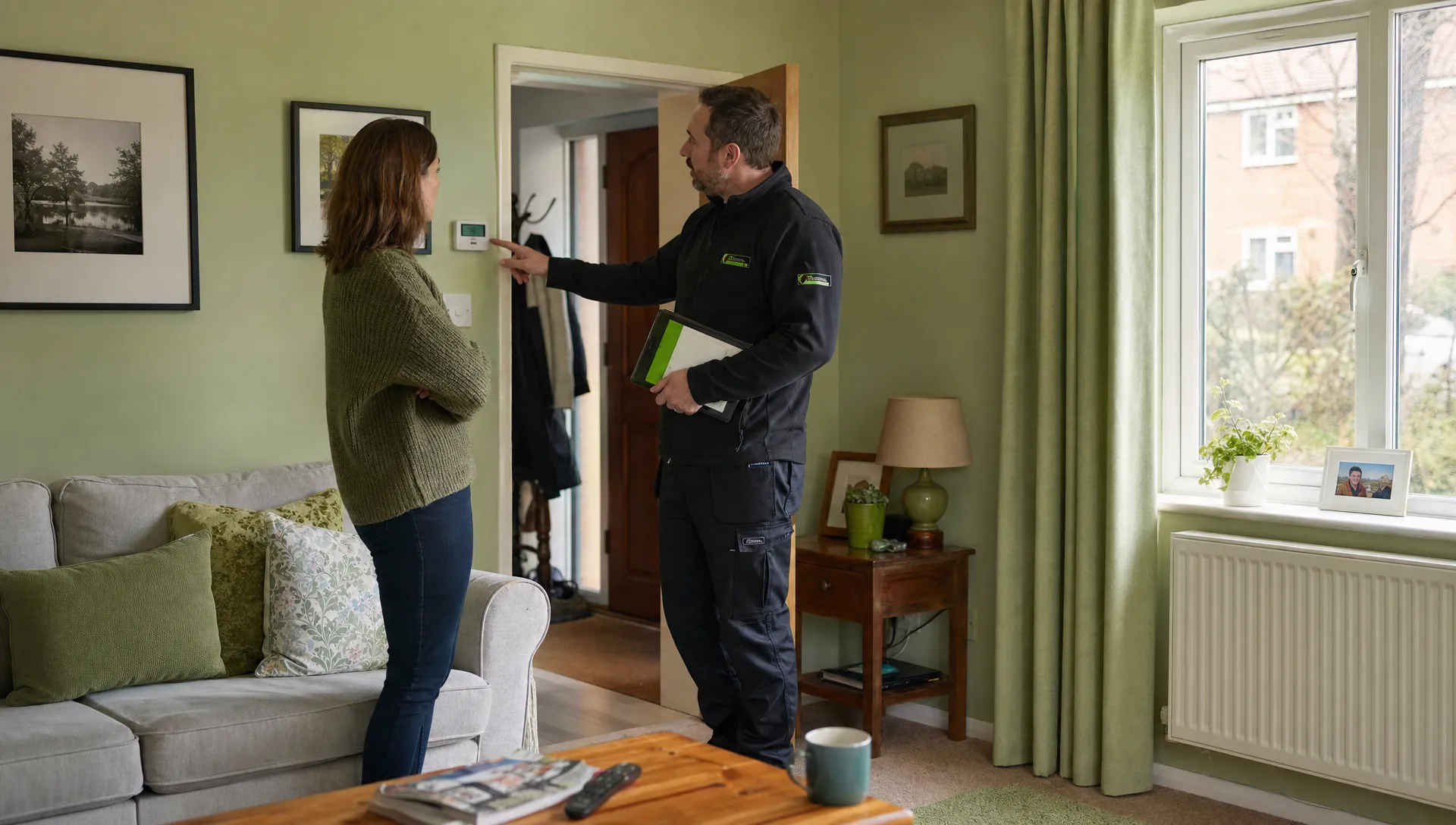
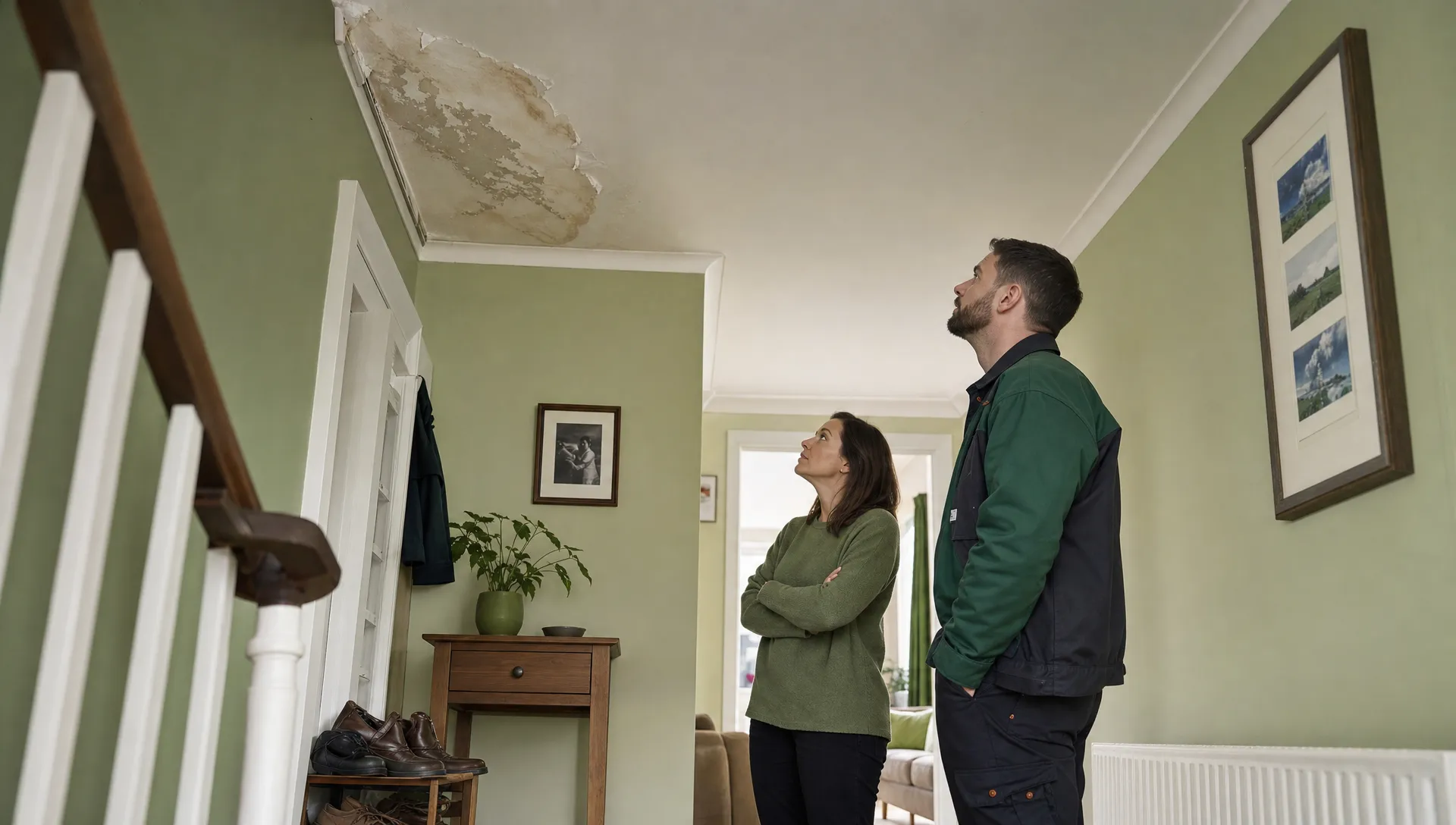
A British homeowner standing in the hallway of a modest terraced house speaking with a tradesperson holding a clipboard, with a tool bag by the front door and natural daylight coming from outside.

Get a written quote, not just a verbal estimate

A quote and an estimate are not the same thing. An estimate is a rough guide that may change. A quote is a fixed price for an agreed scope, unless you later agree changes or hidden problems are discovered that could not reasonably have been known at the start.

For home repairs, ask for the quote in writing before work begins. It should make clear what is included, what is excluded and when payment is due. If the trader is VAT registered, the quote should say whether VAT is included. If materials are being supplied, it should say who is buying them and whether they are included in the price.

A clear written quote should usually cover:

  • The trader’s full name, business name, address and contact details
  • A description of the work to be done
  • Labour costs, material costs and VAT where applicable
  • Start date, expected duration and working hours
  • Payment schedule and deposit amount
  • Waste removal, making good and clean-up responsibilities
  • Guarantees or warranties offered
  • What happens if extra work is needed

If a trader refuses to put things in writing, treat that as a serious warning sign. Honest tradespeople may be busy, but they should still be willing to confirm the basics.

Be careful with deposits and cash payments

It is normal for some tradespeople to ask for a deposit, especially if they need to buy materials or reserve time for a larger job. But the amount should be reasonable and linked to the work. A demand for most or all of the money upfront is risky.

For small jobs, you may not need to pay anything until the work is complete. For bigger repairs, staged payments can be fair, but each stage should match progress. For example, a payment after materials are delivered or after a defined part of the work is completed is clearer than paying large sums with no milestone attached.

Try to use traceable payment methods rather than cash. Bank transfer, card payment or another documented method gives you a clearer record if there is a dispute. If you pay by credit card for certain purchases costing over £100 and up to £30,000, you may have extra protection under Section 75 of the Consumer Credit Act, although the rules depend on the exact arrangement.

Always ask for receipts. A trader who offers a cheaper cash price with no paperwork may seem tempting, but it can leave you exposed if the work fails or they do not return.

Do not let an emergency remove your common sense

Rogue traders often target urgent situations because people feel they have no choice. A leak, broken lock, power issue or heating breakdown can make anyone panic, especially if you have tenants waiting for a repair.

Even in an emergency, ask basic questions before agreeing to a visit. What is the call-out charge? What is the hourly rate? Is VAT included? Is there a minimum charge? How will parts be priced? Will you receive an invoice?

A reliable emergency tradesperson should be able to answer these questions. They may not know the final price until they inspect the problem, but they should not be vague about their charging structure.

Landlords and property managers should be especially careful here. Keep a list of trusted tradespeople in advance, and check local rates before emergencies happen. That way, when a tenant reports an urgent issue, you are not starting from zero under pressure.

Get more than one quote where possible

For anything beyond a very small job, aim for at least two or three quotes. You are not just comparing price. You are comparing how each tradesperson communicates, what they include and how clearly they explain the work.

A good quote may not be the cheapest. It may be the one that shows the trader has properly inspected the job, understood the risks and allowed for the right materials. A very low quote can become expensive later if it excludes waste removal, preparation, safety work or finishing.

When comparing quotes, ask yourself whether each one covers the same scope. If one builder includes making good and another does not, or one gardener includes waste removal and another charges extra, the headline price is not a fair comparison.

Trust your instincts, but back them up with checks

If something feels off, pause. You do not need to accuse anyone or argue. You can simply say you want to compare quotes before deciding.

A genuine tradesperson will not be offended by sensible checks. They may not be available forever, but they should not bully you, frighten you or make you feel foolish for asking questions.

Before you agree to home repairs, take a few minutes to run through this simple checklist:

  • Have you checked typical local prices for the trade and area?
  • Have you read genuine customer reviews?
  • Have you confirmed relevant qualifications or registrations?
  • Have you seen proof of insurance?
  • Do you have a written quote or clear written estimate?
  • Are payment terms clear and traceable?
  • Do you know what is included and excluded?
  • Have you avoided pressure to decide immediately?

Those few checks can prevent many of the most common problems.

What to do if you think you have hired a rogue trader

If work has already started and you are worried, do not ignore it. Keep records of everything, including quotes, messages, invoices, photos and payment receipts. If the trader asks for extra money, ask for the reason in writing before paying.

If the work appears unsafe or very poor, stop and get independent advice. Depending on the trade, that might mean asking another qualified tradesperson to inspect it, contacting your local council building control team, or speaking to the relevant registration body.

You can report problems to the Citizens Advice consumer service, which can pass information to Trading Standards. If you believe you have been scammed or threatened, report it to Action Fraud or the police as appropriate.

For landlords, document everything carefully. Poor repairs can affect tenant safety and compliance, so it is worth acting quickly if there is any concern about gas, electrical, structural or security-related work.

Frequently Asked Questions

How do I avoid rogue traders when hiring for home repairs? Check local prices first, read genuine reviews, verify qualifications and insurance, get a written quote, avoid large upfront cash payments and do not agree to work under pressure.

Is a cheap quote a warning sign? Not always. Some tradespeople charge less because they have lower overheads or a simpler approach. But if one quote is far cheaper than the others, ask what is included and what might be charged later.

Should I hire someone who knocks on my door offering repairs? Be very cautious. Do not agree to work on the doorstep, especially for roofs, driveways, gutters or urgent-looking defects. Take their details if you want, then compare them with other local tradespeople before deciding.

What paperwork should I ask for before work starts? Ask for a written quote, proof of insurance, relevant qualifications or registration, business contact details and clear payment terms. For certain work, you may also need certificates after completion.

Can HaMuch help me avoid rogue traders? HaMuch helps by showing transparent, comparable local pricing and tradesperson listings with customer reviews. This makes it easier to compare options before you request quotes and choose who to contact.

Compare local tradespeople with confidence

Avoiding rogue traders is mainly about slowing the process down, checking the basics and knowing what a fair local price looks like before you commit.

With HaMuch, you can compare local tradespeople, see real pricing data by trade and location, and request quotes for free with no obligation to book. If you are planning home repairs, start by checking the relevant trade in your area, compare your options and choose the tradesperson who gives you the clearest, most trustworthy quote.

How Much Does It Cost to Rewire a House in London?

How Much Does It Cost to Rewire a House in London? - Main Image

If you are planning a full rewire in London, a sensible 2026 starting budget is usually £3,500 to £5,500 for a small flat and £6,000 to £10,000 for a typical threebedroom house. Larger London homes, o

If you are planning a full rewire in London, a sensible 2026 starting budget is usually £3,500 to £5,500 for a small flat and £6,000 to £10,000 for a typical three-bedroom house. Larger London homes, older properties, high-spec finishes or difficult access can push the total to £14,000 or more.

Those figures are planning ranges, not fixed quotes. The real cost to rewire a house in London depends on the size of the property, how many sockets and lighting points you want, whether the home is occupied, and how much making good is included afterwards.

For this job, you need a qualified electrician rather than a general builder. On HaMuch, rewiring sits under the Electrician trade category, and you can benchmark current London electrician rates before you start comparing quotes.

Cost to rewire a house in London by property size

Here is a practical guide to typical full house rewire costs in London. These prices assume a standard domestic rewire with normal access, standard fittings and testing included. Always check whether VAT, plastering, decorating, waste removal and parking costs are included in your quote.

Property type in London Typical full rewire budget Typical timescale What may affect the price
Studio or 1-bedroom flat £3,500 to £5,500 5 to 8 working days Flat access, leasehold rules, number of circuits
2-bedroom flat or small house £4,500 to £7,000 7 to 10 working days Concrete walls, occupied rooms, extra sockets
3-bedroom terraced or semi-detached house £6,000 to £10,000 10 to 15 working days Older wiring, loft access, kitchen layout
4-bedroom house £8,500 to £14,000 2 to 3 weeks More circuits, bathrooms, extensions, home office needs
Large 5-bedroom house or period property £12,000 to £20,000+ 3 weeks or more Complex layout, premium finish, listed or conservation issues

A three-bedroom London house is the most common benchmark homeowners ask about. For that type of property, many quotes fall somewhere around £6,000 to £10,000, but it is completely possible for the quote to sit outside that range if the house is large, occupied, heavily renovated or needs a lot of making good.

Why rewiring costs more in London

London electrical work is often more expensive than the UK average because labour rates, travel time, parking, congestion and access restrictions all add pressure to the final price. Even a simple job can take longer if an electrician has to park streets away, work around controlled parking hours or carry tools through communal entrances.

London properties can also be more complicated. Flats may need permission from a freeholder or managing agent. Older terraced houses may have layers of previous electrical work hidden behind walls or under floors. Period homes can be harder to chase into neatly, and modern refurbishments often need more sockets, lighting zones and data points than older wiring was designed for.

This is why one national average can be misleading. A London rewire quote should be based on a proper look at the property, not just a quick estimate by bedroom count.

What affects the final price?

A rewire is labour-heavy, but the quote is not only about how many days the electrician is on site. The price is shaped by the layout, condition and specification of the home.

Cost factor Why it changes the quote What to ask before accepting
Number of rooms More rooms usually mean more sockets, switches and lighting points How many points are included per room?
Property condition Old plaster, solid walls and awkward floor access slow the job down Has the electrician allowed for difficult access?
Occupied or empty home Working around furniture and daily living takes longer Is the price based on the property being vacant?
Consumer unit A rewire may include a new modern consumer unit, but not always Is the consumer unit included in the fixed price?
Making good Chasing walls and lifting floors can leave repair work Is plaster patching included, and to what finish?
Finish level Standard white fittings cost less than decorative or smart fittings Are fittings included, or supply-only by you?
Testing and certification A completed rewire must be tested and certified Will you receive the correct electrical certificate?
Parking and permits London parking can add daily cost and admin Are parking charges included or added separately?

The biggest surprise for many homeowners is making good. Electricians often repair chases to a basic safe finish, but full plastering and decorating may be quoted separately. If you expect the walls to be paint-ready at the end, make that clear before work starts.

What should a full rewire quote include?

A proper full rewire quote should clearly explain the scope of work. It should not just say “rewire house” with one total price.

A clear quote will usually set out:

  • The rooms included in the rewire
  • The number of sockets, switches and light points allowed for
  • Whether a new consumer unit is included
  • Whether smoke alarms, extractor fans or outdoor power are included
  • Whether old wiring will be removed where accessible
  • Whether chasing, lifting floorboards and reinstatement are included
  • Whether testing, certification and Building Regulations notification are included
  • Whether VAT, parking, waste disposal and materials are included

A full domestic rewire is notifiable electrical work under Part P of the Building Regulations. In plain English, that means the work must be carried out and certified properly. You can read more about competent person schemes on the UK Government website, but the simple rule is this: make sure your electrician is qualified to do the work and provide the right paperwork afterwards.

After a new installation, you should normally receive an Electrical Installation Certificate, often shortened to EIC. This is different from an EICR, which is an inspection report on an existing installation.

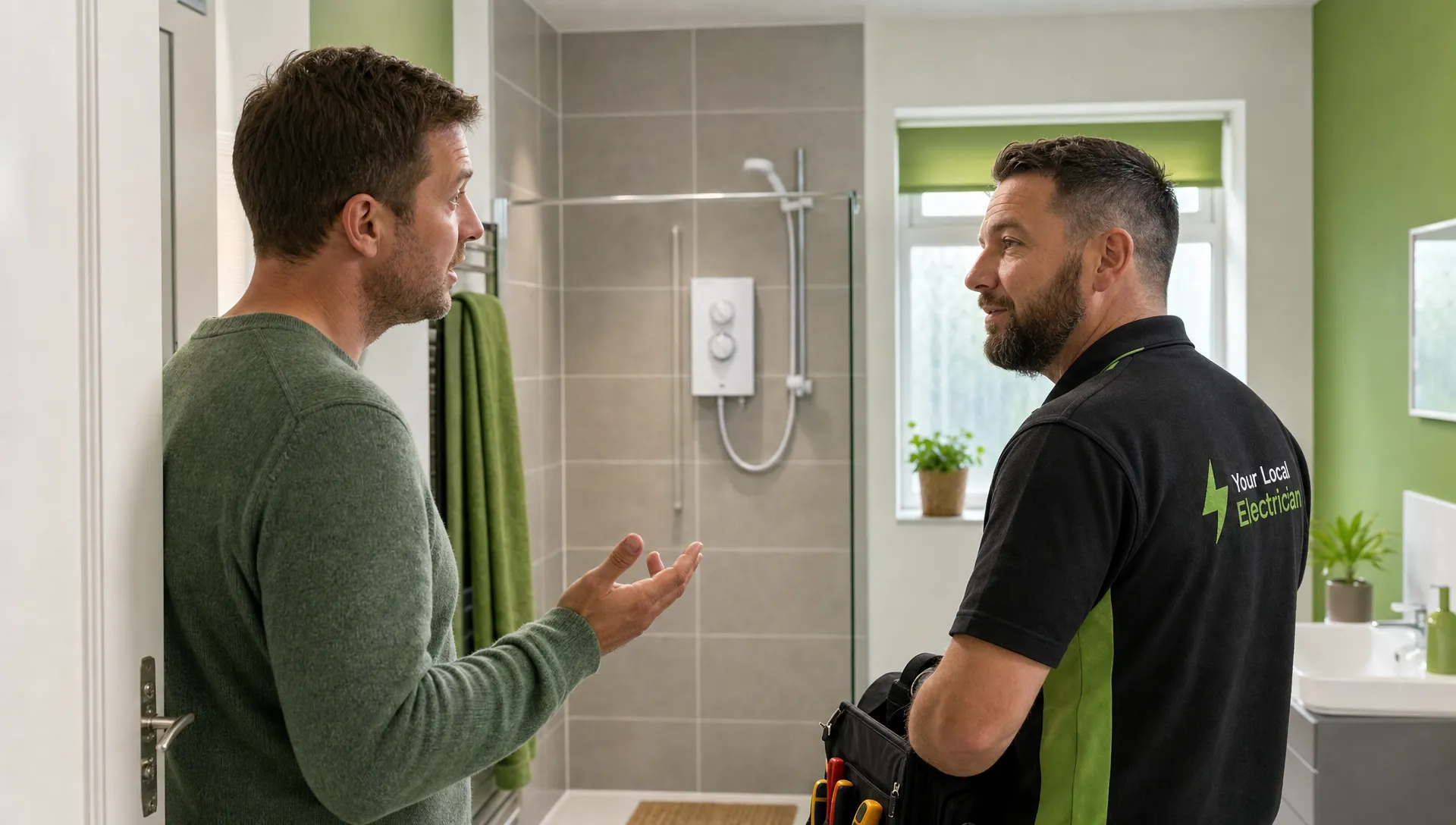
A qualified electrician with a tool bag and clipboard standing in the hallway of a lived-in London terraced house, speaking with a homeowner near the front door in natural daylight.

Do you need a full rewire or an electrical inspection first?

Not every electrical problem means the whole property needs rewiring. If you are unsure, an Electrical Installation Condition Report, known as an EICR, can help identify whether the installation is satisfactory, needs remedial work, or is no longer safe for continued use.

If you are buying a property, renovating a rental home or dealing with repeated electrical faults, it can be sensible to start with an inspection. Our guide to EICR electrical safety certificate costs explains what is usually involved and how prices vary by property type.

For landlords in England, electrical safety rules are especially important. The Government’s private rented sector electrical safety guidance says rental properties must have electrical installations inspected and tested at least every five years by a qualified person.

Signs that a property may need serious electrical work include an old fuse box, very few sockets, frequent tripping, scorch marks, buzzing sounds, damaged accessories, or wiring that appears very old. If you notice burning smells, heat around fittings or visible damage, stop using the affected circuit and speak to an electrician urgently.

Should you add more sockets during a rewire?

In many London homes, older wiring was designed for a very different way of living. A single bedroom may once have needed one socket. Today, the same room might need power for chargers, lamps, a desk, a TV, a router extender and a heater.

Adding sockets during a rewire is usually more practical than adding them later, because floors and walls may already be opened up. That does not mean extra points are free, so ask the electrician how many are included in the base quote and how much additional points will cost.

If you are only planning a smaller upgrade rather than a full rewire, our guide to the cost of installing a new electrical socket gives a clearer breakdown for that specific job.

Example budget for a three-bedroom London rewire

To make the figures easier to picture, here is a realistic planning example for a three-bedroom terraced house in London. This is not a quote, but it shows how the total can build up.

Budget item Typical allowance Notes
Core rewire £6,000 to £10,000 Labour, cabling, standard fittings and testing may be included
Extra sockets or upgraded fittings Varies by quantity and specification Agree the number of points before work starts
Making good Often separate May include patch plastering, but not full decorating
Decorating after rewire Often separate Usually handled by a decorator after electrical work
Temporary accommodation Optional but worth considering Useful if the property will be dusty, noisy or without power at times
Parking and access costs Often overlooked Particularly relevant in controlled London parking zones

For an empty property, a rewire is usually faster and less disruptive. For an occupied home, expect more planning. Furniture may need moving, rooms may be unavailable, and power may be off for periods during the day. Some families choose to move out for the messiest stage, especially if children, pets or home working are involved.

How long does a London house rewire take?

A small flat may take around a week. A typical three-bedroom house might take two weeks, sometimes longer if the property is occupied or access is difficult. Larger houses, period properties and homes being rewired alongside building work can take several weeks.

The timescale should be discussed before work begins. Ask how many electricians will be on site, whether work will happen continuously, and when power is likely to be unavailable. If the rewire is part of a wider renovation, the electrician may need to coordinate with builders, plasterers, kitchen fitters or decorators.

Timing matters in London because access, parking and neighbouring properties can all affect the working day. If you live in a flat, also check building rules about working hours, lift use and noise.

How to compare rewire quotes properly

The cheapest quote is not always the best quote, and the most expensive quote is not automatically the safest. What matters is whether you are comparing like for like.

When you receive quotes, check:

  • Whether each electrician has quoted for the same number of rooms and points
  • Whether the consumer unit is included
  • Whether testing and certification are included
  • Whether making good is included, and to what standard
  • Whether fittings are basic white, decorative or supplied by you
  • Whether VAT is included
  • Whether parking, congestion costs or waste disposal are extra
  • Whether the electrician is appropriately qualified and insured
  • Whether the quote is fixed price or based on a day rate

This is where HaMuch is useful. Many comparison sites ask you to submit details before you see much about pricing. HaMuch is built around transparent, comparable pricing by trade and location, alongside local listings and genuine customer reviews, so you can compare first and decide afterwards.

Frequently asked questions

How much does it cost to rewire a 3-bedroom house in London? A typical three-bedroom house rewire in London often costs around £6,000 to £10,000. The final price depends on the layout, access, number of sockets, consumer unit, finish level and whether making good is included.

Is rewiring a house cheaper if the property is empty? Usually, yes. An empty property is easier and quicker to work in because electricians can lift floors, chase walls and move between rooms without working around furniture or occupants. The quote may still depend more on the condition and specification than occupancy alone.

Can I live in my house while it is being rewired? Sometimes, but it can be disruptive. Rewiring creates dust, noise and periods without power. For a full London house rewire, many homeowners choose to move out temporarily if they can, especially during the messiest stages.

Does a rewire include plastering and decorating? Not always. Some electricians include basic patching where walls have been chased, but full plastering and decorating are often separate. Ask exactly what “making good” means in the quote.

Do I need an EICR before rewiring? If the wiring is clearly outdated or unsafe, an electrician may recommend a rewire after inspection. If you are unsure about the condition, an EICR can be a useful first step because it records the state of the existing installation.

Will a rewire add value to my London property? A safe, modern electrical installation can make a property more attractive to buyers and tenants, especially if the old wiring was a concern. It is best thought of as a safety and reliability improvement rather than a guaranteed profit-making upgrade.

Compare London rewire quotes with HaMuch

A full house rewire is a major job, so it is worth comparing clear, itemised quotes before you book. Check what is included, ask about certification, and make sure you are comparing electricians on the same scope of work.

With HaMuch, you can compare local electricians, see transparent pricing information and request quotes for free with no obligation to book. Start with real London pricing, then choose the electrician who gives you the clearest, most suitable quote for your property.

How Many Leads Does a Tradesperson Actually Need Per Month?

How Many Leads Does a Tradesperson Actually Need Per Month? - Main Image

There is no magic number of monthly leads that suits every tradesperson. A selfemployed plumber doing small callouts needs a very different flow of enquiries from a builder who takes on one large proj

There is no magic number of monthly leads that suits every tradesperson. A self-employed plumber doing small call-outs needs a very different flow of enquiries from a builder who takes on one large project at a time.

The useful question is not how many leads can I get? It is how many good leads do I need to keep my diary full without wasting time quoting for work I will never win?

For many UK tradesmen, tradeswomen and small firms, the answer often sits somewhere between a handful of strong enquiries and a few dozen qualified leads per month. The exact number depends on your trade, your conversion rate, your job size, your local competition and how much capacity you actually have.

For homeowners and landlords, this matters too. Understanding how tradespeople think about leads helps explain why clear job details, realistic budgets and transparent pricing make it much easier to get useful quotes.

The quick answer: work backwards from your diary

A tradesperson should usually start with capacity, not marketing. If you can only complete six jobs in a month, getting 100 vague enquiries is not a win. It can mean missed calls, rushed quotes and frustrated customers.

A simple rule is:

Monthly leads needed = monthly jobs needed ÷ lead-to-job conversion rate

So if a tradesperson wants 8 booked jobs in a month and converts around 1 in 4 suitable enquiries into paying work, they need about 32 qualified leads.

If they convert 1 in 2, they only need 16. If they convert 1 in 6, they need 48. The same business can need very different lead volumes depending on how relevant those leads are and how well the quoting process works.

That is why transparent pricing matters. When customers can compare realistic local costs before they request quotes, the enquiry is often more serious. HaMuch is built around that idea, showing comparable pricing by trade and UK location rather than leaving homeowners to guess.

What counts as a lead?

Not every enquiry deserves to be counted as a lead. A message saying I might need some work done one day is very different from a homeowner who provides photos, a postcode, a clear description and a preferred timeframe.

For lead planning, it helps to separate enquiries into three groups:

Type of enquiry What it usually means How useful it is for planning
General enquiry Someone asks a broad question with little detail Useful, but may not turn into paid work
Qualified lead The customer has a real job, location, timeframe and basic budget awareness Best measure for monthly targets
Booked job The quote has been accepted and the work is scheduled The outcome you are working towards

A tradesperson who says they need 40 leads per month may actually mean 40 raw enquiries. Another might mean 40 properly qualified quote requests. Those are not the same thing.

For homeowners, this is a useful reminder to be specific. A clear enquiry saves time for both sides and makes it easier to compare like-for-like quotes.

A practical monthly lead formula

The cleanest way to calculate lead needs is to work in four stages:

Step Question to answer Example
Capacity How many working days can you realistically sell each month? 16 chargeable days
Job size How many days does the average job take? 2 days per job
Bookings needed How many jobs fill the diary? 8 jobs per month
Conversion rate How many qualified leads become jobs? 1 in 4

In that example, the tradesperson needs 8 booked jobs. If 1 in 4 qualified leads becomes a job, the monthly lead target is 32 qualified leads.

The formula is simple, but the inputs matter. A heating engineer doing boiler servicing may need a steady stream of smaller jobs. A carpenter fitting bespoke wardrobes may need fewer leads because each job takes longer. A builder working on extensions may need very few leads, but each one must be serious, well-scoped and worth pricing properly.

This is why copying another tradesperson's lead target rarely works. The number has to fit the business model.

Example lead targets by job pattern

The table below is not a fixed industry benchmark. It is a planning example to show how the same conversion rate produces different lead needs depending on the size of job.

Job pattern Example trade situation Booked jobs wanted per month If 1 in 3 qualified leads convert Approximate qualified leads needed
Small, quick jobs Call-outs, minor repairs, one-day tasks 15 1 in 3 45
Medium jobs Decorating rooms, plastering, carpentry, small plumbing work 8 1 in 3 24
Larger projects Renovations, fitted joinery, bathroom refits, building work 3 1 in 3 9

The key point is that bigger jobs do not always require more leads. They often require better leads.

For example, a plumber who mostly handles repairs may need more frequent enquiries to keep each week full. If you want to understand how rates affect customer expectations, HaMuch's guide to the average plumber hourly rate in the UK is a useful starting point.

Location changes the number too

Lead needs vary by area. London, Birmingham and Manchester can all produce strong demand, but the shape of that demand is not identical. London often has higher job density and more competition. Birmingham can bring a mix of city and suburban work. Manchester may involve a wide spread of domestic, rental and renovation jobs across nearby towns.

The same trade can therefore need different monthly lead volumes in different places. A tradesperson in a busy city might get more enquiries but face more quote competition. Someone in a smaller town may get fewer enquiries but build stronger repeat work through local reputation.

Before setting a target, it is worth checking both demand and pricing. HaMuch regularly publishes local pricing information, and if you are using electrical work as a benchmark, the electrician rates page helps customers and tradespeople compare rates by location rather than relying on vague national averages. You can also look at which trades are in demand near you right now to understand why some areas generate more quote requests than others.

A UK tradesperson with a tool bag and clipboard talks with a homeowner at the open front door of a modest terraced house, with a small pile of post, a doormat and coats visible in the hallway. The scene feels everyday and local, with natural daylight and a slightly off-centre working-height composition, and no close-up technical details.

Why lead quality matters more than lead volume

Too many poor-quality leads can be worse than too few good ones. If a tradesperson spends evenings answering vague messages, travelling to quote for unsuitable work or competing only on the lowest price, the diary may look busy but the business is not healthier.

A strong lead usually has a few things in common:

  • The customer knows what problem they need solved.
  • The location is within the tradesperson's normal working area.
  • The timing is realistic.
  • The job is appropriate for the trade and skill level.
  • The customer has seen realistic local pricing before asking for a quote.

That last point is often overlooked. When customers have no idea what a job may cost, conversations can go nowhere quickly. Transparent pricing helps filter out unrealistic enquiries and makes quotes easier to compare.

For landlords and property managers, quality is especially important. A rental property repair may need a quick response, but it also needs someone properly qualified, insured and reliable. If you are unsure what checks to make before hiring, HaMuch's guide on how to check if a tradesperson is properly qualified explains what to look for in plain English.

Conversion rate is the hidden lever

A tradesperson does not always need more leads. Sometimes they need to convert the right leads better.

Imagine two decorators both want 10 booked jobs per month. One converts 1 in 5 qualified leads, so needs 50 leads. The other converts 1 in 2, so needs 20. The second tradesperson can spend less time chasing enquiries and more time doing paid work.

Several things can improve conversion without increasing lead volume. Clear communication is a big one. So is providing a written quote, explaining what is included, turning up when agreed and being honest about availability. Reviews also matter, because many homeowners feel more confident when they can see feedback from previous customers.

For homeowners, this is why the cheapest quote is not always the best quote. A clear, professional response can be worth paying attention to, especially for safety-critical or disruptive work.

How many leads is too many?

More leads can sound attractive, but there is a limit. A tradesperson may be getting too many leads if they regularly miss calls, take days to reply, forget to send quotes or rush site visits.

There is also the risk of accepting too much work. Overbooking can cause delays, poor communication and lower customer satisfaction. A full diary is good. A diary that cannot be managed is not.

A sensible lead target should leave room for admin, travel, quoting, materials, unexpected delays and repeat customers. For small firms, it should also leave room for the owner to manage the business rather than spending every spare hour sorting enquiries.

What this means for homeowners and landlords

If you are hiring a tradesperson, the lead calculation explains why good tradespeople may not respond well to vague requests. They are often filtering enquiries carefully because their time is limited.

You can improve your chances of getting accurate quotes by giving the tradesperson useful information from the start. Include the property type, location, access details, photos where helpful and your preferred timescale. If it is a rental property, say whether tenants need to be contacted and whether parking or access is restricted.

It also helps to compare realistic local prices before requesting quotes. HaMuch gives homeowners and landlords a clearer starting point by showing transparent, comparable pricing for trades across the UK. That means you can approach the conversation with a better idea of what is normal for your area.

A simple way to set a monthly lead target

If you are a tradesperson, start with the number of jobs you can realistically complete, then work backwards. If you are a homeowner, use the same logic to understand why clear job details help you get better responses.

Here is a straightforward planning summary:

If your situation is… Your lead target should focus on…
You do small jobs and call-outs A steady flow of frequent, local enquiries
You do medium-sized domestic jobs Fewer but better-scoped quote requests
You do large projects Serious leads with clear budgets and timescales
You are fully booked Better filtering, not more enquiries
You are quiet Improving visibility, reviews and quote response

The best monthly lead number is not the biggest number. It is the number that fills the diary with profitable, suitable work while keeping customers informed and expectations realistic.

Frequently Asked Questions

How many leads does a self-employed tradesperson need per month? It depends on job size and conversion rate, but many sole traders need enough qualified leads to fill their available working days. A small-job trade may need several dozen enquiries, while a project-based tradesperson may only need a few serious leads.

What is a good lead-to-job conversion rate for tradespeople? There is no single correct rate. A tradesperson converting 1 in 2 qualified enquiries is in a very different position from one converting 1 in 6. The best measure is your own recent quote history, tracked over several months.

Do tradespeople in London need more leads than those in Birmingham or Manchester? Not always. London may produce more enquiries, but competition and travel time can be higher. Birmingham and Manchester can also be very busy, depending on the trade, local housing stock and seasonal demand.

How can homeowners get better quotes from tradespeople? Give clear details, share photos if useful, explain the timescale and compare realistic local pricing before you ask for quotes. This makes your enquiry easier to assess and helps tradespeople respond accurately.

Does HaMuch help with comparing tradesperson prices? Yes. HaMuch helps homeowners and landlords compare local tradespeople, genuine customer reviews and transparent pricing data by trade and location, so you can request quotes with a clearer idea of typical costs.

Ready to compare local tradespeople?

Whether you are planning a repair, renovation or routine property job, it pays to compare before you book. HaMuch helps you see real, transparent pricing by trade and location, then request quotes from vetted local tradespeople with no obligation.

Start by checking local prices and requesting quotes through HaMuch so you can compare your options clearly before deciding who to hire.

How Much Does an Emergency Plumber Cost in Birmingham?

How Much Does an Emergency Plumber Cost in Birmingham? - Main Image

If you need an emergency plumber in Birmingham, the first thing you usually want to know is simple: how much is this going to cost? As a practical guide, the emergency plumber call out cost in Birming

If you need an emergency plumber in Birmingham, the first thing you usually want to know is simple: how much is this going to cost? As a practical guide, the emergency plumber call out cost in Birmingham is often around £80 to £150 for the call-out or first hour, with late-night, weekend and bank holiday visits commonly costing more.

That figure can rise if the job is complex, parts are needed, the plumber has to travel across the city at short notice, or the problem happens overnight. For the most accurate local benchmark before you book, compare current plumber rates on HaMuch, where pricing is shown upfront rather than hidden until after you make an enquiry.

Typical emergency plumber call-out costs in Birmingham

Emergency plumbing is usually priced differently from planned work. A normal weekday repair booked in advance may be charged at a standard hourly rate, while an emergency visit often includes a higher first-hour fee because the plumber is interrupting other work, travelling immediately, or attending outside normal hours.

Here is a sensible 2026 guide for Birmingham emergency plumbing costs:

Time of call-out Typical cost range What to check before booking
Same-day weekday, normal hours £70 to £130 Whether this includes the first hour
Evening or weekend £90 to £180 Whether extra time is charged hourly
Late night or very early morning £120 to £250+ Whether travel, parking and VAT are included
Bank holiday emergency £150 to £300+ Whether parts are included or added separately

These ranges are not fixed quotes. They are realistic planning figures for homeowners and landlords who need to make a quick decision. The final bill depends on what the plumber finds once they arrive.

If your repair can wait until normal working hours, it may be cheaper to book a standard appointment. HaMuch’s guide to the average plumber hourly rate in the UK is useful if you want to compare emergency pricing against normal labour rates.

What does the call-out charge usually include?

A call-out charge is the fee for a plumber to attend your property. In many cases, it includes the first 30 to 60 minutes on site, but this is not guaranteed. Some plumbers charge a separate call-out fee plus labour, while others roll both into one “first hour” price.

Before you agree to an emergency booking, ask three simple questions:

  • Is the call-out fee separate, or does it include the first hour of labour?
  • What is the hourly rate after the first hour?
  • Are VAT, parking, travel and basic materials included?

Getting these answers upfront helps you avoid confusion later. This is especially important for emergency work because you may feel under pressure to say yes quickly. A good plumber should be able to explain their pricing clearly before they set off.

Common emergency plumbing jobs and likely costs

Not every urgent plumbing job costs the same. Stopping a leak under a sink is very different from tracing a burst pipe inside a wall or dealing with water coming through a ceiling.

Emergency plumbing problem Typical Birmingham cost range Notes
Burst pipe or major leak £120 to £350+ Cost rises if access is difficult or parts are needed
Leak under sink, bath or basin £90 to £220 Often completed within the first hour if straightforward
Overflowing or unusable toilet £100 to £250 May cost more if blockage is deeper in the pipework
Leaking radiator or valve £100 to £240 Heating system pressure and parts can affect the price
Emergency tap repair £90 to £180 A simple washer or cartridge repair is usually cheaper than replacement
Stopcock problem £120 to £300+ Can be urgent if you cannot isolate the water supply

For a smaller issue such as a dripping or leaking tap, it is worth checking whether it is truly an emergency. If the water can be isolated and there is no damage happening, a planned repair may cost less. HaMuch’s guide on how much it costs to fix a leaking tap explains typical tap repair prices in more detail.

A UK plumber with a tool bag speaking to a homeowner in the hallway of an older terraced house, with coats by the door and natural daylight from the entrance.

Why emergency plumber prices vary across Birmingham

Birmingham is a large city, and location can affect the price. A plumber attending a property in the city centre may need to consider parking, access and travel time. A call-out to Sutton Coldfield, Erdington, Edgbaston, Moseley, Harborne or Solihull may be priced differently depending on where the plumber is based and how quickly they can arrive.

The biggest cost factors are usually:

  • Time of day: Overnight and bank holiday call-outs are normally the most expensive.
  • Severity of the problem: Active flooding costs more to deal with than a contained drip.
  • Access: Repairs behind panels, under flooring or inside walls take longer.
  • Parts: Valves, pipe sections, taps, fittings and specialist parts are usually added to labour.
  • Follow-up work: An emergency visit may make the property safe first, with a permanent repair booked later.
  • VAT status: Some quotes include VAT and some add it on top, so always ask.

The key is not just finding the cheapest quote. It is finding a local plumber who can attend quickly, explain the charge clearly and do the work properly.

What to do before the emergency plumber arrives

A few calm steps can reduce damage and may also reduce the time the plumber needs on site.

If water is leaking heavily, try to turn off the mains stopcock if you know where it is and it is safe to reach. In many Birmingham homes, it may be under the kitchen sink, in a downstairs cupboard, by the front door or near where the water supply enters the property. If you live in a flat, there may be a separate isolation valve inside the flat or a shared supply arrangement.

Move furniture, rugs and electrical items away from the leak if you can do so safely. Use towels, buckets or bowls to contain water, and take photos for your insurer or landlord. If water is near electrics, do not touch wet switches, sockets or appliances. If you are unsure, stay clear and get professional help.

When you call the plumber, explain the situation plainly. Tell them where the leak is, whether the water is still running, whether you have turned the supply off, the property type, your postcode and any parking or access details. A clear description helps them bring the right tools and parts.

When you may need someone other than a plumber

Some emergencies look like plumbing problems but need a different specialist.

If you smell gas, do not call a general plumber as your first step. Call the National Gas Emergency Service on 0800 111 999, open doors and windows, avoid flames and do not use electrical switches. For gas appliance work, you need a Gas Safe registered engineer. You can check official advice through the Gas Safe Register.

If the issue is with an external drain, sewer or repeated toilet blockage affecting more than one fixture, you may need a drainage specialist rather than a standard plumber. If water has affected wiring, sockets or the consumer unit, you may also need an electrician once the leak has been made safe.

Emergency plumbing costs for landlords and property managers

For landlords, speed matters because water damage can affect tenants, neighbouring flats and insurance claims. But it is still worth getting pricing clarity before authorising work.

Ask the tenant to send photos or a short description of what is happening. If they can safely isolate the water, that may turn a full emergency into a controlled urgent repair. For managed properties, make sure the plumber knows who can approve extra costs if the repair goes beyond the first hour or needs parts.

It is also sensible to keep a record of the call-out charge, attendance time, work completed and any recommendation for follow-up repairs. This helps with deposit disputes, insurance paperwork and future maintenance planning.

How to avoid paying more than you need to

In a genuine emergency, delaying can cost more than the call-out fee. But that does not mean you should accept vague pricing.

Before booking, ask for a clear estimate of the attendance charge and what it includes. If the plumber cannot give an exact repair cost until they inspect the issue, that is normal. What they should be able to explain is the call-out fee, the labour rate, whether VAT is included and how parts are charged.

It also helps to compare more than one local option if the situation is safe enough to do so. HaMuch is built for this exact problem: homeowners and landlords can compare local tradespeople, see transparent pricing information and request quotes without being forced to book straight away.

Frequently Asked Questions

How much does an emergency plumber cost in Birmingham? An emergency plumber in Birmingham commonly costs around £80 to £150 for a call-out or first hour, with late-night, weekend and bank holiday work often costing £120 to £250 or more before parts.

Do emergency plumbers charge a call-out fee and an hourly rate? Some do, while others include the first hour in the call-out price. Always ask whether the quoted fee includes labour, how long it covers and what the hourly rate is after that.

Is a leaking tap an emergency? Usually not, unless it cannot be isolated or is causing damage. If the tap is dripping slowly and you can turn off the water locally, a planned repair is likely to be cheaper than an emergency call-out.

Will parts be included in the emergency plumber cost? Usually, parts are charged separately unless the plumber says otherwise. Small fittings may be inexpensive, but replacement taps, valves or specialist parts can increase the final bill.

Should I call a plumber for a boiler leak? If the leak is from pipework near the boiler, a plumber may be able to help. If it involves the boiler itself or any gas-related issue, you should use a Gas Safe registered heating engineer.

Can landlords pass emergency plumbing costs to tenants? It depends on the cause. General plumbing failures are usually the landlord’s responsibility, while tenant-caused damage may be handled differently under the tenancy agreement. Keep records and photos.

Compare emergency plumbers in Birmingham with HaMuch

When water is leaking, you need help quickly, but you still deserve clear pricing. HaMuch helps you compare local, vetted plumbers with genuine customer reviews and transparent cost information, so you can make a confident decision before booking.

Check current plumber rates on HaMuch, then request quotes through HaMuch for free. There is no obligation to book, so you can compare first and choose the plumber that best fits your emergency, budget and location.

How to Check If a Tradesperson Is Properly Qualified

How to Check If a Tradesperson Is Properly Qualified - Main Image

If you are wondering how to check if a tradesperson is qualified, the safest approach is simple: verify the person, the business and the specific work they are allowed to do before you agree to anythi

If you are wondering how to check if a tradesperson is qualified, the safest approach is simple: verify the person, the business and the specific work they are allowed to do before you agree to anything.

A tidy van, a confident manner and a few good reviews can be reassuring, but they are not proof of competence. In the UK, some trades and job types are legally regulated, while others rely more on training, trade body membership, experience, insurance and customer feedback.

That can feel confusing if you are a homeowner arranging a one-off repair, or a landlord responsible for keeping a rental property safe. This guide explains what to ask for, where to check it, and how to compare quotes without getting caught out by vague claims or unusually low prices.

What properly qualified really means

There is no single UK licence that covers every tradesperson. A qualified tradesperson may have formal training, apprenticeship experience, industry certificates, scheme membership, years of proven work, or a combination of these.

For the person hiring them, the key question is not whether they have a certificate somewhere. It is whether they are competent and authorised for your exact job.

In practice, you are checking three things:

  • The tradesperson has suitable skills and experience for the work.
  • They are registered with the correct official scheme where the law or Building Regulations require it.
  • They carry appropriate insurance and are willing to provide written paperwork.

For example, a decorator does not need the same kind of registration as a gas engineer. A general plumber may be perfectly competent to replace taps, but that does not mean they are legally allowed to work on a gas boiler. A builder may be experienced with extensions, but certain structural, drainage or window work may still need Building Control sign-off.

Start with the trade and the job type

The quickest way to avoid confusion is to start with the work you need done. Some jobs carry a higher safety or compliance risk, so the checks are stricter.

Trade or job type What to check Where to verify
Gas boiler, gas cooker or gas fire work Gas Safe registration, photo ID card and the exact gas work categories listed on the card Gas Safe Register
Domestic electrical work Competent person scheme registration for notifiable work, plus evidence of suitable electrical qualifications and experience Competent Person Register
Landlord electrical inspection or EICR A competent and qualified inspector, suitable insurance and a proper Electrical Installation Condition Report Scheme provider checks and written evidence from the electrician
Oil boiler or oil tank work OFTEC registration for oil-fired heating work OFTEC
Solid fuel stove installation HETAS registration or Building Control approval HETAS
Replacement windows and doors FENSA, CERTASS or Building Control sign-off FENSA or the installer’s scheme provider
General plumbing No universal UK plumber licence, so check experience, insurance, reviews and optional trade membership WaterSafe can help for approved plumbers
Locksmith work No statutory locksmith licence in the UK, so check reviews, ID, insurance and optional trade membership Master Locksmiths Association
Building, carpentry, plastering, tiling, decorating, gardening and cleaning Relevant experience, references, photos of similar work, insurance and written terms Customer reviews, references and any job-specific paperwork

The important point is that a logo on a website is not enough. Always check the official register yourself, using the business name, registration number or postcode. If the work is safety-critical, ask the tradesperson to show their ID card when they arrive.

How to check a tradesperson’s qualifications step by step

Ask for their full business details

Before arranging a visit, ask for the tradesperson’s trading name, full name, business address, phone number and email address. If they say they are registered with a trade body or official scheme, ask for the registration number too.

A genuine professional should not be offended by this. Qualified tradespeople are used to being asked, especially for gas, electrical and landlord safety work.

Be cautious if someone only gives a mobile number, refuses to share a surname, or wants to keep everything informal. That does not automatically mean they are unqualified, but it makes your checks much harder.

Check the official register yourself

Do not rely on screenshots, old certificates or website badges alone. Go to the official register and search for the business or individual.

For gas work, check the Gas Safe Register and make sure the engineer is listed for the exact type of appliance. Gas Safe ID cards include categories of work, so a person registered for one type of gas work may not be covered for every gas job.

For electrical work, check whether the electrician or business is part of a recognised competent person scheme. In England and Wales, some domestic electrical work is notifiable under Building Regulations. A registered competent person can usually self-certify that work, which avoids you having to arrange Building Control approval separately.

For rented properties, landlords should also check that electrical inspections are carried out by someone competent to produce a valid EICR. If you are budgeting for this, HaMuch has a guide to how much an EICR electrical safety certificate costs, which explains typical cost factors and what affects the quote.

Match the person at the door to the paperwork

This is especially important for gas and electrical jobs. A company may be registered, but you still want to know who is actually doing the work.

Ask who will attend and whether they are covered under the business registration. When they arrive, check ID if the job is regulated. For Gas Safe work, the engineer should be able to show a current Gas Safe ID card. For electrical work, the person or business should be able to explain what certification you will receive once the work is complete.

If a subcontractor turns up and you have never been given their details, pause and ask for confirmation before they start.

Ask for insurance proof

Qualifications show competence. Insurance protects you if something goes wrong.

At a minimum, ask whether the tradesperson has public liability insurance. If they employ other people, employers’ liability insurance may also be relevant. For inspection and reporting work, such as certain surveys or safety reports, professional indemnity insurance can be useful too.

Ask for the insurance certificate and check that the business name, expiry date and level of cover look sensible for the job. You do not need to become an insurance expert, but you should be able to see that cover is current and not in someone else’s name.

A tradesperson with a tool bag standing in the doorway of a modest UK hallway while speaking with a homeowner, with natural daylight, ordinary household clutter and no close-up view of technical equipment.

Look for evidence of similar work

A tradesperson can be qualified and still be a poor fit for your job. A small repair, a full bathroom refit, a garden clearance and a rental safety inspection all need different experience.

Ask whether they have completed similar work recently. Photos, references and reviews are useful here. For larger projects, ask how they plan to handle access, waste, materials, timescales and any approvals.

For homeowners, this helps you understand whether the tradesperson is comfortable with the scale of the job. For landlords and property managers, it also helps you judge whether they can work around tenants, provide paperwork promptly and communicate clearly.

Get a proper written quote

A qualified tradesperson should be willing to put the basics in writing. A clear quote reduces misunderstandings and makes it easier to compare like for like.

A good written quote should include the scope of work, labour, materials, VAT if applicable, start date or expected timescale, payment terms, waste disposal, and which certificates or guarantees will be provided.

Avoid making a decision based only on a single total price. One quote may include certification, disposal and making good, while another may leave those out. If a quote is much cheaper than the others, ask what is included and what is not.

How qualifications affect price

A properly qualified and insured tradesperson will not always be the cheapest option. They have training, scheme fees, insurance, tools, travel time and admin costs to cover. That does not mean you should overpay, but it does mean the lowest quote is not automatically the best quote.

This is where transparent local pricing helps. HaMuch is built to show real, comparable pricing by trade and location, not vague guesswork. If you are booking electrical work in busy areas such as London, Birmingham or Manchester, checking local electrician rates on HaMuch gives you a better starting point before you request quotes.

The same principle applies to plumbing. If you are not sure what is normal for call-outs, hourly labour or day rates, the HaMuch guide to the average plumber hourly rate in the UK can help you sense-check a quote before you commit.

The aim is not to find the cheapest person at any cost. It is to find someone qualified, reliable and fairly priced for your area.

Extra checks for landlords and property managers

Landlords have additional duties because the property is being let to tenants. You need reliable work, but you also need paperwork that proves key safety checks have been done properly.

For gas appliances, use a Gas Safe registered engineer and keep the gas safety record. For electrical safety in England, private landlords must have electrical installations inspected and tested at least every five years by a qualified and competent person. The GOV.UK landlord guidance on electrical safety explains the current requirements in more detail.

Rules can differ across England, Scotland, Wales and Northern Ireland, so check the requirements for your property’s location. If you manage several properties, it is worth keeping a simple record of each tradesperson’s registration, insurance expiry date, certificates supplied and invoice history.

Red flags that should make you pause

Most tradespeople are honest and hard-working, but it is still worth knowing the warning signs. Be cautious if you notice any of the following:

  • They refuse to provide a registration number for regulated work.
  • They say certificates are not needed for gas, electrical or Building Regulations work without a clear explanation.
  • The name on the register does not match the person or business you are dealing with.
  • They pressure you to agree immediately or pay a large cash amount upfront.
  • They only provide a verbal price for a job that clearly needs a written quote.
  • They cannot explain what is included in the quote.
  • They dismiss your questions about insurance, references or certification.

One red flag does not always mean someone is unsafe, but it does mean you should slow down. A trustworthy tradesperson will usually be happy to explain their credentials in plain English.

Are reviews enough to prove qualification?

Reviews are valuable, but they are not a substitute for qualification checks. A customer review can tell you whether someone turned up on time, communicated well and left the property tidy. It cannot prove they are legally registered for gas work or competent to inspect an electrical installation.

Use reviews as one part of the decision, alongside official registers, written quotes, insurance and evidence of similar work. On HaMuch, local tradesperson listings include genuine customer reviews and comparable pricing, so you can look at reputation and cost together rather than guessing.

Frequently Asked Questions

Can I check a tradesperson’s qualifications online? Yes. For regulated work, use the official register, such as Gas Safe for gas engineers or the Competent Person Register for certain domestic electrical work. For other trades, check trade body membership, reviews, references and insurance.

Does every tradesperson need a licence in the UK? No. The UK does not have one universal tradesperson licence. Gas work is strictly regulated, and some electrical and building-related jobs need specific registration or Building Control sign-off. Many other trades rely on training, experience, insurance and reputation.

Is a recommendation from a friend enough? A recommendation is useful, but it should not replace basic checks. Even if a friend had a good experience, you still need to confirm that the tradesperson is suitable for your exact job and properly registered where required.

What should landlords check before hiring a tradesperson? Landlords should check registration for regulated work, insurance, written quotes and whether the tradesperson can provide the certificates or reports needed for rental compliance. Keep copies of all paperwork with your property records.

Should I avoid the cheapest quote? Not automatically. A low quote may be fine if the scope is clear and the tradesperson is properly qualified. Be careful if it is much lower than other quotes and important items such as certification, materials or waste disposal are missing.

Compare qualified local tradespeople with clearer prices

Checking qualifications does not have to be awkward. It is a normal part of hiring someone to work in your home or rental property.

With HaMuch, you can compare local, vetted tradespeople, see genuine customer reviews and check transparent pricing data before you decide. It is free for homeowners to use and there is no obligation to book.

If you need work done, request quotes through HaMuch and compare properly qualified tradespeople in your area before you choose who to hire.

How Much Does a New Boiler Installation Cost?

How Much Does a New Boiler Installation Cost? - Main Image

If your boiler is nearing the end of its life, breaking down regularly or struggling to heat your home, the big question is simple: what will a replacement actually cost? As a broad UK guide, a new bo

If your boiler is nearing the end of its life, breaking down regularly or struggling to heat your home, the big question is simple: what will a replacement actually cost?

As a broad UK guide, a new boiler installation cost is usually around £2,000-£4,500 for a straightforward like-for-like replacement. More complicated work, such as changing from a conventional boiler with tanks to a combi boiler, moving the boiler to a new room or upgrading old pipework, can push the total to £5,000-£7,000+.

Those figures include more than the boiler itself. You are paying for the appliance, labour, fittings, flue work, controls, safety checks, removal of the old boiler and the engineer’s responsibility for signing off the installation. That is why two homes with the same boiler brand can still receive very different quotes.

Typical new boiler installation cost in the UK

The table below gives realistic guide prices for common domestic gas boiler installation jobs. Treat these as planning figures, not fixed quotes, because the layout and condition of your property make a big difference.

Type of boiler installation Typical UK installed cost What it usually involves
Combi boiler replacement, like-for-like £2,000-£4,000 Replacing an existing combi in the same position with standard flue and controls
System boiler replacement £2,500-£4,500 Replacing a system boiler connected to a hot water cylinder
Heat-only or regular boiler replacement £2,500-£5,000 Replacing a boiler that works with a hot water cylinder and cold water tanks
Conventional boiler to combi conversion £3,500-£6,500 Removing or disconnecting tanks and cylinder, altering pipework and fitting a combi
Back boiler replacement or conversion £4,000-£7,000+ Removing an older back boiler setup and installing a modern boiler elsewhere
Boiler relocation £500-£1,500+ extra Moving the boiler to another wall, cupboard, loft, garage or utility space

The cheapest installations are normally like-for-like swaps where the new boiler goes in the same place, with no major changes to pipework, flue route or heating controls. The most expensive jobs tend to involve conversions, awkward access, old systems that need cleaning, or homes that need pipework upgrades before the new boiler can run safely and efficiently.

Why location changes the price

Labour is a major part of boiler installation cost, and labour rates vary across the UK. London is often more expensive because engineers have higher operating costs, parking charges, congestion issues and heavier demand. Birmingham and Manchester can be more competitive, but prices still depend on the exact property, availability and urgency of the job.

Before you rely on a national average, it is worth checking local pricing. HaMuch shows comparable heating engineer pricing by area, including London heating engineer rates, Birmingham heating engineer rates and Manchester heating engineer rates, so you can see how your local market compares before you request quotes.

This is one of the main advantages of using HaMuch. Instead of starting with vague estimates, you can compare real, location-based pricing and then contact local tradespeople with a clearer idea of what the work should cost.

What affects the final boiler installation cost?

A boiler quote is not just a price for a box on the wall. A heating engineer has to look at the full heating system, the property layout and the safety requirements. These are the main factors that change the total.

Boiler type and size

Combi boilers are popular in UK homes because they heat water on demand and do not usually need a separate hot water cylinder. They can be cost-effective to install when replacing another combi, but they are not automatically the right choice for every home.

A small flat with one bathroom will usually need a different boiler output from a larger family house with multiple bathrooms. If the boiler is too small, it may struggle with heating and hot water demand. If it is oversized, you may pay more than necessary and run the system less efficiently. A good engineer should size the boiler properly rather than simply recommending the biggest model.

Like-for-like replacement or conversion

A like-for-like replacement is usually cheaper because much of the existing setup can remain in place. For example, swapping an old combi boiler for a new combi in the same kitchen cupboard is usually simpler than converting a traditional system to a combi.

Conversions cost more because the engineer may need to alter pipework, remove or isolate tanks, disconnect an old cylinder, fit new controls and test the whole system more extensively. The extra work can easily add a day or more to the job.

Boiler position and flue route

If your new boiler is going in the same place and the flue can exit through the same wall, installation is usually more straightforward. If the boiler is being moved, the engineer may need to run new gas, water and condensate pipework, create a new flue route and make good around the old position.

A boiler in a loft, garage or awkward cupboard can also take longer to install. Access matters because engineers need safe working space, suitable lighting and enough room to service the boiler in future.

Condition of your existing heating system

Older heating systems can contain sludge, corrosion or undersized pipework. If the system is dirty, fitting a new boiler without cleaning it may affect performance and could cause faults later. This is why engineers may recommend a chemical clean or power flush before or during the installation.

In some homes, the gas supply pipe may also need upgrading if it is too small for the new boiler. This is not a cosmetic extra. It can be required for safe operation and proper gas pressure.

What should a new boiler quote include?

A clear boiler installation quote should show exactly what is included, so you can compare like with like. If one quote is much cheaper than another, check whether it has left out important parts of the job.

A typical quote should explain:

  • The boiler make, model and output being supplied
  • Whether VAT is included
  • Labour for removing the old boiler and fitting the new one
  • Standard fittings, flue components and condensate pipework
  • Heating controls, such as a room thermostat or programmer
  • System cleaning, if included
  • Building Regulations notification and commissioning paperwork
  • Warranty registration and any servicing conditions
  • Disposal of the old boiler and waste materials

Gas boiler work must be carried out by a Gas Safe registered engineer. In England and Wales, replacement boiler installations must also comply with relevant Building Regulations, and homeowners can find general guidance on building control approval through GOV.UK.

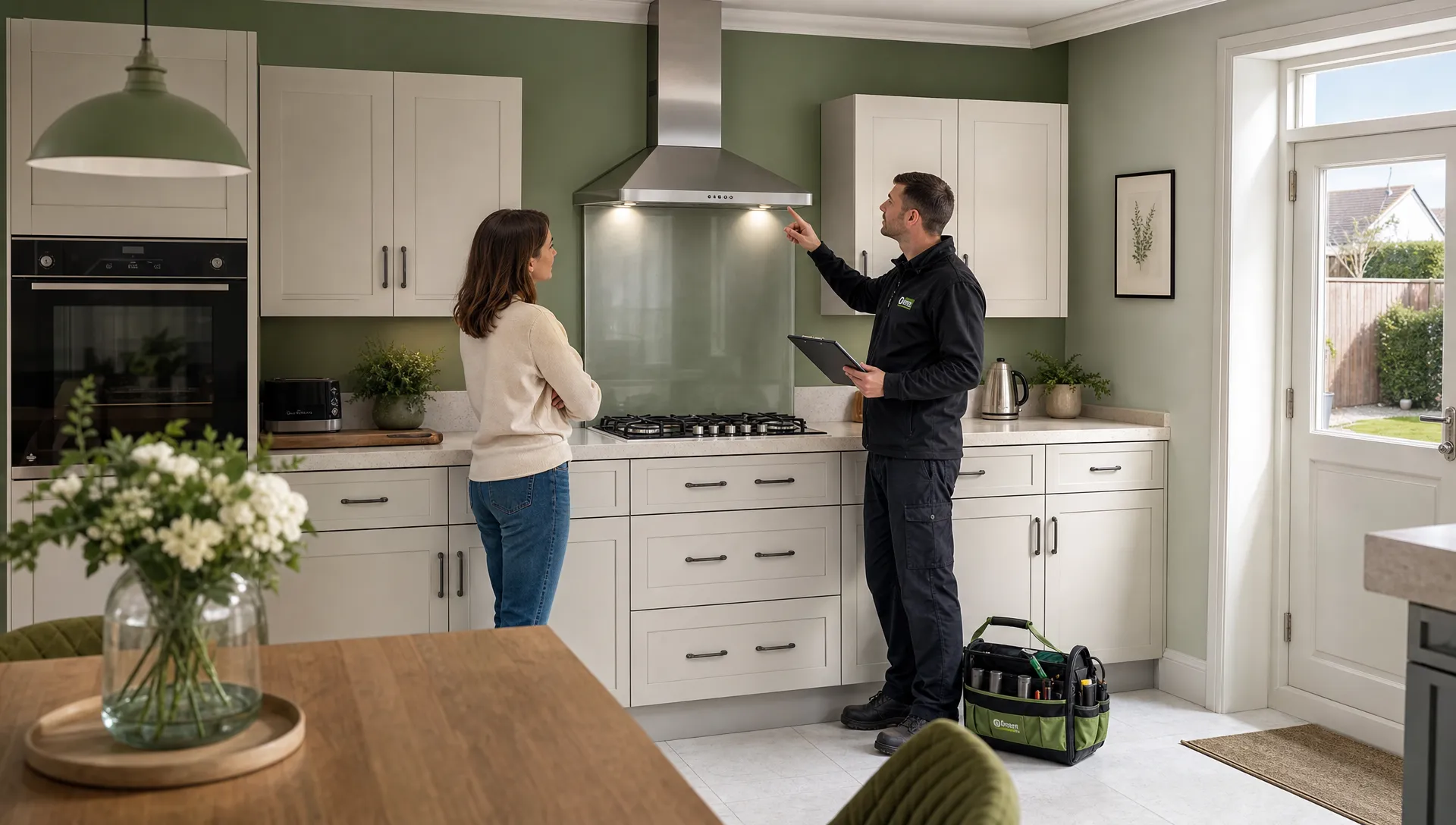
A Gas Safe heating engineer stands in the kitchen doorway of a modest UK home, talking with a homeowner and holding a clipboard while a tool bag rests by the wall. The room feels lived-in, with a kettle, shopping bags and everyday clutter visible, and no close-up technical details.

Common extras that can increase the price

Some extras are optional upgrades. Others are necessary because of safety, warranty or system condition. The important thing is that the quote explains them clearly before work starts.

Possible extra Typical cost impact Why it may be needed
Chemical clean or power flush £300-£800 Helps remove sludge and debris from older heating systems
Magnetic filter £100-£250 Helps protect the new boiler from circulating debris
Smart thermostat or upgraded controls £150-£350 Gives better control over heating schedules and temperatures
Gas pipe upgrade £300-£1,000+ May be needed if the existing supply pipe is too small
New flue route or extensions £200-£1,000+ Needed if the boiler position or flue exit changes
Radiator valve upgrades £40-£100 per radiator Often recommended when improving heating control room by room
Making good after removal Varies Covers boxing in, plastering, decorating or cupboard changes

Do not assume an extra is unfair just because it increases the price. For example, a magnetic filter and proper system cleaning may help protect the new boiler, while a gas pipe upgrade may be a safety and performance requirement. What matters is whether the engineer has explained why the item is needed and whether it is included in the total.

How long does boiler installation take?

A straightforward combi boiler replacement in the same position can often be completed in one day, although the engineer may need longer if access is poor or the system needs cleaning.

A system boiler or heat-only boiler replacement might take one to two days. A conversion from a conventional system to a combi boiler can take two to three days, sometimes longer if tanks need removing, pipework is difficult to access or extra making good is required.

If you are a landlord, it is worth planning the work around tenant access, hot water downtime and any safety documentation you need afterwards. A new installation does not remove the need for ongoing maintenance. For future budgeting, HaMuch also has a guide to annual boiler service costs.

Should you repair or replace your boiler?

If your boiler is fairly new and the fault is minor, repair may be the sensible option. But replacement becomes more appealing when the boiler is old, parts are difficult to source, repair bills are becoming frequent or the appliance is no longer efficient enough for your home.

As a rough decision point, think about the total picture rather than a single repair bill. If you have paid for several callouts in the past year, the boiler is out of warranty and another major component has failed, putting that money towards a planned replacement may be more sensible than waiting for an emergency breakdown in winter.

You should also consider how disruptive the work will be. A planned summer installation gives you more time to compare quotes and choose a suitable engineer. An emergency winter replacement often means less choice and higher urgency.

How to compare boiler installation quotes properly

When comparing quotes, do not only look at the final number. A cheaper quote may be good value, but only if it includes the same level of work, safety checks and aftercare.

Ask each heating engineer to confirm the boiler model, warranty length, whether the system will be cleaned, whether controls are included, how long the job will take and whether Building Regulations notification is included. You should also check customer reviews and make sure the engineer is qualified for gas work.

HaMuch helps with this stage because it is designed around transparent, comparable pricing. You can see local tradesperson listings, genuine customer reviews and pricing information before deciding who to contact. It is free for homeowners to request quotes, and there is no obligation to book.

Frequently Asked Questions

How much does a new boiler installation cost in the UK? A straightforward new boiler installation usually costs around £2,000-£4,500. More complex jobs, such as conversions, relocations or back boiler replacements, can cost £5,000-£7,000+ depending on the property.

Is a combi boiler cheaper to install? A combi boiler can be cheaper when replacing an existing combi in the same position. It can be more expensive if you are converting from a system with tanks and a hot water cylinder because pipework and controls may need changing.

Can I install a gas boiler myself? No. Gas boiler installation must be carried out by a Gas Safe registered engineer. DIY gas work is unsafe and can invalidate insurance, warranties and safety certification.

Does the boiler price include labour? A proper installation quote should include both the boiler and labour, but always check. Some headline prices may exclude extras such as system cleaning, upgraded controls, flue changes or pipework alterations.

How often should a new boiler be serviced? Most manufacturers recommend an annual service, and annual servicing is often required to keep the warranty valid. Landlords also have separate gas safety responsibilities for rental properties.

Why are London boiler installation quotes often higher? London quotes are often higher because heating engineers face higher business costs, travel time, parking issues and strong demand. That is why checking local pricing is more useful than relying only on a national average.

Compare boiler installation quotes with HaMuch

A new boiler is too important to price by guesswork. Before you book, compare local heating engineers, reviews and transparent pricing so you know whether a quote looks fair for your area.

You can request free boiler installation quotes through HaMuch and compare before you decide. There is no obligation to book, and you get a clearer view of local costs before committing to the work.

How Much Does It Cost to Install a New Electrical Socket?

How Much Does It Cost to Install a New Electrical Socket? - Main Image

Adding a new electrical socket is one of those small home improvements that can make a big difference. Whether you are setting up a home office, replacing messy extension leads, or making a rental pro

Adding a new electrical socket is one of those small home improvements that can make a big difference. Whether you are setting up a home office, replacing messy extension leads, or making a rental property more practical, the key question is simple: how much should it cost to fit a new socket?

As a broad UK guide, a straightforward new indoor double socket usually costs around £120 to £250 when it can be taken from a nearby existing circuit. More involved work, such as running cable across a room, chasing into solid walls, adding an outdoor socket, or installing a new circuit from the consumer unit, can cost more.

The final price depends heavily on access, your existing wiring, the finish you want, and local labour rates. That is why it is worth comparing real quotes before booking. HaMuch helps homeowners and landlords check transparent, comparable prices from local electricians, rather than relying on vague estimates.

Average cost to install a new electrical socket

For a typical home, the cost of adding a socket is usually made up of labour, materials, testing, and any small finishing work. Electricians often have a minimum charge, especially for small jobs, so even a quick socket installation may be priced as a half-day or first-hour visit.

Here is a practical UK cost guide for common socket jobs:

Job type Typical cost range What it usually covers
Replace an existing socket faceplate £50 to £90 Swapping a damaged or dated socket in the same position
Add a new double socket near an existing one £120 to £200 Cable taken from a nearby suitable point, basic materials and testing
Add a recessed double socket with chasing £150 to £250 Cutting into the wall for a neater finish, usually with some making good needed
Add a surface-mounted socket £100 to £180 Cable run in surface trunking, often cheaper and quicker than chasing
Install an outdoor socket £150 to £300 Weatherproof socket, suitable protection and external cable route
Add a socket on a new circuit £300 to £600+ New cable run from the consumer unit, more testing and certification

These are guide prices, not fixed quotes. A simple socket fitted on the same wall as an existing outlet may be near the lower end. A new socket in a different room, behind kitchen units, or on the far side of the property may cost more because the electrician has to spend extra time routing cable safely.

If you want to see how labour prices vary in areas such as London, Birmingham and Manchester, HaMuch’s electrician rates by UK location can help you compare local pricing before you request quotes.

Why does the price vary so much?

Two homes can need the same number of sockets but produce very different quotes. The electrician is not just fitting the visible socket plate. They also need to check whether the circuit can safely take the extra load, route cable correctly, test the work, and leave it compliant with current electrical safety standards.

The biggest cost factors are usually the distance from the nearest suitable power source, the type of wall, and whether the cable can be hidden easily. Stud walls and accessible floor voids can make the job quicker. Solid brick walls, tiled splashbacks, laminate flooring, fitted wardrobes and kitchen units can all add time.

The finish matters too. A surface-mounted socket, where the cable is run in neat plastic trunking, is usually cheaper because there is less cutting and repair work. A flush socket, where the box is recessed into the wall, looks tidier but takes longer. If plastering or decorating is needed afterwards, check whether that is included in the electrician’s quote or whether you need a separate tradesperson.

Your location also affects the quote. Electrician costs can be higher in busy city areas because of travel time, parking, congestion charges, demand and general operating costs. That is one reason homeowners in London may see different pricing from those in Manchester or Birmingham, even for a similar job.

Common socket installation scenarios

A useful way to understand the price is to think about the job rather than just the number of sockets. One new socket may be simple. Another may involve lifting floorboards, drilling through walls, or upgrading parts of the circuit first.

For example, adding a double socket behind a desk in a bedroom is often straightforward if there is a nearby socket on the same circuit. The electrician may be able to extend from the existing point, fit the new socket, test it and finish the job in a short visit.

A kitchen socket can be more complicated. Kitchens often have appliances, tiles, cabinets and higher electrical demand. The electrician may need to check whether the existing circuit is suitable and may have to route cable around units or through awkward spaces.

Outdoor sockets need more care. They must be weatherproof, correctly rated and protected. The cable route needs to be safe, and the electrician will need to consider water, impact, garden equipment and whether the circuit has suitable RCD protection.

Landlords should also think about the wider condition of the property’s electrics. If you are adding sockets in a rental property and are unsure about the installation, it may be worth checking the likely cost of an EICR landlord certificate as part of your planning. An EICR is a separate inspection, but it can highlight issues that matter before extra electrical work is carried out.

A UK electrician with a tool bag talking to a homeowner in a modest hallway beside a doorway, with natural daylight, everyday household clutter, and no close-up view of sockets or wiring.

What should be included in an electrician’s quote?

A clear quote should explain what the electrician is actually doing. For a new socket, you want to know whether the price includes the socket plate, back box, cable, trunking if needed, testing, certification where applicable, and basic making good.

It is also worth asking whether the quote includes VAT, travel, parking, and any minimum call-out charge. If the electrician needs to lift flooring, move furniture, cut into walls or return after plastering, this should be made clear before work begins.

For a fair comparison, give each electrician the same information. Useful details include the room, the approximate distance from the nearest existing socket, whether you want a surface-mounted or flush finish, the wall type if you know it, and whether access under floors or above ceilings is available.

Photos help too. A wide photo of the room, the nearest existing socket, and the area where you want the new socket can make it easier for electricians to give an accurate estimate. Avoid relying on the cheapest quote alone if it is vague. A slightly higher quote that clearly includes testing and a tidy finish may be better value than a low price with lots of exclusions.

Do you need a qualified electrician?

Yes. Electrical work is not an area to guess at. A new socket may look like a small job, but unsafe wiring can cause electric shock, overheating or fire risk.

In England and Wales, domestic electrical work must comply with Part P of the Building Regulations. Some jobs, such as installing a new circuit or work in certain special locations, may be notifiable. Rules can vary across the UK, so a qualified electrician should be able to explain what applies to your home.

For many socket additions to an existing circuit, the work is not usually notifiable, but it still needs to be designed, installed and tested correctly. You should expect the electrician to check the circuit and provide appropriate paperwork, such as a Minor Electrical Installation Works Certificate for many alterations.

Electrical Safety First also advises using a registered electrician for domestic electrical work. If you are unsure, ask the electrician about their qualifications, insurance and whether they are registered with a recognised competent person scheme.

Can you reduce the cost of adding sockets?

You should not cut corners on electrical safety, but there are sensible ways to keep the job efficient.

Group small electrical jobs together if you can. If you need two sockets added, a light fitting changed and a damaged socket replaced, doing them in one visit may be more cost-effective than booking separate call-outs.

Be flexible on finish where appearance is less important. In a garage, utility room or cupboard, surface-mounted trunking may be perfectly acceptable and cheaper than chasing cables into walls. In a living room or bedroom, you may prefer to pay extra for a flush finish.

Clear the work area before the electrician arrives. Moving furniture, emptying cupboards and making sockets accessible can save time. If parking is difficult, explain this before the visit so the electrician can plan properly.

Most importantly, compare like-for-like quotes. HaMuch is built to make this easier by showing real, transparent pricing and local tradesperson information upfront, so you can compare before deciding who to contact.

New socket cost for landlords and property managers

For landlords, the cheapest short-term option is not always the best long-term decision. Rental properties often need practical socket layouts because tenants may otherwise rely on extension leads and adaptors.

If you are preparing a property for new tenants, it can make sense to review socket positions at the same time as other electrical checks or maintenance. For example, adding sockets in bedrooms, living rooms or home-working areas may improve usability and reduce complaints later.

You should also keep records of electrical work. If a socket is added, ask for the relevant certificate or written confirmation of the work completed. This can be useful for your property file and may support future safety checks.

If your rental property is due for an inspection, HaMuch’s guide to how much an EICR electrical safety certificate costs explains what landlords and homeowners can expect from that separate process.

Frequently Asked Questions

How much does it cost to fit a new socket in the UK? A straightforward new indoor double socket often costs around £120 to £250. Replacing an existing socket faceplate may cost less, while outdoor sockets, recessed sockets or new circuits can cost more.

Is a double socket more expensive than a single socket? Usually only slightly. The labour is often the main cost, so many homeowners choose a double socket because it gives more flexibility for a small difference in materials.

Can an electrician add a socket anywhere? Not always. The electrician needs to check whether there is a safe cable route and whether the existing circuit can take the extra point. Some locations, such as bathrooms and outdoor areas, need extra care.

Will the electrician need to damage the wall? If you want a flush socket, some cutting or chasing may be needed. A surface-mounted socket can reduce mess, but the cable and trunking will be visible.

How long does it take to install a new socket? A simple socket addition may take one to two hours. More complex jobs, such as long cable runs, outdoor sockets or work involving solid walls, can take half a day or longer.

Do I need an EICR before adding a socket? Not usually for a simple socket addition, but an electrician may recommend further checks if the installation looks old, unsafe or overloaded. Landlords may already need an EICR for rental compliance.

Compare electrician quotes with HaMuch

Before you book, it is worth checking what local electricians are charging in your area. The cost to fit a new socket can vary depending on your home, your location and how much work is involved.

With HaMuch, you can compare local, vetted electricians with genuine customer reviews and transparent pricing information. It is free to request quotes, and there is no obligation to book. Compare first, ask the right questions, then choose the electrician that feels right for the job.

What’s the Average Plumber Hourly Rate in the UK? (2026)

What's the Average Plumber Hourly Rate in the UK? (2026) - Main Image

For most standard plumbing work in 2026, a realistic plumber hourly rate in the UK is usually around £40 to £80 per hour, before parts and any VAT. In highercost areas, urgent jobs, or specialist work

For most standard plumbing work in 2026, a realistic plumber hourly rate in the UK is usually around £40 to £80 per hour, before parts and any VAT. In higher-cost areas, urgent jobs, or specialist work, it can be more. A sensible UK-wide planning average is roughly £55 to £65 per hour for normal weekday work.

That said, the hourly rate is only one part of the bill. Many plumbers charge a minimum first-hour fee, a call-out charge, or a fixed price for common jobs such as replacing a tap, unblocking a sink, repairing a toilet or tracing a leak. That is why it is worth checking local pricing before you book, rather than relying on a national average.

HaMuch is built around that idea: showing real, comparable pricing by trade and location, so homeowners and landlords can see what plumbers near them typically charge before requesting quotes. You can check the latest plumber hourly and daily rates on HaMuch and compare local tradespeople with genuine customer reviews.

Average plumber hourly rate in the UK in 2026

A plumber’s hourly rate depends on where you live, the type of work, whether it is urgent, and whether the plumber is self-employed, part of a larger firm, or VAT registered.

As a broad 2026 guide, these are typical labour-only figures for domestic plumbing work:

Type of plumbing work Typical 2026 labour rate
Standard weekday plumbing £40 to £80 per hour
First-hour or minimum visit charge £60 to £120
Full day rate £300 to £500 per day
Evening, weekend or emergency work £90 to £150+ per hour
Larger quoted jobs Often priced as a fixed quote rather than hourly

These figures are best used as a starting point. A small job may not cost “one hour x hourly rate” because the plumber still has to allow for travel, diagnosis, parking, admin and the risk that a simple job takes longer than expected.

For example, if you have a dripping tap, the repair might be quick if it only needs a washer or cartridge. But if the tap is seized, access is awkward, or the whole tap needs replacing, the cost can change. For a closer look at that specific job, see HaMuch’s guide to how much it costs to fix a leaking tap.

How plumber hourly rates vary by location

Location is one of the biggest reasons plumbing prices vary. Labour costs, parking, congestion, travel time and local demand all affect the rate you are quoted.

In larger cities, especially the capital, plumber rates are often higher than the UK average. In busy rental areas, landlords may also pay more for short-notice appointments because demand is steady and tenants need issues fixed quickly.

Area What to expect
London plumber rates Usually above the UK average, especially for urgent or central appointments
Birmingham plumber rates Often closer to the national average, though prices vary by availability and job type
Manchester plumber rates Similar to many large UK cities, with higher rates for emergency and out-of-hours work

The simplest way to avoid guessing is to compare plumbers in your area before you call. A national average is useful, but a local rate is more useful when you are deciding whether a quote is fair.

Why the first hour often costs more

Many homeowners are surprised when a short plumbing visit costs more than a simple hourly calculation. For example, a plumber charging £60 per hour may still quote £90 or £100 for a small job.

That does not always mean you are being overcharged. The first hour commonly includes:

  • Travel time to and from your property
  • Initial diagnosis and testing
  • Setting up tools and protecting the work area
  • A minimum charge to make small jobs viable
  • Basic admin, insurance and business overheads

This is why it helps to ask whether the quote includes a minimum charge, call-out fee, parts, VAT and waste disposal if anything is being removed.

For landlords and property managers, this matters even more. A plumber may attend a rental property, diagnose a problem, need permission for extra work, then return with parts. Clear pricing helps avoid disputes between landlord, tenant and contractor.

Hourly rate vs fixed quote: which is better?

An hourly rate is useful for comparing plumbers, but it is not always the best way to price the job. For simple repairs, the plumber may offer a fixed price. For investigative work, an hourly rate may be fairer because nobody knows how long it will take until the issue is found.

A fixed quote is often better for clearly defined work, such as replacing a toilet, changing taps, installing a washing machine connection or fitting a new radiator valve. You know the agreed price before work starts, and the plumber has allowed for the expected labour and materials.

An hourly rate is often more suitable for leak tracing, intermittent faults, low water pressure, hidden pipework issues or multiple small jobs around the home. In those cases, the plumber cannot always predict the time needed until they have inspected the property.

The key is not whether the plumber charges hourly or fixed price. The key is whether the quote is clear.

A plumber in work clothes stands in the doorway of a typical British kitchen with a tool bag on the floor, talking to a homeowner holding paperwork. The room has ordinary household clutter and natural daylight, with no close-up view of pipes or fittings.

What affects the final plumber bill?

The hourly rate gives you a starting point, but the final bill depends on several practical factors.

1. The urgency of the job

Emergency plumbing costs more because the plumber may be rearranging other work, travelling outside normal hours, or attending during evenings, weekends or bank holidays. A burst pipe at 10pm will almost always cost more than replacing a tap on a Tuesday morning.

If the issue is serious but safe to leave temporarily, ask whether the plumber can isolate the problem first, then return during normal hours to complete the repair. That can sometimes keep the overall bill more manageable.

2. The complexity of the repair

Two jobs that sound similar can take very different amounts of time. A toilet that keeps running may need a simple valve adjustment, or it may need replacement parts. A leak under a sink may be visible and easy to reach, or it may involve units, flooring or boxed-in pipework.

A good plumber should explain what they have found, what needs doing, and whether there is a risk the job may grow once they start.

3. Parts and materials

Hourly rates usually cover labour only. Parts are normally charged separately, and the cost can vary widely depending on the quality, brand and availability.

For small repairs, parts may only be a few pounds. For larger jobs, such as replacing several taps, fitting new radiators or changing pipework, materials can become a major part of the quote.

4. Access and working conditions

A job is usually quicker when everything is easy to reach. If the plumber has to work in a cramped cupboard, remove panels, drain down part of the system, lift flooring or deal with old fittings that have seized, the labour time can increase.

This is not always obvious until the plumber sees the property, which is why photos and a clear description can help when requesting quotes.

5. Qualifications needed

Not every plumber can legally work on gas appliances. If the job involves a gas boiler, gas pipework or gas safety checks, you need a properly qualified Gas Safe registered engineer. You can check registration directly through the Gas Safe Register.

If your job is specifically a boiler service, it may be priced differently from general plumbing work. HaMuch has a separate guide explaining annual boiler service costs and what is normally included.

How to compare plumber quotes fairly

When comparing plumbers, try not to look at the hourly rate in isolation. A plumber with a slightly higher rate may be better value if they diagnose the issue quickly, bring the right parts, explain the work clearly and complete the job without repeat visits.

Before booking, ask for the basics in writing. You do not need a complicated contract for a small repair, but you do need clarity.

Useful questions include:

  • Is there a call-out charge or minimum first-hour fee?
  • Is the rate different after the first hour?
  • Are parts included or charged separately?
  • Is VAT included in the price?
  • What happens if extra work is needed?
  • Is the work guaranteed?
  • When can the plumber attend?

For larger jobs, get more than one quote where possible. This gives you a better sense of the going rate and helps you spot quotes that are unusually high or suspiciously low.

HaMuch makes this easier because you can compare local plumbers, see genuine reviews and request quotes without being pushed to book before you are ready.

What is a fair plumber call-out charge?

A typical call-out or minimum attendance charge in 2026 is often around £60 to £120, depending on location, time of day and the plumber’s pricing model.

Some plumbers do not separate the call-out charge from the first hour. Instead, they may say the first hour is £90, then additional hours are £60. Others may charge a flat visit fee plus labour. Neither approach is automatically wrong, provided it is explained before they attend.

Be cautious if the pricing is vague. Phrases such as “from £30” can look attractive, but they may not reflect the real amount you will pay once minimum charges, parts and VAT are added.

This is where transparent local pricing helps. With HaMuch, you can compare what plumbers in your area typically charge, rather than working from a vague national estimate.

How landlords should budget for plumbing work

Landlords and property managers often need plumbing work done quickly, especially when tenants have no hot water, a leaking pipe, a blocked toilet or an unusable shower.

For rental properties, it is worth keeping a list of common plumbing costs and agreed rates with trusted local tradespeople. You may not always have time to gather several quotes during an emergency, but you can still compare local rates in advance and understand what is reasonable for your area.

It is also helpful to give the plumber clear access details, tenant contact information, photos of the issue and any known stopcock location. The less time wasted on diagnosis and access, the more predictable the final bill is likely to be.

Red flags to watch out for

Most plumbers want to do a fair job for a fair price, but it is still sensible to protect yourself before agreeing to work.

Be careful if a plumber will not explain their hourly rate, refuses to put anything in writing, asks for full payment upfront for a small job, or cannot confirm whether VAT is included. For gas work, never accept “I can do boilers too” as proof of qualification. Always check the engineer is Gas Safe registered for the type of work needed.

A very cheap quote can be just as concerning as a very expensive one. It may exclude important items, use low-quality parts or lead to extra charges later. Comparing several plumbers gives you a more balanced view.

Frequently Asked Questions

What is the average plumber hourly rate in the UK in 2026? A typical plumber hourly rate in the UK is around £40 to £80 per hour for standard weekday domestic work, with a planning average of roughly £55 to £65 per hour. Rates are often higher for urgent, specialist or out-of-hours jobs.

Do plumbers charge a call-out fee as well as an hourly rate? Many plumbers charge a call-out fee or a minimum first-hour rate. This often covers travel, diagnosis and the cost of attending a small job. Always ask whether the first hour, parts and VAT are included.

Why are plumbers more expensive in some cities? Local labour costs, parking, congestion, travel time and demand all affect plumber rates. Large cities and busy rental areas often have higher prices, especially for short-notice appointments.

Is it cheaper to pay a plumber by the hour or get a fixed quote? It depends on the job. A fixed quote is usually best for clear, predictable work. An hourly rate can be fairer for fault finding, leak tracing or jobs where the plumber cannot know the full scope until they inspect it.

Can any plumber work on a boiler? No. If the work involves gas, you need a Gas Safe registered engineer. General plumbing skills are not enough for gas appliances, gas pipework or gas safety checks.

Compare plumber hourly rates near you

The best way to know whether a quote is fair is to compare it with real local pricing. National averages are helpful, but your area, job type and urgency matter most.

With HaMuch, you can check transparent plumber rates, compare local vetted tradespeople, read genuine customer reviews and request quotes for free. There is no obligation to book, so you can compare first, then decide with confidence.