Find affordable tradespeople

HaMuch is Excellent

Matt Warren

https://www.seobridge.co.uk

Content partner for HaMuch, drawing on HaMuch's live database of UK tradesperson rates and pricing data.

10 Questions to Ask Before Hiring a Plumber

10 Questions to Ask Before Hiring a Plumber

Hiring a plumber often happens when something is already leaking, blocked or not working. That urgency can make it tempting to choose the first person who answers the phone, but a few clear questions

Hiring a plumber often happens when something is already leaking, blocked or not working. That urgency can make it tempting to choose the first person who answers the phone, but a few clear questions can save a lot of stress later.

The best questions to ask before hiring a plumber are not complicated. You are simply trying to find out whether they are qualified for the job, whether the price is clear, whether they are insured, and whether you will have proper backup if something goes wrong.

Before you start calling around, it is worth checking local plumber rates so you have a realistic price benchmark. A quote is much easier to judge when you can compare it with real, transparent pricing data by trade and location, rather than relying on guesswork or waiting until after you have sent off a job request.

Prices can also vary by area. A plumber in London may have different labour, travel and parking costs from one in Birmingham or Manchester, so local comparison matters.

Quick checklist of questions to ask a plumber

Question What it helps you check
Are you qualified for this exact job? Whether they have the right skills, especially for gas, heating or unvented cylinders
Are you insured? Whether your home and their work are protected if something goes wrong
Can you provide a written quote? Whether the price is clear before work starts
Is it a fixed price or an estimate? Whether the final bill could change
Have you done similar jobs locally? Whether they understand the type of property and plumbing issue
Who will actually do the work? Whether the person you speak to is the person attending
How will you diagnose the problem? Whether call-out charges and investigation time are clear
Which parts will you use? Whether materials are suitable, available and included in the price
Do you guarantee the work? Whether you have comeback if the same fault returns
What paperwork will I receive? Whether you will get invoices, certificates or landlord records where needed

1. Are you qualified for this exact type of plumbing work?

Not every plumber does every type of plumbing job. Some focus on leaks, taps, toilets and pipework. Others specialise in heating systems, boilers, bathrooms, drainage or commercial properties.

Ask the plumber whether they have experience with your specific issue. Replacing a kitchen tap is very different from tracing a hidden leak, installing an unvented hot water cylinder or working around a boiler.

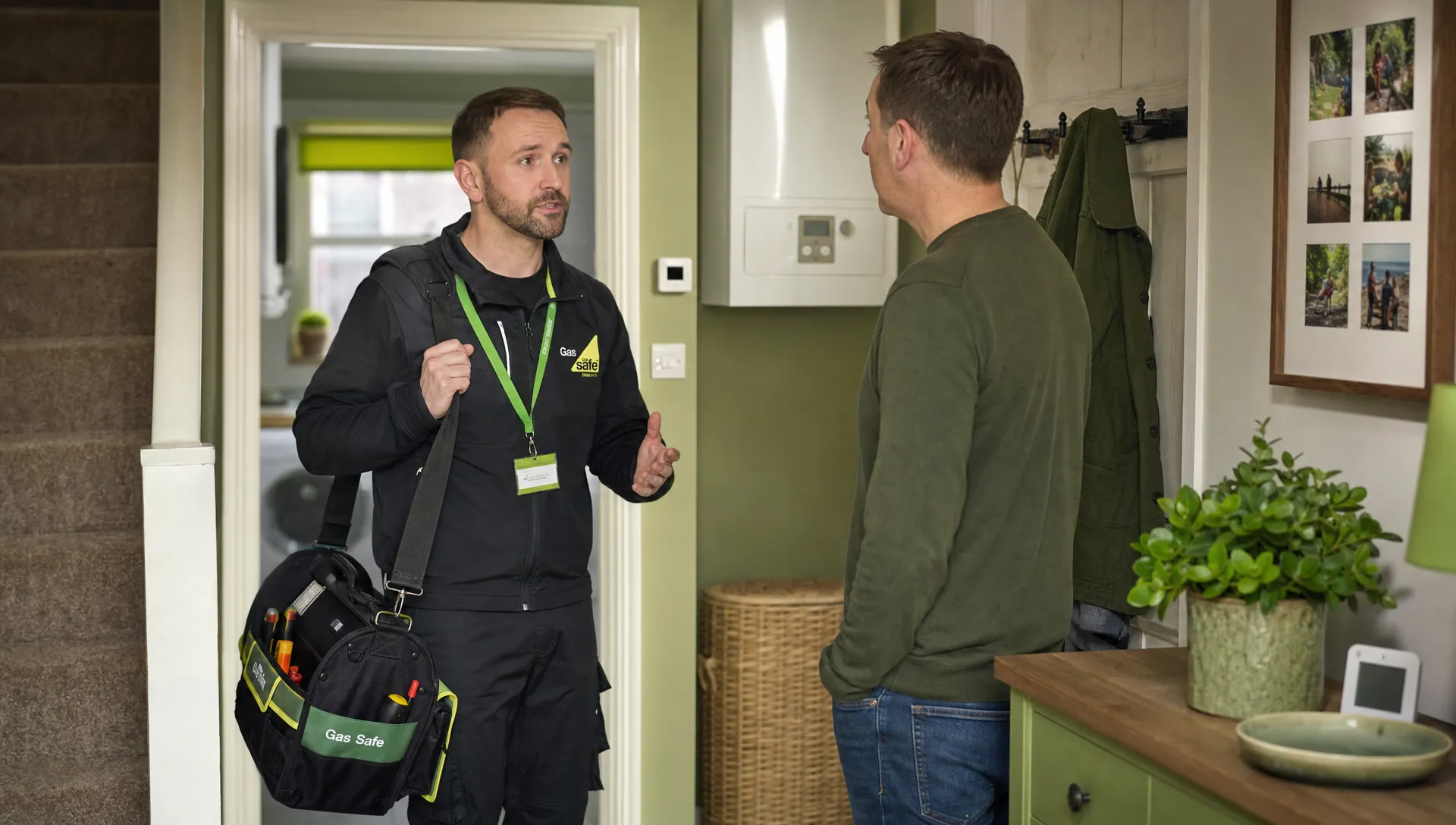
If the work involves gas, such as a gas boiler, gas pipe, gas hob or gas fire, the person must be Gas Safe registered. You can check this through the official Gas Safe Register. Ask to see their Gas Safe ID card and make sure the categories on the card match the work being carried out.

For water supply and mains water work, you may also want to look for an approved plumber through schemes such as WaterSafe, especially if the job involves drinking water pipework or compliance with water regulations.

2. Are you insured, and can I see proof?

A reliable plumber should be able to tell you what insurance they carry. Public liability insurance is the main one homeowners usually ask about, as it can help cover accidental damage caused during the job.

If the plumber is bringing employees or subcontractors, it is also sensible to ask how those people are covered. You do not need to interrogate them, but a genuine professional should not be offended by a polite request for proof of insurance.

This matters for small jobs as well as big ones. A tiny leak behind a basin can damage flooring, kitchen units or a ceiling below. Insurance does not replace good workmanship, but it is an important safety net.

3. Can you give me a written, itemised quote?

A verbal price is easy to misunderstand. Before you agree to the work, ask for a written quote that sets out what is included.

A good plumbing quote should usually make clear whether the price includes labour, materials, VAT, call-out charges, waste removal, parking costs and any follow-up visit. For larger jobs, it should also break down the main stages of work, rather than giving one vague total.

This is where HaMuch can help you sense-check the figure. Many tradesperson comparison sites do not show useful pricing upfront, while HaMuch focuses on real, comparable local pricing data so you can compare quotes more confidently before you commit.

4. Is this a fixed price or an estimate?

A quote and an estimate are not the same thing. In plain English, a fixed quote is the agreed price for a defined piece of work. An estimate is the plumber's best judgement based on what they can see at the time.

Some plumbing jobs are hard to price exactly before investigation. For example, a leak under a floor may reveal damaged pipework, rotten boards or poor previous repairs once the area is opened up. That does not mean an estimate is bad, but the plumber should explain what might change the final cost.

Ask what happens if the job turns out to be more complicated than expected. A good plumber will pause, explain the issue, give you an updated price and ask for approval before carrying on with extra work.

5. Have you completed similar jobs recently?

Experience with similar jobs is often more useful than a general promise that they can handle it. Ask whether they have dealt with the same type of problem, property or system recently.

For example, older homes can have pipework that has been altered several times over the years. Flats may have awkward access, shared drainage or building management rules. Rental properties may need tidy communication with tenants and paperwork for the landlord.

Customer reviews are useful here, especially when they mention the same type of work. Look for comments about punctuality, communication, tidiness and whether the price matched the quote.

A homeowner and plumber reviewing an itemised plumbing quote at a kitchen table, with a visible sink pipe, notebook, tools and a neat sample of pipe fittings laid out for discussion.

6. Who will actually do the work, and when?

Sometimes the person who gives the quote is not the person who turns up. That is not automatically a problem, but you should know who will be in your home and who is responsible for the standard of work.

Ask whether the plumber will attend personally or send a colleague. If more than one person is involved, ask who your main contact will be and whether all workers are qualified for the tasks they will carry out.

It is also worth confirming the expected start date, arrival window and how long the job is likely to take. For landlords and property managers, ask whether they can contact tenants directly, provide notice where needed and send updates once the job is complete.

7. How will you diagnose the problem, and what does the call-out fee include?

For emergency leaks, boiler issues, blocked toilets or low water pressure, the first visit may involve diagnosis rather than immediate repair. This is normal, but the charging structure should be clear.

Ask whether there is a call-out fee, what it includes and when the hourly rate begins. If the plumber needs specialist equipment, such as leak detection tools or drain cameras, ask whether that is included or charged separately.

A trustworthy plumber should be able to explain their process in simple terms. For example, they might isolate the water supply, test pressure, inspect visible pipework and then advise whether further investigation is needed.

8. What parts and materials will you use?

Parts vary in quality, availability and warranty. A cheaper part is not always poor quality, and a premium part is not always necessary, but the choice should be explained.

Ask whether the quote includes all parts and whether the plumber will use like-for-like replacements or recommend an upgrade. For taps, valves, pumps, toilets, radiators and shower components, it helps to know whether the parts are standard and easy to source if they ever need replacing.

If you are buying materials yourself, check that the plumber is happy to fit them. Some tradespeople will not guarantee customer-supplied parts, because they cannot control the quality or compatibility.

9. What guarantee do you provide on labour and parts?

A professional plumber should be clear about what is guaranteed and for how long. There may be one guarantee for labour and a separate manufacturer's warranty for parts.

Ask what happens if the same fault returns after the visit. Will they come back free of charge if it is related to their workmanship? Are there situations where a return visit would be chargeable, such as a new blockage caused by misuse or a separate fault elsewhere in the system?

Get the guarantee in writing where possible, especially for larger jobs. It does not need to be complicated, but it should be clear enough that both sides understand it.

10. What paperwork or certification will I receive?

For simple jobs, an invoice may be all you need. For gas, heating, landlord or regulated work, paperwork becomes much more important.

If gas work is involved, ask what Gas Safe documentation will be provided. If you are a landlord, make sure the plumber or heating engineer understands what records you need for your rental property. For unvented hot water cylinders or certain heating upgrades, ask whether any building control notification, certificate or compliance paperwork applies.

Good paperwork helps if you later sell the property, make an insurance claim, manage a tenancy or need another tradesperson to understand what has been done.

Red flags to watch for before you book

Most plumbers are honest, hardworking tradespeople, but it still pays to be alert. Be cautious if something feels rushed, vague or unusually cheap without explanation.

Common warning signs include:

  • Refusing to provide a written quote for anything beyond a very small job
  • Asking for a large cash payment upfront before any work or materials are supplied
  • Being unclear about qualifications for gas or specialist work
  • Avoiding questions about insurance, guarantees or paperwork
  • Pressuring you to decide immediately when the job is not an emergency
  • Giving a price that is far below other quotes without explaining why

A low quote is not always a bad quote. The key is whether you understand what is included, what is excluded and what could change.

How to compare plumbing quotes fairly

Once you have answers from two or three plumbers, compare like with like. A cheaper quote may exclude parts, VAT, waste removal or follow-up visits. A higher quote may include better materials, faster availability or a longer guarantee.

Do not judge on price alone. Look at the full picture: experience, reviews, communication, insurance, clarity and whether the plumber has explained the job in a way you understand.

For homeowners, this helps avoid paying more than necessary. For landlords and property managers, it also helps reduce repeat call-outs, tenant disruption and unclear invoices.

If your plumbing job overlaps with another trade, it is worth checking the right specialist before you book:

  • Compare heating engineer rates if the job involves a boiler, radiator system or gas appliance.
  • Compare electrician rates if the plumbing work includes an electric shower, pump wiring or controls.
  • Compare builder rates if you are planning a bathroom renovation, drainage alteration or structural work.

Frequently asked questions

Should I choose the cheapest plumber? Not automatically. The cheapest quote may be good value, but only if it includes the same labour, parts, insurance, VAT and guarantee as the others. Compare the detail, not just the total.

How many plumbing quotes should I get? For non-urgent work, getting two or three quotes is sensible. For emergencies, you may need to move faster, but you should still ask about call-out fees, hourly rates and insurance before booking.

Do plumbers need to be Gas Safe registered? Only if they are doing gas work. A plumber can carry out water plumbing without being Gas Safe registered, but any work on gas appliances or gas pipework must be done by someone on the Gas Safe Register.

Should I pay a deposit before plumbing work starts? A small deposit can be reasonable for larger jobs or special-order materials. Be cautious about paying a large amount upfront, especially in cash, before any work has started.

Can landlords use the same questions when hiring a plumber? Yes. Landlords should also ask about tenant access, emergency response times, invoices, certificates and any safety paperwork needed for the property.

Ready to compare plumbers with confidence?

The right plumber should be able to answer these questions clearly and calmly. If the price, qualifications or scope of work feels vague, take a step back and compare your options.

With HaMuch, you can check real local pricing data, compare vetted tradespeople with genuine customer reviews and request quotes for free, with no obligation to book. Start by comparing plumber rates in your area, then choose the professional who feels right for the job.

What’s the Average Electrician Hourly Rate in the UK? (2026)

What's the Average Electrician Hourly Rate in the UK? (2026)

The short answer: for standard domestic electrical work in 2026, the average electrician hourly rate in the UK is usually around £40 to £70 per hour, before materials and VAT. In London and parts of t

The short answer: for standard domestic electrical work in 2026, the average electrician hourly rate in the UK is usually around £40 to £70 per hour, before materials and VAT. In London and parts of the South East, it can be higher, often around £55 to £90 per hour. For urgent call-outs, evening work, or weekend visits, expect a higher rate.

That said, hourly rate is only one part of the bill. Many electricians have a minimum charge, often the first hour, and some jobs are priced as a fixed quote rather than by the hour. If you are a homeowner comparing quotes, or a landlord budgeting for rental maintenance, the most useful question is not just “what is the hourly rate?” It is “what will this job cost in total, and what is included?”

Average electrician hourly rate in the UK in 2026

Here is a practical guide to what you may pay for a qualified domestic electrician in 2026. These figures are typical labour ranges, not guaranteed prices, because the final quote depends on your location, the job, access, materials, and urgency.

Type of electrical work Typical 2026 labour cost
Standard hourly rate £40 to £70 per hour
London hourly rate £55 to £90 per hour
First hour or minimum call-out £60 to £120
Half-day rate £180 to £300
Day rate £300 to £500
Emergency or out-of-hours rate £80 to £150 per hour

A small job, such as replacing a light fitting or changing a socket, may take less than an hour in practice. However, you may still pay a minimum charge because the electrician has travel time, admin, parking, insurance, tools, testing equipment, and certification responsibilities to cover.

For larger jobs, such as a consumer unit replacement, partial rewire, or new circuit, most electricians will prefer to give a fixed quote after seeing the work. This is usually better for you too, as it gives a clearer total price before the job starts.

Why electrician rates vary so much

Two electricians can charge different hourly rates and both may be perfectly reasonable. Electrical work is safety-critical, so the cheapest hourly rate is not always the best value. A good quote should reflect the electrician’s experience, qualifications, workload, insurance, local costs, and the complexity of the job.

Location

Location is one of the biggest factors. Electricians in London usually charge more because of higher business costs, congestion, parking, and travel time. Birmingham and Manchester are often more moderate, although prices can still rise for city-centre work, urgent visits, and specialist jobs.

Rural jobs can also cost more than expected if the electrician has to travel a long distance. Even if the hourly rate looks lower, a call-out fee or minimum charge may be added.

Type of job

Straightforward replacement jobs are usually cheaper than diagnostic or compliance work. For example, swapping a like-for-like light fitting is normally simpler than finding an intermittent fault, adding a new circuit, or investigating why an RCD keeps tripping.

Fault finding is often charged hourly because the electrician cannot always know how long it will take until testing begins. Installation work is more likely to be quoted as a fixed price, especially when materials and certification are involved.

Qualifications, registration, and certification

Electrical work must be carried out safely and, for some jobs, must comply with building regulations. In England and Wales, certain domestic electrical work falls under Part P of the Building Regulations. You can find official guidance on electrical safety and building regulations through GOV.UK.

Many homeowners look for electricians who are registered with a competent person scheme or who can provide the correct certification for notifiable work. Organisations such as Electrical Safety First also advise using a properly qualified electrician for electrical work in the home.

Urgency

Emergency call-outs cost more because the electrician has to interrupt planned work or attend outside normal hours. If you have a genuine safety issue, such as burning smells, exposed live wiring, repeated tripping, or signs of overheating, do not delay. For non-urgent work, booking during normal working hours will usually be cheaper.

Materials and VAT

Hourly rates normally cover labour only. Materials such as sockets, switches, cable, trunking, circuit breakers, consumer units, outdoor fittings, and smoke alarms will be charged on top.

VAT can also affect the final bill. VAT-registered electricians must charge VAT, usually at 20%, while smaller sole traders may not be VAT registered. Always ask whether a quote includes VAT, otherwise two prices that look similar may not be directly comparable.

Electrician hourly rates by UK area

The table below gives a broad guide to how electrician rates can differ by location in 2026. These are typical domestic labour ranges and should be treated as a starting point for comparison.

Area Typical hourly rate What to expect
London £55 to £90 Higher travel, parking, and business costs
South East £45 to £75 Often above the UK average, especially near London
Birmingham and West Midlands £40 to £65 Competitive rates, but urgent work can cost more
Manchester and North West £40 to £65 Similar to many large regional cities
Scotland, Wales, North East, and parts of the Midlands £35 to £60 Lower rates are possible, but check minimum charges

Regional averages are helpful, but your postcode matters. A landlord with several properties in Manchester may get a different rate from a homeowner booking a one-off job in a rural village. That is why comparing local quotes is usually more reliable than relying on a single national average.

Hourly rate, call-out fee, or fixed quote: which one applies?

Electricians do not price every job in the same way. Understanding the pricing method makes it much easier to compare quotes fairly.

Pricing method Best suited to Why it is used
Hourly rate Fault finding, small repairs, extra tasks while on site Time needed is uncertain
Minimum call-out Very small jobs, first visits, urgent checks Covers travel and the first block of time
Half-day or day rate Several small jobs in one property Often better value than separate visits
Fixed quote Installations, upgrades, larger planned work Gives a clearer total cost before work begins

If you have a list of small jobs, it can be worth grouping them together. For example, replacing two light fittings, changing a cracked socket, and checking an extractor fan may be cheaper in one visit than booking separate call-outs.

A qualified electrician testing a consumer unit inside a UK home, with tools neatly arranged nearby and the work area kept safe and tidy.

Example costs for common electrical jobs

Hourly rates are useful, but most people want to know what they are likely to pay for a specific job. The examples below show typical labour-led price ranges for common domestic electrical tasks in 2026. Materials, VAT, access issues, and certification can change the final cost.

Job Typical price range Common pricing approach
Replace a light fitting £60 to £120 Minimum charge or first hour
Replace a socket or switch £60 to £120 Minimum charge or first hour
Add an extra socket £120 to £250 Fixed quote or hourly plus materials
Electrical fault finding £80 to £180 for first visit Hourly or minimum call-out
Install an outdoor socket £120 to £250 Fixed quote
Replace or upgrade a consumer unit £500 to £1,200+ Fixed quote
EICR for a rental property Often fixed by property size Fixed inspection price

For landlords, EICRs are a common recurring cost. In England, private landlords must usually have electrical installations inspected and tested at least every five years under the Electrical Safety Standards in the Private Rented Sector Regulations. The government provides guidance for landlords and tenants on these rules.

How to compare electrician quotes properly

A low hourly rate can look attractive, but it does not always mean the lowest final bill. One electrician may charge £45 per hour but have a high minimum fee, while another may charge £60 per hour and finish the work quickly with all testing included.

When comparing quotes, check the same details every time:

  • Whether the price includes VAT
  • Whether materials are included or charged separately
  • Whether there is a call-out fee or minimum charge
  • Whether testing and certification are included
  • Whether parking, congestion charges, or travel are extra
  • Whether remedial work is included or quoted separately
  • Whether the electrician is insured and appropriately qualified

This is where transparent pricing matters. HaMuch is built to help homeowners and landlords compare real local tradesperson prices, customer reviews, and availability, rather than making decisions from vague national averages alone.

How to keep electrical costs under control

You should never cut corners with electrical safety, but there are sensible ways to avoid unnecessary costs.

First, describe the job clearly when requesting a quote. If possible, mention the age of the property, the type of work needed, whether access is easy, and whether you have photos of the issue. A clearer description helps electricians quote more accurately.

Second, combine small jobs into one visit where practical. If you already need an electrician to replace a light fitting, ask them to price any other minor jobs at the same time.

Third, ask for an itemised quote. You do not need a complicated breakdown, but you should understand what is labour, what is materials, and what is VAT. For larger jobs, ask whether certification is included.

Finally, compare more than one quote. This does not mean choosing the cheapest. It means checking whether the price is reasonable for your area, whether the electrician has good reviews, and whether the scope of work is clear.

When should you pay more for an electrician?

There are times when paying a higher hourly rate is sensible. Electrical faults can be dangerous, and poorly completed work may cost more to fix later.

It is often worth paying for a more experienced or specialist electrician if the job involves an old fuse box, repeated tripping, landlord compliance, consumer unit upgrades, outdoor electrics, electric heating controls, or a property you plan to sell or rent out.

You should also be cautious if a quote is far below the others. It may be perfectly genuine, but check what is included. A low labour price may exclude testing, certification, waste disposal, VAT, or essential materials.

Frequently Asked Questions

What is the average electrician hourly rate in the UK in 2026? Most domestic electricians charge around £40 to £70 per hour in 2026. In London, the typical range is often higher, around £55 to £90 per hour.

Do electricians charge a call-out fee? Many electricians charge a minimum fee for small jobs or first visits. This is often £60 to £120 and may cover the first hour of labour, depending on the electrician.

Is it cheaper to pay an electrician by the hour or get a fixed quote? Hourly pricing can work well for fault finding and small repairs. Fixed quotes are usually better for planned installation work because you know the total cost before the job starts.

Are electrician rates higher in London? Yes, London rates are usually higher than the UK average because of travel time, parking, congestion, demand, and general business costs.

Should I choose the cheapest electrician? Not automatically. Compare the full quote, reviews, qualifications, insurance, materials, VAT, and whether testing or certification is included.

Do landlords need an electrician for an EICR? Yes. Landlords should use a qualified and competent person to carry out an Electrical Installation Condition Report. If you are budgeting for a rental property, it is worth checking local EICR costs before booking.

If you are planning electrical work in the capital, compare local pricing and reviews for electricians near London before you book.

For rental property compliance in the North West, our guide to EICR electrical safety certificate costs in Manchester explains what landlords and homeowners can expect.

Ready to get a clearer price for your own job? Use HaMuch to request quotes from local electricians, compare real pricing data and customer reviews, and choose with confidence. It is free for homeowners to use, and there is no obligation to book.

How Much Does an EICR (Electrical Safety Certificate) Cost in Manchester?

How Much Does an EICR (Electrical Safety Certificate) Cost in Manchester? - Main Image

If you need an EICR in Manchester, the short answer is that most domestic Electrical Installation Condition Reports cost around £90 to £300, depending on the size and complexity of the property. A sma

If you need an EICR in Manchester, the short answer is that most domestic Electrical Installation Condition Reports cost around £90 to £300, depending on the size and complexity of the property. A small flat is usually at the lower end, while a larger house, older property, HMO or property with multiple consumer units can cost more.

An EICR is often called an Electrical Safety Certificate, especially by landlords and letting agents. Strictly speaking, it is a report rather than a certificate. It checks the condition of the fixed electrical installation in a property, including wiring, sockets, switches, earthing and the consumer unit.

For landlords in Manchester, it is not just a nice-to-have. In England, private rented homes must have electrical installations inspected and tested at least every five years, unless the report says it needs to be done sooner. For homeowners, an EICR is commonly requested before selling, buying, renovating or renting out a property.

Typical EICR cost in Manchester

The table below gives a practical guide to typical EICR prices in Manchester for domestic properties in 2026. These are inspection and report costs only, not the cost of fixing faults found during the inspection.

Property type Typical EICR cost in Manchester Notes
Studio or 1-bed flat £90 to £140 Usually quicker if access is simple and circuits are limited
2-bed flat or small house £110 to £170 Common price range for many rental flats and terraces
3-bed house £140 to £220 Price depends on the number of circuits and property age
4-bed house £180 to £300 Larger homes take longer to inspect and test properly
5-bed house or large property £250 to £450+ More circuits, outbuildings or multiple consumer units can increase cost
HMO or multi-let property £250 to £600+ Depends on room count, layout, communal areas and licensing requirements

Some electricians quote a fixed price by property size. Others price by the number of circuits in the consumer unit. Either approach can be fair, as long as the quote is clear about what is included.

When comparing quotes, check whether VAT is included. Some local electricians are not VAT registered, while others must add VAT to the quoted price. A quote of £150 plus VAT becomes £180, which makes a noticeable difference when you are comparing several prices.

What is included in an EICR?

A proper EICR is more than a quick look at the fuse box. The electrician will inspect and test the fixed electrical installation to identify damage, deterioration, unsafe work or anything that does not meet current safety expectations.

A typical domestic EICR in Manchester should include checks on accessible parts of the installation, testing of circuits, inspection of the consumer unit, earthing and bonding checks, and a written report showing whether the installation is satisfactory or unsatisfactory.

Item Usually included? What to check before booking
Visual inspection of accessible electrics Yes Confirm whether lofts, garages or outbuildings are included
Electrical testing of circuits Yes Ask if the quote is based on a maximum number of circuits
Consumer unit inspection Yes Mention if the property has more than one consumer unit
Written EICR report Yes Ask how quickly the report will be provided
Fault codes and observations Yes Make sure the electrician explains any C1, C2, C3 or FI codes
Remedial repairs No Repairs are normally quoted separately
Portable appliance testing No PAT testing is separate from an EICR
New consumer unit certificate No This applies only if installation work is carried out

The report will usually classify issues using codes. A C1 means danger is present and immediate action is needed. A C2 means the issue is potentially dangerous and urgent remedial work is required. FI means further investigation is needed. A C3 means improvement is recommended, but it does not normally make the report unsatisfactory on its own.

Why EICR prices vary in Manchester

Two homes can have the same number of bedrooms but very different EICR costs. A modern 2-bed apartment in Manchester city centre may be quicker to test than an older converted property with altered wiring, extensions or unclear labelling at the consumer unit.

The biggest factor is usually the number of circuits. More circuits mean more testing, more recording and more time on site. A property with separate circuits for an extension, electric shower, garage, outdoor lighting or electric heating may cost more than a simpler home.

Age and condition also matter. Manchester has a wide mix of property types, from city centre flats to Victorian terraces and larger suburban homes. Older properties are not automatically unsafe, but they may have had more DIY alterations, older fuse boxes or wiring that needs closer inspection.

Access can affect the price too. If the electrician needs to work around tenants, restricted parking, missing keys, locked cupboards or furniture blocking sockets, the visit can take longer. For landlords and property managers, arranging access properly is one of the easiest ways to keep costs under control.

Urgency is another factor. If you need a same-day or next-day EICR for a tenancy deadline, expect to pay more than you would for a flexible appointment booked in advance.

Landlord EICR rules in Manchester

Manchester landlords must follow the same electrical safety rules as other private landlords in England. Under the Electrical Safety Standards in the Private Rented Sector regulations, landlords must make sure electrical installations are inspected and tested by a qualified and competent person at least every five years.

Landlords must provide a copy of the report to existing tenants within 28 days of the inspection. New tenants should receive a copy before they occupy the property. If the local authority asks for the report, the landlord must provide it within seven days.

If the report is unsatisfactory, the landlord must complete any required remedial work within 28 days, or sooner if the report states a shorter timescale. Written confirmation that the work has been completed should also be kept.

For landlords with several properties, EICR costs can add up quickly. That makes it especially important to compare electricians on both price and reliability. HaMuch helps by showing real, comparable pricing data by trade and location, so you are not left guessing what a fair Manchester price should look like before you request quotes.

Does the EICR cost include repairs?

In most cases, no. The EICR price covers inspection, testing and the written report. If the electrician finds faults, remedial work is normally quoted separately.

That is not a bad thing. Keeping the inspection separate from repairs makes the pricing clearer. It also gives you the chance to compare quotes for any follow-up work, especially if the report includes several observations.

Common remedial items after an EICR can include replacing damaged sockets, improving earthing or bonding, fixing loose accessories, replacing an outdated consumer unit, adding RCD protection or investigating an unknown circuit fault. Small fixes may cost relatively little, while larger jobs can run into several hundred pounds or more.

Finding on report What it may mean for cost
Only C3 recommendations The EICR may still be satisfactory, so repairs may be optional
One or two small C2 issues Expect a separate quote for specific remedial work
Several C2 issues Costs can rise depending on the amount of labour and materials
FI code Further investigation is needed before a final repair price is clear
Old or damaged consumer unit A larger upgrade may be recommended and priced separately

If a report comes back unsatisfactory, ask for an itemised remedial quote. A clear quote should explain what work is needed, why it is needed, and whether any certification will be provided after completion.

A qualified electrician testing a consumer unit inside a Manchester home, with the fuse board cover open and test equipment beside it.

How long does an EICR take?

A small flat may take around one to two hours. A typical 3-bed house may take two to four hours. Larger homes, HMOs and properties with multiple consumer units can take half a day or more.

During the test, the electrician may need to turn the power off for short periods. If you work from home, have medical equipment, keep food in freezers or have tenants in occupation, plan the appointment carefully. Let the electrician know about any access issues before they arrive.

The written report may be provided the same day, but it is also common for it to follow within a few working days. If you need the report urgently for a tenancy start date, say so before booking.

How to compare EICR quotes in Manchester

Price matters, but the cheapest quote is not always the best value if the inspection is rushed or the report is unclear. A good electrician should be able to explain the inspection process in plain English and answer basic questions before you book.

Before accepting a quote, ask:

  • Is the price fixed for my property type, or based on the number of circuits?
  • Does the quote include VAT and the written EICR report?
  • How soon will I receive the report?
  • Are garages, lofts, extensions or outbuildings included?
  • What happens if remedial work is needed?
  • Can you provide evidence of qualifications, insurance and inspection experience?

It is also worth checking customer reviews and local experience. An electrician who regularly works on Manchester rental properties will usually understand landlord deadlines, tenant access and the importance of clear paperwork.

You can compare local electricians in Manchester on HaMuch to see transparent, comparable pricing and genuine customer reviews before requesting quotes. The service is free for homeowners and landlords to use, and there is no obligation to book.

How to avoid paying more than you need to

The easiest way to avoid extra cost is to give accurate information upfront. Tell the electrician the property type, number of bedrooms, approximate age, whether it is rented, and whether there are outbuildings or more than one consumer unit.

If you can, send a photo of the consumer unit before the visit. This can help the electrician understand the likely number of circuits and spot any obvious complications. For landlords, make sure the tenant knows the appointment time and that the electrician can access all rooms, sockets, cupboards and the consumer unit.

Do not hide known issues. If lights flicker, sockets are damaged or previous electrical work was done without paperwork, mention it. It is better to get an accurate quote than to receive a low estimate that changes once the electrician arrives.

Finally, compare more than one quote. Many trade directories ask you to submit your details before you get any sense of cost. HaMuch is different because pricing transparency is built into the comparison process, helping you understand typical local rates before you shortlist a tradesperson.

Frequently Asked Questions

How much does an EICR cost in Manchester? Most domestic EICRs in Manchester cost around £90 to £300. A small flat may be closer to £90 to £140, while larger houses, HMOs or properties with several circuits can cost £300 or more.

Is an EICR the same as an Electrical Safety Certificate? People often use the term Electrical Safety Certificate, but the correct name is Electrical Installation Condition Report. It records the condition of the fixed electrical installation and states whether it is satisfactory or unsatisfactory.

Do landlords in Manchester legally need an EICR? Yes. Private landlords in England, including Manchester, must have electrical installations inspected and tested at least every five years, unless the report says the next inspection is needed sooner.

Does an EICR include fixing faults? Usually not. The EICR cost covers inspection, testing and the report. Any remedial work needed to make the installation safe is normally quoted separately.

Can a property fail an EICR? The report can be marked unsatisfactory if it contains C1, C2 or FI observations. The issues will need to be dealt with, especially for rental properties.

How can I get a fair EICR quote? Give clear property details, check whether VAT and the report are included, compare more than one electrician, and ask for an itemised quote for any remedial work.

Related cost guides and local trades in Manchester

If your EICR flags electrical work, HaMuch’s main electrician cost and comparison page can help you understand typical electrician pricing before you book.

For wider rental maintenance, you can also compare plumbers in Manchester when dealing with leaks, bathroom issues or landlord repair jobs.

If you manage rental properties with boilers or heating systems, HaMuch also lists heating engineers in Manchester so you can compare local tradespeople for related safety and maintenance work.

Get EICR quotes from Manchester electricians

An EICR is one of those jobs where clear pricing and proper paperwork both matter. Whether you are a landlord meeting your legal duties or a homeowner checking the safety of your property, comparing quotes gives you a better chance of finding the right electrician at a fair local price.

Use HaMuch to request quotes from vetted Manchester electricians, compare real pricing data and read genuine customer reviews before deciding. It is free to use, and there is no obligation to book.

How Much Does It Cost to Hire a Plumber in Manchester?

Plumber fitting pipework in a home in Manchester

If you’re trying to work out what a plumber in Manchester should actually cost, you’re not alone. Prices vary more than most homeowners expect, and it’s easy to end up either overpaying or underestimating a job before it’s even started. Here’s a straightforward breakdown of what to expect, and how to make sure you’re getting a fair price.

Average Plumber Costs in Manchester

Most plumbers in Manchester charge by the hour, with day rates common for bigger jobs. As a rough guide:

  • Call-out fee: £40 to £70, often waived if you go ahead with the work
  • Hourly rate: £45 to £75, depending on experience and the complexity of the job
  • Half-day rate: £150 to £250
  • Full-day rate: £250 to £450

Emergency or out-of-hours call-outs (burst pipes, no hot water on a weekend) typically cost more, sometimes 25 to 50 percent on top of standard rates.

These figures move around depending on the job itself. A dripping tap is a very different cost to a full bathroom re-plumb, so it’s worth getting a specific quote rather than working off averages alone.

What Affects the Price?

A few things tend to push the cost up or down:

  • Job complexity – straightforward repairs cost less than installations or full replacements
  • Access – awkward pipework behind walls or under floors takes longer to reach
  • Parts and materials – some plumbers include these in their quote, others charge separately
  • Timing – evening, weekend, and emergency call-outs usually carry a premium
  • Local demand – like most cities, rates can vary by area within Greater Manchester

Why Prices Can Vary So Much Between Quotes

This is where things get confusing for a lot of homeowners: two plumbers can quote wildly different prices for what sounds like the same job. Sometimes that’s down to experience or overheads, but sometimes it’s simply because there’s no standard rate card in the trade, and prices are rarely published anywhere.

This is one of the reasons we built HaMuch around actual rate data rather than guesswork. Instead of asking around and hoping for the best, you can see real, comparable pricing from plumbers already working in your area, so you know roughly what you should be paying before you even pick up the phone.

How to Hire a Plumber Without Overpaying

  1. Get more than one quote. Even two or three quotes will show you where the going rate actually sits.
  2. Ask what’s included. Materials, VAT, and call-out fees aren’t always itemised upfront.
  3. Check reviews, not just star ratings. A high score with vague reviews tells you less than a handful of detailed ones.
  4. Confirm the total before work starts. A clear price for the job, not just an hourly estimate, avoids surprises.
  5. Ask about guarantees. Reputable plumbers will stand behind their work for a set period.

Compare Plumber Prices in Manchester

Rather than ringing round for quotes one by one, you can see current rates from local, vetted plumbers directly on HaMuch, based on real pricing from tradespeople working in your area right now.

Get quotes from vetted plumbers in Manchester →


Related Cost Guides